Menopause is one of the most heavily marketed corners of the supplement world, and one of the most oversold, full of “hormone balance” blends and “natural” fixes that promise to melt away hot flashes. The honest picture is more modest: a few ingredients have real, if small, evidence, several popular ones do nothing, and the single most effective treatment is not a supplement at all. This guide ranks the menopause supplements actually worth considering, judged on evidence, dosing, and safety, and it is candid about where a doctor and hormone therapy belong in the conversation.
The short story: for hot flashes, rhapontic rhubarb (ERr 731) has the best single-botanical evidence; if you cannot or prefer not to use estrogen, non-hormonal Swedish flower pollen is the safest-studied option; and for the mood and sleep side, ashwagandha is the pick. But read the framing first.
Read this first: hormone therapy is the most effective option
No supplement matches menopausal hormone therapy (MHT). For hot flashes and night sweats, hormone therapy is the single most effective treatment, cutting them by roughly 75 percent, and it also protects bone. For many women under 60 or within 10 years of menopause without contraindications, the benefit-to-risk balance is favorable. It is a conversation to have with your doctor.
Supplements are for women who cannot use hormones, prefer not to, or have milder symptoms, and their effects are modest against a large placebo response. Nothing here treats or cures menopause, and if you have a hormone-sensitive cancer history or take medication, some of these interact, so talk to a clinician before starting. Everything below is ranked with those honest limits in mind. For the stage-by-stage lifestyle picture, see our menopause lifestyle guide.
The short version
- Best overall: Metagenics Estrovera (ERr 731 rhubarb), the best-studied single botanical for hot flashes.
- Best non-hormonal: Bonafide Relizen (Swedish flower pollen), the non-estrogenic option for hormone-sensitive women.
- Best for mood and sleep: ashwagandha (KSM-66), for the stress side of perimenopause, not for hot flashes.
- Hormone therapy wins. MHT cuts hot flashes about 75 percent; supplements are modest by comparison.
- Skip: wild yam creams, DHEA, dong quai, evening primrose, vitamin E, and kitchen-sink hormone-balance blends.
How we ranked them
Menopause symptoms are not one problem, so we ranked by how well a product matches a real symptom, with honest grading of thin evidence. We weighed four things:
- Real evidence for a specific symptom. Hot flashes, mood and sleep, and bone are different targets, and we matched each pick to what it actually has data for, graded honestly against the large placebo effect in menopause trials.
- Honest, transparent dosing. A single standardized active at a studied dose beats a proprietary “hormone balance” blend that hides its amounts.
- Safety and hormonal status. Whether a product is estrogenic matters a great deal for women with a breast-cancer history, so we flag it on every pick.
- Value and availability. Cost per serving and how easy it is to actually buy.
Scores are our editorial assessment on a five-point scale, reflecting product quality for a use case, not a promise that any ingredient treats a disease. We keep the top scores modest because the evidence is modest. Prices are approximate and change often. For the ingredient-by-ingredient science across all of menopause, see our menopause supplement guide.
The 7 best menopause supplements
Tap any product to jump straight to its full review.
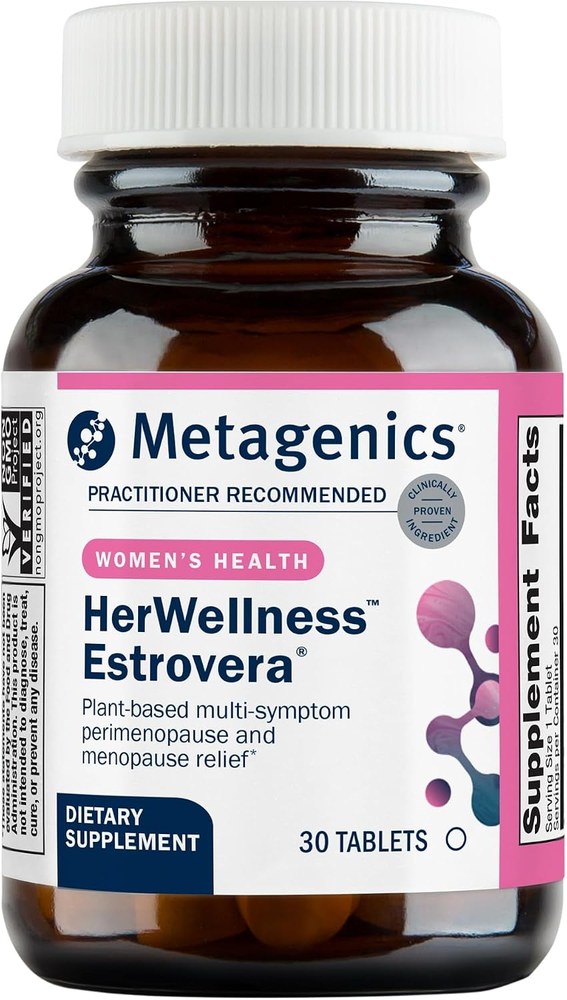
Metagenics Estrovera (ERr 731 Rhubarb Extract)
Best for: The best-studied single botanical for hot flashes
If you want the single botanical with the most specific evidence for hot flashes, this is it. ERr 731, a standardized rhapontic (Siberian) rhubarb extract at 4 mg, significantly cut the number and severity of hot flashes versus placebo in a 12-week randomized trial and is backed by several more RCTs, delivered as one transparent active rather than a proprietary blend. It works through estrogen-receptor-beta rather than raising systemic estrogen. It ranks first for the best evidence-to-transparency ratio in the category. Honest caveats: it is a selective phytoestrogen despite “hormone-free” marketing, so women with an ER-positive breast-cancer history, on tamoxifen or an aromatase inhibitor, or with unexplained bleeding should not use it without a doctor; it is premium-priced; and it is not a substitute for hormone therapy.
- Best single-botanical RCT evidence for hot flashes
- One transparent standardized active, no blend
- Works via ER-beta, does not raise systemic estrogen
- Still a selective phytoestrogen (breast-cancer history: ask a doctor)
- Premium price
- Not a substitute for hormone therapy
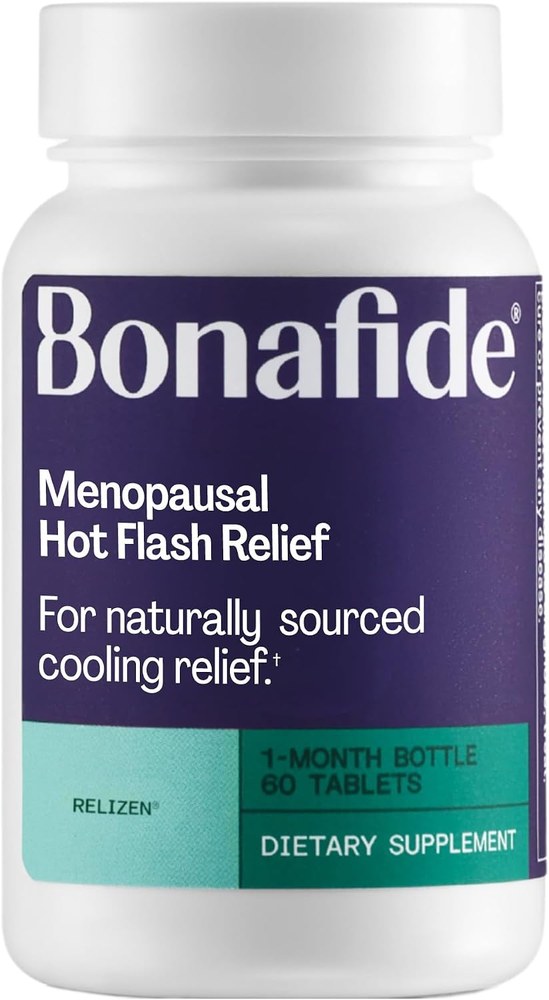
Bonafide Relizen (Swedish Flower Pollen)
Best for: Women who cannot or should not use estrogen
The one option genuinely built for hormone-sensitive women. Purified Swedish flower pollen extract does not bind estrogen receptors and, unlike SSRIs, did not inhibit the CYP2D6 enzyme that activates tamoxifen in laboratory testing, and a small multicenter trial of the same purified pollen extract in breast-cancer survivors found it reduced hot flashes. Trials show reduced hot flashes and night sweats. It is the correct pick for women who cannot or prefer not to use estrogenic options. It ranks second because the efficacy evidence is genuinely mixed: some trials are positive, but a 2024 meta-analysis found the pooled controlled data fell short of significance, and it is premium, direct-to-consumer priced. Contains pollen cytoplasm, so flag a severe pollen allergy with your doctor.
- Non-estrogenic and CYP2D6-safe in lab testing (tamoxifen-compatible)
- A small trial in breast-cancer survivors found it reduced hot flashes
- The right pick when estrogen is off the table
- Efficacy evidence is mixed (a 2024 meta-analysis was null)
- Premium, mostly direct-to-consumer pricing
- Contains pollen; note a severe pollen allergy
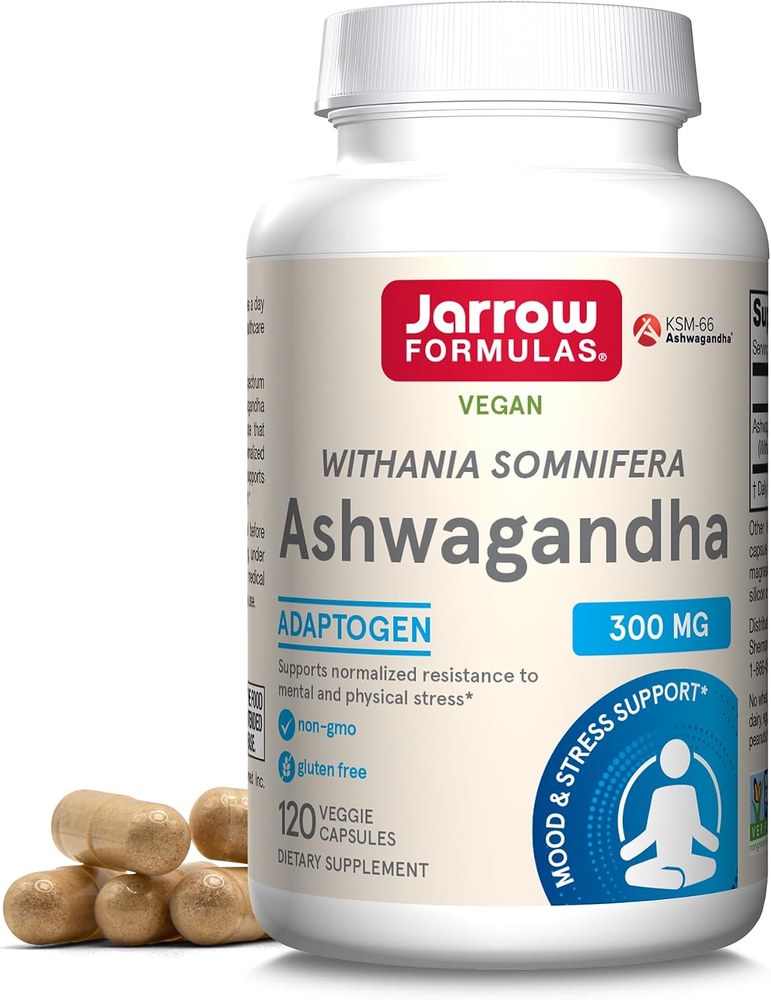
Jarrow Formulas Ashwagandha KSM-66, 300 mg
Best for: The stress, mood and sleep side of perimenopause
For the stress, irritability, and poor sleep that often hit hardest in perimenopause, ashwagandha is the best-evidenced adaptogen, and KSM-66 is the most-studied branded extract. A randomized trial of an ashwagandha root extract at 300 mg twice daily reduced total menopausal symptom scores versus placebo, with clear gains on the psychological symptoms. This is already a vetted pick on our site. The honest framing matters: ashwagandha is not a hot-flash treatment, it targets mood and sleep, and in that same trial it modestly raised estradiol and lowered FSH and LH, so it is not a truly “non-hormonal” option and is best avoided with hyperthyroidism, thyroid medication, or in pregnancy. See our ashwagandha ranking for the extract-by-extract comparison.
- Best-evidenced adaptogen for perimenopausal mood and sleep
- KSM-66, the most-studied branded extract
- Inexpensive per serving
- Does not treat hot flashes
- Raised estradiol in the trial, so ask a doctor if you have a hormone-sensitive history
- Caution with thyroid disease or medication
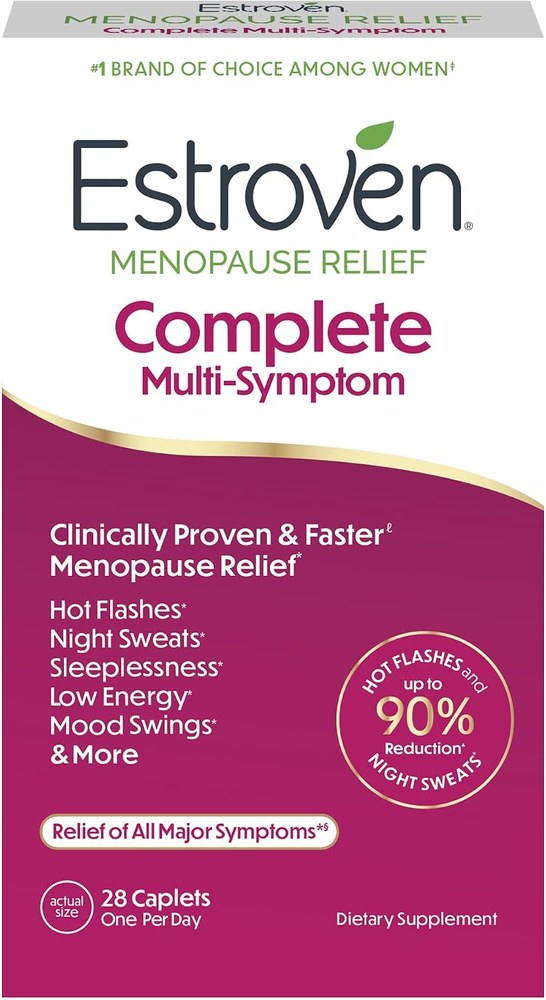
Estroven Complete Multi-Symptom Menopause Relief
Best for: A once-daily, widely stocked hot-flash option
The accessible version of the top pick. Estroven Complete uses the same rhapontic-rhubarb active family as Estrovera, which has genuine hot-flash and night-sweat RCT support, in a convenient once-daily caplet you can grab at any drugstore for far less money. If you want the best-evidenced botanical without the practitioner-brand price, start here. Two honest notes: it carries the same ER-beta phytoestrogen caveat as Estrovera, and Estroven sells many different SKUs, some of which add soy isoflavones or black cohosh, so read the specific label and, if you are hormone-sensitive, avoid the isoflavone and black-cohosh versions. Estroven's “up to 90 percent” marketing figures are the brand's, not independent findings.
- Same evidence-backed rhubarb active as the top pick
- Once-daily, widely stocked, low cost
- Hormone-free formula
- Same ER-beta caveat (breast-cancer history: ask a doctor)
- Many Estroven SKUs; some add soy or black cohosh
- Brand efficacy figures are marketing, not independent
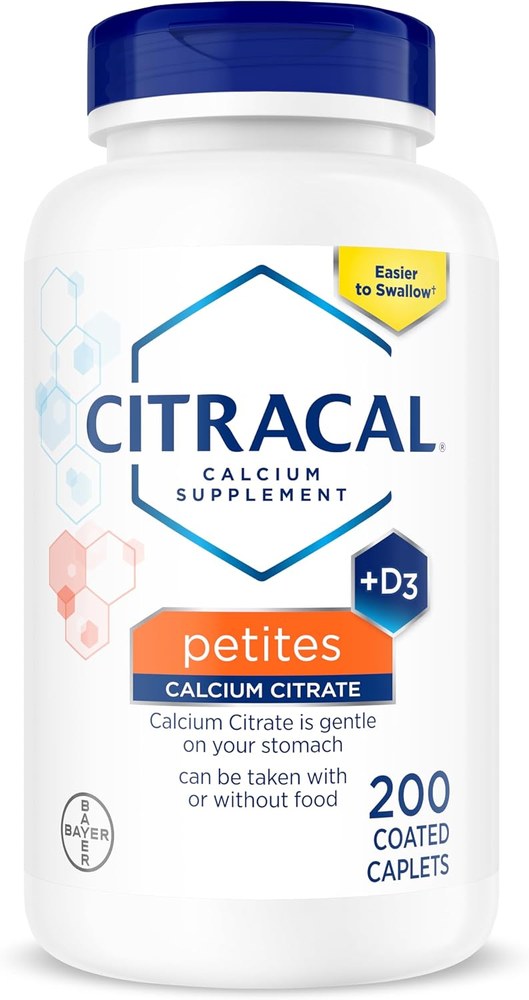
Citracal Petites, Calcium Citrate + Vitamin D3
Best for: The postmenopausal bone-health base
Bone loss speeds up as estrogen falls, and calcium plus vitamin D is the sensible base, best thought of as filling a dietary gap rather than a fracture cure. Calcium citrate absorbs even with low stomach acid or on acid-reducing medication, common in older women, and this is a cheap, widely available way to top up toward the ~1,200 mg/day total target from diet plus supplement. Be honest about the limits: in healthy postmenopausal women, calcium and D produced only a tiny bone-density gain, did not significantly cut hip fractures, and slightly raised kidney-stone risk, so more is not better and the real benefit is largest if you are deficient. Consider adding vitamin D3 with K2, and if you are at real osteoporosis risk, get a bone-density scan and talk to your doctor. Our bone-health guide has the full picture.
- Well-absorbed calcium citrate (fine with low stomach acid)
- Cheap, widely available bone base
- Sensible for filling a dietary calcium gap
- Only a tiny bone-density gain and no clear fracture cut in healthy women
- Excess supplemental calcium may raise kidney-stone risk
- Not a substitute for a bone workup if you are at risk
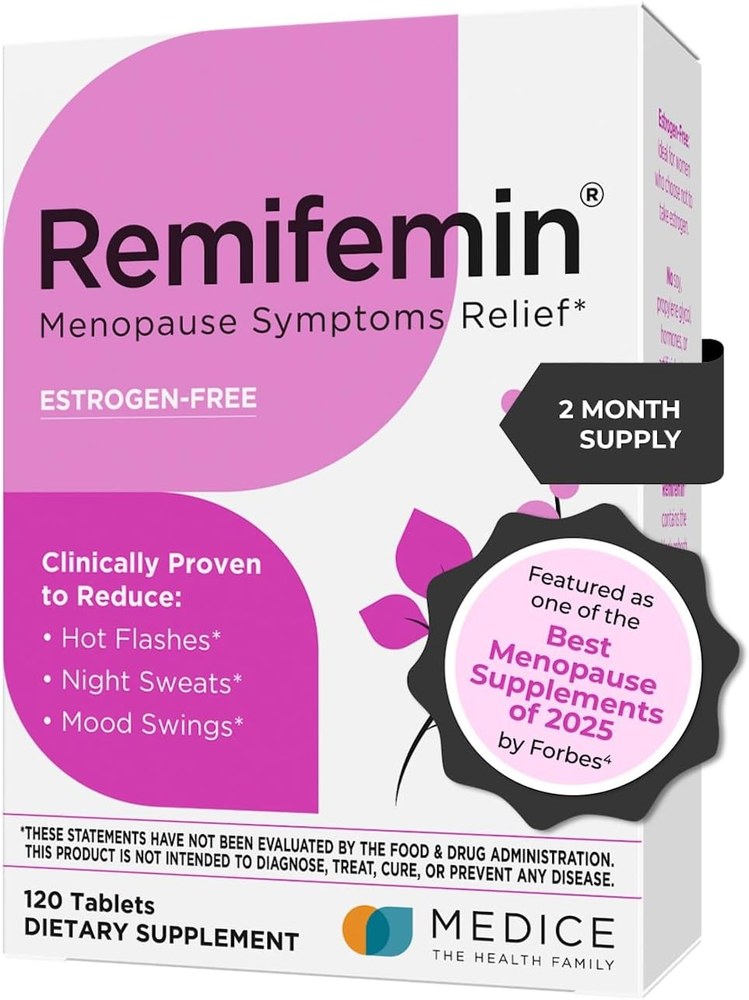
Remifemin Menopause Relief (Black Cohosh)
Best for: The classic black cohosh, if you want to try one
Black cohosh is the most recognized menopause botanical, and Remifemin uses the specific iCR extract behind most of its positive trials, as a single standardized ingredient with no added hormones. If you want to try black cohosh, this is the one with the track record. But the honest grade is only fair, because the evidence is genuinely mixed: a Cochrane review and the rigorous one-year HALT trial found it no better than placebo, while an industry-associated meta-analysis of this exact extract did find a benefit. There are rare reports of liver injury (a formal reassessment judged causation usually unlikely, but stop and see a doctor for jaundice, dark urine, or right-upper-abdomen pain), and its safety in hormone-sensitive cancer is not established.
- The specific iCR extract with the best black-cohosh data
- Single standardized ingredient, estrogen-free
- Widely available, moderate price
- Evidence is genuinely mixed (Cochrane and HALT were null)
- Rare liver-injury reports; stop for jaundice or dark urine
- Safety in hormone-sensitive cancer not established
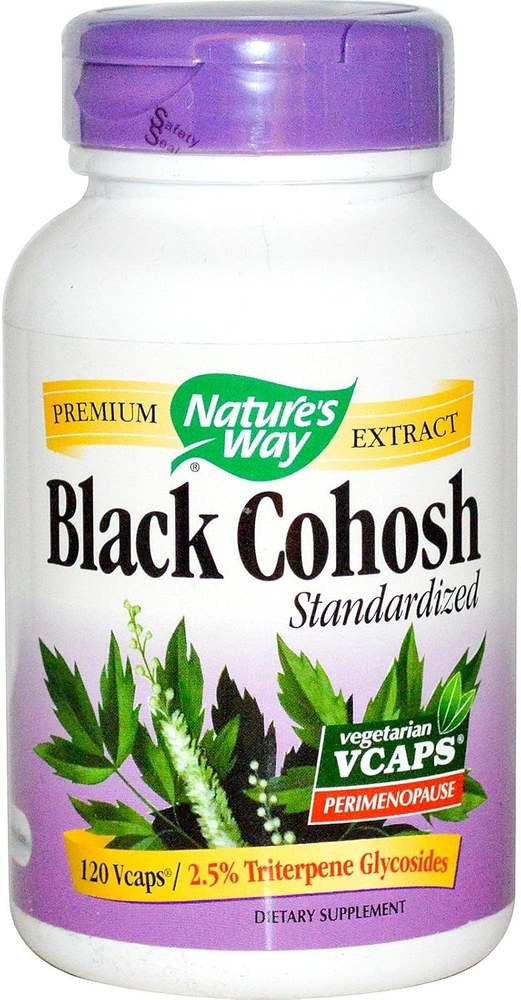
Nature's Way Black Cohosh, Standardized 40 mg
Best for: The cheapest single, standardized menopause botanical
The honest budget answer, which is a single standardized botanical rather than a cheap “meno complex.” Nature's Way gives you a standardized black cohosh extract at a rock-bottom price from a long-trusted herb brand. Buy it if cost is the priority and you want to try black cohosh without the Remifemin premium. It ranks last for the same reason as any black cohosh, the mixed evidence and the liver caution, plus budget does not mean better: Remifemin's specific extract carries the trial record. Whatever you do, skip the ultra-cheap “hormone balance” blends, and note that some popular black-cohosh products add dong quai and licorice, which bring their own issues.
- Cheapest legitimate single, standardized botanical
- Long-trusted herb brand, Non-GMO options
- No proprietary-blend games
- Same mixed evidence and liver caution as any black cohosh
- The trial record is for Remifemin's extract, not this one
- Avoid the cheap 'hormone balance' blends nearby
The full lineup, side by side
Read the target and hormonal columns first. If you have a breast-cancer history or take tamoxifen, the non-hormonal row (Relizen) is the one to start with, after talking to your doctor.
| Product | Active | Best for | Hormonal status | Award |
|---|---|---|---|---|
| Estrovera (ERr 731) | Rhapontic rhubarb 4 mg | Hot flashes | ER-beta phytoestrogen | Best overall |
| Bonafide Relizen | Swedish flower pollen | Hot flashes | Non-hormonal | Non-hormonal / hormone-safe |
| Jarrow Ashwagandha KSM-66 | 300 mg root extract | Mood, sleep, stress | Shifts hormones slightly | Mood & sleep |
| Estroven Complete | Rhapontic rhubarb | Hot flashes | ER-beta phytoestrogen | Drugstore pick |
| Citracal + D3 | Calcium citrate + D3 | Bone | Non-hormonal | Bone & long-term |
| Remifemin | Black cohosh (iCR) | Hot flashes, mood | Not established | Best black cohosh |
| Nature's Way Black Cohosh | Black cohosh 40 mg | Hot flashes | Not established | Budget |
“Hormonal status” matters most for women with a hormone-sensitive cancer history: non-hormonal picks are safer bets, phytoestrogens (rhubarb, soy, red clover) need a doctor's sign-off, and black cohosh's status is not established. None of these products carry a USP or NSF seal, so we grade the botanicals on clinical evidence and formulation transparency.
What actually has evidence for menopause
Behind the products, only a handful of ingredients have earned real data. Here is the honest one-line version, with links to the deeper science.
- Rhapontic rhubarb (ERr 731). The best single-botanical evidence for hot flashes, with several RCTs behind the 4 mg dose. A selective phytoestrogen, so it is not for hormone-sensitive women without a doctor.
- Swedish flower pollen. Non-hormonal, CYP2D6-safe in lab testing, and studied in a small breast-cancer-survivor trial, though the pooled efficacy evidence is mixed.
- Soy isoflavones and red clover. Small, real reductions in hot flashes in some meta-analyses, no clear benefit in others. We cover the hot-flash science in depth in our red clover guide.
- Black cohosh. The most recognized menopause botanical, but genuinely mixed, no better than placebo in the best trials.
- Ashwagandha and saffron. For the mood and sleep side, not hot flashes. Saffron improved psychological symptoms but not vasomotor ones.
- Bone nutrients. Calcium plus vitamin D as a base, with modest data for vitamin K2 (MK-7) and collagen peptides. See our bone-health guide.
One point that runs through all of it: omega-3 did not reduce hot flashes in the large NIH MsFLASH trials, and if you are still having periods, menopause picks are the wrong list, see our PMS guide instead.
Menopause “support” to skip
Some of the most heavily marketed menopause products are the least worth buying, and a few carry real cautions.
- Wild yam “natural progesterone” creams. The diosgenin in wild yam does not convert to progesterone in the body, and wild yam cream performed no better than placebo. Only creams listing “Progesterone USP” contain actual hormone, which is drug territory.
- DHEA sold as a supplement. DHEA is a hormone that the body turns into estrogen and testosterone, with androgenic side effects, and a Cochrane review found it did not reliably improve menopausal quality of life. Treat it as a hormone to discuss with a doctor, not a shelf supplement.
- Dong quai, evening primrose oil, and vitamin E. Each performed no better than placebo for hot flashes in controlled trials.
- Kitchen-sink “hormone balance” and “estrogen detox” blends. They hide per-ingredient doses, so you cannot tell whether any active is at a studied amount, and the “balance your hormones” premise is marketing. Be careful with St John's wort too: it lowers the blood levels of many drugs, including birth control.
How to choose the right one for you
Match the pick to your dominant symptom:
- If hot flashes are the problem, start with rhapontic rhubarb (Estrovera, or drugstore Estroven for the same active for less).
- If you cannot or should not use estrogen, non-hormonal Swedish flower pollen (Relizen) is the safest-studied choice.
- If mood, irritability, and sleep are the worst part, ashwagandha targets that cluster, though not hot flashes.
- If bone health is the concern, a calcium-plus-D base fills the gap, but get a bone-density scan and talk to your doctor if you are at real risk.
- Whatever you pick, choose a single, transparent, standardized active over a hormone-balance blend, give it two to three months, and treat hormone therapy as the more effective option to discuss with your doctor.
Hormone therapy and when to see a doctor
This is a buyer's guide for general wellness, not a substitute for care. Menopausal hormone therapy remains the most effective treatment for hot flashes and night sweats and also protects bone, and modern reappraisals of the Women's Health Initiative found no excess mortality over long-term follow-up, with the benefit-to-risk balance most favorable for women under 60 or within 10 years of menopause. If your symptoms are disrupting your life, if you have a personal or family history of breast cancer, blood clots, or heart disease, or if you take medication, talk to a doctor about whether hormone therapy or a prescription non-hormonal option is right for you before relying on supplements. Supplements can be a reasonable addition or alternative, but the decision belongs with a clinician who knows your history.
Frequently asked questions
What is the best supplement for menopause?
It depends on your main symptom, and the honest headline is that no supplement matches hormone therapy, which is the most effective medical treatment and worth discussing with a doctor. If hot flashes are the problem, rhapontic rhubarb extract (ERr 731, sold as Estrovera) has the best single-botanical evidence; if you cannot or should not use estrogen, non-hormonal Swedish flower pollen (Relizen) is the safest-studied choice; and if the hardest part is mood, irritability, and sleep, ashwagandha is the best-evidenced option. Supplement effects are modest, so set expectations accordingly.
Do menopause supplements actually work for hot flashes?
Modestly and inconsistently. Hot-flash trials have a large placebo effect, and against that bar, rhapontic rhubarb (ERr 731) and soy isoflavones show small but real reductions, while black cohosh was no better than placebo in a Cochrane review and the rigorous one-year HALT trial. None of them come close to hormone therapy, which cuts hot flashes by roughly 75 percent. A supplement is a reasonable thing to try if your symptoms are mild or you prefer a non-hormonal route, not a cure.
What is the safest menopause supplement if I have had breast cancer?
Favor non-estrogenic options and clear them with your oncologist first. Purified Swedish flower pollen (Relizen) does not bind estrogen receptors and, in laboratory testing, did not inhibit the CYP2D6 enzyme that activates tamoxifen, and a small trial in breast-cancer survivors found it reduced hot flashes; maca is also non-estrogenic. Avoid concentrated soy and red clover isoflavone pills, black cohosh, and rhapontic rhubarb (ERr 731) without a doctor's sign-off, since these are phytoestrogens or have estrogenic uncertainty. Whole-food soy in the diet is considered safe; the question mark is over concentrated isoflavone supplements.
Is black cohosh effective and safe?
The evidence is genuinely mixed. A Cochrane review and the well-run one-year HALT trial found black cohosh no better than placebo for hot flashes, although an industry-associated analysis of the specific iCR extract in Remifemin did report a benefit. On safety, there are rare reports of liver injury, and while a formal reassessment judged the causation usually unlikely, you should stop and see a doctor if you develop jaundice, dark urine, or right-upper-abdomen pain. Its safety for women with hormone-sensitive cancer is not established.
What supplements help with menopause bone loss?
Calcium and vitamin D are the base, but keep expectations honest: in healthy postmenopausal women, calcium plus D produced only a tiny bone-density gain, did not significantly reduce hip fractures, and slightly raised kidney-stone risk, so they matter most if your intake is low rather than as a fracture cure. Vitamin K2 as MK-7 and specific collagen peptides have modest bone-density data. The most effective protection against menopausal bone loss is hormone therapy or prescribed bone medication, so if you are at real risk, get a bone-density scan and see a doctor rather than relying on supplements.
Which menopause supplements should I avoid?
Skip wild yam “natural progesterone” creams, because the diosgenin in yam does not convert to progesterone in the body; DHEA sold as a supplement, because it is a hormone with androgenic side effects; and dong quai, evening primrose oil, and vitamin E, which performed no better than placebo for hot flashes. Avoid kitchen-sink “hormone balance” blends that hide their per-ingredient doses, and be careful with St John's wort, which lowers the blood levels of many prescription drugs, including birth control.
Are supplements as good as hormone therapy (HRT)?
No. Menopausal hormone therapy is the single most effective treatment for hot flashes, cutting them by around 75 percent, and it also protects bone; for many women under 60 or within 10 years of menopause the benefit-to-risk balance is favorable. Supplements are a reasonable option for women who cannot use hormones, prefer not to, or have milder symptoms, but they are modest by comparison. The right move is to discuss hormone therapy and the alternatives with your doctor and decide from there.
The bottom line
The best menopause supplement is an honest one, matched to your main symptom and bought with realistic expectations. Estrovera is the smart all-rounder for hot flashes, Relizen is the non-hormonal choice when estrogen is off the table, ashwagandha is the pick for mood and sleep, and a calcium-plus-D base covers bone. Just keep the expectations honest: these effects are modest, hormone therapy is the most effective treatment and worth discussing with your doctor, several popular menopause products do nothing, and a few can interact with medications or are inappropriate after breast cancer. Choose one transparent, standardized active, give it a couple of months, and loop in a clinician for anything more than mild symptoms.