Every winter the same shelf fills up: zinc, vitamin C, elderberry, a rainbow of "immune defense" blends, and lately quercetin stacks promising to shuttle zinc into your cells. Most of these products are built around real nutrients with real research behind them. The catch is that the research is narrower than the labels suggest: most of it shows a modest effect in specific situations, such as a cold that has already started, a vitamin D level that was low to begin with, or a body under the stress of marathon training. No supplement has been shown to prevent colds, flu or COVID-19 in a healthy, well-fed adult, and several of the largest recent trials were flatly null.
So this guide does something slightly different from the usual roundup. We picked one standout product for each of six immune ingredient categories that have human trials behind them, plus two products the site's owner asked us to include and to rank first and second, then assessed all eight on five things: how strong the evidence for the category is, how well the product matches the studied dose and form, whether it is independently tested, how much safety margin it leaves, and what it costs per day. Our top pick, Thorne Immune Activator, is a single, independently tested capsule built around a carrot fiber with early trial data. If you want everything in one bottle, IMMUNO BLASTER discloses real doses of four nutrients, with several caveats. Each pick below wins a specific job, and the comparison table shows the evidence tier next to every one.
The short version
- Top pick: Thorne Immune Activator. One capsule a day of Benicaros carrot fiber and currant extract, NSF Certified for Sport. The evidence is early and comes from the fiber's maker, and it is the priciest pick at about $1.63 a day. Included and placed first at the site owner's request; Thorne did not pay and has no connection to NutraSmarts.
- If you want one bottle: IMMUNO BLASTER, at number two. Quercetin 500 mg, zinc 30 mg, vitamin C 800 mg and vitamin D3 5,000 IU in two veggie capsules, disclosed doses and no proprietary blend. Mind the vitamin D total, the daily zinc, and the lack of a third-party seal. Included and placed second at the site owner's request; the brand did not pay and has no connection to NutraSmarts.
- Best cheap basics: Culturelle (Lactobacillus rhamnosus GG) and USP Verified Nature Made Vitamin C 1000 mg cover the two other categories with decent human data, from 9 to about 58 cents a day.
- Best zinc lozenge: Life Extension Enhanced Zinc Lozenges. Zinc acetate, the form with the most trial data for shortening a cold that has already started, used as a short course and never daily.
- The frame: in trials these products shorten or soften infections at best, mostly in people who are deficient, under heavy physical stress, or in group childcare. None prevents infection in a healthy adult. Sleep, vaccines and hand washing still do most of the work.
How we ranked them
Immune supplements are a category where the marketing runs far ahead of the trials, so we judged every product against the trials. Five things, in this order:
- Evidence for the category. We read the systematic reviews and the key randomized trials for each ingredient and sorted them into plain tiers: moderate, low to moderate, weak, or very low. Zinc lozenges and strain-specific probiotics have the most human data, and even there the effects are modest and the certainty is mostly low; vitamin C and beta-glucan are weak; elderberry, quercetin and NAC are weak to null; and vitamin D, once the headline, no longer shows a significant effect on infections in the latest pooled analysis. The carrot fiber in our top pick rests on a single maker-run trial. Evidence sets the ceiling on what we will claim for a product.
- Dose and form that match the studies. A zinc capsule swallowed once a day is not the zinc acetate lozenge the cold trials used. A 125 mg beta-glucan capsule is half the lowest studied dose. We rewarded products that deliver the studied dose in the studied form.
- Independent testing. USP Verified is the strictest common seal; a brand's own certificate of analysis is good; a bare "lab tested" claim is the weakest. Immune products attract more fly-by-night brands than most categories, so this carried real weight.
- Safety margins. Zinc has a 40 mg daily ceiling and depletes copper over time, vitamin D has a 4,000 IU ceiling, vitamin C tops out at 2,000 mg. Products that push past those limits lost points even when the formula was otherwise good.
- Value. Price per day at the label dose. A daily immune habit is a year-round cost, so a product that does the same job for 9 cents beats one that does it for a dollar.
The order is our editorial call built on those five criteria plus one more consideration: this is a guide to daily immune support, so an as-needed product like zinc lozenges, useful only for the first days of a cold, sits lower than its evidence alone would put it. Scores are our editorial assessment on a five-point scale, not customer ratings, and no brand paid for its position. Six of the eight products were chosen by category. The other two were on the list before the research began, and their positions were set, because the site's owner asked for them: Thorne Immune Activator at number one and IMMUNO BLASTER at number two. Neither brand paid for its placement or has any connection to NutraSmarts. Thorne's case is testing and simplicity, an NSF Certified for Sport capsule with one studied ingredient at its studied dose, and IMMUNO BLASTER's is convenience; neither beats the singles on depth of evidence, and both cards say so plainly.
The 8 best immune support supplements
Tap any product to jump straight to its full review.
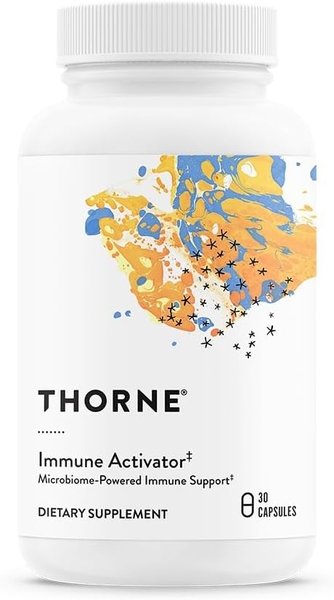
Thorne Immune Activator
Best for: people who want one simple, independently tested daily capsule aimed at gut-immune support, and accept that the evidence is early
This is our top pick, placed at number one because the site's owner asked for it; Thorne did not pay for its placement and has no connection to NutraSmarts. Its case is testing and simplicity: one capsule a day, NSF Certified for Sport, built around Benicaros, a carrot fiber, at the same 300 mg dose its maker studied. Be clear about how early that evidence is. In one maker-run trial, adults given a cold virus after eight weeks reported a lower peak symptom score, but viral load and the share who caught a cold did not differ, and a fivefold higher dose did no better. The red and black currant extract has no immune studies, and the capsule itself has never been tested.
- Benicaros at 300 mg, the same dose as the one trial arm that showed a signal
- NSF Certified for Sport: independently tested for label accuracy and banned substances
- One capsule a day, with nothing near an upper limit
- Well tolerated in trials; the FDA had no questions on its safety notice
- The capsule itself has never been tested; "clinically studied" means the carrot fiber only
- The key trial was run with the fiber's maker and has not been repeated
- Viral load and the share who caught a cold did not differ in that trial
- The currant extract has no immune studies, and 250 mg is half its tested dose
- About $1.63 a day, the most expensive pick here
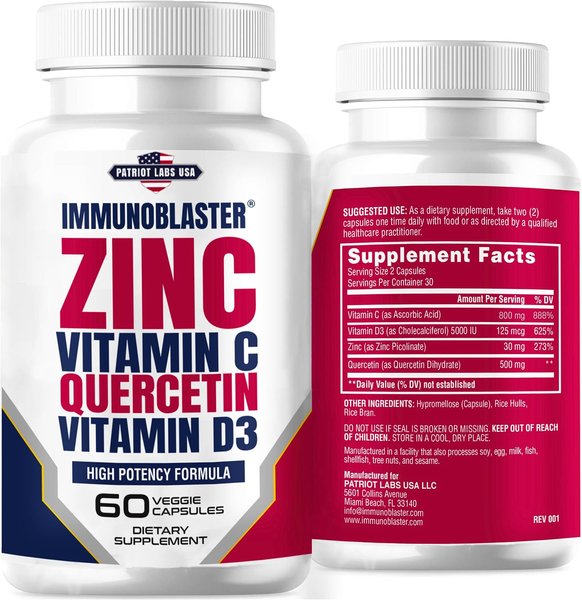
IMMUNO BLASTER Zinc, Quercetin, Vitamin C and D3
Best for: people who want zinc, quercetin, vitamin C and vitamin D3 in one bottle, have a clinician's okay for 5,000 IU of vitamin D a day with no other source, and understand the caveats
This is the one combination product in the guide, at number two because the site's owner asked for it; the brand did not pay for its placement and has no connection to NutraSmarts. Its case is convenience: two veggie capsules cover quercetin 500 mg, zinc picolinate 30 mg, vitamin C 800 mg and vitamin D3 5,000 IU, with every dose disclosed and no proprietary blend. The caveats are real. That much vitamin D is over the 4,000 IU daily limit, so take the full serving only with a blood test and your clinician's okay, and no other vitamin D. Quercetin at this dose showed no effect in the one large trial, and there is no third-party seal.
- Four studied ingredients in one serving, every dose disclosed
- No proprietary blend and nothing at trace doses
- Veggie (hypromellose) capsules; the brand states a GMP-registered US facility
- Replaces three or four separate bottles
- Vitamin D3 at 5,000 IU is over the 4,000 IU daily limit; use only with a blood test and a clinician's okay
- Made in a facility that also processes soy, egg, milk, fish, shellfish, tree nuts and sesame
- The zinc is a swallowed capsule, not a lozenge, and 30 mg a day with no copper can lower copper over time
- Quercetin at 500 mg showed no effect in the one large trial; the zinc ionophore claim comes from a lab study
- Lab testing is the brand's own claim; there is no USP, NSF or Informed Choice seal
- About 80 cents to a dollar a day, more than the singles
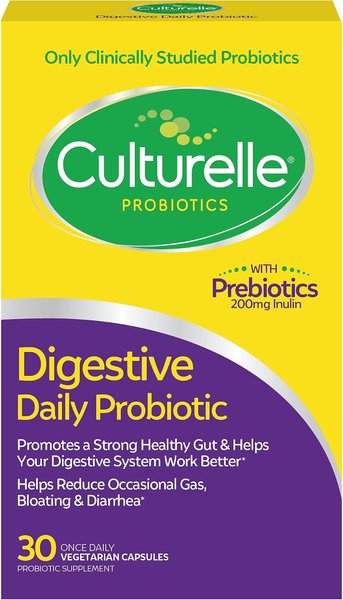
Culturelle Digestive Daily Probiotic
Best for: households with kids in daycare or school, and anyone who also wants a well-studied gut probiotic
Lactobacillus rhamnosus GG is the probiotic strain with the most trials behind it, and Culturelle delivers it on its own at 10 billion CFU, in the studied range. A 2022 Cochrane review found probiotics modestly reduced the share of people who got an upper respiratory infection, at low certainty, and the results depend on the strain: LGG helped children in daycare, while trials in young children and marathon runners came back null. It is shelf stable, sold everywhere, and also covers everyday gut support. Skip it without a doctor's okay if you are seriously immunocompromised or in intensive care.
- A single, fully identified strain, Lactobacillus rhamnosus GG, the probiotic with the most respiratory-infection trials behind it
- 10 billion CFU per capsule, in the range the trials used
- Shelf stable and sold almost everywhere
- The most-studied single probiotic strain overall, so it also covers everyday gut support
- The immune evidence is low to moderate certainty, and much of it comes from children in daycare
- Contains inulin, which bloats some people
- No third-party certification seal on the box
- A daily habit at 58 cents adds up for a modest effect
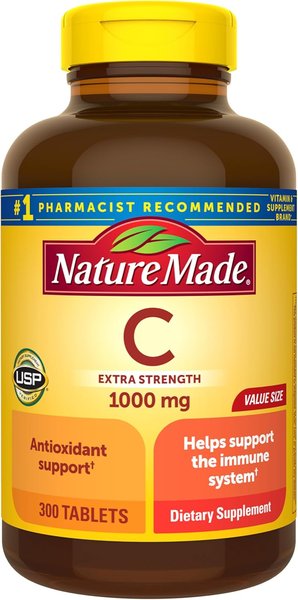
Nature Made Extra Strength Vitamin C 1000 mg
Best for: people under heavy physical stress such as marathon training, and anyone who wants cheap, verified vitamin C
Vitamin C is the most famous immune supplement and the most oversold. In the Cochrane review, taking it daily did not reduce how often people caught colds, though it shortened them slightly, and starting it after symptoms began did not help; the exception was people under heavy physical stress, such as marathon runners. There is no reason to pay for fancy forms: this 1,000 mg tablet is plain ascorbic acid, USP Verified, at about 9 cents a day. Your body absorbs only part of a dose this large, and men prone to kidney stones should check with a doctor first.
- USP Verified plain ascorbic acid; there is nothing in vitamin C worth paying a premium for
- About 9 cents a day for a 300-day supply
- Gluten free, no artificial flavors or colors
- The regular-use pattern that trimmed cold duration in the pooled trials is easy to keep up at this price
- Absorption falls off above a few hundred milligrams at a time, so much of a 1,000 mg tablet is excreted
- Regular vitamin C did not reduce how often people caught colds in the general population
- A large tablet; buffered or chewable forms are gentler for sensitive stomachs
- Men prone to kidney stones should ask a doctor first; 1,000 mg or more is linked to more stones in men
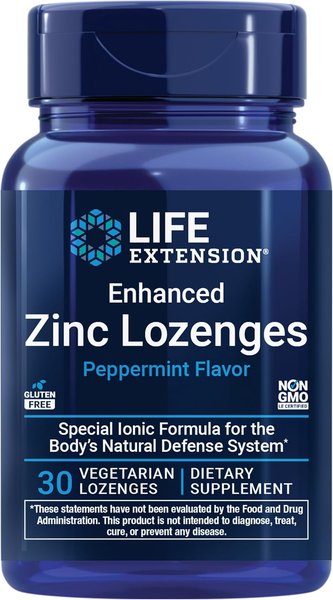
Life Extension Enhanced Zinc Lozenges
Best for: a short course at the first sign of an immune challenge, not for daily use
Zinc lozenges are the one product here meant for the first day of a cold, not for daily use. In trials, lozenges dissolved slowly in the mouth and started within 24 hours shortened colds, though the 2024 Cochrane review rates that benefit as low certainty and found no effect on preventing colds. Life Extension's lozenge is zinc acetate at 18.75 mg, with a certificate of analysis. Expect a metallic taste and some nausea, follow the label, and keep it to a few days, since lozenge doses quickly pass the 40 mg daily limit and can lower copper. It sits at number five only because this is a guide to daily support.
- Zinc acetate, the salt with the most consistent lozenge data, releasing ionic zinc as it dissolves
- 18.75 mg of zinc per lozenge, a little larger than the roughly 13 mg lozenges used in the trials
- Vegetarian, non-GMO, and a certificate of analysis is available for every lot
- Thirty cents a lozenge
- Not a daily supplement; the brand itself says so, and daily high-dose zinc depletes copper
- Metallic taste and nausea are common with any effective zinc lozenge
- Large lozenge that must dissolve slowly; it is not a mint
- Only 30 per bottle, about one cold's worth
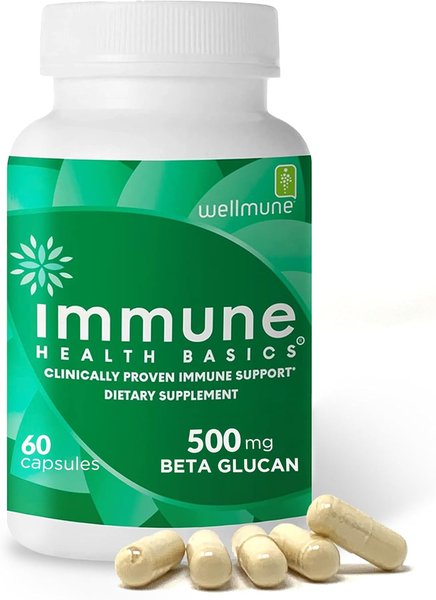
Immune Health Basics Ultra Strength (Wellmune 500 mg)
Best for: endurance athletes and anyone who wants the one beta-glucan that was actually studied, price no object
Yeast beta-glucan, a fiber from baker's yeast, has human trials behind one branded form, Wellmune, mostly at 250 mg a day. The positive results come from self-reported symptom diaries in marathon runners and stressed adults, in trials largely funded by the maker, and the two trials that confirmed infections medically were not statistically significant. Immune Health Basics sells it at 500 mg, the top studied dose, but at $1.07 a day it is the second-priciest pick here. For less, NOW Beta-Glucans costs about 26 cents a capsule, though its generic beta-glucan is not what the trials tested.
- The exact branded material (Wellmune) used in the human beta-glucan trials, not a generic yeast extract
- 500 mg per capsule, at the top of the studied range
- One capsule a day, vegan, no fillers
- Well tolerated in the trials
- $1.07 a day, the second most expensive pick here
- The trials are small, mostly funded by the ingredient maker, and measured self-reported symptom days
- No third-party certification seal
- Cheaper option: NOW Beta-Glucans, a generic yeast beta-glucan, at about 26 cents a capsule
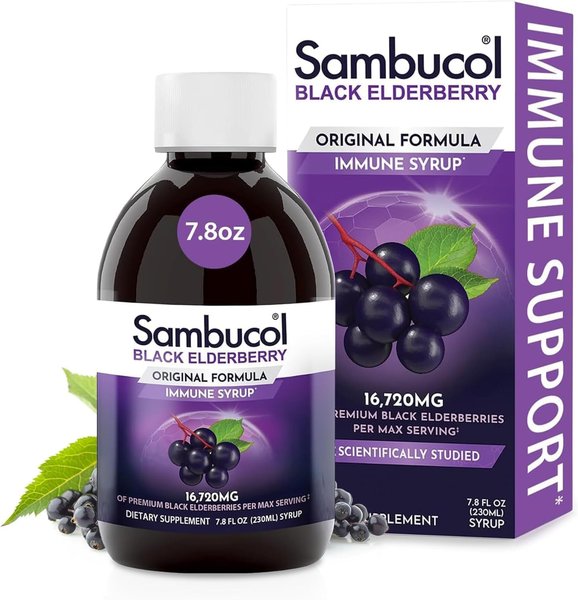
Sambucol Black Elderberry Syrup, Original
Best for: people who like a syrup at the first sniffle and understand the evidence is mixed
Elderberry is a plausible, well-tolerated maybe. A small 2019 meta-analysis covering 180 people reported a large benefit, but several of its trials were funded by the makers, and the best-controlled trial, in 87 emergency-room patients with confirmed flu, found no significant difference from placebo. If you want it anyway, Sambucol is the product several trials used, including that null one. It tastes good and costs about 82 cents a day, but it is a glucose syrup, and no trial has tested taking it every day year round. Never eat raw elderberries, leaves or stems, which contain cyanide-producing compounds.
- The brand several of the elderberry trials used, so you get the studied product
- Standardized black elderberry extract, vegan, kosher and gluten free
- Pleasant taste, easy to give across a household
- About 82 cents a day at the maintenance dose
- The best-controlled recent trial found no significant difference from placebo
- Several of the positive trials were funded by the maker
- Glucose syrup base; there is real sugar in every spoonful
- No trial has tested daily year-round use; the studied regimen was five days at symptom onset; no third-party seal
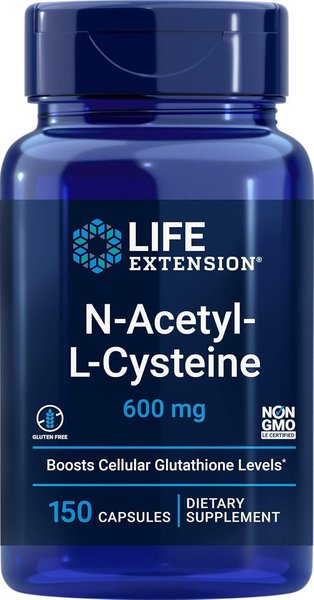
Life Extension N-Acetyl-L-Cysteine 600 mg
Best for: people who already take NAC for mucus or antioxidant support and want the dose from the one immune trial
NAC has the thinnest immune evidence on this list: one 1997 Italian trial of 600 mg twice a day in 262 mostly older adults found that fewer of those who caught influenza developed symptoms, and it has never been repeated at scale. The FDA considers NAC excluded from the legal definition of a dietary supplement but allows its sale under enforcement discretion. If you already take NAC, Life Extension's 600 mg capsule matches the trial dose and comes with a certificate of analysis, at about 18 cents a capsule. Expect a sulfur smell, and ask a pharmacist first if you use nitroglycerin or blood thinners.
- 600 mg per capsule, the exact dose used in the one long immune trial
- Certificate of analysis available for every lot; non-GMO, gluten free
- 150 capsules for about 18 cents each
- Also the dose most often used for glutathione support
- The immune evidence is a single 1997 trial that has never been replicated at scale
- Sulfur smell and taste; stomach upset in some people
- Ask a pharmacist first if you use nitroglycerin or blood thinners
- Sold under FDA enforcement discretion; the agency says NAC is not legally a dietary supplement ingredient
The full lineup, side by side
Doses are per label serving. The most useful columns are the evidence tier for the category and the third-party testing column, because those are the two things the front of a bottle never tells you.
| Product | Category | Key dose per serving | Evidence for the category | Third-party testing | Servings | ~ Price / serving |
|---|---|---|---|---|---|---|
| Thorne Immune Activator | Prebiotic fiber + polyphenols | Benicaros 300 mg + currant extract 250 mg | Low; one maker-run trial of the carrot fiber, the capsule itself untested | NSF Certified for Sport | 30 | $1.63 |
| IMMUNO BLASTER | Combination stack | Quercetin 500 mg, zinc 30 mg, C 800 mg, D3 5,000 IU | Weak; tiered by its weakest claim, quercetin at 500 mg was null | Brand lab test only | 30 | ~$0.90 |
| Culturelle | Probiotic | 10 billion CFU L. rhamnosus GG | Low to moderate; strain specific, with null replications | None stated | 30 | $0.58 |
| Nature Made C | Vitamin C | 1,000 mg ascorbic acid | Weak; regular use shortens episodes slightly, no prevention except under heavy exercise | USP Verified | 300 | $0.09 |
| LE Zinc Lozenges | Zinc (lozenge) | 18.75 mg zinc acetate | Moderate; lozenges at symptom onset only, none for prevention | COA on request | 30 | $0.30 |
| IHB Wellmune 500 | Yeast beta-glucan | 500 mg Wellmune beta-glucan | Weak; self-reported diaries, maker funded; medically confirmed trials not significant | None stated | 60 | $1.07 |
| Sambucol | Elderberry | 2 tsp standardized elderberry syrup | Weak to null; best trial null | None stated | ~23 | $0.82 |
| LE NAC 600 | NAC | 600 mg NAC (twice daily in the trial) | Very low; one 1997 trial | COA on request | 150 | $0.18 |
Prices are approximate per-serving estimates from Amazon pack sizes on 9 October 2026 and change often. Evidence tiers are our editorial read of the human trials for each ingredient category, not a claim about any specific product.
How to choose the right one for you
Start with the nutrient you might actually be short on
The whole logic of immune supplementation is that correcting a shortfall helps and piling on more does not. Vitamin D is the one a meaningful share of adults is low in, especially in winter, at northern latitudes and in people with darker skin (older adults also make less from sunlight), and correcting that shortfall is worth doing even though the latest pooled trial estimate for infections is not significant. If you want vitamin D on its own, a plain D3 at 1,000 to 2,000 IU a day, such as Nature Made Vitamin D3 2000 IU (USP Verified, about 9 cents a day), stays well under the 4,000 IU upper limit; the 5,000 IU in IMMUNO BLASTER is above it. Zinc and vitamin C deficiencies are rare in people eating a normal diet. If you can get a 25-hydroxyvitamin D blood test, it answers the vitamin D question for a few dollars and tells you whether 2,000 IU is enough or whether your clinician wants more for a while.
Daily versus "at the first sign"
These products split into two very different jobs. Vitamin D, probiotics and vitamin C only showed anything in trials when taken every day for weeks or months; starting them when you feel a tickle does nothing. Zinc lozenges are the opposite: a short, high-dose course started within 24 hours of symptoms, then stopped. Elderberry was studied the same way, for five days at symptom onset, never as a daily habit. Match the product to the job, and do not take a zinc-lozenge dose every day.
Read the testing seal, not the front label
Immune products attract more low-quality brands than almost any other supplement category, and a bottle that says "clinically proven" or "doctor formulated" is making a marketing claim, not a quality one. The seals that mean an outside lab checked the product are USP Verified, NSF Certified and Informed Choice. A brand that publishes a certificate of analysis for each lot is the next best thing. A bare "lab tested" or "GMP certified" line is the brand grading its own homework. One of our eight picks is USP Verified, one is NSF Certified for Sport, and two publish certificates of analysis; the rest, including the all-in-one stack, do not, and we said so in each card.
Stacks versus singles
An all-in-one product like IMMUNO BLASTER is convenient and, unlike many proprietary-blend products in this category, it discloses real doses of ingredients that have at least some human data. The price you pay for convenience is control: you cannot adjust the vitamin D down if you already get some from a multivitamin, you cannot drop the daily zinc, which does not stand in for a lozenge at the first sign of trouble, and you pay more per day than the singles cost. If you are the kind of person who will actually take four bottles, the singles are cheaper, more flexible and better tested. If you are not, a disclosed-dose stack beats a drawer of forgotten bottles.
What did not make the list
Echinacea has a Cochrane review behind it that found no consistent benefit, the prevention trials that looked best were run with the maker's scientists as co-authors, and it carries a real allergy risk for people sensitive to the ragweed family, including documented cases of anaphylaxis. Medicinal mushrooms such as AHCC, turkey tail and reishi have been studied for immune-cell markers in small groups, and as far as we can find no trial has measured infections in healthy people. Zinc nasal sprays and gels are excluded outright because of the FDA's 2009 warning. None of these is a bad product category, but none has earned a card.
Mind the ceilings and the interactions
The tolerable upper limits that matter here are 40 mg a day for zinc, 4,000 IU (100 mcg) for vitamin D and 2,000 mg for vitamin C. Daily zinc at 50 mg or more for weeks lowers copper status, which is the basis of the 40 mg upper limit, so as a precaution anyone taking 25 mg or more for months should take a little copper or choose a product that includes it. Too much vitamin D over time shows up as high calcium, with nausea, weakness, excessive thirst and kidney stones, and thiazide diuretics add to that risk. Quercetin raises blood levels of fexofenadine and alters drugs handled by the liver's CYP3A4 system and the P-glycoprotein transporter, which includes some statins, calcium-channel blockers and cyclosporine. Probiotics are not for people who are seriously immunocompromised, in intensive care or carrying a central line without a doctor's okay. NAC can interact with nitroglycerin and blood thinners. And nothing in this guide replaces a flu or COVID vaccine, the one intervention shown to reduce the risk of those infections.
Frequently asked questions
What is the best immune support supplement?
Our top pick is Thorne Immune Activator, a once-daily capsule of Benicaros carrot fiber and currant extract that is NSF Certified for Sport, with the caveat that its evidence is early: one maker-run trial of the fiber found a lower peak symptom score after a deliberate cold-virus exposure, with no difference in viral load or in who caught a cold. For a nutrient you may actually be short on, a plain vitamin D3 at 1,000 to 2,000 IU a day makes sense if a blood test shows you are low. For a cold that has already started, zinc acetate lozenges have the most direct trial data for shortening it, with low to moderate certainty.
Do immune supplements actually prevent colds?
No supplement has been shown to prevent colds, flu or COVID-19 in healthy, well-nourished adults. The pattern across the trials is narrower: vitamin D has not shown a significant effect in the latest pooled analysis, even in deficient people; zinc lozenges may shorten a cold that has already started; regular vitamin C shortens colds slightly without reducing how many you get, except in people under heavy physical stress; and probiotics modestly reduce how many people get an infection and how long it lasts, with several null trials mixed in. Vaccination, sleep and hand washing do more than any product in this guide.
Should I take zinc every day or only when I feel a cold coming on?
Only when a cold is starting, and only as a lozenge. The trials that shortened colds used zinc acetate or gluconate lozenges dissolved slowly in the mouth, started within a day of symptoms, at roughly 80 to 90 mg of zinc a day for a few days. That dose is more than double the 40 mg daily upper limit and would deplete copper if taken for weeks. A daily zinc tablet at 10 to 15 mg is reasonable only if your diet is low in zinc, and it will not do what the lozenges do; a swallowed capsule works by a different route than a lozenge dissolving in the mouth. Skip zinc nasal sprays and gels entirely; the FDA has warned they can cause lasting loss of smell.
Is a combination product like IMMUNO BLASTER better than buying the ingredients separately?
It is more convenient and, unlike many immune blends, it discloses real doses: quercetin 500 mg, zinc 30 mg, vitamin C 800 mg and vitamin D3 5,000 IU per two capsules. It is not better on evidence or value. The singles are cheaper per day, several are better tested, and you can adjust each dose. The stack's 5,000 IU of vitamin D also exceeds the 4,000 IU daily ceiling, so it makes sense only with a blood test, a clinician's okay and no other vitamin D source, and its 30 mg of daily zinc comes with no copper. Choose it if you will reliably take one bottle and not four, and you understand those limits.
How much vitamin D should I take for immune support?
The trials that showed anything used modest daily doses rather than large occasional ones, and the 2021 pooled analysis pointed to 400 to 1,000 IU a day (it found no difference by starting blood level, though an earlier 2017 analysis saw the biggest effect in people who were low); the 2025 update found no significant effect overall or in the deficient subgroup, and a 2022 UK trial that gave 800 or 3,200 IU a day to adults who tested low found no reduction at all, so expect a modest effect at best. For an adult who gets little sun, 1,000 to 2,000 IU a day is a sensible baseline, and 4,000 IU is the daily upper limit without medical supervision. A blood test is the only way to know whether you need it at all or need more; if your level is low, your clinician may prescribe a higher dose for a few months.
Does elderberry work?
The evidence is mixed. A meta-analysis covering 180 people across a handful of small trials, several funded by the makers, found a large reduction in cold and flu symptoms, but an NIH-funded review concluded the evidence is uncertain, and the best-controlled recent trial, in emergency-department patients with confirmed influenza, found no significant difference from placebo. Elderberry extract is well tolerated and plausible, so it is a reasonable maybe rather than a proven product, and no trial has tested taking it every day year round. Never eat raw or unripe berries, leaves or stems, which contain cyanide-producing compounds.
Which immune supplements are safe to take together?
Vitamin D, vitamin C and a probiotic can be taken together daily without known interactions. Add zinc lozenges only during a cold. Watch the totals: keep vitamin D under 4,000 IU a day across all your products, vitamin C under 2,000 mg and daily zinc under 40 mg, and add a little copper if you take zinc for weeks. Quercetin and NAC have drug interactions worth a pharmacist's check, probiotics need a doctor's okay if you are seriously immunocompromised, and anyone who is pregnant or on prescription medication should ask a clinician before starting any of these.
The bottom line
The best immune support supplement is the one that fixes a shortfall you actually have, taken in the form the trials used. Our top pick, Thorne Immune Activator, is a simple, independently tested daily capsule with early, maker-funded evidence behind its carrot fiber, and IMMUNO BLASTER is a sensible choice if you want quercetin, zinc, C and D3 in one bottle and will watch your vitamin D and zinc totals; both were placed at the site owner's request. Culturelle and a cheap, USP Verified vitamin C cover the categories with the most human data, and zinc acetate lozenges belong in the cabinet for the first day of a cold. If a blood test shows you are low in vitamin D, a plain 1,000 to 2,000 IU D3 fixes that more safely than a 5,000 IU stack. Beta-glucan, elderberry and NAC are reasonable experiments, not foundations. None of them prevents infection in a healthy person, and all of them work better on top of sleep, a flu shot and washed hands than instead of them.