Glycine is the smallest amino acid. Your body makes it, it is the most common building block of collagen, and it tastes mildly sweet. As a supplement it is sold mainly for sleep, based on Japanese studies in which 3 g at bedtime improved how well people felt they slept. Those studies were small and linked to Ajinomoto, a company that sells glycine for sleep, so the evidence is thinner than the marketing suggests. The products themselves are simple: free-form glycine, as powder or capsules.
So this ranking rewards what you can check: whether the label serving makes 3 g easy, whether an independent program confirmed the contents, the cost of 3 g, what else is in the bottle, and how far the claims outrun the research. We read the Supplement Facts panel on every product's current Amazon listing (for Swanson, which shows no panel image, the listing's ingredient field) and scored all ten on the same five criteria. For background, see our glycine guide.
The short version
- Best overall: Nutricost Glycine Powder, a 3 g scoop of plain glycine for about $0.15, with no benefit claims on the listing.
- Lowest cost: Micro Ingredients and BulkSupplements, about $0.09 to $0.10 per 3 g.
- Best verified: Thorne Glycine, the only plain glycine we found on NSF's contents-certified list, though 3 g takes 6 capsules and costs about $0.74.
- The sleep evidence is small. Three crossover trials of 3 g at bedtime analyzed about 19, 11 and 7 people, all linked to Ajinomoto, and we found no independent randomized repeat.
- What they found: better self-rated sleep quality, faster sleep onset in one brain-wave study, and less next-day fatigue in one; sleepiness showed no significant difference in that trial.
- Powder is the practical form. 3 g is one scoop or teaspoon of most powders versus three to six capsules.
- On clozapine? High-dose glycine did not help and may have blunted clozapine's benefit in trials; ask your prescriber.
How we ranked them
Plain glycine is the same molecule in every product, so we scored what actually separates them:
- Dose and form (25%). The sleep trials used 3 g at bedtime. Powder with a 3 g label serving scores highest; then powder with a 1 g serving; then 1,000 mg capsules, 3 for 3 g; then 500 mg capsules, 6 for 3 g.
- Content verification (25%). Highest for an NSF/ANSI 173 listing, which includes checking that the product contains what the label says; we confirmed each one on NSF's site on October 20, 2026. Then an unnamed third-party, in-house or on-request testing claim, then nothing. A certified factory is not a tested product.
- Cost per 3 g (20%), from Amazon prices on October 20, 2026, whatever the label's serving size.
- Other ingredients (10%). Nothing added scores highest, then a capsule with excipients.
- Marketing restraint (20%). Products start at 4 of 5, and half a point comes off for each category present: unverifiable superiority or grade claims, such as "pharmaceutical grade"; benefits beyond the human evidence, such as detox, muscle, memory or longevity; and delivery claims such as liposomal absorption. Sleep and relaxation wording is not deducted, since sleep is the studied use.
Scores are rounded to one decimal, and ties are ordered by the unrounded score, then by marketing restraint, then by cost per 3 g. We also looked at NOW's 100-capsule bottle, Source Naturals powder, Pure Encapsulations NAC + Glycine and several glycine gummies with added ingredients. Magnesium glycinate is a magnesium supplement; a 200 mg magnesium dose carries only about 1.2 g of glycine by our arithmetic. No brand paid to be included, and none sent product.
What glycine research actually shows
The sleep trials. Three small Japanese crossover trials tested 3 g of glycine at bedtime. In about 19 women unhappy with their sleep, it improved self-rated sleep quality. In about 11 adults, it improved self-rated sleep, and brain-wave recordings showed a shorter time to fall asleep and to reach deep sleep, without changes in overall sleep structure; that paper reports no numbers in its abstract. In 7 men whose sleep was cut by a quarter for three nights, next-day fatigue was lower than on placebo, but sleepiness showed no significant difference. That last trial was single-blind, its volunteers were full-time Ajinomoto employees, three of its five authors worked for Ajinomoto, and the protocol was approved by Ajinomoto's own ethics board. We searched PubMed and ClinicalTrials.gov and found no independent randomized repeat and no meta-analysis. A separate Japanese urology study, in which 20 outpatients took 3 g twice a day after four weeks of glucose, reported shorter sleep latency, but it was not randomized and sleep was a side measure. A 2024 systematic review described the sleep studies as small with a high risk of bias.
How it might work. In rats, oral glycine acted through NMDA receptors in the brain's clock region to widen skin blood vessels and lower core body temperature, a normal cue for sleep. That mechanism has not been confirmed in people in peer-reviewed work we found.
Blood sugar and metabolism. In 9 healthy people, glycine taken with sugar cut the blood glucose response by more than half in a single test. Small Mexican trials in type 2 diabetes and metabolic syndrome reported lower lab markers, unreplicated. A genetic study of 80,003 people suggests that the link between low glycine and diabetes may run the other way: insulin resistance appears to lower glycine.
GlyNAC is not glycine. Trials of glycine plus NAC from one Baylor group reported better glutathione and function markers in older adults, mostly within-group changes in small samples; Baylor holds a GlyNAC patent licensed to Nestle. A Nestle trial in 114 older adults found no significant difference in its main glutathione measure after two weeks. Because every group given glycine also got NAC, none of these results can be credited to glycine. More in our glutathione supplements ranking.
Collagen, skin and joints. Glycine makes up about a third of collagen, but we found no published human trial of glycine alone for skin, joints or connective tissue.
High-dose research. Psychiatric trials used 30 to 60 g a day, ten to twenty times the sleep dose, under medical supervision; the largest, with 157 patients, found no significant difference from placebo. Added to clozapine, glycine did not help, and a pooled analysis found positive symptoms worsened. In mice, an 8 percent glycine diet extended median lifespan 4 to 6 percent, far beyond any human dose.
Quality. ConsumerLab tested 10 glycine products in 2025, including several brands ranked here, and reported that price was not an indicator of quality; its brand-by-brand results are paywalled.
The 10 best glycine supplements
Tap any product to jump straight to its full review.
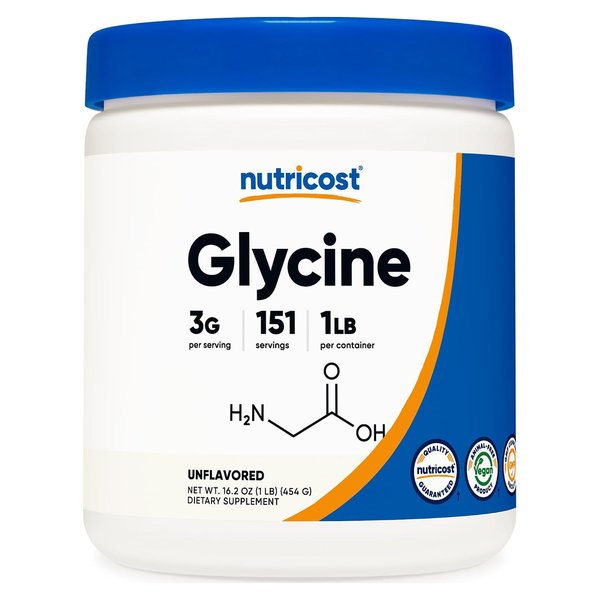
Nutricost Glycine Powder (1 lb)
Best for: A 3 g scoop of plain glycine with no hype
The top pick because it does the basics best: one 3 g scoop matches the sleep trials, the tub holds glycine and nothing else, and the listing makes no benefit claims at all. At about $0.15 per 3 g it costs slightly more than the 1 kg bags. Its "third party tested" line names no lab, and its NSF mention refers to the factory, not the product.
- One 3 g scoop matches the amount used in the sleep trials
- Glycine and nothing else
- A listing with no benefit claims at all
- 4.7 stars across more than 1,800 Amazon ratings
- "Third party tested" names no lab and shows no results
- About $0.15 per 3 g, a little more than the 1 kg bags
- Its NSF mention refers to the factory, not this product
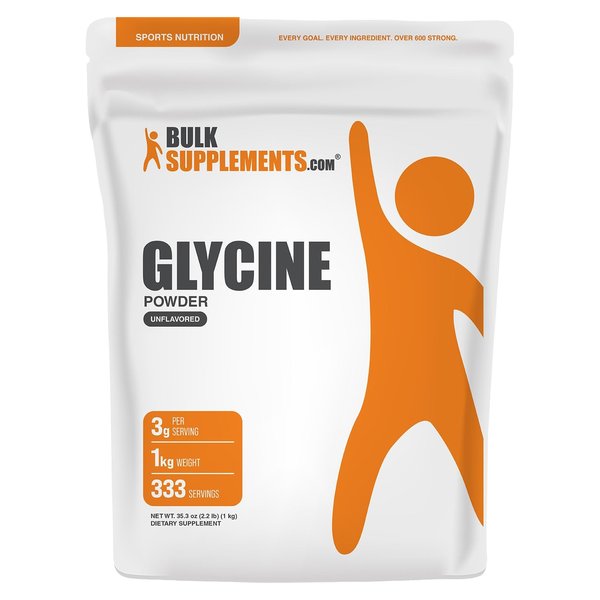
BulkSupplements Glycine Powder (1 kg)
Best for: A bulk 3 g serving at a low price
Nearly tied with Nutricost: 3 g per teaspoon of plain glycine at about $0.10. It ranks just behind on marketing, because a gallery panel pitches workout results that glycine trials have not shown. Like Nutricost's, its third-party testing badge names no lab.
- 3 g per teaspoon, the sleep-trial amount
- About $0.10 per 3 g, with nothing added
- More than 3,000 Amazon ratings averaging 4.5 stars
- Its "third party tested" badge names no lab
- A gallery panel pitches workout results, which glycine trials have not shown
- A 1 kg bag lasts close to a year at 3 g a day
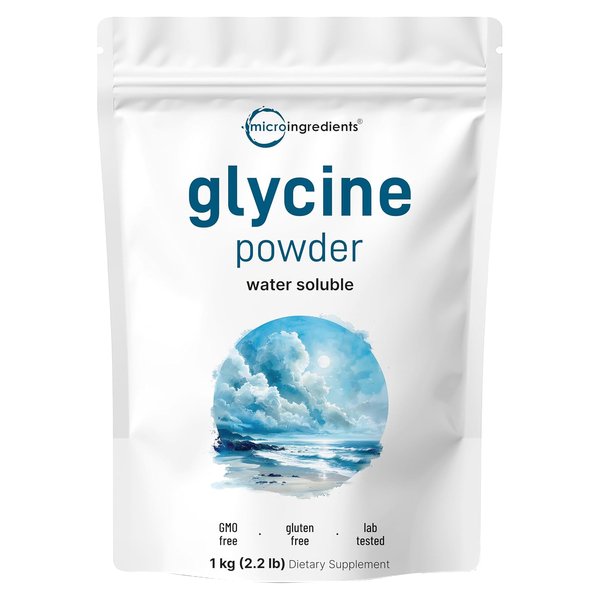
Micro Ingredients Glycine Powder (1 kg)
Best for: The lowest cost per gram
The cheapest here at about $0.09 per 3 g, with nothing added and a restrained listing whose directions suggest bedtime use, like the trials. The 1 g scoop means three scoops for the trial amount, and its third-party testing claim names no lab.
- About $0.09 per 3 g, the cheapest here
- Glycine and nothing else, with a restrained, sleep-focused listing
- Directions suggest taking it at bedtime, like the trials
- The label serving is a 1 g scoop, so 3 g means three scoops; a gallery panel calls the scoop 1/8 teaspoon, which by our arithmetic holds closer to half a gram, so a kitchen scale helps
- "Third-party lab tested" names no lab
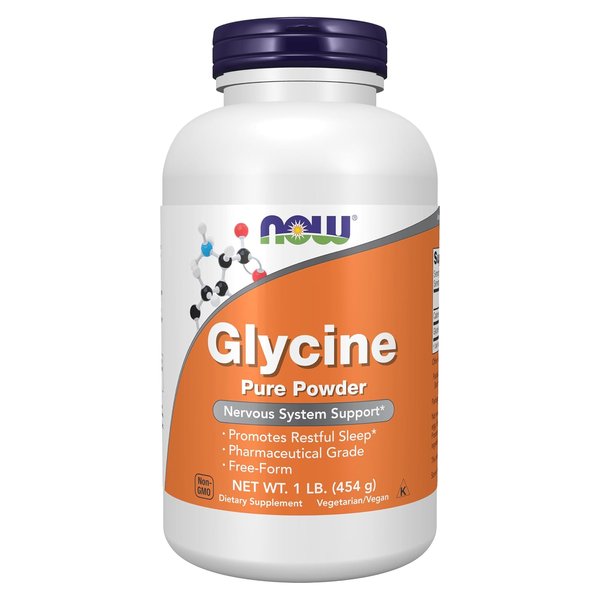
NOW Glycine Pure Powder (1 lb)
Best for: A known brand's 3 g powder
A 3 g serving per 3/4 teaspoon of plain glycine for about $0.12, from a long-established brand. It loses points for in-house rather than independent testing, a "pharmaceutical grade" label with no official meaning, and a "cognitive support" title that rests on very little human evidence.
- 3 g per 3/4 teaspoon, about $0.12
- Glycine and nothing else
- More than 2,300 Amazon ratings averaging 4.6 stars
- NOW says testing is done in its own ISO/IEC-accredited labs, not by an independent program
- Calls it "pharmaceutical grade", a term with no official meaning for supplements
- Its title promises "cognitive support", which rests on very little human evidence
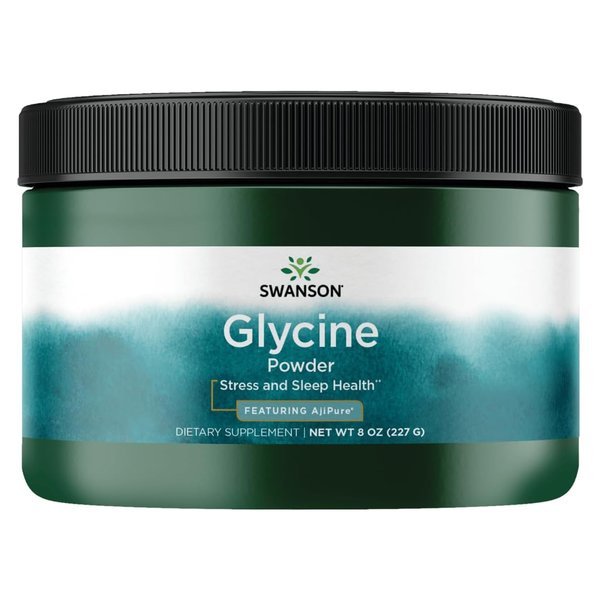
Swanson AjiPure Glycine Powder (8 oz)
Best for: Buyers who want Ajinomoto's AjiPure glycine
The only product here that names AjiPure glycine, from Ajinomoto, the company behind the sleep trials, at about $0.22 per 3 g. The scoop holds 1 g, the testing claim names no lab, the listing claims muscle and memory benefits and "pharmaceutical grade" quality, and it has only 36 ratings.
- AjiPure glycine from Ajinomoto, the company linked to the Japanese sleep trials
- The listing names only AjiPure glycine as the ingredient
- About $0.22 per 3 g
- A 1 g scoop, so 3 g means three scoops
- "Third-party tested for purity and potency" names no lab
- Claims lean muscle mass benefits glycine trials have not shown, and memory support that rests on very little human evidence
- Only 36 Amazon ratings
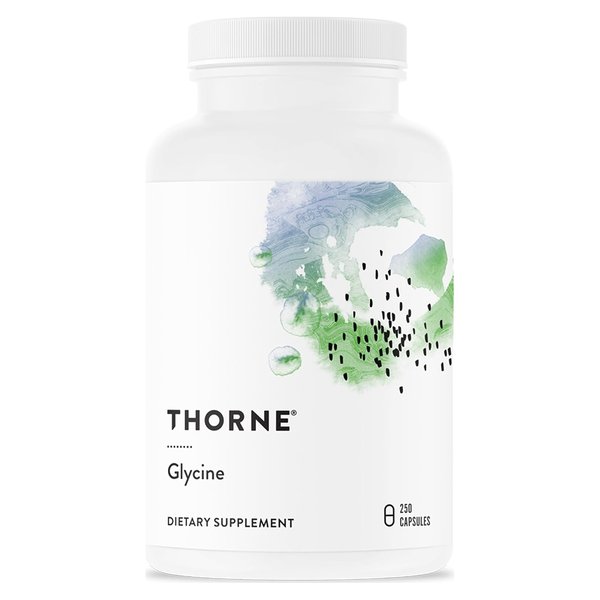
Thorne Glycine (250 capsules)
Best for: Buyers who want NSF-verified contents
The verified pick: Thorne Glycine is listed under NSF/ANSI 173 at 6 capsules a day, which we confirmed on NSF's site, and 6 capsules give the 3 g used in the trials. That verification costs about $0.74 per 3 g, five to eight times the 1 lb and 1 kg powders, and the listing claims detox and weight-related cytokine benefits plus a #1 recommended brand survey. Choose it if independent verification matters more to you than price.
- Listed under NSF/ANSI 173 at 6 capsules a day; we confirmed it on NSF's site
- The label's maximum, 6 capsules, gives the sleep-trial amount of 3 g
- 4.6 stars across more than 1,500 Amazon ratings
- 3 g takes 6 capsules, and a bottle lasts about 6 weeks at that amount
- About $0.74 per 3 g, five to eight times the 1 lb and 1 kg powders
- Claims detoxification and weight-related cytokine benefits glycine trials have not shown, and memory support that rests on very little human evidence
- Shows a "#1 most recommended clinical brand" survey claim
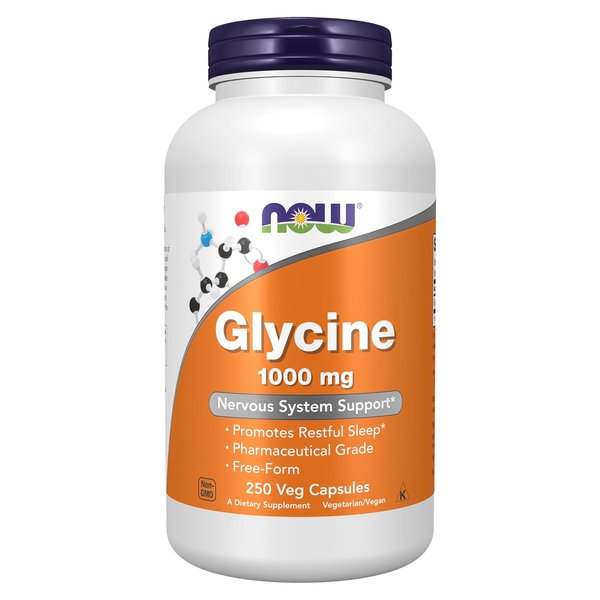
NOW Glycine 1,000 mg (250 capsules)
Best for: Capsule users who want the lowest cost
The best-value capsule: three 1,000 mg vegan capsules give 3 g for about $0.29. Testing is in NOW's own labs, the "pharmaceutical grade" label has no official meaning, and the label says glycine promotes glycogen storage for energy production, which glycine trials have not shown.
- The cheapest capsule per gram here, about $0.29 per 3 g
- 1,000 mg vegan capsules; the label serving is 3 capsules, 3 g
- Directions allow 1 to 3 capsules a day, up to the 3 g trial amount
- NOW says testing is done in its own labs, not by an independent program
- Calls it "pharmaceutical grade", a term with no official meaning for supplements
- Its label says glycine promotes glycogen storage for energy production, which glycine trials have not shown
- Three capsules a night costs two to three times as much as the plain powders
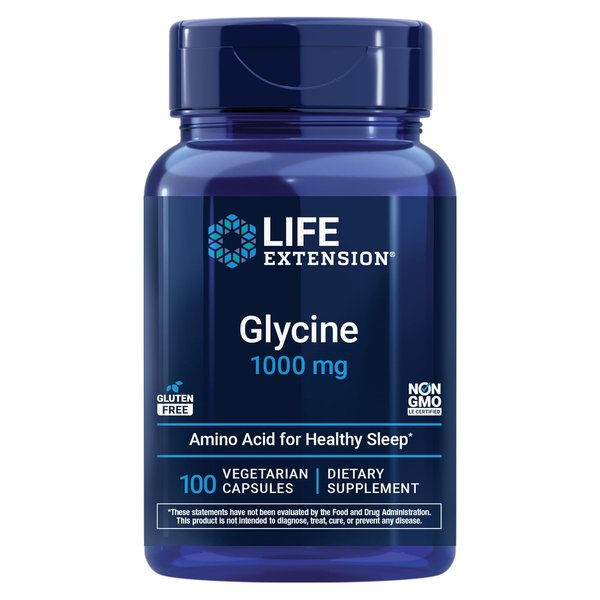
Life Extension Glycine 1,000 mg
Best for: Trying glycine with a small bottle
A $12 bottle of 1,000 mg capsules whose directions allow up to 3 at bedtime. It lasts a month at that amount, about $0.36 per 3 g, and the listing says its dose is "significantly higher" than many glycine supplements "to provide the maximum benefits" and that glycine supports memory. A certificate of analysis is available on request.
- Directions allow up to 3 capsules, 3 g, at bedtime
- A low $12 bottle price to try glycine
- Says a certificate of analysis is available for every product
- A bottle lasts about a month at 3 g a day, about $0.36 per 3 g
- Says its 1,000 mg is "significantly higher" than many glycine supplements "to provide the maximum benefits"
- Says glycine supports memory, which rests on very little human evidence
- The certificate is on request, and no lab is named on the listing
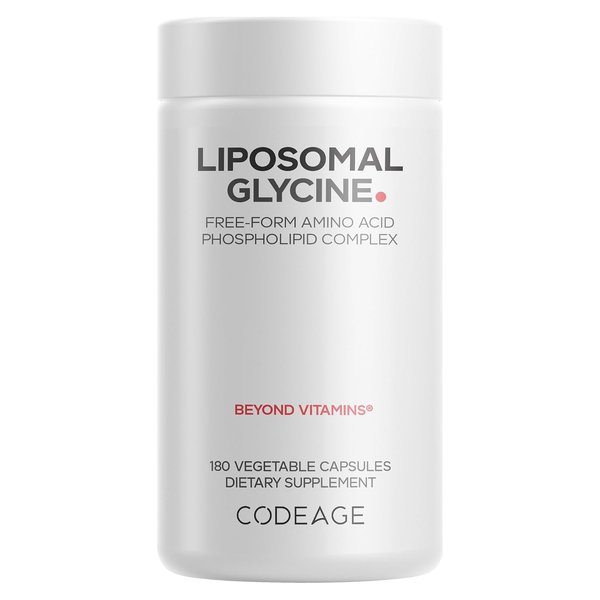
Codeage Liposomal Glycine
Best for: A second NSF-listed option, at a price
The second NSF/ANSI 173 listed glycine, 1,500 mg per 3 capsules with a sunflower-lecithin phospholipid system. It ranks low because it costs about $1.33 per 3 g, its liposomal delivery has not been shown to improve absorption of an amino acid that already raises blood glycine when taken plain, and its gallery promises a "longevity code".
- Listed under NSF/ANSI 173 as Liposomal Glycine+, 3 capsules; we confirmed it on NSF's site
- 1,500 mg of free-form glycine per 3 capsules
- About $1.33 per 3 g, the most expensive here
- Its "advanced liposomal delivery" has not been shown to improve glycine absorption
- Gallery panels promise a "longevity code" and say "not all supplements are created equal"
- 3 g would take 6 capsules, double the label serving
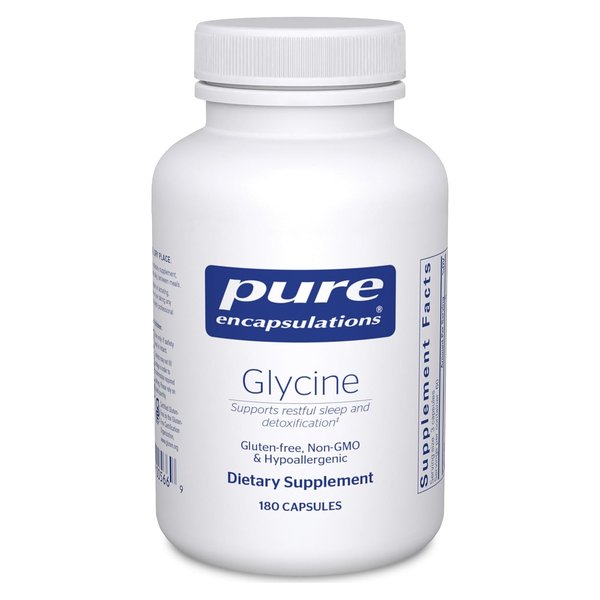
Pure Encapsulations Glycine
Best for: A minimal-excipient capsule
Capsules with only a cellulose shell, plant fiber and an antioxidant, at 1,500 mg per 3 capsules. It is the second most expensive here, about $1.17 per 3 g, needs 6 capsules for the trial amount, names no outside lab, and claims liver detox and kidney support that glycine trials have not shown.
- No magnesium stearate or silica in the capsules
- Directions allow 3 capsules twice a day, 3 g
- 4.7 stars across about 1,000 Amazon ratings
- About $1.17 per 3 g
- 3 g takes 6 capsules, so a bottle lasts a month
- Claims liver detox and kidney support, which glycine trials have not shown
- "Manufactured and tested to verify potency and purity" names no outside lab
The full lineup, side by side
Amounts come from each product's Supplement Facts panel on its Amazon listing (Swanson's from its ingredient field); verification comes from NSF's own listing. Glycine is cheap and simple, so the 3 g serving, the price and what else is in the bottle separate products most.
| Product | Form | Glycine per serving (label) | Other ingredients | Testing claim or certification | Cost per 3 g | Score |
|---|---|---|---|---|---|---|
| #1 Nutricost | Powder | 3,000 mg (1 scoop) | None | Unnamed third party | $0.15 | 4.1 |
| #2 BulkSupplements | Powder | 3,000 mg (1 tsp) | None | Unnamed third party | $0.10 | 4.1 |
| #3 Micro Ingredients | Powder | 1,000 mg (1 scoop) | None | Unnamed third party | $0.09 | 4.1 |
| #4 NOW Powder | Powder | 3,000 mg (3/4 tsp) | None | In-house lab | $0.12 | 3.9 |
| #5 Swanson AjiPure | Powder | 1,000 mg (1 scoop) | None listed | Unnamed third party | $0.22 | 3.7 |
| #6 Thorne | Capsules (500 mg) | 1,000 mg (2 caps) | HPMC capsule, cellulose, calcium laurate | NSF/ANSI 173 | $0.74 | 3.4 |
| #7 NOW Capsules | Capsules | 3,000 mg (3 caps) | HPMC capsule, HPC, stearic acid, silica | In-house lab | $0.29 | 3.3 |
| #8 Life Extension | Capsules | 1,000 mg (1 to 3 caps) | Cellulose capsule, ascorbyl palmitate | COA on request | $0.36 | 3.3 |
| #9 Codeage | Capsules (500 mg) | 1,500 mg (3 caps) | Capsule, MCC, sunflower lecithin | NSF/ANSI 173 | $1.33 | 3.2 |
| #10 Pure Encapsulations | Capsules (500 mg) | 1,500 mg (3 caps) | Cellulose capsule and fiber, ascorbyl palmitate | Unnamed lab | $1.17 | 2.9 |
Prices are Amazon prices on October 20, 2026 and change often. Cost per 3 g is the container price divided by the grams of glycine it holds, times 3, whatever the label's own serving. NSF/ANSI 173 listings were confirmed on info.nsf.org; other testing claims are as the brands state them. People taking clozapine should ask their prescriber before using glycine.
How to choose, and what to check first
Start with 3 g. That is the amount used in the sleep trials, taken 30 to 60 minutes before bed. Most powders make it one scoop or teaspoon, and powders here cost $0.09 to $0.22 per 3 g against $0.29 to $1.33 for capsules; glycine dissolves easily and tastes mildly sweet.
Decide how much verification is worth to you. Thorne is the only plain glycine we found on NSF's contents-certified list. The cheaper powders make unnamed testing claims you cannot check.
Skip the extras. Liposomal delivery, "pharmaceutical grade" labels and longevity or detox promises add cost, not evidence. Magnesium glycinate supplies only 1 to 2 g of glycine at typical doses, below the trial amount, and we found no study showing that glycine adds anything there.
- Clozapine. In small trials, high-dose glycine added to clozapine did not help and may have blunted its benefit; talk to your prescriber first.
- Other medicines. We found no interaction studies at 3 g; ask a pharmacist if you take prescription drugs, especially sedatives.
- Pregnancy, breastfeeding and children. We found no supplement safety trials; ask your clinician.
- Side effects. Few or none were reported in small trials at 3 to 6 g a day. At very high doses used in psychiatric research, people dropped out over taste and nausea, and a Russian stroke trial reported slight sedation.
- Expectations. The sleep evidence is three small company-linked trials measuring how people felt; if poor sleep persists, see a clinician.
Frequently asked questions
Does glycine help you sleep?
Three small Japanese trials, all linked to the glycine seller Ajinomoto, found that 3 g before bed improved how well people felt they slept, and one found faster sleep onset on brain-wave recordings. We found no independent randomized repeat, so the evidence is promising but limited.
How much glycine should you take for sleep?
The trials used 3 g taken 30 to 60 minutes before bed. Most powders make that one scoop or teaspoon; capsules usually take three to six.
Is glycine powder or capsules better?
Powder. Most reach 3 g in one scoop or teaspoon, costs far less per dose, dissolves easily and tastes mildly sweet. Capsules suit people who dislike powders, at several times the price.
Is glycine safe?
In small trials at 3 to 6 g a day, few or no side effects were reported. People taking clozapine should ask their prescriber first, and we found no supplement safety trials in pregnancy. Note that FDA does not list glycine as generally recognized as safe for general food use; supplements are regulated separately.
Does glycine help collagen or skin?
Glycine is collagen's most common amino acid, but we found no published human trial showing that extra glycine changes skin, joints or collagen.
What is GlyNAC?
A combination of glycine and N-acetylcysteine studied by one Baylor group, which holds a patent licensed to Nestle. A larger Nestle trial found no significant difference in its main glutathione measure, and the results cannot be credited to glycine alone.
Is magnesium glycinate a good source of glycine?
Not really. A typical 200 to 300 mg magnesium dose carries about 1 to 2 g of glycine by our arithmetic, below the 3 g used in sleep trials.
The bottom line
The best glycine supplement is plain glycine in a 3 g serving at a price you will not notice. Nutricost's powder does that best, BulkSupplements and Micro Ingredients are the cheapest, and Thorne is the pick if NSF-verified contents matter more than cost. Keep expectations modest: the sleep evidence comes from three small trials linked to a glycine seller, measuring mostly how people felt, and glycine's other promises, from collagen to longevity, have not been tested in people.