Glutathione is the body's main antioxidant, a small three-amino-acid molecule every cell makes for itself. Supplement shelves sell it as reduced glutathione capsules, liposomal capsules and liquids, and S-acetyl glutathione, often with promises about skin, detox and energy. The honest picture is narrower: swallowed glutathione can raise blood levels slowly over months, nearly every trial result we found is a lab measurement rather than a health outcome, and the pricier forms have not been shown to work better.
So this ranking rewards what you can check: a dose in the range trials used, an independent certification confirmed on the certifier's own site, a fair price per 500 mg, and a listing that does not oversell. We read the printed label on every product below and scored all eight on the same five criteria. For the science in more depth, see our glutathione guide.
The short version
- Best overall: Toniiq Glutathione, 1,000 mg of reduced glutathione a day, an NSF/ANSI 173 listing we confirmed, and about 25 cents per 500 mg.
- Best value: Nutricost Glutathione, about 17 cents per 500 mg and one capsule a day, but its testing claim names no lab.
- Best for tested athletes: Thorne Glutathione-SR, the only one here with NSF Certified for Sport, at about ten times Toniiq's price.
- It works slowly, if at all. In a six-month trial, 250 to 1,000 mg a day raised blood glutathione; a four-week trial at 1,000 mg found no significant change.
- Fancy forms are unproven. We found no published head-to-head trial showing liposomal beats plain reduced glutathione, and no human absorption study of S-acetyl glutathione.
- Skin claims are shaky. In the best-known skin trials, melanin changes were significant at only some sites or only in a small subgroup.
- Never inject supplement glutathione. The FDA warned in August 2026 that supplement-grade glutathione compounded into injectables was linked to adverse events in at least 30 patients.
How we ranked them
Every product here sells the same molecule, so we scored what the label, the listing and the certifier let you check:
- Form and dose (30%). Full marks for reduced glutathione at a label daily amount of 250 to 1,000 mg, the range used in the placebo-controlled trials. Liposomal products lose half a point because their claimed advantage rests on one small uncontrolled study; S-acetyl products score lower still because we found no human absorption study.
- Testing and transparency (25%). Credit for an NSF/ANSI 173 listing, and more for NSF Certified for Sport, both confirmed on NSF's own sites on October 17, 2026. A certificate of analysis that names its lab earns a little; a testing claim that names no lab, a label that contradicts its listing, or a hidden glutathione amount costs points.
- Cost per 500 mg (20%), from Amazon prices on October 17, 2026.
- Marketing restraint (15%). Points come off for skin lightening or brightening claims, detox or liver claims, unverifiable "#1" or percentage claims, and comparisons to IV glutathione. We report those claims; we do not repeat them.
- Purity (10%). How much else is in the product besides glutathione.
Scores are rounded to one decimal. Three products tied exactly; we ordered them by form and dose, then by testing. We did not give extra credit for Setria by name: it is the brand used in the six-month trial, but generic reduced glutathione is the same molecule. No brand paid to be included, and none sent product.
Does oral glutathione work?
The absorption question. Glutathione is a tiny peptide, and the gut has enzymes that break it apart, so for years the answer was no. In a 1992 study, a single dose of about 3 grams did not significantly raise plasma glutathione over four and a half hours in seven volunteers. A 2011 placebo-controlled trial gave 40 adults 1,000 mg a day for four weeks and found no significant difference from placebo in red-cell glutathione or in urinary markers of oxidative damage.
The six-month trial. The study that changed the conversation gave 54 adults 250 or 1,000 mg a day of Setria or placebo for six months. Compared with their own starting levels, glutathione rose 30 to 35 percent in red cells, plasma and white blood cells at the high dose, and 260 percent in cells from the inside of the cheek; the low dose raised blood levels about 17 percent. Levels fell back to baseline within a month of stopping. Trade press reported that Kyowa, which makes Setria, supported the study. What rose was a lab measurement: no trial of oral glutathione we found has shown fewer infections, better energy or any other health outcome.
Liposomal, sublingual and S-acetyl. The main liposomal study gave 12 healthy adults 500 or 1,000 mg a day for a month with no placebo group; blood glutathione rose about 40 percent at two weeks, and the study was funded in part by a company that sells liposomal glutathione. We found no published trial comparing liposomal with plain reduced glutathione head to head. A maker-sponsored crossover trial in 20 adults found a sublingual tablet raised plasma glutathione more than ordinary capsules at the same 450 mg dose. For S-acetyl glutathione we found no human absorption or efficacy study in PubMed, only rat toxicology and a 2026 European food safety opinion that 300 mg a day is safe for adults, excluding pregnancy and breastfeeding.
Skin. Lighter skin is a common reason people buy it, and the evidence is weak. In a 2012 trial, 500 mg a day for four weeks lowered the melanin index more than placebo at only two of six skin sites. In a Kyowa-funded 2017 trial of 250 mg a day, the main melanin result was not significant overall, and the one significant result came from a subgroup of 17 people over 40 at one skin site. A 2025 systematic review found modest melanin-index reductions versus placebo in five small oral trials, but called the effects unsustainable and advised against IV use.
Exercise. In a two-week crossover study of eight men, post-exercise blood lactate was 2.9 millimoles per liter after 1 gram a day versus 3.4 after placebo; KOHJIN, which makes Opitac glutathione, helped fund it, and also part-funded a small uncontrolled four-month pilot in people with a liver condition. Most other exercise trials tested glutathione blended with citrulline, not glutathione alone.
The precursor route. Your cells build glutathione from cysteine, glycine and glutamate, and cysteine is usually the bottleneck, which is why NAC is sold as an alternative. In a crossover trial, 1.2 grams a day of NAC improved exercise performance only in people who started with low glutathione. Small trials from one Baylor group reported that GlyNAC (glycine plus NAC) raised glutathione in older adults, but the largest trial, 114 healthy older adults funded by Nestle, which holds GlyNAC patents, found no significant difference from placebo in its main glutathione measure after two weeks. We found no fairly dosed trial comparing NAC with glutathione directly. NAC is sold under FDA enforcement discretion rather than as an approved supplement ingredient; our NAC supplements ranking covers it.
The 8 best glutathione supplements
Tap any product to jump straight to its full review.
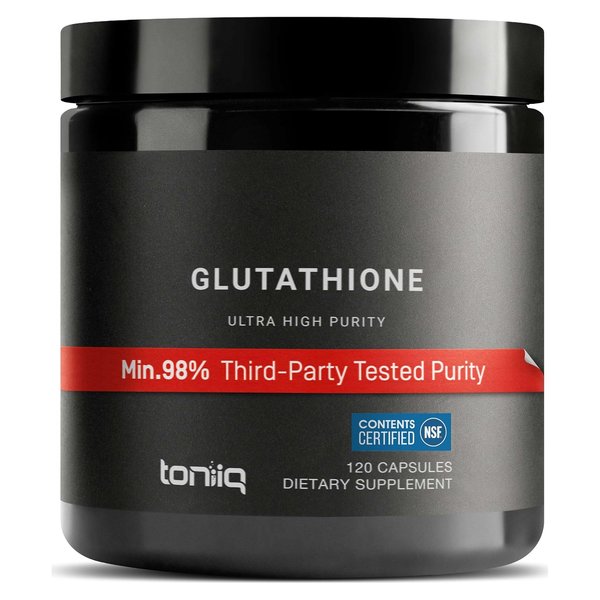
Toniiq Ultra High Strength Glutathione
Best for: Most people who want an NSF-listed product at the trial dose for a low price
The top pick because it pairs the dose the six-month trial used with the strongest proof of what is in the bottle at a low price. Two capsules give 1,000 mg of reduced glutathione, NSF lists the product under its dietary supplement standard, which we confirmed on NSF's own site, and it costs about 25 cents per 500 mg. What holds it back is the listing: it promises brighter skin and liver detox support and quotes a #1 purity survey, claims the evidence does not back.
- Listed under NSF/ANSI 173 on NSF's own site, which we checked
- 1,000 mg a day, the top dose used in the six-month trial
- About 25 cents per 500 mg, the second-lowest price here
- Plain reduced glutathione with standard capsule fillers
- The listing promises "brighter, more even skin", which the trials did not show consistently
- It also sells "liver detox support" and a "#1 in Verified Purity" survey claim
- Its certificate-of-analysis image does not name the testing lab
- Two capsules a day, on an empty stomach per the label
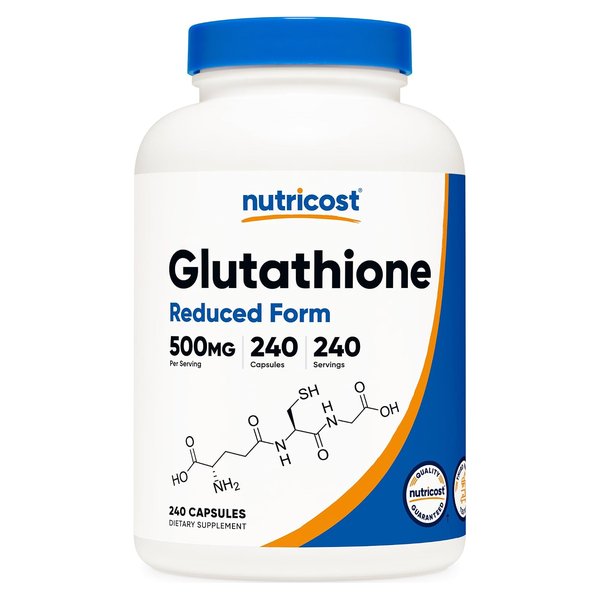
Nutricost Glutathione 500 mg
Best for: The lowest cost per dose, if an unnamed testing claim is acceptable
The cheapest glutathione we found at about 17 cents per 500 mg, with one 500 mg capsule a day and a plain listing free of skin and detox claims. It ranks below Toniiq on testing: its "3rd Party Tested" claim names no lab, the NSF wording on the listing refers to the factory, and we found no NSF listing for the product itself. If price matters most, it is the pick.
- The lowest price per 500 mg we found, about 17 cents
- One 500 mg capsule a day, inside the range trials used
- 240 servings, about eight months per bottle
- A plain listing with no skin, detox or survey claims
- "3rd Party Tested" names no lab, and we found no NSF listing for the product
- "Made in an NSF certified facility" describes the factory, not this product
- A big bottle to finish before it expires if you stop early
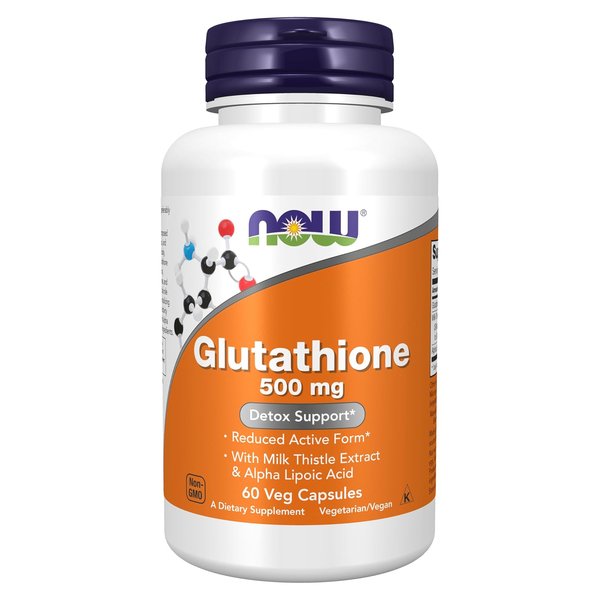
NOW Glutathione 500 mg
Best for: People who want milk thistle and alpha lipoic acid in the same capsule
A sensible 500 mg capsule from a widely sold brand, with 100 mg of milk thistle extract and 50 mg of alpha lipoic acid added. Those extras were not part of the glutathione trials, so they lower its purity score rather than adding value, and "Detox Support" is printed on the bottle. At about 39 cents a day it is still good value, and the glutathione dose is right.
- 500 mg of reduced glutathione in one capsule
- Adds 100 mg milk thistle extract and 50 mg alpha lipoic acid, if you want them
- About 39 cents a day from a widely sold brand
- More than 10,000 Amazon ratings
- "Detox Support" is printed on the bottle and in the listing title
- The added ingredients are not what the glutathione trials tested
- We found no NSF or USP listing for it
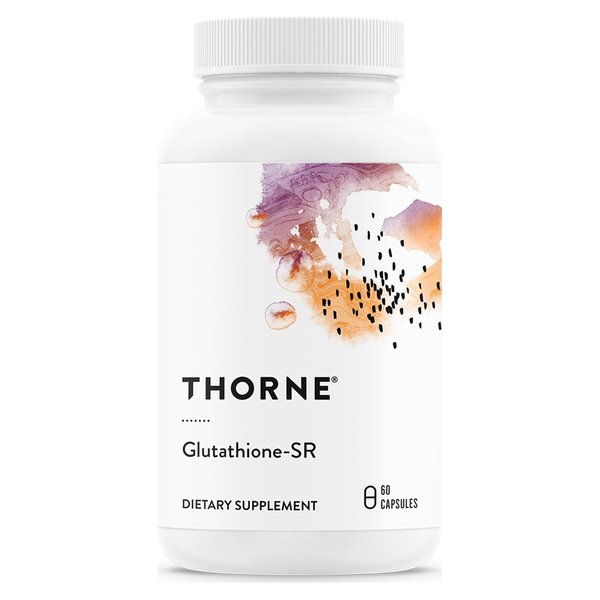
Thorne Glutathione-SR
Best for: Athletes in drug-tested sports who need NSF Certified for Sport
The choice for athletes in tested sports: it is the only product here with NSF Certified for Sport, which screens for banned substances, and it also holds an NSF/ANSI 173 listing. Each capsule holds 175 mg in a sustained-release matrix, and the label's one capsule two to three times a day gives 350 to 525 mg. The price is the problem, about $2.57 per 500 mg, ten times Toniiq, and we found no trial testing whether sustained release matters.
- The only product here with NSF Certified for Sport, which screens for banned substances
- Also listed under NSF/ANSI 173, both confirmed on NSF's own sites
- The label's 350 to 525 mg a day sits inside the trial range
- Sustained-release capsule, taken in divided doses
- The most expensive per 500 mg here, about $2.57
- 175 mg per capsule, so two to three capsules a day
- The listing uses liver and detox wording and a "#1 recommended" survey claim
- We found no trial testing whether sustained release changes anything
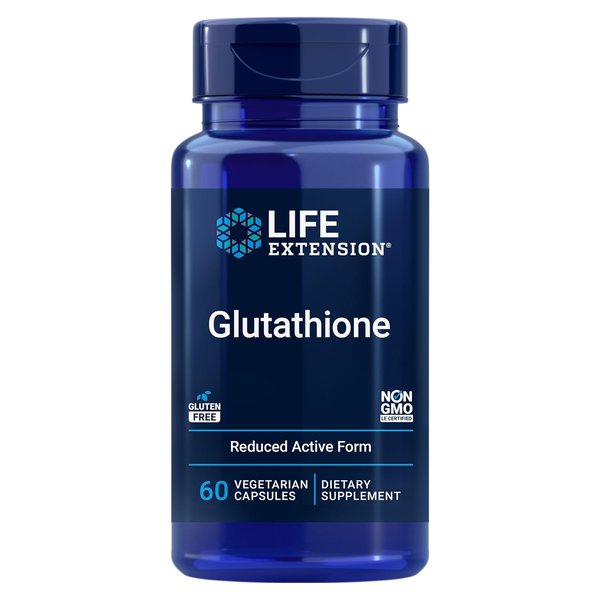
Life Extension Glutathione
Best for: Shoppers who prefer a restrained label and a small bottle
A restrained, well-made capsule: two capsules give 500 mg of Opitac reduced glutathione, the listing sticks to antioxidant wording, and the brand offers a certificate of analysis for every product. It loses ground on price, about 78 cents per 500 mg, adds 80 mg of calcium from dicalcium phosphate, and has no NSF listing we could find. It tied Thorne and Codeage on score and placed between them on the tiebreaks.
- Uses Opitac, glutathione made by the Japanese company KOHJIN, which helped fund two small trials
- 500 mg a day, inside the trial range
- A restrained listing that sticks to antioxidant wording
- The brand says a certificate of analysis is available for every product
- About 78 cents per 500 mg, roughly three times Toniiq
- Two capsules a day, which also add 80 mg of calcium
- We found no NSF or USP listing for it
- Only about 150 Amazon ratings
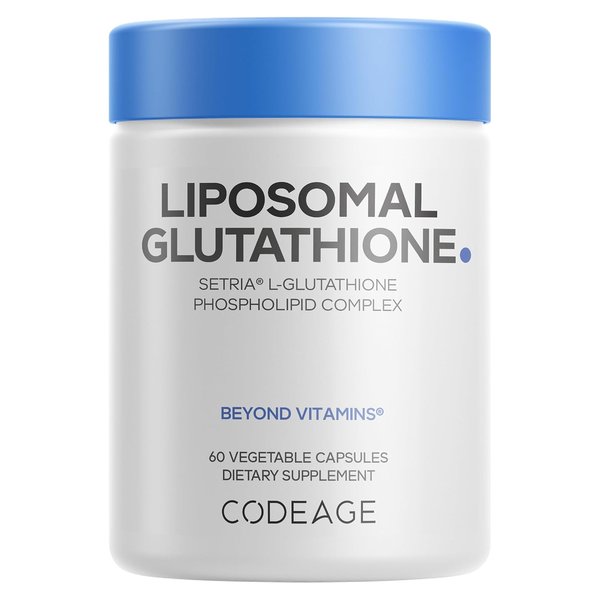
Codeage Liposomal Glutathione (Setria)
Best for: People set on a liposomal capsule who want an NSF listing
The best liposomal option, because it is the only one with an NSF/ANSI 173 listing we could confirm. Two capsules deliver 500 mg of Setria wrapped in a sunflower phospholipid complex that the listing puts at 350 mg. The catch is the premise: we found no head-to-head trial showing liposomal glutathione beats plain reduced glutathione, so you pay about $1.33 per 500 mg, five times Toniiq, for an unproven advantage. The listing also pitches it as an alternative to injectable glutathione.
- The only liposomal product here with an NSF/ANSI 173 listing we could confirm
- 500 mg of Setria, the ingredient used in the six-month trial
- A sunflower phospholipid complex, which the listing puts at 350 mg (the label gives no amount)
- Vegan capsule, so no liquid to measure
- About $1.33 per 500 mg, five times Toniiq, for a form with no proven advantage
- The listing pitches it as an alternative to injectable or IV glutathione
- Two capsules a day
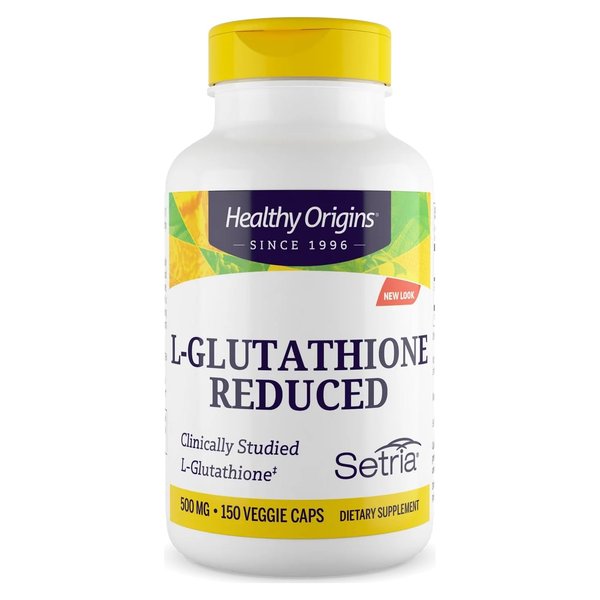
Healthy Origins Setria L-Glutathione 500 mg
Best for: Setria fans who want one capsule a day at a fair price
Setria, the brand used in the six-month trial, in a one-capsule 500 mg dose at about 33 cents per 500 mg, which would put it near the top on price and dose. It drops on transparency: Amazon's ingredient text says gelatin capsule while the bottle says veggie caps, its third-party badge names no lab, and the listing describes it as formulated with L-cysteine, L-glutamic acid and glycine, which are simply the amino acids glutathione is made of.
- Setria, the ingredient used in the six-month trial, at about 33 cents per 500 mg
- One 500 mg capsule a day
- 150 servings, about five months per bottle
- Amazon's ingredient text says gelatin capsule while the bottle says veggie caps
- The listing says it is formulated with L-cysteine, L-glutamic acid and glycine, which are simply what glutathione is made of
- Detox wording, and a third-party badge that names no lab
- We found no NSF or USP listing for it
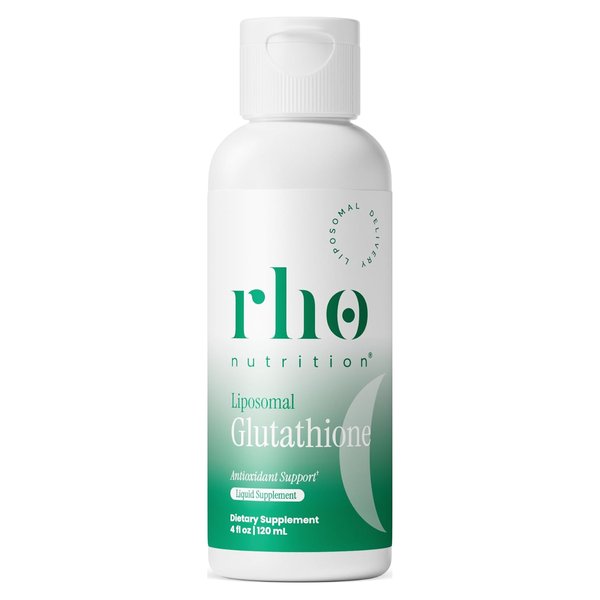
Rho Nutrition Liposomal Glutathione Liquid
Best for: People who cannot or will not swallow capsules
The best liquid for people who cannot swallow capsules: 4 mL gives 500 mg of glutathione, it is sweetened with monk fruit, and its certificate of analysis names the testing lab. It is the priciest per dose among the products we ranked after Thorne, about $1.77 per 500 mg, it contains a preservative and flavors, and its listing claims detox, immune, and skin and collagen benefits that we found no glutathione trial showing.
- A liquid for people who cannot swallow capsules
- Shows a certificate of analysis that names its testing lab
- Sweetened with monk fruit rather than sugar
- Discloses that its physician ambassadors are paid
- About $1.77 per 500 mg, among the priciest here
- Contains glycerin, flavors and potassium sorbate as a preservative
- The listing claims detox, immune, and skin and collagen benefits
- We found no NSF or USP listing for it
Pure Therapro Glutathione GOLD (S-acetyl). Its printed label shows 200 mg of Emothion S-acetyl glutathione per capsule, while one listing bullet says 100 mg. The listing claims "69% greater" absorption and that it is "clinically proven" to beat the reduced form; we found no human absorption study of S-acetyl glutathione in PubMed. Not ranked. Check price on Amazon $63.97 for 60 capsules · seen October 17, 2026
Jarrow S-Acetyl L-Glutathione 100 mg. A 100 mg S-acetyl tablet whose Amazon title calls it liposomal, although it is an ordinary coated tablet. Not ranked, for the same evidence gap. Check price on Amazon $35.94 for 60 tablets · seen October 17, 2026
Pure Encapsulations Liposomal Glutathione. A well-known brand, but each softgel holds a 375 mg proprietary blend of Setria and phospholipids, and the label does not say how much of that is glutathione, so we could not score its dose or price. Check price on Amazon $67.50 for 30 softgels · seen October 17, 2026
The full lineup, side by side
Daily amounts come from each product's printed label. The two columns to check first are the daily amount, where the controlled trials used 250 to 1,000 mg, and testing, where only three products have an NSF listing we could confirm.
| Product | Form | Glutathione per day (label) | Other actives | Testing | Cost per 500 mg | Score |
|---|---|---|---|---|---|---|
| #1 Toniiq | Reduced, capsule | 1,000 mg | None | NSF/ANSI 173 | $0.25 | 4.4 |
| #2 Nutricost | Reduced, capsule | 500 mg | None | Unnamed claim | $0.17 | 4.2 |
| #3 NOW | Reduced, capsule | 500 mg | Milk thistle 100 mg, ALA 50 mg | None found | $0.39 | 3.9 |
| #4 Thorne | Reduced, sustained-release capsule | 350 to 525 mg | None | NSF Certified for Sport, NSF/ANSI 173 | $2.57 | 3.8 |
| #5 Life Extension | Reduced, capsule | 500 mg | Calcium 80 mg | None found | $0.78 | 3.8 |
| #6 Codeage Liposomal | Liposomal, capsule | 500 mg | Phospholipids (350 mg per listing) | NSF/ANSI 173 | $1.33 | 3.8 |
| #7 Healthy Origins | Reduced, capsule | 500 mg | None | Unnamed claim | $0.33 | 3.7 |
| #8 Rho Liquid | Liposomal, liquid | 500 mg | None | Named-lab COA | $1.77 | 3.3 |
Prices are Amazon prices on October 17, 2026 and change often. Cost per 500 mg is the bottle price divided by the milligrams of glutathione it holds, times 500. "NSF/ANSI 173" and "NSF Certified for Sport" were confirmed on NSF's own listings; "Unnamed claim" means a third-party testing claim that names no lab.
How to choose, and what to check first
Start with plain reduced glutathione. It is the only form with a long-term controlled trial behind it, and it is the cheapest. A daily amount of 250 to 1,000 mg covers what the trials used; nothing here directs more than 1,000 mg.
Look for the certifier's listing, not a badge. "Third-party tested" on a label tells you nothing unless the lab or certifier is named. You can search NSF's dietary supplement listings yourself at info.nsf.org; Toniiq, Thorne and Codeage appeared there when we checked.
Give it months, and decide what you are measuring. In the six-month trial, blood levels took months to climb and fell back within a month of stopping. If you are buying it for a specific reason, ask a clinician whether a cheaper route such as NAC, or simply enough protein, makes more sense; our NAC supplements ranking compares those products.
- Swallow it; never inject it. The FDA says no injectable skin lightener is approved, and in August 2026 it warned compounders after supplement-grade glutathione used in injectables was linked to adverse events in at least 30 patients, including fever, chills and hospitalizations.
- Asthma. Inhaled (nebulized) glutathione narrowed the airways of people with mild asthma in a small trial. That finding is for inhaled glutathione, not capsules, but people with asthma should still check with their clinician.
- Chemotherapy or radiation. Antioxidants could in theory interfere with some treatments. Ask your oncologist before taking any glutathione product.
- Pregnancy and breastfeeding. We found no human safety data, and the European S-acetyl opinion specifically excludes pregnant and breastfeeding women.
- Rare skin reactions. Trials up to 1,000 mg a day for six months reported glutathione was well tolerated, but one published case linked glutathione whitening pills to a severe skin reaction. Stop and get help if a rash or blistering appears.
Frequently asked questions
What is glutathione?
Glutathione is a small molecule made of three amino acids: glutamate, cysteine and glycine. Every cell makes it, and it is the body's main antioxidant, recycling between a reduced (active) form and an oxidized form. Supplements sell the reduced form, a liposomal version, or S-acetyl glutathione.
Does oral glutathione actually get absorbed?
Partly, and slowly. A single large dose did not raise blood glutathione within hours, and a four-week trial at 1,000 mg a day found no significant change. A six-month trial at 250 or 1,000 mg a day did raise blood and tissue levels compared with starting levels, and they fell back within a month of stopping. Those are lab measurements, not proof of a health benefit.
Is liposomal glutathione better?
It has not been shown to be. The main liposomal study had 12 people, no placebo group and funding from a seller. We found no published trial comparing liposomal with plain reduced glutathione head to head, so the higher price buys an unproven advantage.
What about S-acetyl glutathione?
We found no human absorption or efficacy study of S-acetyl glutathione in PubMed. The safety data are rat studies and a 2026 European food safety opinion that 300 mg a day is safe for adults, excluding pregnancy and breastfeeding. We found no human trial backing claims that it absorbs better.
Is NAC better than glutathione?
We found no fairly dosed trial comparing them directly. NAC supplies cysteine, the usual bottleneck for making glutathione, and is cheaper. In one crossover trial, 1.2 grams a day of NAC improved performance only in people who started with low glutathione. NAC is sold under FDA enforcement discretion.
Does glutathione lighten skin?
The evidence is weak. In one trial, 500 mg a day for four weeks lowered the melanin index more than placebo at two of six sites; in another, 250 mg a day did not significantly change it overall. A 2025 systematic review called oral effects unsustainable, and the FDA says no injectable skin lightener is approved.
How much glutathione should you take?
Trials of reduced glutathione used 250 to 1,000 mg a day, the longest for six months. Every product we ranked directs an amount in that range. Follow your product's label and ask your clinician what fits you.
The bottom line
The best glutathione supplement is plain reduced glutathione at 250 to 1,000 mg a day, from a product whose contents are confirmed by someone other than the seller, at a fair price. Toniiq does that best, Nutricost is the cheapest if you can accept an unnamed testing claim, and Thorne is the pick for athletes in tested sports. Skip paying extra for liposomal or S-acetyl forms until a head-to-head trial shows they do more. And keep expectations modest: oral glutathione can raise blood levels over months, but we found no consistent, independently confirmed evidence that it changes how you feel, how you look or how healthy you are.