The best vegan protein powders now stand up to whey on the only thing that matters, building and keeping muscle. But the plant-protein aisle has two quiet problems the marketing does not mention: not every plant protein has a complete amino-acid profile, and independent testing keeps finding heavy metals in some of the most popular tubs. This guide ranks the vegan protein powders worth buying, judged on complete amino profiles, protein per scoop, added sugar, and the third-party testing that actually protects you, and it is honest about the trade-offs.
The short story: plant protein builds muscle just as well as whey when you get enough total protein, a pea and rice blend or soy gives you a complete amino profile, and the single most useful thing to look for is genuine third-party heavy-metal testing. Read the framing first, because with plant protein, how it was tested matters as much as what is in it.
Read this first: what a protein powder can and cannot do
Plant protein works. When total protein is matched, meta-analyses find no meaningful difference between plant and animal protein for muscle mass or strength, and a controlled trial found vegan and omnivorous diets built muscle equally. Gram for gram, plant proteins carry a little less leucine and are slightly less digestible, but that gap closes with enough total protein, a complete blend, or a slightly bigger scoop.
A powder is a convenience, not magic. Whole foods like beans, lentils, tofu, and soy deliver the same amino acids plus fiber and micronutrients, and no study shows powder beats equivalent food protein. Two things genuinely separate a good tub from a bad one: a complete amino profile and honest third-party testing, because independent labs keep finding lead and cadmium in some plant powders. We cover the underlying science in our companion guides on the best protein powders overall and what to know about pea protein.
The short version
- Best overall: Garden of Life Sport Organic, NSF Certified for Sport, 30 g of protein, tested every batch.
- Best complete formula: a pea and rice blend such as Momentous, which covers pea's low methionine with rice.
- Plant protein builds muscle as well as whey when your total daily protein is adequate.
- Heavy metals are the real issue: plant, organic, and chocolate powders often test higher for lead and cadmium, so choose third-party-tested products.
- Skip: proprietary amino blends that hide doses, dessert-level added sugar, and the assumption that organic means cleaner.
How we ranked them
We ranked these by what actually makes a plant protein worth drinking, and we weighed four things:
- A complete amino profile. Pea alone is low in methionine and rice is low in lysine, so we favored complete blends (pea and rice, or multi-source) and soy, or single-source proteins with the gap clearly flagged.
- Protein and quality per scoop. Real grams of protein per serving, from a disclosed source, with enough leucine to matter, not a proprietary blend that hides the numbers.
- Third-party heavy-metal testing. The differentiator in this category. We rewarded NSF Certified for Sport, Informed Sport, and brands that publish per-batch certificates of analysis.
- Sugar, fillers, and value. Low or no added sugar, a clean ingredient list, and a fair cost per serving.
Scores are our editorial assessment on a five-point scale, reflecting product quality for a use case, not a promise that any product treats a condition. For the whey-versus-plant comparison and an overview of every protein type, see our best protein powder guide.
The 7 best vegan protein powders
Tap any product to jump straight to its full review.
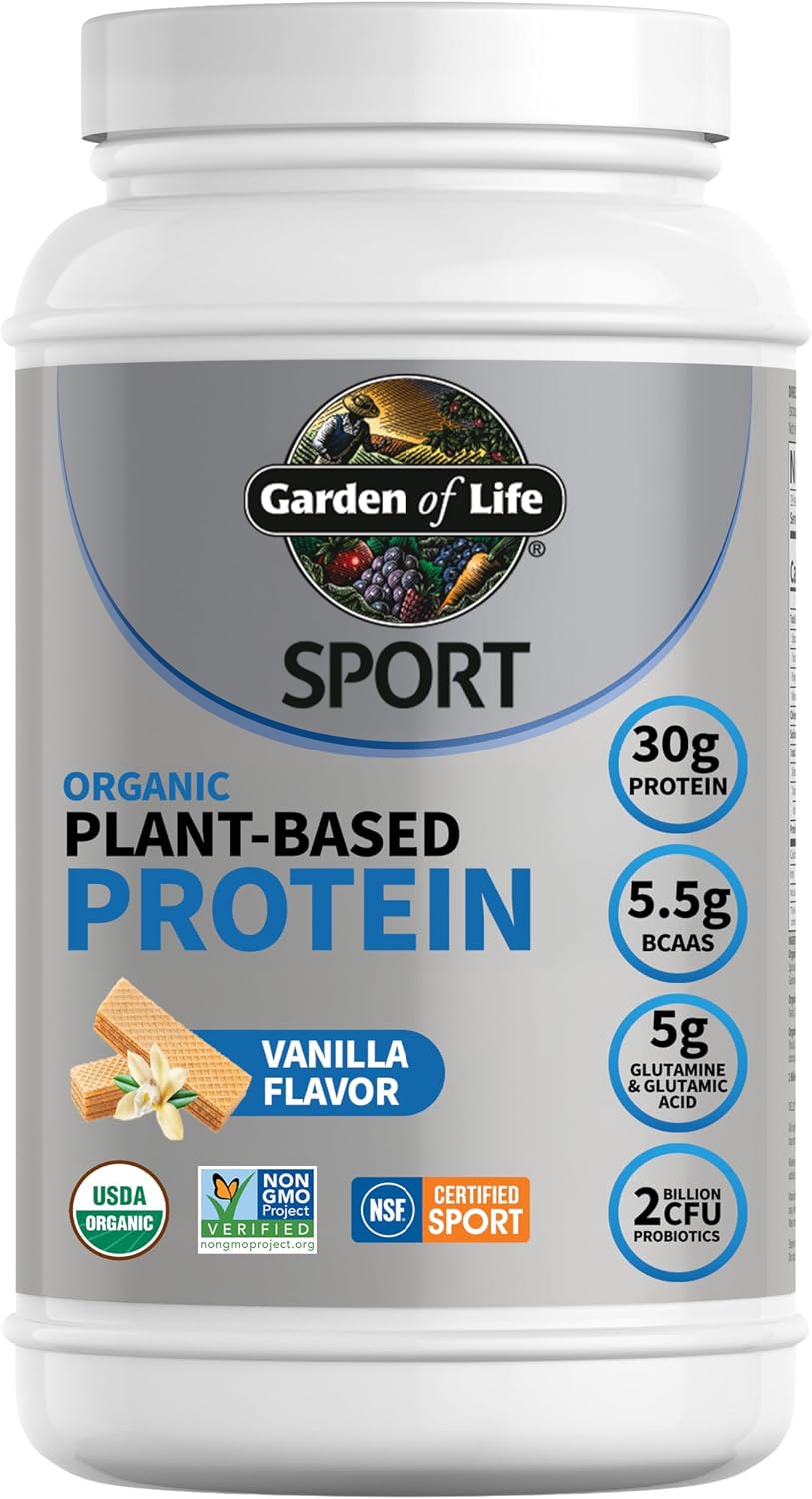
Garden of Life Sport Organic Plant Protein
Best for: A tested, organic, high-protein blend for most people
The one we would hand most people, because it clears the two bars that matter most for a plant protein at once. It is NSF Certified for Sport, which means every batch is independently tested for heavy metals and banned substances, and it is USDA Organic, a rare combination in this category. You get a full 30 g of protein from a multi-source pea and bean blend, more than most vegan powders, with 0 g added sugar and naturally occurring BCAAs. Like most legume-based blends it delivers all nine essential amino acids but runs a little lower in methionine, so it does not complement the way a pea and rice blend does. The NSF for Sport seal directly answers the heavy-metal concern that hangs over plant proteins, and it is still one of the better values per serving. If you want a single, trustworthy tub and do not want to overthink it, this is the pick. Buy the standalone protein tub, not the pricier two-item recovery bundle.
- NSF Certified for Sport: every batch tested for metals and banned substances
- 30 g protein (all nine EAAs), more than most vegan powders
- USDA Organic, 0 g added sugar, good value
- Two scoops per serving to hit 30 g
- Bean blend can taste earthier than a pea isolate
- Watch out for the pricier recovery-bundle listing
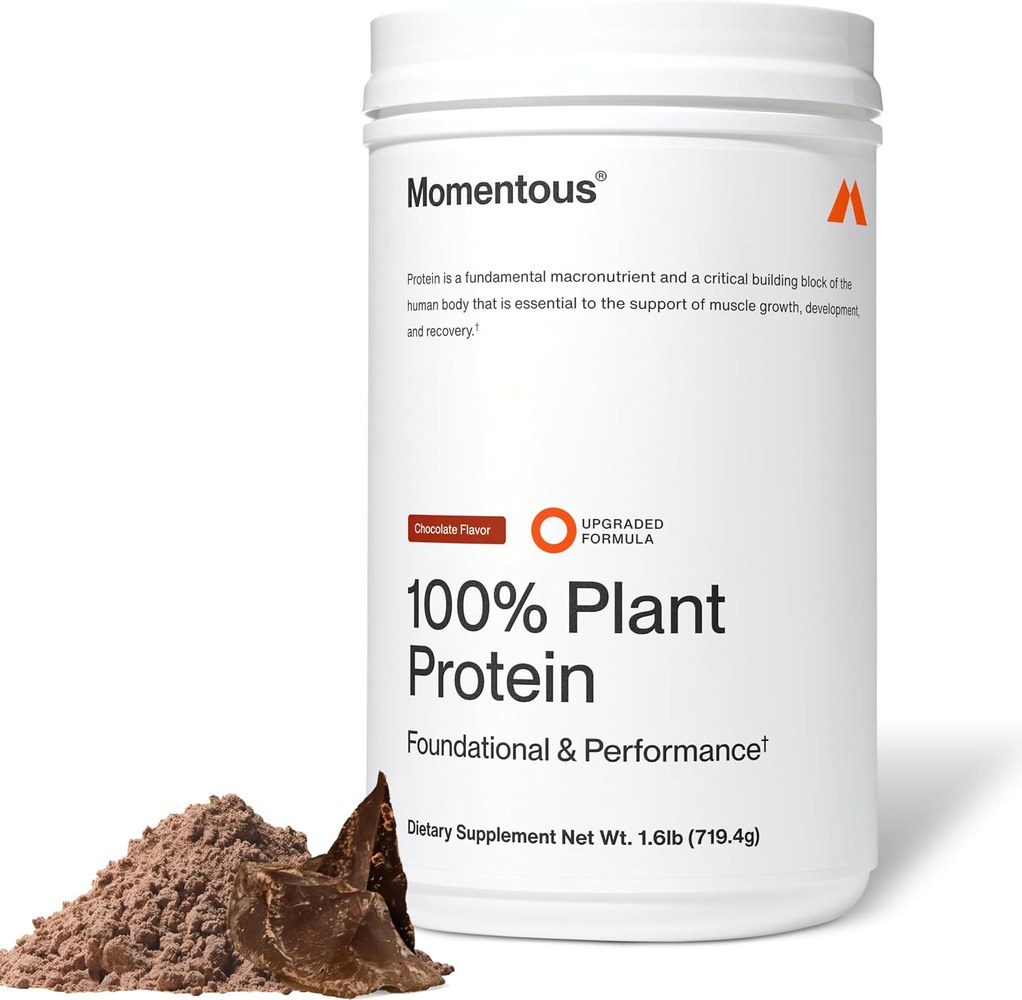
Momentous Vegan Protein
Best for: A textbook complete amino profile with a gold-standard test seal
The cleanest example of the science done right. Pea protein is a little low in the amino acid methionine, and rice protein is a little low in lysine, so combining pea and rice covers both gaps and creates a complete amino profile, which is exactly what this two-source blend is. It is NSF Certified for Sport, the same batch-testing standard trusted by professional and college teams, so the heavy-metal and banned-substance questions are handled. At 20 g per scoop it is a smaller dose than our top pick, and it costs a bit more per serving, which is why it sits at number two rather than one. But if you want the textbook complete pea and rice formula with the strongest test seal, this is it.
- True pea and rice blend for a complete amino profile
- NSF Certified for Sport batch testing
- Clean label, 0 g added sugar
- Only 20 g protein per scoop
- Among the pricier picks per serving
- Fewer flavor options
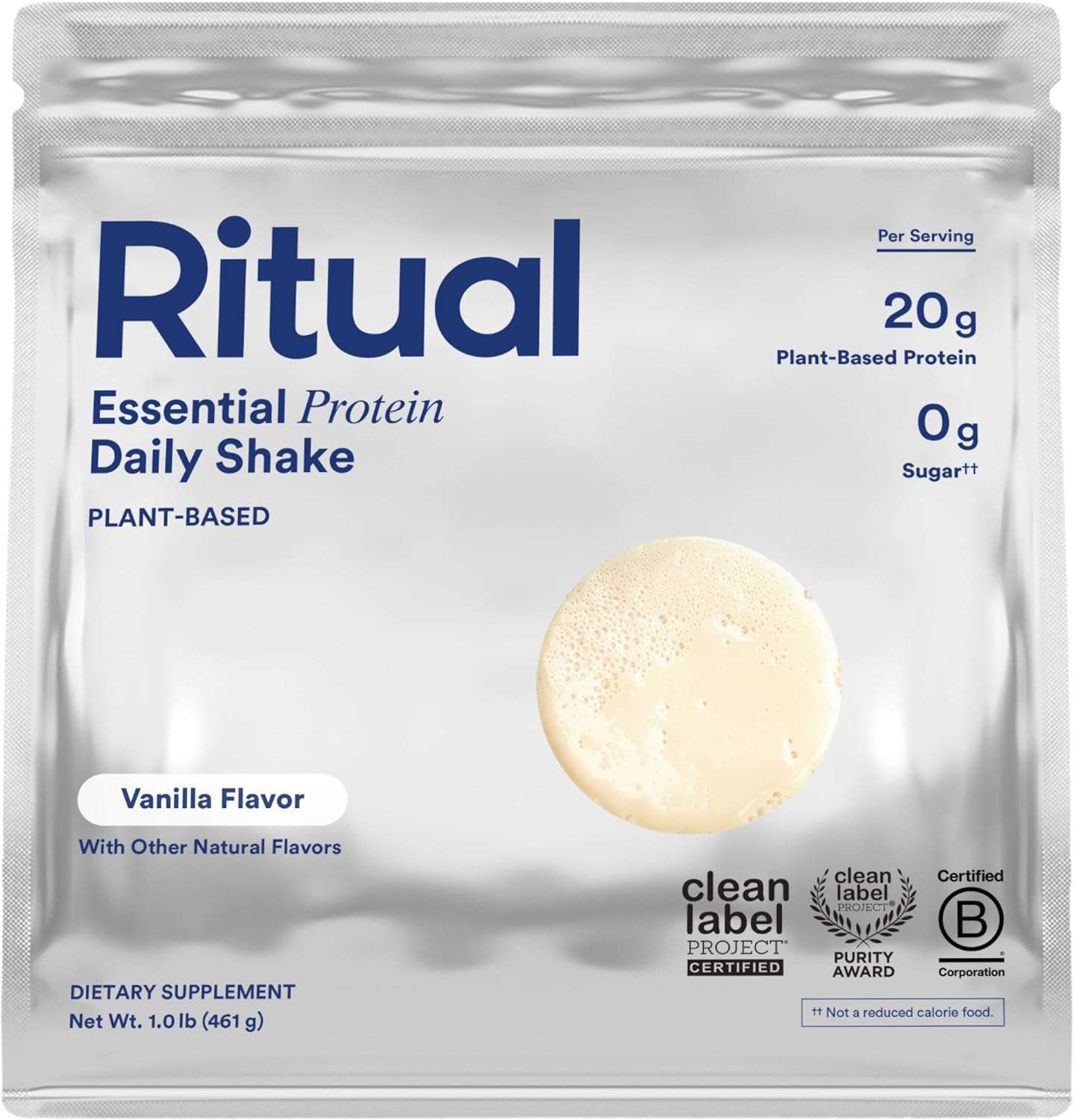
Ritual Vegan Pea Protein
Best for: A completed pea isolate with published sourcing and metal testing
The pick for people who want to see exactly what is in the tub and where it came from. Ritual takes a pea protein isolate and adds the methionine that pea is naturally low in, so the amino profile is complete without needing a second grain source. Its real selling point is transparency: the brand publishes its suppliers and states the product is third-party tested for heavy metals, which is the disclosure that matters most here. It is the priciest per serving of our picks and only 20 g of protein, and note that it carries Clean Label Project certification and heavy-metal testing rather than a formal sport certification. For a transparency-first buyer, though, it is a standout.
- Pea isolate completed with added methionine
- Published sourcing and third-party heavy-metal testing
- Sugar-free, clean formulation
- Most expensive per serving here
- Only 20 g protein per scoop
- Clean Label Project certified, but no sport certification
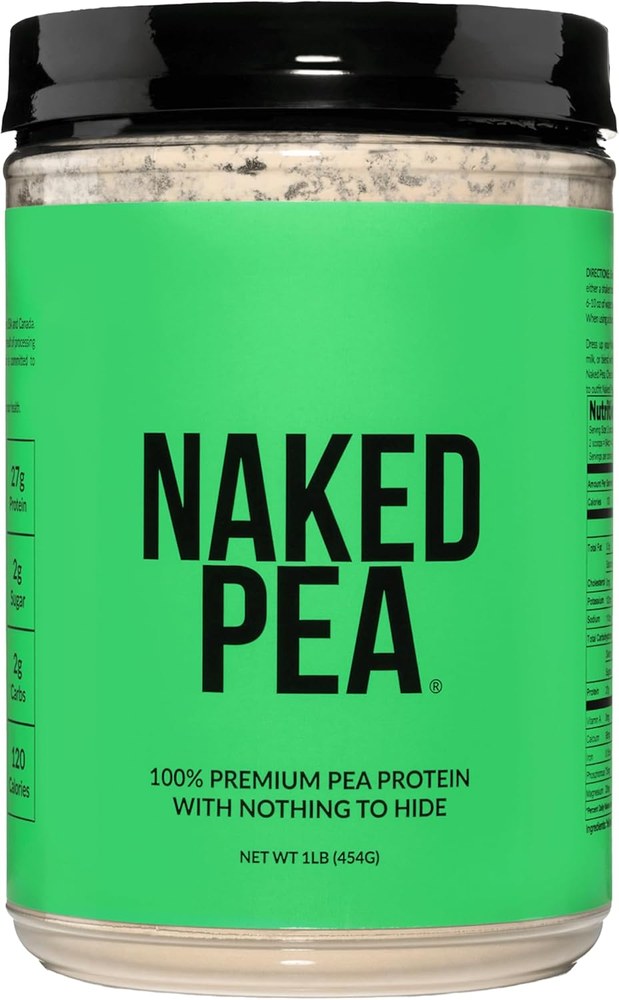
Naked Pea Protein Isolate
Best for: One ingredient, one of the highest protein doses, nothing else
For the buyer who wants a protein and nothing else, this is as clean as a label gets: one ingredient, pea protein isolate, no sweeteners, gums, or flavors, in the unflavored version. It delivers 27 g of protein per serving, among the highest here from a single ingredient, is NSF Contents Certified for label accuracy and heavy metals, and is well priced. The honest caveat is the same one that applies to any single-source pea product: pea alone is a little low in methionine, so its standalone quality score sits below a complete blend. That is easy to fix, because a varied diet or a grain at the same meal fills the gap, but if you want a formula that is complete on its own, pick a pea and rice blend instead. Stick to the unflavored tub, since flavored versions add other ingredients.
- Literally one ingredient, 27 g protein per serving
- NSF Contents Certified for label accuracy and metals
- Great value, no sweeteners or fillers
- Pea alone is lower in methionine, not complete on its own
- Unflavored and plain, needs a smoothie
- Two scoops per serving
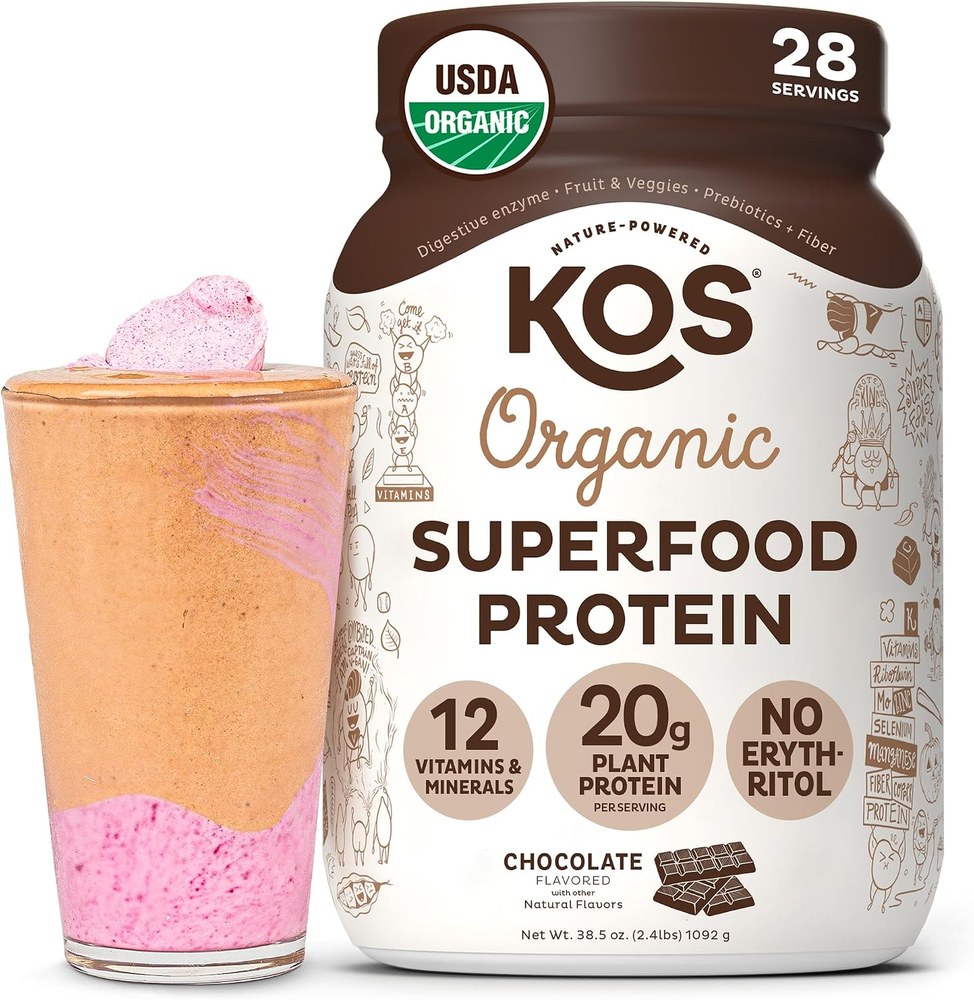
KOS Organic Plant Protein
Best for: A palatable five-source blend that publishes its metal tests
Plant proteins are notorious for tasting chalky, and this is the one most people actually enjoy drinking. KOS blends pea with flax, quinoa, pumpkin seed, and chia for a complete profile and a smoother texture, sweetened with monk fruit and with 0 g added sugar. What earns it a spot beyond taste is transparency: KOS publishes third-party heavy-metal testing with batch certificates of analysis on its site, testing for lead, arsenic, cadmium, and mercury, which is exactly the disclosure this category needs. It is not carrying an NSF for Sport seal, so a drug-tested athlete should look higher on this list, but for an everyday drinker who wants a plant protein that is pleasant and openly tested, it is an easy recommendation.
- Among the best-tasting, smoothest plant proteins
- Complete five-source organic blend
- Publishes batch heavy-metal certificates of analysis
- 20 g protein per scoop
- Not carrying an NSF for Sport certification
- Blend includes seeds some people avoid
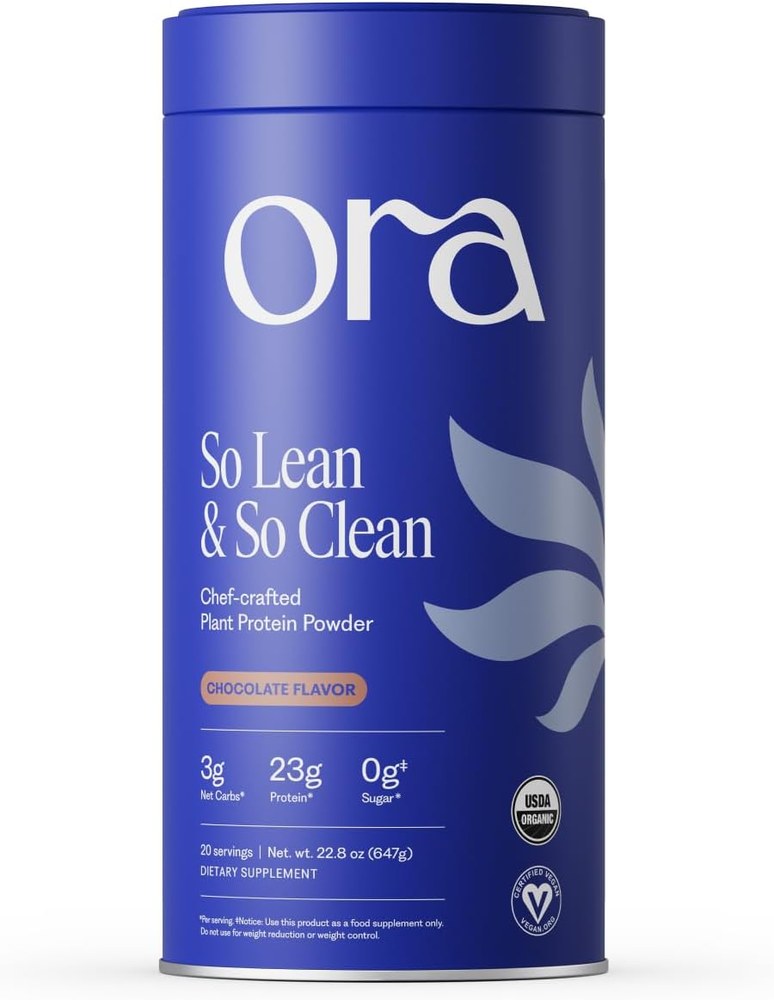
Ora So Lean & So Clean Organic Protein
Best for: A whole-food-style organic blend tested every batch
The whole-food-style choice, for people who want an organic, food-first blend rather than an isolate. Ora combines organic pea and brown rice with sacha inchi, amaranth, and quinoa plus a superfood mix, for a complete 23 g serving with 0 g added sugar. Importantly for this category, Ora states it tests every batch for lead and arsenic and screens broadly for heavy metals, which is the reassurance an organic plant protein most needs, since organic status alone does not mean lower metals. It is a two-scoop serving and a middle-of-the-road price, and it is not formally sport-certified, but the combination of a clean organic blend and honest per-batch testing makes it a solid pick.
- Organic whole-food blend, complete 23 g serving
- States per-batch testing for lead and arsenic
- No added sugar, broad contaminant screening
- Two scoops per serving
- Not a formal NSF or Informed Sport certification
- Superfood blend adds cost over a plain isolate
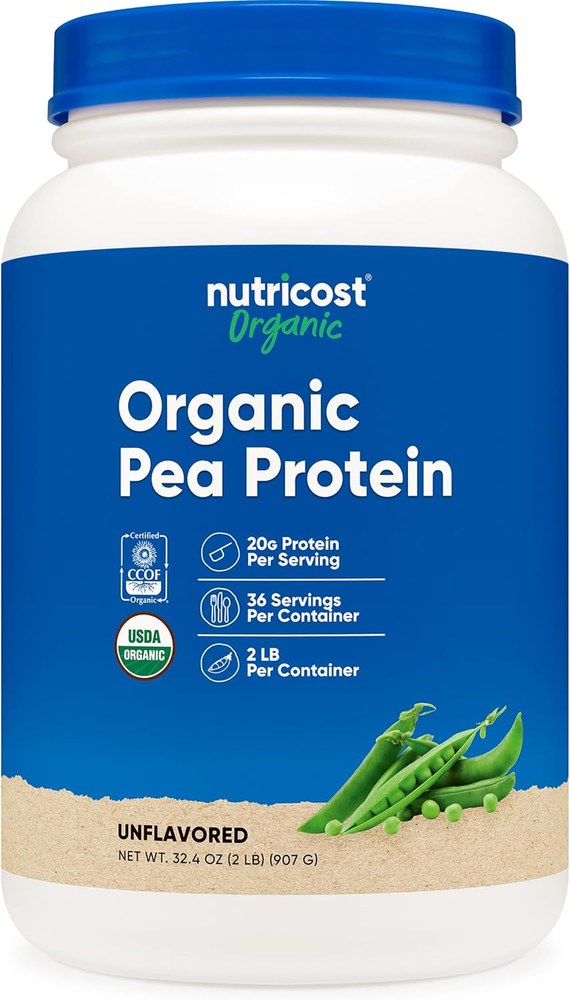
Nutricost Organic Pea Protein
Best for: The lowest cost per gram of protein, from a real label
The value answer, and it is a legitimate one, not a suspiciously cheap mystery powder. Nutricost gives you a USDA Organic pea protein isolate at roughly a dollar a serving, the lowest cost per gram of protein here, with 0 g added sugar. It is third-party tested for purity with a certificate of analysis available on request, though it does not carry a formal sport certification, so it is a notch below our tested picks on that axis. As with any single-source pea product, it is a little low in methionine, so it is not complete on its own. But if budget is the priority and you round out your amino acids elsewhere in the day, this is the honest cheap pick, and the bulk sizes push the cost even lower.
- Lowest cost per gram of protein here
- USDA Organic pea isolate, 0 g added sugar
- COA available on request
- Pea alone is lower in methionine, not complete
- No formal sport certification (COA on request only)
- Plain, unflavored texture
The full lineup, side by side
Read the “testing” column closely, because in this category it is the one that protects you. Our top picks all carry real third-party testing; the budget and minimalist options are honest about where they stand.
| Product | Protein source | Protein | Third-party testing | Award |
|---|---|---|---|---|
| Garden of Life Sport Organic | Organic pea and bean blend | 30 g | NSF Certified for Sport | Best Overall |
| Momentous Vegan Protein | Pea and rice blend | 20 g | NSF Certified for Sport | Best Pea and Rice Blend |
| Ritual Vegan Pea Protein | Pea isolate plus methionine | 20 g | Clean Label Project Certified | Best Traceable Pick |
| Naked Pea | Pea isolate (one ingredient) | 27 g | NSF Contents Certified | Best Minimalist |
| KOS Organic Plant Protein | Organic five-source blend | 20 g | Published batch COAs | Best Tasting |
| Ora So Lean & So Clean | Organic multi-source blend | 23 g | Per-batch metal testing | Best Organic Whole-Food |
| Nutricost Organic Pea | Organic pea isolate | 20 g | COA on request | Best Budget |
Protein grams and testing details are read from current Supplement Facts panels and manufacturer disclosures and can change; confirm before you buy. Certification is not the same as “below every threshold,” but it means the product is independently tested, which is the meaningful bar here.
What the evidence actually says
Two questions decide whether a vegan protein is any good: does it build muscle, and is it complete? The evidence is reassuring on both, with honest caveats.
- Plant protein builds muscle as well as whey, when total protein is adequate. Meta-analyses that match protein intake find no meaningful difference in muscle mass or strength, and a controlled trial found vegan and omnivorous high-protein diets produced equal muscle growth.
- The per-gram gap is real but small. Isolated plant proteins have a little less leucine and are slightly less digestible than whey, so they are marginally less anabolic gram for gram. The fix is enough total protein, a complete blend, or a slightly larger dose.
- Pea plus rice is the classic complete blend. Pea is high in lysine but low in methionine; rice is the reverse, so together they cover each other and reach a quality score close to a single good-quality protein. Soy protein is the one plant source that is complete on its own, scoring highest of the plant proteins.
- Leucine and total dose drive the response. Aim for roughly 20 to 40 g of protein per serving; older adults need a bit more per meal to clear the same anabolic threshold.
None of this requires a powder at all. It is simply the science that lets a plant powder stand in for whey when whole-food protein is inconvenient.
Protein marketing to skip
A few common claims are worth ignoring, and one deserves real scrutiny.
- The heavy-metal reality, told honestly. Watchdog groups (the Clean Label Project and Consumer Reports) have repeatedly found plant-based, organic, and especially chocolate-flavored powders testing higher for lead and cadmium than whey. These are investigations, not peer-reviewed studies, and the amounts are measured against very conservative limits, so this is about managing dose, not avoiding poison. But it is real, it comes from plants pulling metals out of soil, and it is exactly why we weight third-party testing so heavily.
- “Organic” as a purity signal. Organic describes farming, not testing, and organic plant proteins have actually averaged more lead than conventional in watchdog reports. Look for a heavy-metal certification or a published certificate of analysis, not just the USDA Organic seal.
- Proprietary “amino blends” and protein spiking. When a label lists one combined number for a “protein matrix” or “amino blend,” you cannot verify the real protein or leucine per serving, and cheap free amino acids can pad nitrogen-based protein tests. Favor a full per-ingredient breakdown.
- Dessert-level sugar and collagen shortcuts. Some “protein” products hide 15 to 30 g of added sugar, and collagen (not vegan anyway) is an incomplete protein low in leucine. Read the added-sugar line, and treat collagen as a skin or joint product, not a muscle protein.
How to choose the right one for you
Match the pick to your situation:
- If you want one trustworthy tub, a third-party-tested complete blend like our top pick covers almost everyone.
- If you are a competitive or drug-tested athlete, insist on NSF Certified for Sport or Informed Sport specifically.
- If you want the cleanest label, a single-ingredient pea isolate is as simple as it gets, just round out methionine elsewhere in your day.
- If taste has made you quit plant protein before, a smooth multi-source blend is the one to try.
- Whatever you choose, favor a complete profile or blend, check the added-sugar line, and prioritize a product that publishes real third-party testing.
How much protein, and who needs powder
The protein RDA of 0.8 g per kg of bodyweight is a floor set to prevent deficiency in sedentary adults, not a target for building muscle. Active people, those trying to gain or keep muscle, and older adults do better in the range of about 1.2 to 1.6 g per kg per day, with the muscle-building benefit plateauing near 1.6 g per kg in the research, above which extra protein mostly adds cost. Spreading protein across meals and hitting roughly 20 to 40 g per serving helps, and older adults need a slightly higher per-meal dose to get the same effect. In people with healthy kidneys, higher protein does not harm kidney function; the genuine exception is established chronic kidney disease, where protein is moderated under medical guidance, so anyone with kidney disease, diabetes, or related risk factors should check with a clinician before leaning on high-protein shakes. And remember the powder is a tool for hitting that daily number, not a substitute for an otherwise reasonable diet.
Frequently asked questions
Is plant protein as good as whey for building muscle?
Yes, as long as you get enough total protein and enough leucine. Meta-analyses that match total protein between groups find no meaningful difference between plant and animal protein for muscle mass or strength, and a controlled trial found vegan and omnivorous diets built muscle equally at about 2 g per kg of bodyweight. The real difference is per gram: plant proteins carry a bit less leucine and are slightly less digestible, so the practical fix is a slightly larger scoop or a pea and rice blend, not switching back to whey.
What is the best vegan protein powder?
For most people, a third-party-tested complete blend like Garden of Life Sport, which is NSF Certified for Sport and organic. If you want the textbook complete amino profile, a pea and rice blend such as Momentous is ideal, and soy is the one plant protein that is complete on its own. Whatever you choose, the single most useful thing to look for is genuine third-party heavy-metal testing, not just a nice label.
Do vegan protein powders contain heavy metals? Should I worry?
Some do, and it is worth understanding rather than panicking. Watchdog groups like the Clean Label Project and Consumer Reports have found that plant-based, organic, and chocolate-flavored powders often test higher for lead and cadmium than whey, because plants draw these metals up from soil through their roots. This is about dose, not poison, and the amounts are compared against very conservative thresholds. The fix is to choose products with real third-party testing (NSF Certified for Sport, Informed Sport, or published certificates of analysis), favor vanilla over chocolate, and rotate your protein sources.
Is pea protein a complete protein?
Pea contains all nine essential amino acids but is relatively low in methionine, so on its own its protein quality score (DIAAS around 0.7 to 0.8) sits below whey. Blending pea with rice, which is lower in lysine but higher in methionine, balances both and creates a complete profile, which is exactly why pea and rice blends exist. Soy protein is complete on its own and scores the highest of the single plant proteins.
How much protein do I need, and can a powder hurt my kidneys?
The RDA of 0.8 g per kg of bodyweight is a floor to prevent deficiency, not a target for building muscle. Active people and older adults do better around 1.2 to 1.6 g per kg, with muscle gains plateauing near 1.6 g per kg in the research. In people with healthy kidneys, higher protein does not harm kidney function. The exception is established kidney disease, where protein should be moderated under medical guidance.
Is organic vegan protein cleaner or lower in heavy metals?
Not necessarily, and often the opposite. Organic describes how a crop is grown, not whether the finished powder was tested for metals, and watchdog testing has repeatedly found organic plant proteins averaging more lead than conventional ones. Look for an actual third-party heavy-metal certification or a published certificate of analysis, rather than assuming a USDA Organic seal means lower contamination.
Do I even need a protein powder?
No. Whole foods such as beans, lentils, tofu, tempeh, soy milk, and seeds deliver the same amino acids plus fiber and micronutrients, and no study shows powder beats an equivalent amount of food protein. A powder is a convenience for hitting a daily target when whole-food protein is inconvenient, not a requirement or a shortcut to results.
The bottom line
The best vegan protein powder is a complete, well-tested one that fits how you actually eat. For most people, Garden of Life Sport Organic nails it: NSF Certified for Sport, organic, and a full 30 g of protein. If you want the textbook complete amino profile, reach for a pea and rice blend like Momentous; if you want the simplest possible label, a single-ingredient pea isolate works as long as you round out your amino acids elsewhere. Keep the framing straight: plant protein builds muscle as well as whey when your total protein is adequate, the amino gap is easily closed by blending, and the one thing worth being picky about is genuine third-party heavy-metal testing. Choose a transparent, well-tested tub, and let whole foods carry most of the load.