Saffron, the deep red stigma of the Crocus sativus flower, is the rare botanical where the mood research is genuinely worth taking seriously. Multiple meta-analyses find a real signal, and one analysis even found no significant difference between saffron and SSRIs in small head-to-head trials. That is a striking claim, and it is exactly why this guide spends as much time on what the evidence does not show as on what it does. It is also why the ranking turns on a practical distinction most shoppers miss. The foundational saffron trials actually used unbranded extract, typically 30 mg a day, and they worked. The problem is that you cannot buy that exact material. What the branded extracts give you is traceability: a specific, characterized extract tied to a specific published result.
The short version
- Best overall: Natural Factors affron. The exact 28 mg studied dose, the standardization printed on the panel, and genuine independent testing.
- Best certified: Thorne Safr'Inside (NSF Certified for Contents), and best value: Sports Research, real affron for about fifty cents a day.
- Different goals, different extracts: Satiereal for appetite, affronEYE for eye health. They are not interchangeable.
- Reality check: the benefit shows up mainly on self-rated mood scales and not on clinician-rated ones. Promising and better evidenced than most herbs, but modest, and not a treatment.
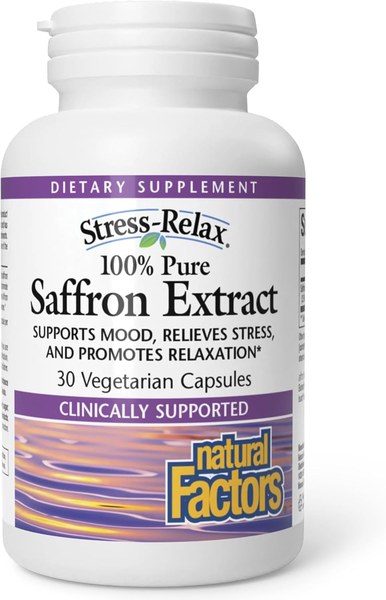
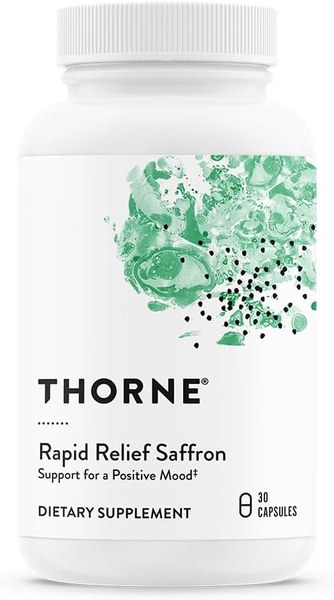
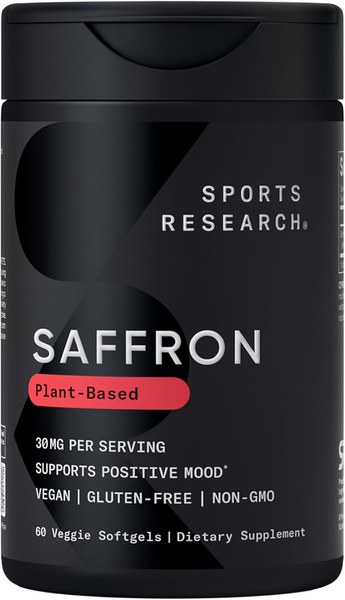
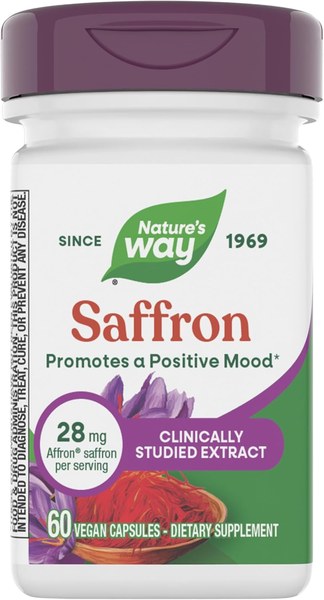
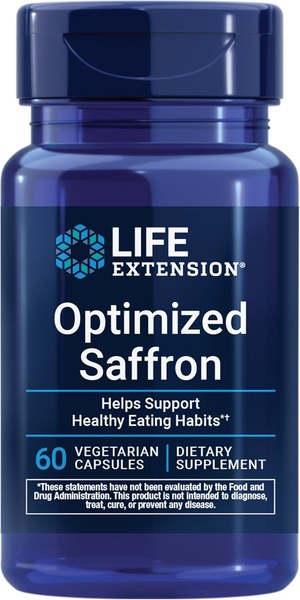
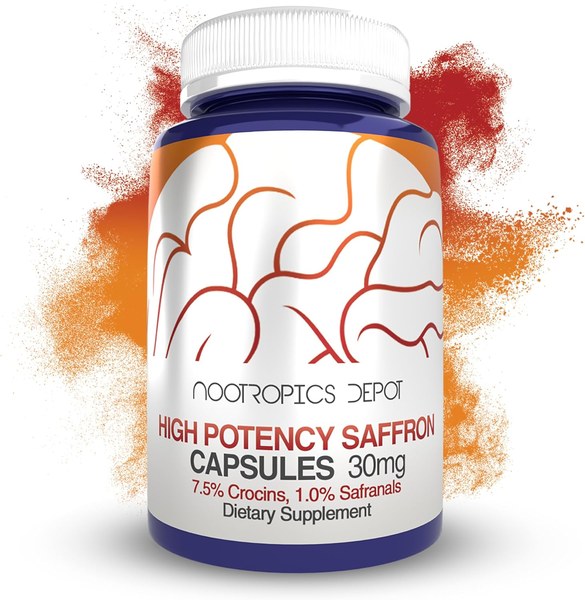
The seven we ranked, left to right by finish: Natural Factors, Thorne, Sports Research, Nature's Way, Life Extension, Nootropics Depot, SuperSmart.
How we ranked them
Saffron is the most expensive spice in the world by weight, which creates a strong incentive to sell products containing less real saffron than the label implies. So identity and dose came first:
- A traceable extract. The earliest positive trials used plain unbranded saffron at 30 mg a day, so this is not a case of "only branded works." But you cannot buy the material those researchers used. A branded extract such as affron, Satiereal, Safr'Inside, or affronEYE at least ties the capsule in your hand to a specific characterized extract and a specific published result.
- A dose that matches that extract. This is the detail shoppers get wrong most often. affron was studied at 28 mg a day, Safr'Inside around 30 mg, Satiereal at 176.5 mg, and affronEYE at 20 mg. A bigger number is not a stronger product when it is a different material entirely.
- Standardization printed on the panel. An actual percentage of crocins, safranal, or Lepticrosalides, not just a trademark and a milligram count.
- Independent testing. A named certifying body counted far more than a brand saying "third-party tested" without naming one.
- Single ingredient. Saffron buried in a nine-active mood blend cannot be evaluated, and stacking it with other serotonergic ingredients raises questions a single-ingredient capsule does not.
What we left out, and why. The best-selling saffron on Amazon costs about eight cents a capsule and is an unbranded extract dosed at 88.5 mg, a number inherited from an earlier era of saffron marketing rather than from any trial of that material. No clinical study has been run on it. We also left out the shelf of nine-in-one and ten-in-one saffron blends, some of which combine saffron with 5-HTP or St. John's wort, which compounds the serotonergic question rather than answering it. Cheap and popular is not the same as evidenced. Scores are our editorial assessment on a five-point scale, not customer ratings.
The branded saffron extracts, by goal
Four different trademarked extracts, four different studied doses. Matching the extract to your goal matters more than the brand on the front.
- affron (Pharmactive) · mood and sleep · studied at 28 mg a day, standardized to 3.5% Lepticrosalides
- Safr'Inside (Activ'Inside) · acute stress response · tested as a single 30 mg dose before a laboratory stress task in 19 young men, not as a daily regimen
- Satiereal (Inoreal) · appetite and between-meal snacking · studied at 176.5 mg a day
- affronEYE (Pharmactive) · retinal and macular function · standardized to 3% crocin and sold at 20 mg a day, the dose used in the AMD research, though those trials used unbranded saffron rather than affronEYE itself
The 7 best saffron supplements
Tap any product to jump straight to its full review.
Natural Factors Stress-Relax Pure Saffron
Extract: affron 28 mg · ISURA certified
The only product here that satisfies every criterion at once. It delivers exactly 28 mg of affron, the dose used in the mood trials rather than a rounded marketing number; it prints the full standardization (3.5% Lepticrosalides) on the panel, which most of this category does not; and it carries ISURA certification, an independent program that DNA-authenticates the botanical and screens for contaminants. In a category where saffron's price makes substitution profitable, botanical authentication is worth real money. The catch is the bottle: 30 capsules, so one month at a time, and it costs more per day than the value picks.
- Exactly 28 mg affron, the dose used in the mood research
- Full standardization printed on the panel, which is rare here
- ISURA certification independently authenticates the botanical
- Single ingredient with nothing else competing for credit
- Only 30 capsules, so a one-month supply with no larger size
- About 40 percent more per serving than Sports Research for the same extract
- Sold by a third-party seller rather than the brand storefront
Thorne Rapid Relief Saffron
Extract: Safr'Inside 30 mg · NSF Certified for Contents
The highest-confidence capsule in the category, if price is not the deciding factor. It uses Safr'Inside at 30 mg, and it is NSF Certified for Contents, which means an independent body verified what is actually in the bottle rather than the brand asserting it. That is the strongest quality credential anyone offers here. Two honest marks against it: the panel prints only the trademark and the milligrams, not a standardization percentage, and at roughly $1.50 a day it costs three times the value pick for a comparably branded, dose-matched extract.
- NSF Certified for Contents, the strongest credential in this category
- Safr'Inside at 30 mg, the amount used in its acute stress study
- Clean single-ingredient formula with three excipients
- Practitioner-grade brand with a rigorous testing program
- Most expensive per serving here by a wide margin
- No standardization percentage printed on the panel
- New listing with a thin review history so far
- Its branded evidence is a single-dose lab stress study in 19 young men, funded by the ingredient maker
The best price-to-credibility ratio here. It is real affron at 30 mg, within the studied range, in a two-month bottle for about fifty cents a day, roughly 30 percent less than the other affron picks and a third of what the certified pick costs. It is a single active in an MCT-oil softgel, sold and shipped by the brand's own storefront, which removes the gray-market seller risk that plagues supplement listings. What you give up is documentation: the standardization percentage lives on the brand's website rather than the panel, and "third-party tested" is a brand claim with no named certifier or public certificate.
- Cheapest branded affron here at about fifty cents a day
- Two-month supply per bottle
- Sold directly by the brand storefront, not a reseller
- Single active in an oil-based softgel
- Standardization percentage is not printed on the panel
- Third-party testing is claimed but no certifier is named
- Newer listing, so long-term supply consistency is unproven
- 30 mg rather than the 28 mg used in the affron trials, a trivial difference but not an exact match
The most accessible way to get the exact studied dose for two months at a time. It is the only pick that pairs 28 mg of affron with a 60-count bottle, it is sold and shipped by Amazon directly, and it comes from a long-established herbal brand with wide retail distribution, so the product is unlikely to disappear. It is a clean, vegan, single-active capsule. What holds it at fourth is documentation rather than the product: no standardization percentage on the panel and no third-party certification of any kind, in a category where those are the whole argument.
- The exact 28 mg affron dose in a two-month bottle
- Shipped and sold by Amazon directly
- Long-established brand with wide distribution
- Single active, clean vegan capsule
- No standardization percentage printed anywhere on the panel
- No third-party testing certification claimed
- New listing with a thin review base so far
Life Extension Optimized Saffron
Extract: Satiereal 78 mg · two capsules daily
If your goal is appetite and between-meal snacking rather than mood, this is the only real option, because Satiereal is the extract that goal was actually studied with, and it is the only product using it that we found on Amazon. Keep the evidence in proportion: the appetite claim rests largely on one 8-week trial in 60 mildly overweight women, and a later small study of a Satiereal-containing multi-ingredient supplement found no effect on body composition, mood, or cravings. It prints its standardization (0.34% safranal) on the panel and it is a clean single ingredient. One thing you should know before buying, though: the current label is 78 mg twice daily, or 156 mg a day, while the snacking trial used 176.5 mg. That is about 12 percent below the studied amount, so the common claim that this matches the trial dose is not strictly accurate. Note also that the real cost is per day, not per capsule.
- The only Satiereal product we found on Amazon
- Standardization printed directly on the panel
- Single ingredient, no stimulants or weight-loss blend
- Long-established listing with a deep review history
- 156 mg a day sits about 12 percent below the trial dose of 176.5 mg
- Two capsules daily, so the real cost is roughly $0.83 a day
- No independent third-party certification
Nootropics Depot High Potency Saffron
Extract: Generic, 30 mg · 7.5% crocins, 1% safranals
The honest pick if you refuse to pay a trademark premium. It publishes batch certificates of analysis by lot number, which is more raw verification than any branded product here offers, and it prints the highest actives in the roundup at a minimum 7.5% crocins and 1% safranals. At roughly 32 cents a serving for a six-month bottle it is also the cheapest credible option. It sits at sixth on traceability rather than on evidence, and that distinction is worth being precise about. Plain unbranded saffron at 30 mg a day is arguably the most-trialed configuration in the whole literature, including the 2005 trial that first showed saffron beating placebo on a clinician-rated depression scale. What you cannot do is verify that this particular extract is equivalent to the one in those studies, and a higher crocin percentage is not proof of a bigger effect, since the branded extracts are standardized on different marker sets.
- Publishes batch certificates of analysis by lot number
- Highest printed actives in the category
- Cheapest credible option, with a six-month bottle
- Single active at a dose within the general clinical range
- Not a branded extract, so you cannot tie it to a specific published trial
- Higher crocin percentage is not evidence of a larger effect
- Self-published certificates rather than an independent certification mark
The only product we found on Amazon built on affronEYE, at the 20 mg daily dose used in the eye research, which makes it the most sensible saffron to pick if your interest is vision rather than mood. One precision point, since this guide makes a lot of the difference between branded and generic: the published AMD trials used unbranded saffron at 20 mg, not affronEYE specifically, so what you are matching here is the dose and the crocin standardization rather than the exact studied material. It prints its 3% crocin standardization and has the cleanest excipient list of any pick, acacia gum and nothing else. Two cautions. First, keep expectations proportionate: the eye research is an open-label trial with no placebo group, and while it found modest improvements in retinal electrical responses, visual acuity did not improve and was in fact slightly worse at 12 months. Second, the Amazon listing has a pack-size discrepancy, with the title saying 90 capsules while the pricing and the bottle itself indicate 60, so confirm the count when it arrives.
- The only affronEYE product we found on Amazon, at the 20 mg dose used in the eye research
- Cleanest excipient list here, acacia gum only
- 3% crocin standardization printed on the panel
- Reasonable daily cost for a single-purpose branded extract
- The supporting eye research is open-label with no placebo group
- Listing shows a pack-size discrepancy between title and price
- No third-party testing or certification claimed
The full lineup, side by side
| Product | Extract | Daily dose | Standardization on panel | Best for | Testing | ~Cost/day |
|---|---|---|---|---|---|---|
| Natural Factors | affron | 28 mg | 3.5% Lepticrosalides | Mood | ISURA certified | ~$0.70 |
| Thorne | Safr'Inside | 30 mg | Not printed | Stress | NSF Certified for Contents | ~$1.50 |
| Sports Research | affron | 30 mg | Not printed | Mood, value | Brand-stated | ~$0.50 |
| Nature's Way | affron | 28 mg | Not printed | Mood, everyday | GMP only | ~$0.53 |
| Life Extension | Satiereal | 156 mg | 0.34% safranal | Appetite | In-house CoA | ~$0.83 |
| Nootropics Depot | Generic | 30 mg | 7.5% crocins, 1% safranals | Value, transparency | Published batch CoA | ~$0.32 |
| SuperSmart | affronEYE | 20 mg | 3% crocin | Eye health | None claimed | ~$0.67 |
Prices are approximate and change often. Doses are per day at the labeled serving, which is two capsules for Life Extension and SuperSmart. Confirm the current label and capsule count before buying.
Does saffron actually work?
Saffron is better supported than most botanicals sold for mood, and the honest version of that statement comes with an important qualifier.
The headline finding is real. A 2026 systematic review pooled 34 randomized trials in 1769 people and assessed the evidence with GRADE, rating the overall certainty moderate, which is a respectable grade for a botanical. Saffron significantly improved scores on the Beck Depression Inventory, though that particular finding rests on 14 of those trials and 817 people, and on the Beck Anxiety Inventory, which rests on 6 trials and 339 people.
The qualifier is the part most articles skip. In that same review, saffron showed no significant effect on the clinician-rated scales, the Hamilton depression and anxiety ratings, or on the Profile of Mood States. The reviewers said so plainly, noting that the lack of clinician-rated effects underscores the need for higher-quality trials. This is not an isolated result: an earlier umbrella analysis pooling seven meta-analyses found exactly the same split, with the self-rated Beck score improving while the clinician-rated Hamilton score did not. Heterogeneity between trials was also very high, above 90 percent on the main outcomes, which means the studies disagreed with each other a great deal. Two overlapping analyses of largely the same trial pool landing on the same pattern is worth taking seriously in both directions: something is happening, and it is clearest in how people rate themselves.
The largest trial is genuinely good, and modest. A 2025 study in the Journal of Nutrition gave 202 adults with subclinical depressive symptoms either 28 mg of affron or placebo for 12 weeks, making it the biggest saffron trial run to date. Saffron beat placebo on the primary depression measure, and 72 percent of the saffron group reached a clinically meaningful improvement versus 54 percent on placebo. Three things keep that in proportion: the effect size was small (Cohen's d of 0.39), there were no differences on the other secondary outcomes, and the authors themselves flagged large placebo responses. It is also worth knowing that two of the study's authors are employees of the company that makes affron, and the lead author runs a research organization funded by supplement companies.
On the SSRI comparison. A 2025 meta-analysis found no statistically significant difference between saffron and SSRIs across eight depression trials and four anxiety trials, with fewer adverse events reported on saffron. That is genuinely interesting, and it is also a small body of evidence in mostly mild-to-moderate cases. Failing to find a difference in small trials is not the same as demonstrating equivalence, which is why the warning at the top of this page exists.
And on the literature as a whole. A meta-research review that assessed 19 saffron meta-analyses for methodological quality concluded that saffron is safe and improves a range of outcomes, but that the scientific quality of the published reviews needs improving and that the clinical effects need confirming through high-quality trials in multiple countries with large samples. That last phrase is doing quiet work: much of the saffron literature comes from a small number of research groups, and independent replication across settings is the weakest link.
How to choose the right one
Three questions settle it:
- What is your goal? Mood points to affron at 28 to 30 mg, appetite points to Satiereal at a much higher milligram figure, and eye health points to affronEYE at 20 mg. They are different materials studied for different things, so pick the extract, not the biggest number.
- Does the label prove anything? Prefer a named branded extract plus a printed standardization percentage. If a product gives you neither, you are buying on trust in a category where saffron's price rewards cutting corners.
- Are you taking medication? Then the first conversation is with your prescriber, not with a shopping list. See the warning at the top of this page.
If you are weighing saffron against other options for mood, our guides to supplements for anxiety and stress and 5-HTP cover the neighbouring choices, and we go deeper on the mood research in saffron for mood.
Frequently asked questions
Does saffron actually work for mood?
Saffron has one of the better evidence bases of any botanical taken for low mood, but the picture has an important wrinkle. A 2026 GRADE-assessed review pooled 34 randomized trials in 1769 people and rated the overall certainty of evidence moderate. Saffron significantly improved scores on the self-rated Beck Depression Inventory, a finding resting on 14 of those trials and 817 people, and on the Beck Anxiety Inventory, resting on 6 trials and 339 people. On clinician-rated scales, however, the Hamilton depression and anxiety ratings, it found no significant effect. A separate umbrella analysis of seven earlier meta-analyses reached the same split: self-rated scores improved while the clinician-rated Hamilton scale did not. Heterogeneity between trials was also very high. So the fair reading is that saffron is worth trying and better supported than most herbs sold for mood, though St. John's wort has a larger depression trial base and far more drug interactions. The effect is modest, it shows up most clearly in how people rate themselves, and it is not established as a treatment.
Can I take saffron with an antidepressant?
Ask your prescriber first, and do not stop or reduce a prescribed antidepressant to try saffron. You may have seen headlines that saffron performs about as well as an SSRI. That comes from a 2025 meta-analysis which found no statistically significant difference between saffron and SSRIs across eight depression trials and four anxiety trials, with fewer side effects on saffron. The honest reading is that those were small, mostly mild-to-moderate cases, and finding no significant difference in a small comparison is not the same as proving equivalence. Saffron is also thought to act partly on serotonin, so combining it with an SSRI, SNRI or other serotonergic medication is a conversation for your clinician rather than something to do on your own. If your mood is affecting your daily life, that is a reason to speak to a doctor, not to self-treat.
How much saffron should I take?
The right dose depends entirely on which extract you bought, which is why the branded name matters more than the milligram number. For mood, affron was studied at 28 mg a day, and the largest trial to date used exactly that. Safr'Inside has been studied around 30 mg a day. For appetite and snacking, Satiereal was studied at 176.5 mg a day, a much larger number because it is a different extract standardized to different markers. For eye health, affronEYE was used at 20 mg a day. This is why a generic bottle advertising 88.5 mg of unbranded saffron extract is not automatically stronger than a 28 mg affron capsule. They are different materials, and only some of them have been tested in people.
Is affron better than a generic saffron extract?
Less than the marketing implies. It is worth knowing that the classic saffron trials used plain unbranded extract at 30 mg a day, including the 2005 study that beat placebo on a clinician-rated depression scale in diagnosed patients, so this is not a case of only branded extracts having evidence. What a branded extract buys you is traceability: affron in particular has the largest and most recent trial behind it, so you can point to a specific characterized material and a specific result. A generic extract may be excellent, and some are standardized to higher crocin and safranal percentages, but you cannot verify it matches what any trial used, and a higher marker percentage is not proof of a bigger effect since the branded extracts are standardized on different markers. Higher crocin content is also not proof of a bigger effect, since the branded extracts are standardized on different marker sets for a reason. If price is the deciding factor, a well-documented generic with published batch testing is a defensible choice, and we ranked one. It just sits below the extracts the research was done on.
How long does saffron take to work?
Most trials run between four and twelve weeks, and the largest affron trial ran for twelve. Four weeks is a fair minimum before deciding, and eight to twelve weeks is a better window. One thing worth knowing before you start: that largest trial recorded large improvements in the placebo group too, which is typical in mood research and a reminder that feeling better in the first week or two does not necessarily mean the capsule caused it. Take it daily, give it a couple of months, and judge it on the trend rather than on any single day.
Is saffron safe, and what are the side effects?
At the doses used in supplements, saffron is generally well tolerated and reviews report no serious adverse reactions. The most commonly reported complaints are nausea, dry mouth, reduced appetite and headache, and in the head-to-head comparisons people taking saffron reported fewer side effects than those taking SSRIs, though those were small trials and a lower side effect count is not a reason to substitute saffron for a prescribed medication. The caveats matter, though. Very high doses of saffron are genuinely toxic, though the amounts involved are in the range of several grams, hundreds of times a 28 mg capsule, so this is an argument against megadosing loose saffron rather than a reason to worry about a standard supplement. It should be avoided in pregnancy, where high intakes have historically been associated with harm. And because of the serotonergic mechanism and reported interactions with antidepressants, blood pressure medication, blood thinners and sedatives, anyone taking medication should check with a clinician before starting.
The bottom line
Saffron is one of the few botanicals where the mood research rewards a careful reading rather than dismissal. The signal is real, the certainty is moderate, and the honest caveat is that it shows up mainly on self-rated scales, with the largest and best trial finding a small effect alongside a large placebo response. Buy on the extract rather than the milligram count: Natural Factors gives you the studied affron dose with the standardization printed and independent botanical authentication, Thorne is the certified choice, Sports Research is the value buy, and Life Extension and SuperSmart cover appetite and eye health with their own specific extracts. Give it eight to twelve weeks, keep the expectations proportionate, and if your mood is genuinely affecting your life, start with a clinician instead.