5-HTP, or 5-hydroxytryptophan, is the compound your body makes from tryptophan on its way to producing serotonin. It comes from the seed of a West African plant, Griffonia simplicifolia, and it is sold for mood, sleep, and appetite. It is also the supplement in this whole category where who should not take it matters more than which bottle you buy. So this guide starts with that, then ranks the products on purity and sensible dosing rather than on potency, and tells you honestly how thin the evidence is.
- Antidepressants: SSRIs, SNRIs, MAOIs, and tricyclics
- Migraine triptans, tramadol, dextromethorphan (in many cough remedies), linezolid, and lithium
- St. John's wort or other serotonergic supplements
The short version
- Best overall: NOW 5-HTP 100 mg. A minimal label from the maker with the most thoroughly audited testing program in the category.
- Best for beginners: NOW 5-HTP 50 mg, because starting low is the single most useful thing you can do here, and best value: Doctor's Best.
- If nausea stopped you before: Solaray enteric coated or Natrol time release.
- Reality check: a Cochrane review screened 108 trials and found only two good enough to use. Treat 5-HTP as a may-help experiment, not an antidepressant substitute, and never as a replacement for care you already need.
How we ranked them
5-HTP is a single compound, so there is no standardization puzzle to solve. What separates these products is who made them and how much is in a capsule. We weighed five things, in this order:
- Manufacturing and testing. This matters more here than in most categories because of the contamination history discussed below. Audited facilities, real analytical labs, and published quality programs counted most.
- A sensible dose. We treated 50 mg and 100 mg as better than 200 mg, not worse. Nausea and serotonergic load both rise with dose, so a big capsule you cannot split is a drawback, not a feature.
- A clean, single-ingredient label. No mood blends. Stacking 5-HTP with other serotonergic ingredients compounds the interaction risk and makes it impossible to tell what you are reacting to.
- Source transparency. Whether the panel actually names Griffonia simplicifolia seed.
- Format and value. Enteric-coated and time-release forms earn credit for addressing nausea; cost per serving breaks ties.
Why added vitamin B6 is not a bonus. Plenty of 5-HTP products add vitamin B6 and market it as a helpful cofactor. It is a cofactor, for the enzyme that converts 5-HTP into serotonin. The catch is where that conversion happens. A 2006 review in Pharmacology and Therapeutics puts it plainly: how much 5-HTP reaches the brain depends on how much is converted to serotonin in the periphery first, which is why research protocols that want more 5-HTP reaching the brain pair it with a drug that blocks peripheral conversion. Serotonin made in the periphery does not cross into the brain. Being straight about the limit of this argument: no trial has tested whether adding B6 to a supplement measurably changes any of that, and in someone with adequate B6 the enzyme is likely already saturated, so extra B6 may simply do nothing. That is why we treated added B6 as neutral rather than harmful, and why it was enough to break a tie against an otherwise excellent product from a brand we usually rate highly.
What we left out. Proprietary mood blends. That includes a product that was a category best seller on Amazon at the time of writing, which stacks 5-HTP with L-tryptophan and SAM-e, three serotonergic ingredients in one capsule, so most readers arriving from a search land on exactly the kind of product this guide argues against buying first. Products built around a 200 mg serving. Bulk powder that asks you to weigh a serotonergic compound on a scale at home. And one widely listed product that many roundups call plain 5-HTP but which actually contains valerian, magnesium oxide, niacinamide, and B6 alongside it. Scores are our editorial assessment on a five-point scale, not customer ratings, and they top out in the mid-fours because of how limited the evidence is.
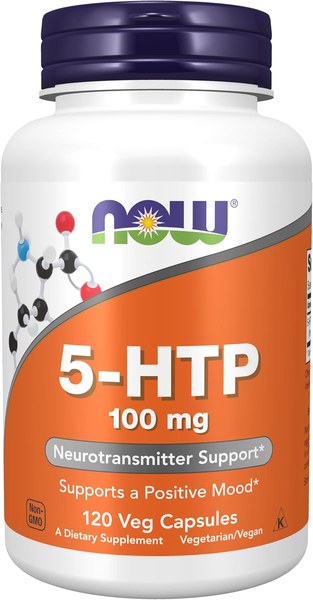
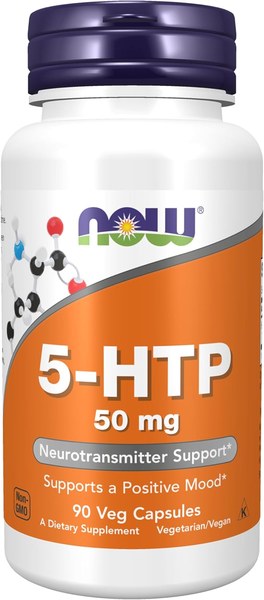
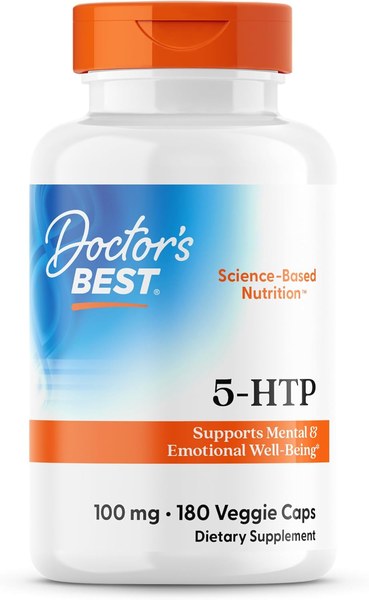
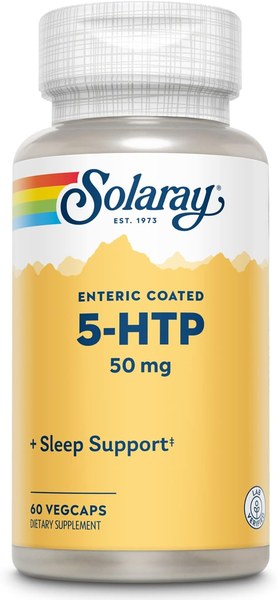
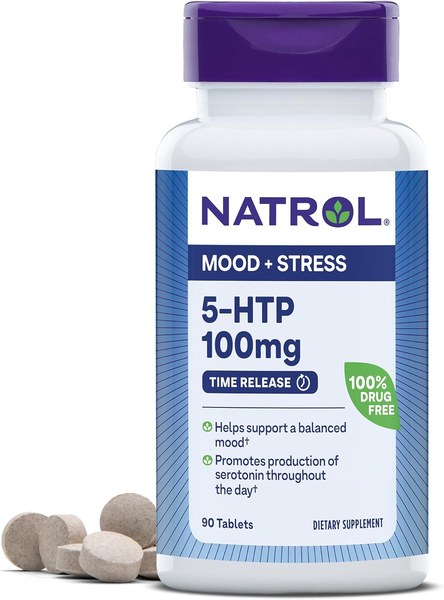
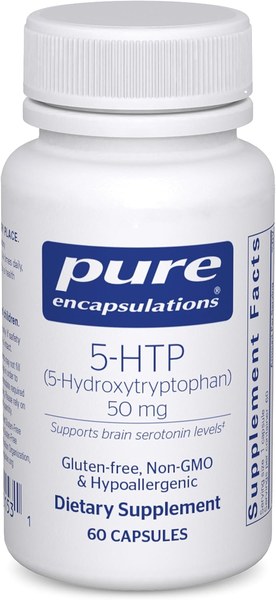
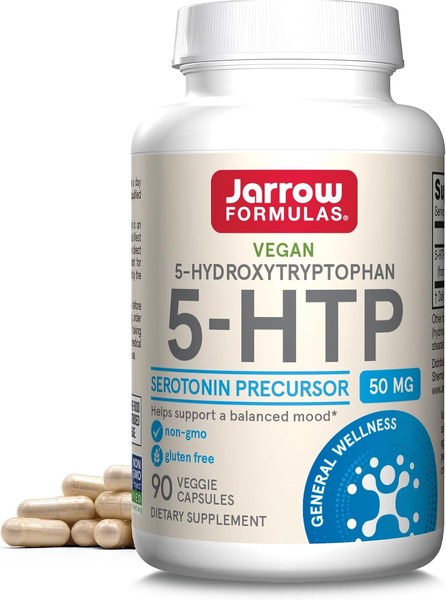
The seven we ranked, left to right by finish: NOW 100 mg, NOW 50 mg, Doctor's Best, Solaray, Natrol, Pure Encapsulations, Jarrow.
The 7 best 5-HTP supplements
Tap any product to jump straight to its full review.
NOW Foods 5-HTP 100 mg
Form: 100 mg immediate-release veg capsule · no added B6
The pick that best answers this category's real question, which is who made it. NOW runs its own analytical laboratories and holds multiple independent GMP certifications, including an NPA A rating and NSF/ANSI 455-2, which is the deepest verifiable quality program among these brands. The label is about as clean as it gets: 5-HTP plus rice flour in a cellulose capsule, with the Griffonia simplicifolia seed source printed on the panel and no vitamin B6 added. At roughly fourteen cents a day it is also one of the cheapest here. The only real caveat is that 100 mg is a step above where most people should start.
- The most thoroughly audited manufacturing in this lineup, with in-house analytical labs
- Minimal label with no added B6 and no cofactor blend
- Griffonia simplicifolia seed source printed on the supplement panel
- Excellent value at about fourteen cents per capsule
- 100 mg is one step above the 50 mg most people should start at, and capsules cannot be split
- Immediate-release, so no formulation buffer against nausea
- Listing price has been discounted heavily off list, so it may drift
NOW Foods 5-HTP 50 mg
Form: 50 mg immediate-release veg capsule · no added B6
The bottle most people should actually buy first. It is the identical material and the identical audited manufacturing as our top pick, at half the dose, which lets you find the smallest amount that does anything for you rather than starting where the side effects start. It is also the cheapest capsule here, so a cautious two-week trial costs almost nothing. Yes, the same brand takes our top two slots. That is a comment on how few makers in this category have quality programs you can actually verify, and the 50 mg and 100 mg genuinely suit different readers.
- 50 mg is the sensible starting dose, so you can titrate up rather than guess
- Cheapest per capsule in the lineup, which makes a trial nearly free
- Same minimal label and same audited manufacturing as the 100 mg
- Griffonia seed source stated on the panel
- If you settle at 100 mg or more you will move through a bottle quickly
- Immediate-release, so no nausea buffer if 50 mg still bothers you
- Only one bottle size on this listing
Doctor's Best 5-HTP 100 mg
Form: 100 mg veggie capsule · 180 count · no added B6
The best value per 100 mg capsule here, and the only product in the lineup that names Peak X on its own label and states the material is tested for it. Given that the contamination question is the main reason to care about who made your 5-HTP, a brand that addresses it directly on the panel earns real credit. It is a clean three-ingredient vegan formula with the Griffonia seed source stated, and the 180-count works out to roughly a six-month supply. The honest limit is that this is a manufacturer statement, not an independent certificate, so it is a claim you are trusting rather than a seal you can verify.
- The only ranked product that names Peak X on the label and states it tests for it
- Lowest cost per 100 mg capsule in the lineup
- Clean vegan panel with Griffonia seed named and no added B6
- Large 180-count bottle sold directly by the brand
- The Peak X claim is the brand's own statement, with no published third-party certificate
- 100 mg only, so no lower starting dose in this listing
- No independent certification seal on the product
Solaray 5-HTP 50 mg Enteric Coated
Form: 50 mg enteric-coated vegetarian capsule
If nausea is what made you quit 5-HTP last time, this is the format built for that problem. The enteric coating delays release past the stomach, and pairing that with the gentle 50 mg dose makes it the most tolerable combination in the lineup. The panel names Griffonia simplicifolia seed extract, and unlike Solaray's own 100 mg versions, this one does not add vitamin B6 or vitamin C. Two honest marks against it: it costs about three times NOW's 50 mg for the same dose, and its quality language is the brand's own rather than an independent certification.
- Enteric coating is the most direct formulation answer to 5-HTP nausea
- 50 mg plus enteric coating is the gentlest combination available here
- Griffonia seed named, with no added B6 or vitamin C
- Vegetarian cellulose capsule
- Roughly three times the cost of NOW's 50 mg for the same dose
- Quality language is a house claim rather than an independent seal
- Thin review base compared with the top picks
Natrol 5-HTP 100 mg Time Release
Form: 100 mg controlled-release tablet · no added B6
The established option for spreading a dose out rather than delivering it all at once. The controlled-release tablet releases its 100 mg over hours, which blunts both the nausea spike and the abrupt drowsiness some people get from an immediate-release capsule. Notably for a mass-market brand, it does not add vitamin B6, and it names the Griffonia seed source. The 32 mg of calcium is tablet base rather than an added active. The trade-offs: a time-release tablet cannot be split down to 50 mg, and its gradual curve makes it a poorer fit if you specifically want something timed for falling asleep.
- Gradual release blunts both nausea and abrupt drowsiness
- No added vitamin B6, which is unusual at this price point
- Griffonia seed source named on the panel
- Vegetarian and free of all major allergens
- Time-release tablets cannot be split, so there is no way down to 50 mg
- Manufacturing is GMP-registered at the facility level, with no product-level seal
- Poor fit if you want a dose timed specifically for sleep onset
Pure Encapsulations 5-HTP 50 mg
Form: 50 mg hypoallergenic vegetarian capsule
The pick for people with sensitivities or a clinician's protocol to follow. Pure Encapsulations has the strictest excipient policy here, just 5-HTP plus cellulose in a vegetarian capsule, with no binders, coatings, dyes, or flow agents, plus independent lot-level testing and certified gluten-free status. The 50 mg dose fits the way 5-HTP is normally introduced in practice. Its lab verification is the strongest here after NOW, so it is fair to ask why it sits at six. The answer is specific to this category: when the open question is what botanical material actually went into the capsule, a panel that does not print the Griffonia source leaves out the one fact the contamination question turns on, and that gap is harder to forgive on the most expensive product here. The Amazon listing also runs well above the brand's own pricing through a third-party seller, so check what you are paying.
- Strictest excipient policy in the lineup, with no binders, coatings, or dyes
- Independent lot-level testing and certified gluten-free
- 50 mg fits clinician-guided titration
- Genuinely hypoallergenic, which suits the sensitive-gut readers most likely to react
- The panel does not name Griffonia simplicifolia, a transparency gap at this price
- Amazon pricing runs well above the brand's own and moves with a reseller buy box
- Easily the most expensive way to buy 50 mg here
Jarrow Formulas 5-HTP 100 mg
Form: 100 mg vegan veggie capsule · no added B6
A genuinely good budget option that finishes last only because the field above it is strong. Jarrow gives you a vegan, non-GMO 100 mg capsule with Griffonia simplicifolia seed named on the panel, no added B6, and a 90-day supply at a low price. Nothing here is wrong. What it lacks, relative to the picks above, is independent verification: purity rests on the brand's own program with no third-party certification specific to this product, which is precisely the axis this category is ranked on. If you want a clean panel without paying practitioner prices, it does the job.
- Vegan and non-GMO with Griffonia seed named on the panel
- Ninety-day supply at one of the lowest costs per capsule
- No added B6 and no cofactor blend
- Long-established brand in the category
- No independent certification specific to this product
- 100 mg only on this listing, with no lower starting dose
- Immediate-release, with no enteric coat or timed option
The full lineup, side by side
| Product | Dose | Release | Added | Source on panel | Testing | ~Cost/serving |
|---|---|---|---|---|---|---|
| NOW 100 mg | 100 mg | Immediate | None | Griffonia seed | Three GMP certifications | ~$0.14 |
| NOW 50 mg | 50 mg | Immediate | None | Griffonia seed | Three GMP certifications | ~$0.12 |
| Doctor's Best | 100 mg | Immediate | None | Griffonia seed | Brand-stated Peak X testing | ~$0.13 |
| Solaray Enteric | 50 mg | Enteric coated | None | Griffonia seed | House claim | ~$0.38 |
| Natrol Time Release | 100 mg | Timed | Calcium base | Griffonia seed | Facility GMP | ~$0.24 |
| Pure Encapsulations | 50 mg | Immediate | None | Not named | Third-party lot testing | Premium, varies |
| Jarrow Formulas | 100 mg | Immediate | None | Griffonia seed | In-house program | ~$0.14 |
Prices are approximate, per capsule or tablet, and change often. The Pure Encapsulations listing is sold through a third-party seller above the brand's own pricing, so we have not published a fixed figure. Confirm current pricing and the label before buying.
Does 5-HTP actually work?
5-HTP has a plausible mechanism and a thin evidence base, and the gap between those two things is where most of the marketing lives. Here is the fair reading.
The mechanism is well characterized. 5-HTP is the direct precursor to serotonin and it does cross into the brain, which is settled biochemistry and is the reason for the interaction warning at the top of this page. How much of an oral dose actually reaches the brain is a more complicated question, since a large share is converted in the periphery first. What is not settled at all is whether raising serotonin this way produces a benefit you would notice.
The depression evidence is thin and old. The reference point is a Cochrane review of tryptophan and 5-HTP for depression. The reviewers located 108 trials and found only two, involving 64 patients in total, that were of sufficient quality to include. Those two did favor the supplements over placebo, but the review concluded the evidence was of insufficient quality to be conclusive, and made a point most product pages skip: because antidepressants exist that have been proven effective and safe, the clinical usefulness of 5-HTP is limited at present. That is a fair summary of where things still stand.
Newer research is small. A 2025 randomized trial gave 100 mg a day to older adults in Singapore for 12 weeks and reported improved cognitive screening scores, higher serum serotonin, and lower depression-scale scores. It is a real trial, but the details matter. It enrolled 30 people, it was single-blinded, and the comparison group simply did not take anything rather than taking a placebo. The participants were also neither depressed nor cognitively impaired at the start, and the changes were about one point on a 30-point cognitive screen and a similarly small move within the normal range of a depression scale. The authors said plainly that the findings should be interpreted cautiously. It suggests something worth studying in healthy older adults, not evidence that 5-HTP lifts low mood.
What that adds up to. 5-HTP is a may-help, poorly-proven supplement with a real mechanism, a real interaction risk, and a common side effect in nausea. It is a reasonable, cheap, short experiment for someone not taking serotonergic medication. It is not a substitute for treatment, and if low mood is affecting your life, that is a conversation for a clinician, not a purchase. For sleep specifically, melatonin is better evidenced and lower risk, which we cover in our sleep supplement guide. For mood, saffron has accumulated more consistent trial support, as we discuss in saffron for mood.
How to choose the right one
Four questions settle it:
- Are you on a serotonergic medication? If yes, that is the whole answer: talk to your prescriber before anything else. Nothing else on this page matters more.
- What dose? Start at 50 mg. Most people do not need more than 100 mg, and beginning at 200 mg mostly buys you nausea.
- Did it upset your stomach last time? Choose an enteric-coated or time-release form, and take it with food.
- Who made it? In this category, favor makers with audited facilities and real analytical testing, and skip anything that stacks 5-HTP with other serotonergic ingredients in a proprietary blend.
Frequently asked questions
Does 5-HTP actually work?
The honest answer is that the evidence is thin and old. A Cochrane review of tryptophan and 5-HTP for depression screened 108 trials and found only two, involving 64 patients in total, that were of sufficient quality to include. Those two did favor the supplements over placebo, but the reviewers concluded the evidence was of insufficient quality to be conclusive, and noted that because antidepressants exist that have been proven effective and safe, the clinical usefulness of 5-HTP is limited at present. Newer research is small: a 2025 randomized trial in 30 older adults on 100 mg a day reported a gain of about one point on a 30-point cognitive screen and a similarly small move on a depression scale, but the participants were neither depressed nor cognitively impaired to begin with, it was single-blinded, the comparison group simply did not take anything, and the authors themselves urged caution. So 5-HTP is a may-help, poorly-proven ingredient rather than an antidepressant substitute.
Can I take 5-HTP with an antidepressant?
Not without your prescriber's approval. This is the most important thing on this page. 5-HTP is a direct precursor to serotonin, so combining it with drugs that also raise serotonin can push levels too high and trigger serotonin syndrome, a genuine medical emergency. The drugs that matter most include SSRIs, SNRIs, MAOIs, tricyclic antidepressants, triptans for migraine, tramadol, dextromethorphan, linezolid, lithium, and the herb St. John's wort. Warning signs include agitation, confusion, a racing heart, high blood pressure, muscle twitching or rigidity, heavy sweating, shivering, fever, and diarrhea. If you take any serotonergic medication, the honest answer is do not start 5-HTP on your own, and if you have started and feel any of those symptoms, stop and seek medical care.
How much 5-HTP should I take, and when?
Start low. 50 mg is the sensible starting dose, and many people never need more than 100 mg. Studies have used higher amounts, but nausea and serotonergic load both climb with the dose, so beginning at 200 mg means starting where the side effects start. Most people take it in the evening, both because any drowsiness is welcome then and because it suits the mood and sleep uses it is bought for. Taking it with food helps with the nausea that is by far its most common complaint. Give a dose two weeks before deciding whether it is doing anything, increase only in small steps, and treat it as something to use for a defined period rather than indefinitely.
What are the side effects of 5-HTP?
Nausea is the most common by a wide margin, and it is dose-related, which is the main practical argument for starting at 50 mg and for considering an enteric-coated or time-release form. Other frequent complaints are stomach upset, loose stools, heartburn, drowsiness, and vivid dreams. Drowsiness is why most people take it at night rather than in the morning. The serious risk is not a side effect of 5-HTP alone but of combining it with serotonergic medication, which can cause serotonin syndrome. Because it acts on serotonin, it is also generally avoided in pregnancy and breastfeeding, and anyone with a diagnosed mood disorder should involve their clinician rather than self-treating.
What is Peak X, and is 5-HTP contaminated?
Peak X is the nickname for a contaminant found in some 5-HTP, and the science on it is genuinely unsettled, which is exactly why manufacturing quality matters here. The background is that in 1989 an outbreak of eosinophilia-myalgia syndrome, a serious illness, was traced to contaminated L-tryptophan from a single manufacturer, not to 5-HTP. Later, Mayo Clinic researchers chemically identified the Peak X contaminant as 4,5-tryptophan-dione, described it as a putative neurotoxin, and found it in all six over-the-counter 5-HTP samples they tested, though at 0.5 to 10.3 percent of the level in the material linked to illness. A subsequent safety review argued the opposite, that the peak reflects chromatographic artifacts at trivial concentrations and that no definitive toxicity cases had emerged from decades of worldwide use, with the possible exception of one unresolved case, and two of the four authors of that review worked for a dietary supplement ingredient company. Isolated case reports do exist: FDA researchers investigated a family who became ill after taking 5-HTP, one with EMS and two with eosinophilia, found an impurity in their product absent from other samples, and saw the eosinophilia resolve after they switched products. No 5-HTP-caused outbreak has ever been established. The practical takeaway is not that 5-HTP is known to be dangerous, but that buying from a manufacturer with real testing and auditing behind it is worth more in this category than in almost any other.
Is 5-HTP or melatonin better for sleep?
For sleep specifically, melatonin is the better-evidenced and lower-risk choice for most people. Melatonin acts on the body clock and is most useful for trouble falling asleep, jet lag, and shifted schedules, and it does not carry 5-HTP's interaction profile with antidepressants. 5-HTP is really a mood-oriented supplement whose drowsiness makes it a night-time product, rather than a sleep aid in its own right, and the sleep evidence for it is weaker than the mood evidence, which is itself thin. If your problem is purely falling asleep or a shifted schedule, start with melatonin or with basic sleep habits. If you are drawn to 5-HTP for low mood specifically, the interaction warning above matters far more than the choice between the two.
The bottom line
5-HTP is one of the few supplements where the most valuable thing a guide can tell you is who should not buy it. If you take an antidepressant, a triptan, tramadol, lithium, or St. John's wort, this is a conversation for your prescriber, not a purchase. If none of that applies, it is a cheap, plausible, poorly-proven experiment worth a careful try: start at 50 mg in the evening with food, give it two weeks, and buy from a maker whose testing you can actually verify. NOW takes our top two spots on manufacturing and clean labeling, Doctor's Best is the value buy and the only one that addresses Peak X on its label, and Solaray or Natrol are the answers if nausea stopped you before. Keep the expectations modest, and keep the warning box in mind.