Probiotics are the category where the marketing points you in exactly the wrong direction. The big numbers on the front of the bottle, 50 billion CFU, 100 billion, 30 strains, are mostly there to win a shelf war, and they distract from the one thing that actually determines whether a probiotic does anything: the specific strain inside. Benefits are strain-specific, not genus-wide, so a single well-studied strain at a modest dose routinely beats a giant blend of unnamed bacteria. This guide ranks the best probiotic supplements on what matters, named and studied strains, honest dosing, real testing, and price, and it is candid about the biggest truth of all: most healthy people do not need a daily probiotic at all.
The short story: for most people who want one, Culturelle is the smart pick, because it delivers the single most-researched probiotic strain on earth (LGG) at an honest dose, with no CFU theatrics. From there, each product wins a specific job, from the best IBS option to the right choice during a course of antibiotics.
The short version
- Best overall: Culturelle, the single most-studied strain (Lactobacillus rhamnosus GG) at an honest 10 billion CFU.
- Strains beat CFU: benefits are strain-specific. Align works at just 1 billion CFU; a 50-billion blend of unnamed strains is weaker than one studied strain.
- Match the strain to the goal: S. boulardii for antibiotics and travel, LGG for general use, B. longum 35624 for IBS-type bloating.
- Most healthy people don't need one: fermented foods cover it. Probiotics shine for specific situations, not as a daily ritual.
How we ranked them
Because a named, studied strain matters more than a big CFU number, strain transparency and evidence did most of the deciding. We weighed five things:
- Strain transparency. A full strain designation (genus + species + strain, like L. rhamnosus GG) ranks highest. A label that lists only genus and species is a red flag. See how to read a label.
- Evidence matched to a goal. Does the strain have human data for a specific use (general digestion, IBS, antibiotic-associated diarrhea)? See our probiotics overview.
- Honest dosing. A studied CFU count that is guaranteed through the expiration date, not just a big number measured at manufacture.
- Format and extras. Shelf-stable vs refrigerated, delayed-release delivery, and whether a genuine prebiotic makes it a synbiotic.
- Value. Cost per serving for a daily habit.
Scores are our editorial assessment on a five-point scale, not customer ratings. Per-serving prices are approximate and change often.
The 7 best probiotic supplements
Tap any product to jump straight to its full review.
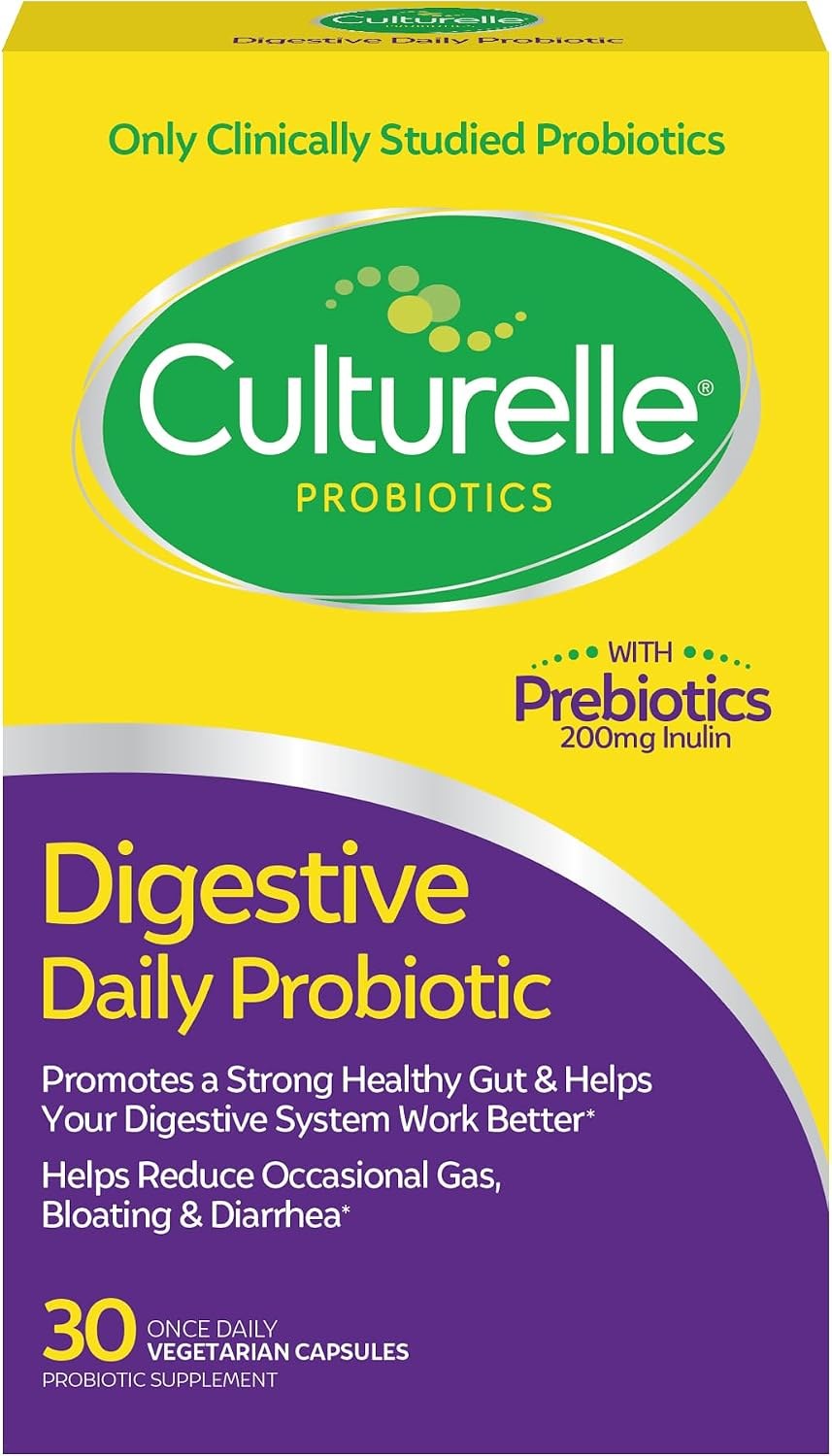
Culturelle Digestive Daily
Best for: A single, proven strain you can actually trust
The honest winner. Culturelle is built on Lactobacillus rhamnosus GG (LGG), the single most-studied probiotic strain on earth, with more than a thousand published papers behind it, at a sensible 10 billion CFU plus a little inulin prebiotic. You know exactly what you are taking and why, which is the whole point. It is shelf-stable and cheap. The honest note on testing: Culturelle is made in an NSF-audited facility, which is a quality signal but not the same as an independent batch-tested seal, so we describe it accurately rather than overselling it.
- LGG, the most-researched single strain
- Honest 10 billion CFU, not a marketing number
- Shelf-stable, with an inulin prebiotic
- Inexpensive per serving
- One strain (a feature, but not for everyone)
- NSF-audited facility, not a product seal
- Contains a small amount of dairy
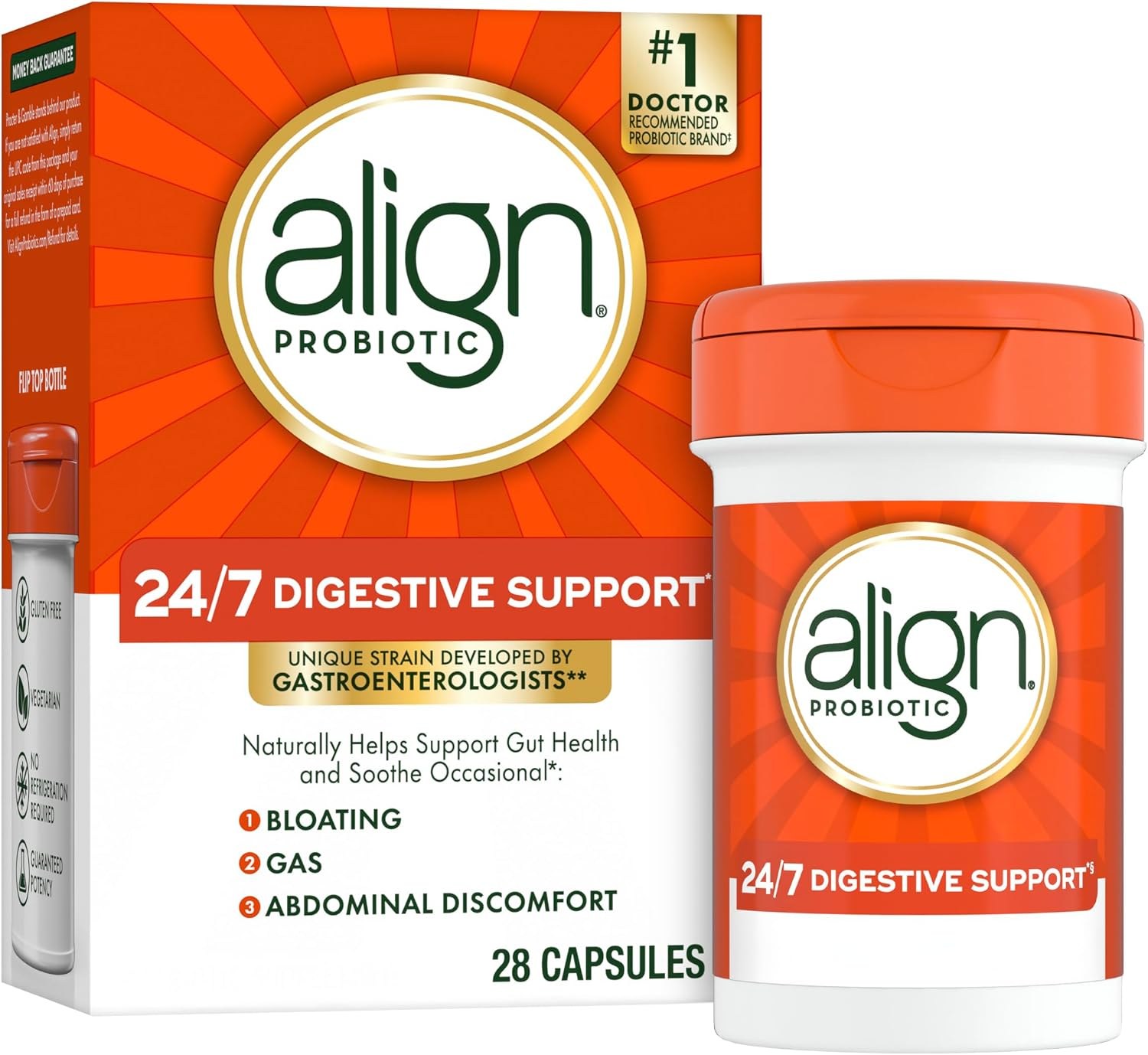
Align 24/7 Digestive Support
Best for: IBS-type bloating, gas, and abdominal discomfort
The IBS pick, and the best illustration of this whole guide. Align is Bifidobacterium longum 35624 (formerly called B. infantis 35624), a strain with a genuine manufacturer-funded trial in over 350 people showing reduced abdominal pain and bloating, at just 1 billion CFU. That tiny number is the point: a higher dose was not better, which is direct proof that the right strain matters more than the CFU count. The trade-offs are an everyday price that is a little high and a single-strain, no-frills formula.
- B. longum 35624 has real IBS trial data
- Effective at just 1 billion CFU
- Shelf-stable, DNA-verified per lot
- Pricier per serving than its CFU suggests
- Single strain, no prebiotic
- Best for IBS, less of an all-rounder
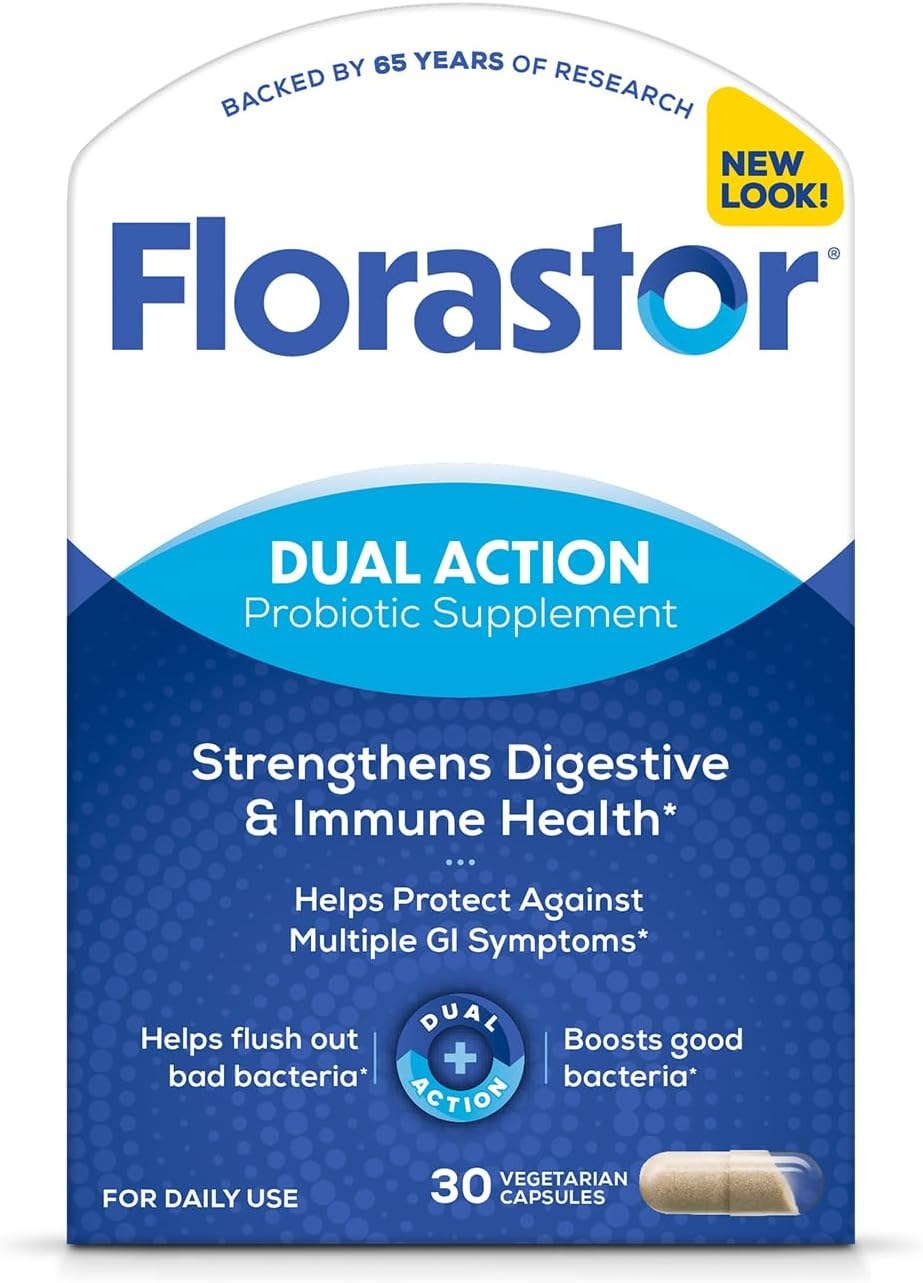
Florastor Daily Probiotic
Best for: Taking alongside antibiotics, and traveler's upset
The right tool for one important job. Florastor is Saccharomyces boulardii CNCM I-745, a beneficial yeast rather than a bacterium, and that is exactly why it shines during antibiotics: antibiotics kill bacteria, but they do not touch a yeast, so you can take it at the same time. It has strong, specific evidence for antibiotic-associated and traveler's diarrhea. It is shelf-stable and well tolerated. The honest note is that it is a specialist, not an everyday general-digestion probiotic, so match it to the situation.
- A yeast, so antibiotics don't kill it
- Strong evidence for antibiotic and travel diarrhea
- Can be taken at the same time as antibiotics
- A specialist, not an all-purpose daily
- Single organism, no prebiotic
- Not for those advised to avoid live yeast
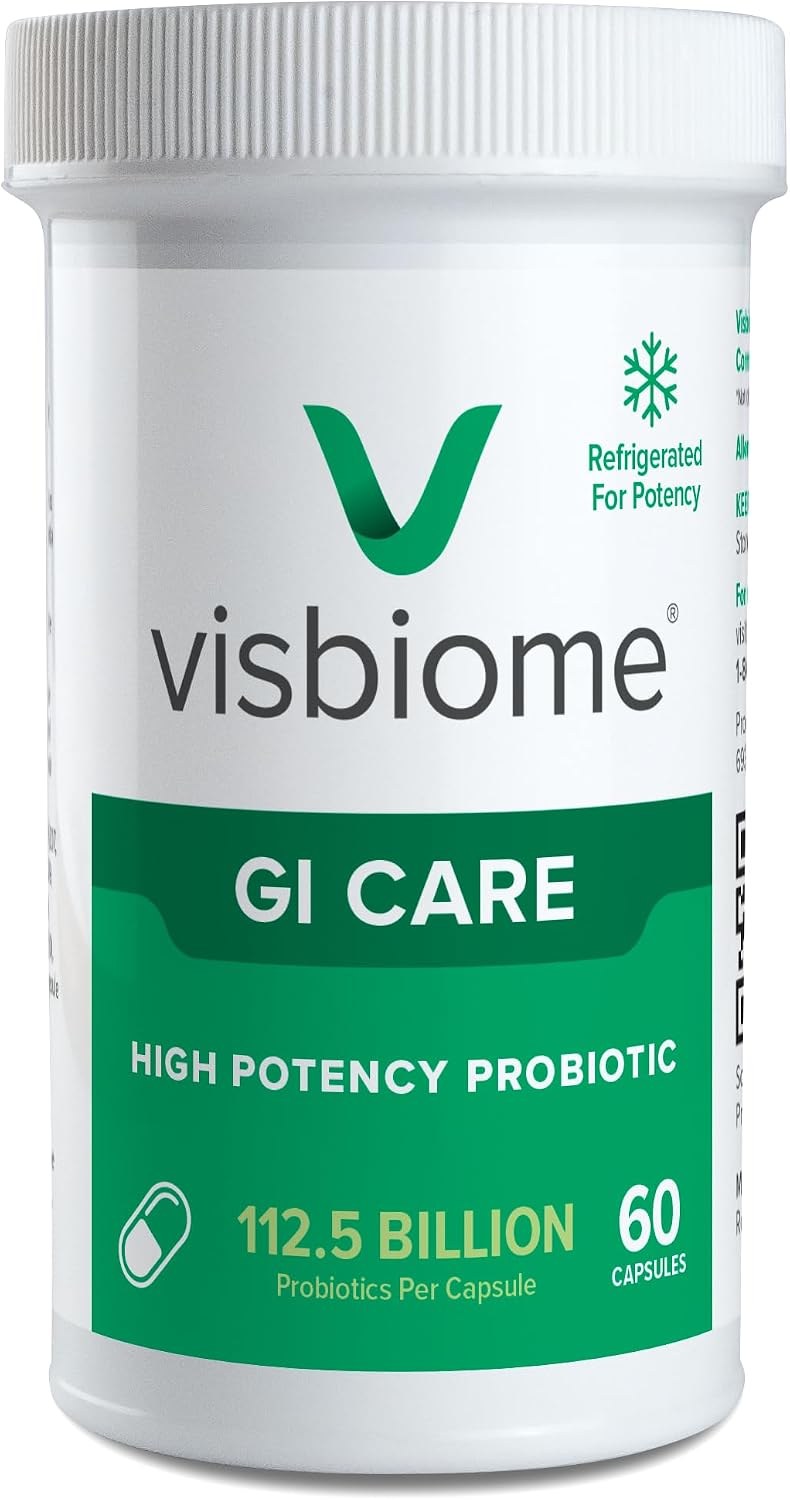
Visbiome High Potency Probiotic
Best for: A clinically studied, high-density multi-strain formula
The high-potency, evidence-heavy option. Visbiome is the De Simone Formulation (the 8-strain blend formerly sold as VSL#3), with all strains individually designated and the most published multi-strain data of any product here, including studies in ulcerative colitis and pouchitis. At 112.5 billion CFU it is genuinely high-density, which is why it ships cold and needs refrigeration. The honest framing: this is a clinical-grade tool, sold as a medical food, and it is overkill (and pricey) for a healthy person who just wants general support.
- The most-published multi-strain formula
- All 8 strains fully designated
- Genuinely high-density (112 billion CFU)
- Requires refrigeration, ships cold
- Overkill for healthy general use
- Among the priciest, no prebiotic
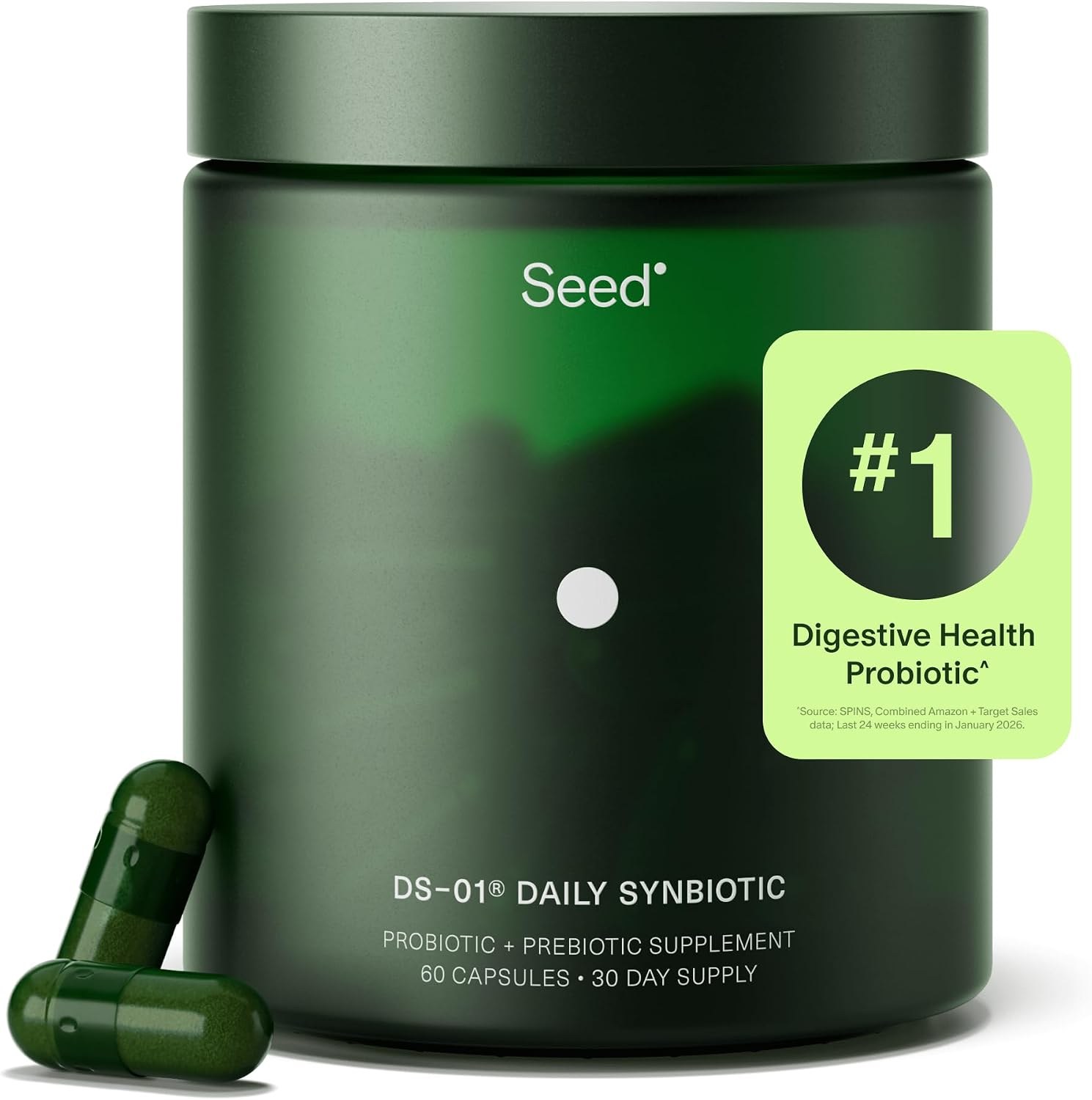
Seed DS-01 Daily Synbiotic
Best for: A transparent, fully-designated multi-strain synbiotic
The premium, do-it-properly synbiotic. Seed's DS-01 lists all 24 strains with full designations and pairs them with a genuine prebiotic, an Indian-pomegranate polyphenol rather than the usual inulin, plus rigorous third-party testing for potency, allergens, and contaminants. If you want a transparent, kitchen-sink daily synbiotic, this is the well-made one. Two honest caveats keep it mid-pack: it is expensive, and it reports its count in AFU (active fluorescent units), a different metric from CFU that you cannot directly compare to the other numbers here.
- All 24 strains fully designated
- Real prebiotic (pomegranate polyphenol)
- Rigorous third-party testing
- Expensive per serving
- Reports AFU, not directly comparable to CFU
- More strains than most people need
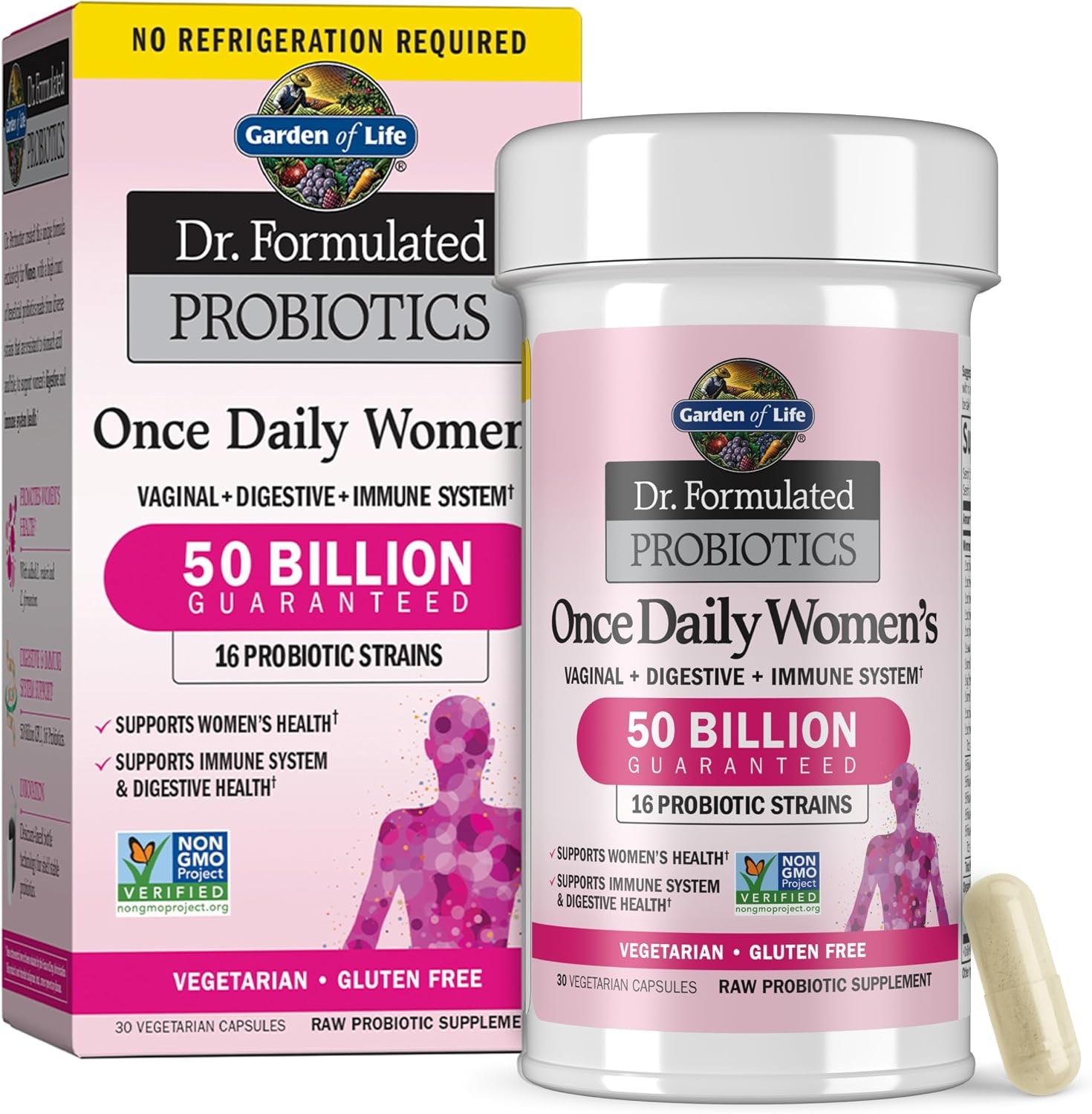
Garden of Life Dr. Formulated Women's
Best for: Women's digestive and vaginal health support
The women's-health pick. Garden of Life's Once Daily Women's includes Lactobacillus reuteri and L. fermentum, the species most associated with vaginal and urinary health, alongside a 16-strain digestive blend and a prebiotic fiber, with clean Non-GMO Project and gluten-free certifications. It is a sensible, targeted choice if women's health is your goal. The honest limit is transparency: most of the 16 strains are listed at the species level without individual strain identifiers, so you get partial, not full, strain clarity.
- Targeted women's-health species (reuteri, fermentum)
- Non-GMO Project + gluten-free verified
- Shelf-stable, once daily, with prebiotic fiber
- Only partial strain designations
- 50 billion CFU is more about marketing than need
- Pricier than single-strain options
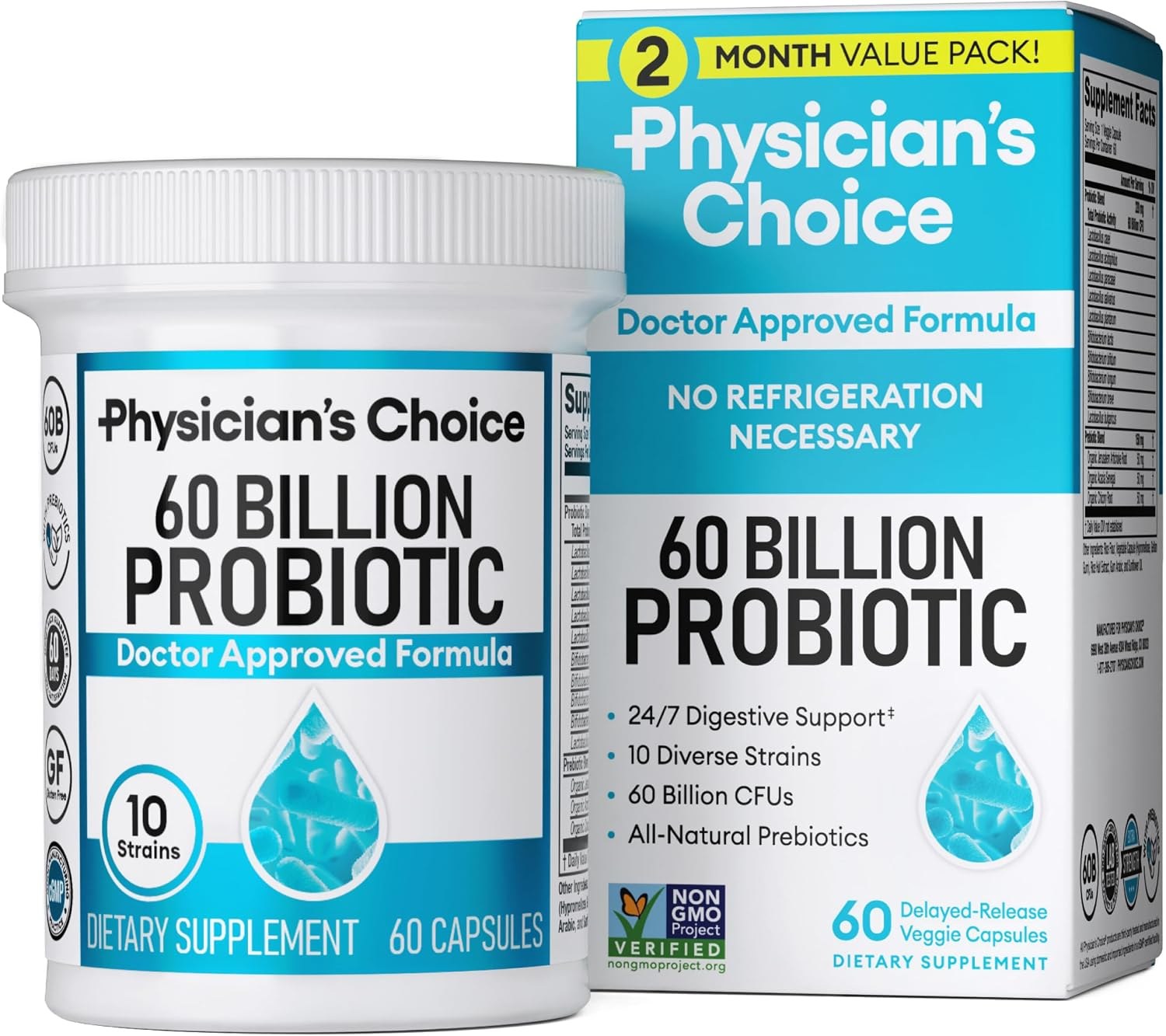
Physician's Choice 60 Billion
Best for: The lowest cost per serving, with eyes open
The budget pick, and the cautionary tale. Physician's Choice gives you 60 billion CFU across 10 species, a prebiotic, and a smart delayed-release acid-resistant capsule, at the lowest price per serving here. As a general, gentle daily it is fine and great value. But it is also the clearest example of the pattern this guide warns about: the label names only genus and species (Lactobacillus acidophilus, Bifidobacterium lactis, and so on) with no strain designations, so that big 60-billion number is doing a lot of the marketing work. Ranked last on transparency, not on value.
- Lowest cost per serving here
- Delayed-release, acid-resistant capsule
- Includes a prebiotic, Non-GMO verified
- No strain designations (the key red flag)
- High CFU stands in for strain specificity
- Generic blend, not matched to a goal
The full lineup, side by side
Read the strain column first, then the testing. The CFU number is the least useful thing on this table, which is rather the point.
| Product | Lead strain(s) | CFU | Storage | Testing | ~ Price / serving |
|---|---|---|---|---|---|
| Culturelle | L. rhamnosus GG | 10 billion | Shelf-stable | NSF-audited facility | $0.73 |
| Align | B. longum 35624 | 1 billion | Shelf-stable | DNA-verified per lot | $1.07 |
| Florastor | S. boulardii CNCM I-745 | ~5 billion | Shelf-stable | Manufacturer QC | $0.87 |
| Visbiome | De Simone 8-strain | 112.5 billion | Refrigerated | Clinical-grade QC | $1.00 |
| Seed DS-01 | 24 designated strains | 53.6 billion AFU | Shelf-stable | Third-party tested | $1.67 |
| Garden of Life Women's | 16-strain (reuteri, fermentum) | 50 billion | Shelf-stable | Non-GMO verified | $1.10 |
| Physician's Choice | 10-strain (no strain IDs) | 60 billion | Shelf-stable | Non-GMO, 3rd-party | $0.43 |
A higher CFU is not a better probiotic. Look for named strains with evidence for your goal, and a count guaranteed through the expiration date. Prices are approximate and change often.
How to choose
Look for the full strain designation
The single most useful habit: read the strain, not the front of the bottle. A quality label gives you genus, species, and a strain identifier, like Lactobacillus rhamnosus GG or Bifidobacterium longum 35624. A label that says only "Lactobacillus acidophilus" is telling you almost nothing about what it actually does.
Ignore the CFU arms race
More billions is not more benefit. Align's IBS data peaked at just 1 billion CFU, and a bigger dose was no better. Past a studied threshold, a huge CFU number is marketing. The same goes for strain count, 24 strains is not inherently better than one.
Match the strain to your goal
This is where probiotics earn their keep: S. boulardii for antibiotic-associated or traveler's diarrhea, LGG for general digestive support, B. longum 35624 for IBS-type bloating, and women's-health species like L. reuteri for vaginal and urinary support.
Refrigerated vs shelf-stable: check the at-expiry guarantee
Both can be excellent. What matters is whether the CFU is guaranteed through the expiration date, not just at manufacture. Modern shelf-stable products with that guarantee are convenient and travel well; only very high-density formulas like Visbiome truly need refrigeration.
Ask whether you need one at all
For many people the honest answer is no. Fermented foods like yogurt, kefir, kimchi, and sauerkraut support gut health day to day. Reach for a supplement for a specific reason, a course of antibiotics, travel, or a strain matched to a diagnosed issue, rather than as a default daily habit.
Frequently asked questions
Do I actually need a probiotic supplement?
Probably not as a daily habit if you are healthy. A diet with fermented foods like yogurt, kefir, kimchi, and sauerkraut supports gut health for most people. Probiotics earn their keep in specific situations: during or after antibiotics, for traveler's digestive upset, or when a specific strain matches a goal like easing IBS-type bloating. If you are managing a health condition, talk to your clinician first.
What matters more, the CFU count or the strains?
The strains, by a wide margin. Benefits are strain-specific, and a high CFU number such as 50 billion or 100 billion is mostly marketing past a certain point. One well-studied strain at a modest dose, like Align working at about 1 billion CFU or Culturelle's LGG at 10 billion, often beats a 50-billion blend that lists only genus and species. Look for the full strain designation, for example L. rhamnosus GG, not just Lactobacillus.
Refrigerated or shelf-stable, which is better?
Either is fine. The real question is whether the CFU count is guaranteed through the expiration date, not just at the time of manufacture. A shelf-stable product with an at-expiry guarantee, like Culturelle, Align, Florastor, or Seed, is convenient and travels well. A few high-density formulas such as Visbiome require refrigeration to keep their live cells viable.
When should I take a probiotic?
Consistency matters more than perfect timing, so take it at the same time each day to build the habit. Many people take it with or just before a meal. Most modern capsules use delayed-release or acid-resistant technology to survive stomach acid, so the exact time of day is less important than taking it daily. Saccharomyces boulardii (Florastor) can be taken any time, including alongside antibiotics.
Can I take a probiotic with antibiotics?
Yes, and it is one of the best-supported uses. Saccharomyces boulardii (Florastor) is ideal here because it is a yeast, so antibiotics do not kill it, and it can be taken at the same time. For bacterial probiotics, a common approach is to separate them from the antibiotic dose by a couple of hours and continue for a week or two after finishing the course. Check with your pharmacist or doctor.
What is the difference between a prebiotic, a probiotic, and a synbiotic?
A probiotic is the live beneficial microbes themselves. A prebiotic is the food that feeds them, typically a fiber like inulin from chicory root or specific polyphenols. A synbiotic combines both in one product. In this list, Culturelle, Garden of Life, Physician's Choice, and Seed are synbiotics, while Align, Florastor, and Visbiome are probiotic-only.
The bottom line
Probiotics are a category where the smart move is to ignore the loudest numbers. For most people who want one, Culturelle wins by delivering the best-studied single strain at an honest dose. Align is the IBS pick, Florastor is what to reach for with antibiotics or travel, and Visbiome is the high-potency clinical option. Seed is the premium synbiotic done transparently, Garden of Life is the women's-health choice, and Physician's Choice is the value buy if you accept its thin strain labeling. Above all: read the strain, match it to your goal, and remember that for a lot of people, food does the job.