Fiber is having a moment. Between the "fibermaxxing" trend and a renewed appreciation for gut health, fiber supplements are flying off shelves, and the marketing makes them sound interchangeable. They are not. The type of fiber matters more than almost anything else: it determines whether a product lowers cholesterol and steadies blood sugar, whether it relieves or worsens constipation, and whether it leaves you comfortable or bloated and gassy. This guide ranks the best fiber supplements by what actually distinguishes them, fiber type and the evidence behind it, gas and fermentation, low-FODMAP suitability, form, and price.
The short story: for most people, Metamucil (psyllium) is the best pick, because psyllium is the most evidence-backed fiber and it is gentle on gas. From there, every product below wins a specific job, from the gentlest non-gas option to the best low-FODMAP choice to the best capsule. For how fiber fits the bigger gut picture, see our gut health guide.
The short version
- Best overall: Metamucil. Psyllium husk, the most-studied fiber for regularity, cholesterol, and blood sugar, and gentle on gas.
- Gentlest on bloating: Citrucel (methylcellulose), which is essentially non-fermenting, or Regular Girl (PHGG) for a low-FODMAP prebiotic.
- Best value purist: Konsyl, 100% psyllium with no additives.
- The type is everything. Psyllium for evidence, methylcellulose or PHGG for sensitive guts, and go easy on inulin if you bloat.
How we ranked them
Fiber supplements differ most in their fiber type, so that drove the ranking:
- Fiber type and evidence. Psyllium has the strongest research for regularity, cholesterol, and blood sugar, so it set the bar. Methylcellulose, wheat dextrin, PHGG, and inulin each have their own profile.
- Gas and fermentation. Whether the fiber ferments (feeding bacteria, but causing gas) or passes through gently.
- Low-FODMAP suitability. Important for anyone with a sensitive gut or IBS.
- Added sugar and form. We favored low or no added sugar; gummies tend to be under-dosed.
- Value. Cost per serving for a daily, long-term habit.
Scores are our editorial assessment on a five-point scale, not customer ratings. Per-serving prices are approximate and change often.
The 7 best fiber supplements
Tap any product to jump straight to its full review.
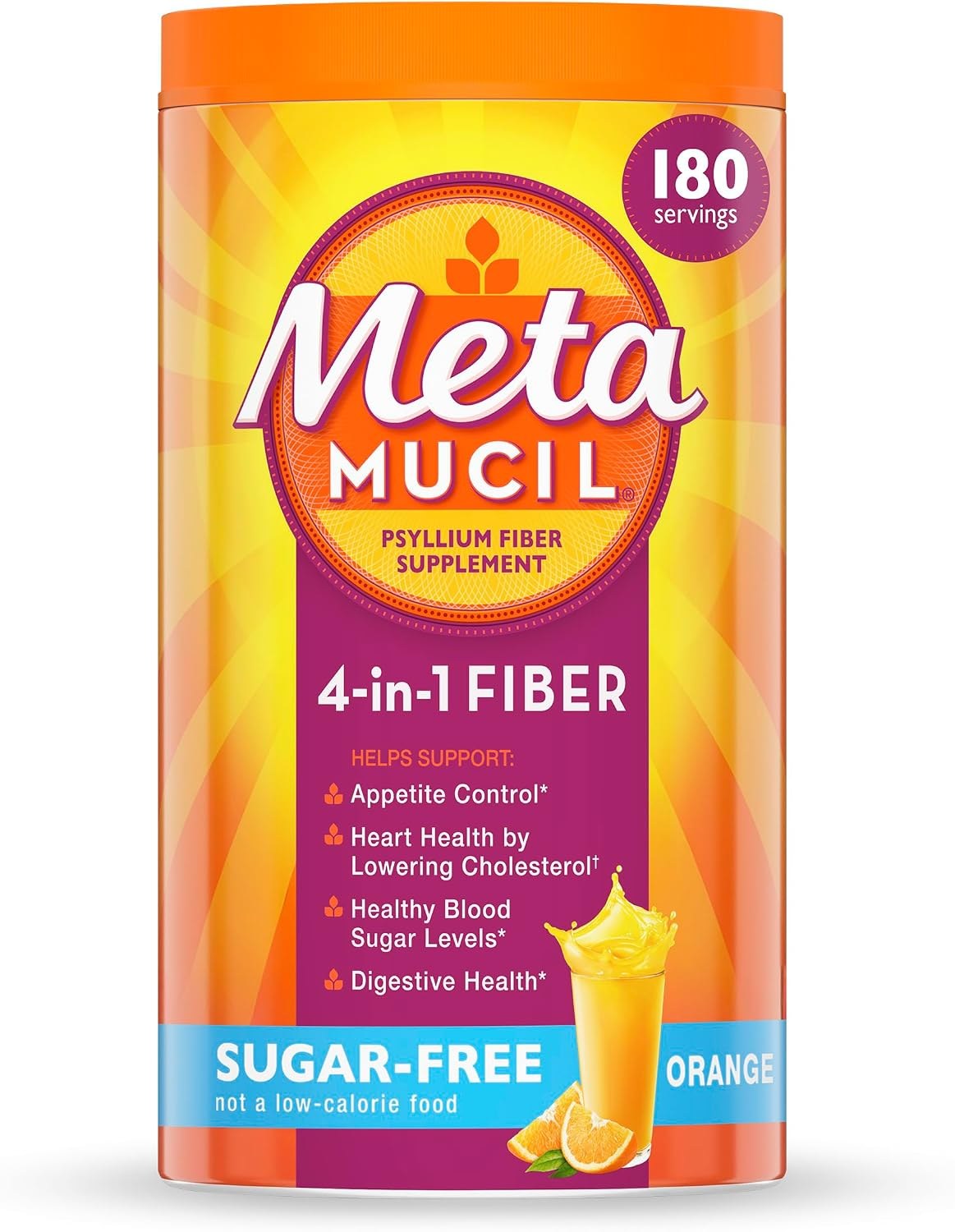
Metamucil 4-in-1 Psyllium Fiber
Best for: The most evidence-backed fiber, in a palatable everyday form
The default for good reason. Metamucil is psyllium husk, the gel-forming soluble fiber with the broadest, strongest evidence, for regularity, supporting healthy cholesterol, and blunting post-meal blood-sugar spikes, and it is the most palatable, widely available way to take it. Psyllium is also minimally fermented, so it is gentle on gas. Two honest notes: the sugar-free version uses aspartame (a real-sugar version exists with about 8 g added sugar), so pick by sweetener preference, and despite a common myth, it is not USP Verified.
- Psyllium, the most-studied fiber
- Helps regularity, cholesterol, and blood sugar
- Low gas, low-FODMAP at normal doses
- Palatable, cheap, everywhere
- Sugar-free version uses aspartame
- Real-sugar version adds ~8 g sugar
- Not third-party certified (no USP)
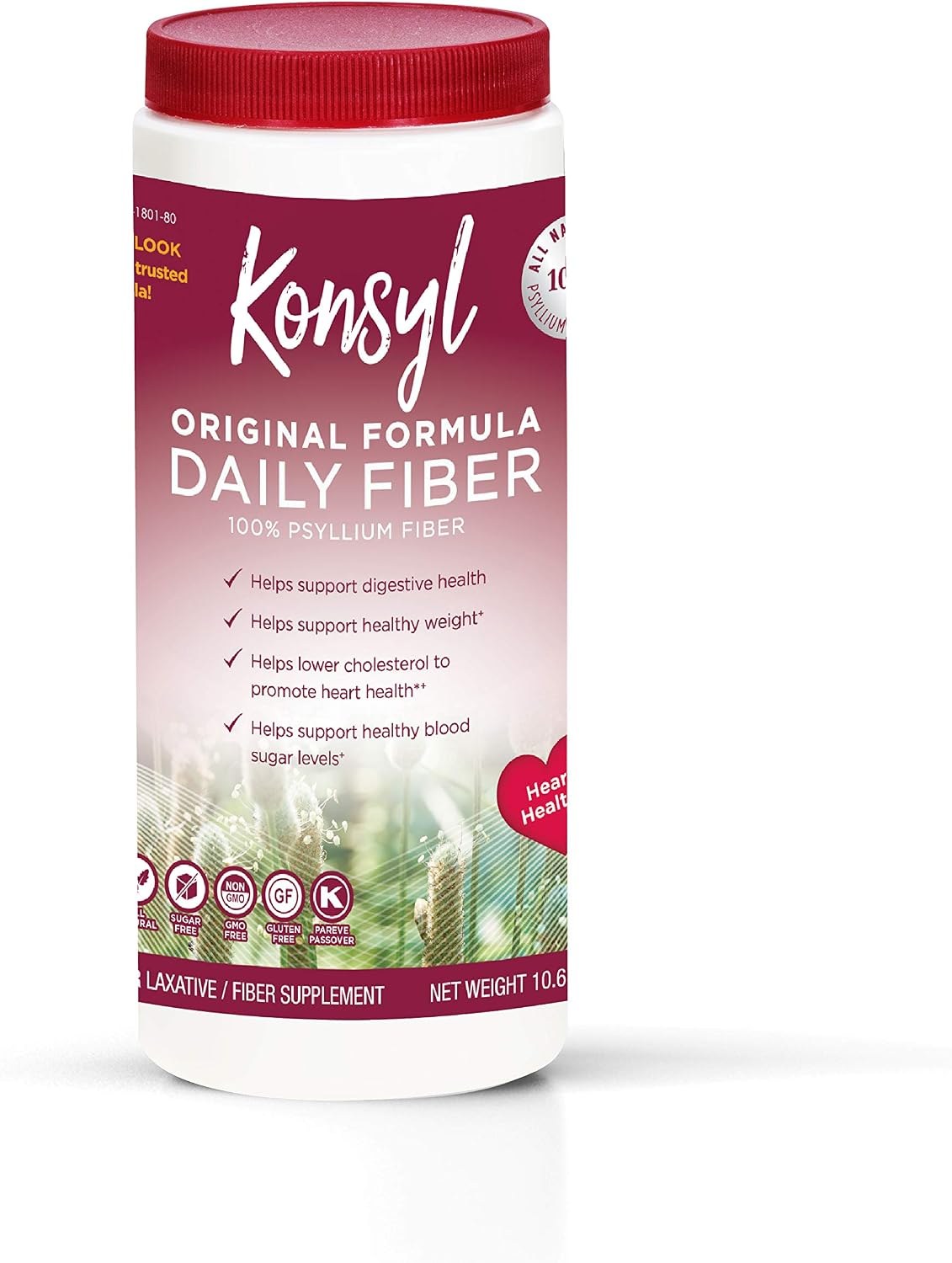
Konsyl Original 100% Psyllium Fiber
Best for: A pure, additive-free, high-potency psyllium
The purist's psyllium. Konsyl Original is 100% psyllium husk with no additives, sweeteners, or sugar, and it packs roughly double the psyllium per dose of typical competitors (about 6 g, yielding 3 g of soluble fiber). For anyone who wants the cleanest possible label and a higher potency, this is the pick. The honest trade-off is practical: pure psyllium with no flow agents gels and clumps almost instantly, so you have to stir and drink it fast, and it costs more per dose than the bulk options.
- 100% psyllium, zero additives or sugar
- Higher potency per dose
- Low gas, low-FODMAP
- The cleanest label here
- Gels fast, must drink immediately
- Pricier per dose than bulk psyllium
- No flavor options
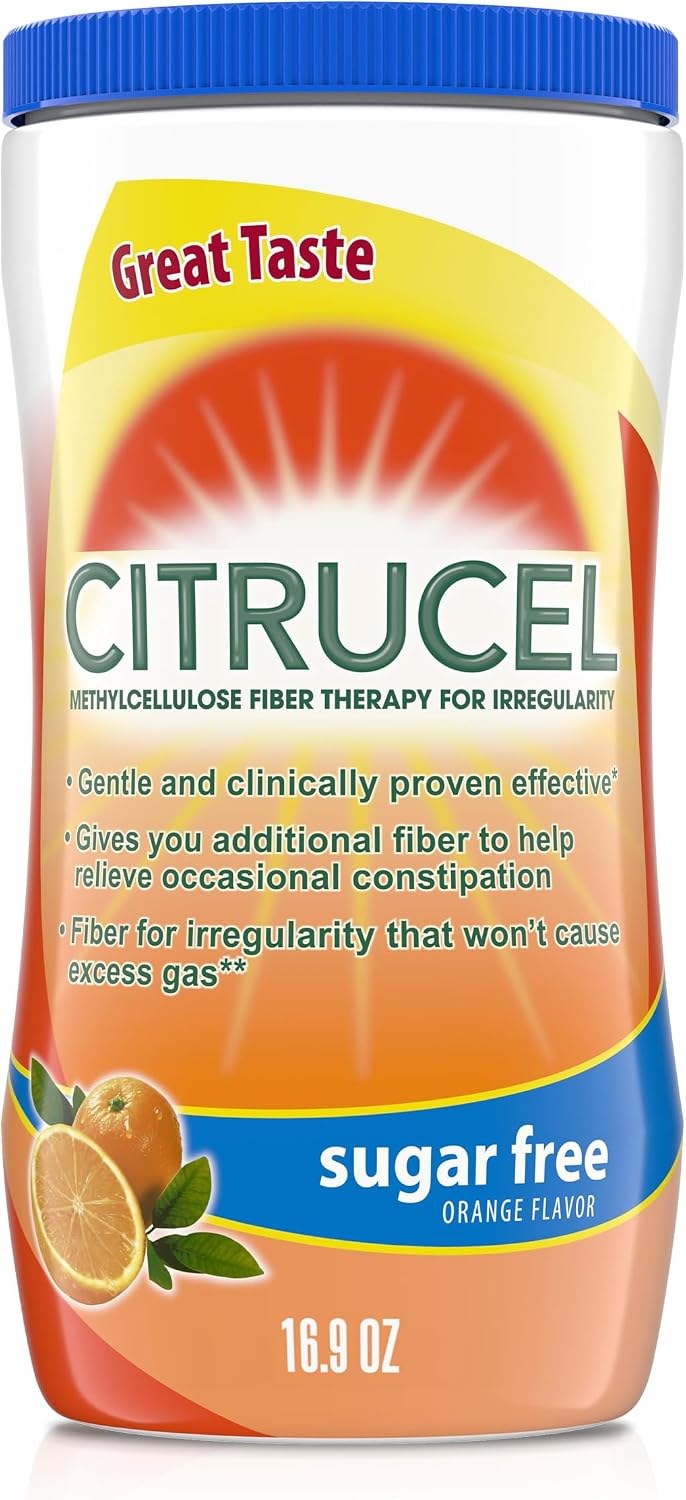
Citrucel Methylcellulose Fiber
Best for: Sensitive stomachs that bloat on other fibers
The gentlest on gas, by design. Citrucel is methylcellulose, a soluble fiber that does not ferment, which is the whole point: no fermentation means little to no gas, making it the standout for anyone who bloats on psyllium or inulin. It is low-FODMAP and gluten-free. The honest limits are dose and sweetener: each scoop is only 2 g (so you take it more than once a day to add up), and the sugar-free version uses aspartame. If gas is your dealbreaker, though, this is the one.
- Non-fermenting, so minimal gas
- Low-FODMAP, gentle on sensitive guts
- Soluble fiber for regularity
- Gluten-free
- Only 2 g per scoop (low dose)
- Sugar-free version uses aspartame
- Not a prebiotic (does not feed gut bacteria)
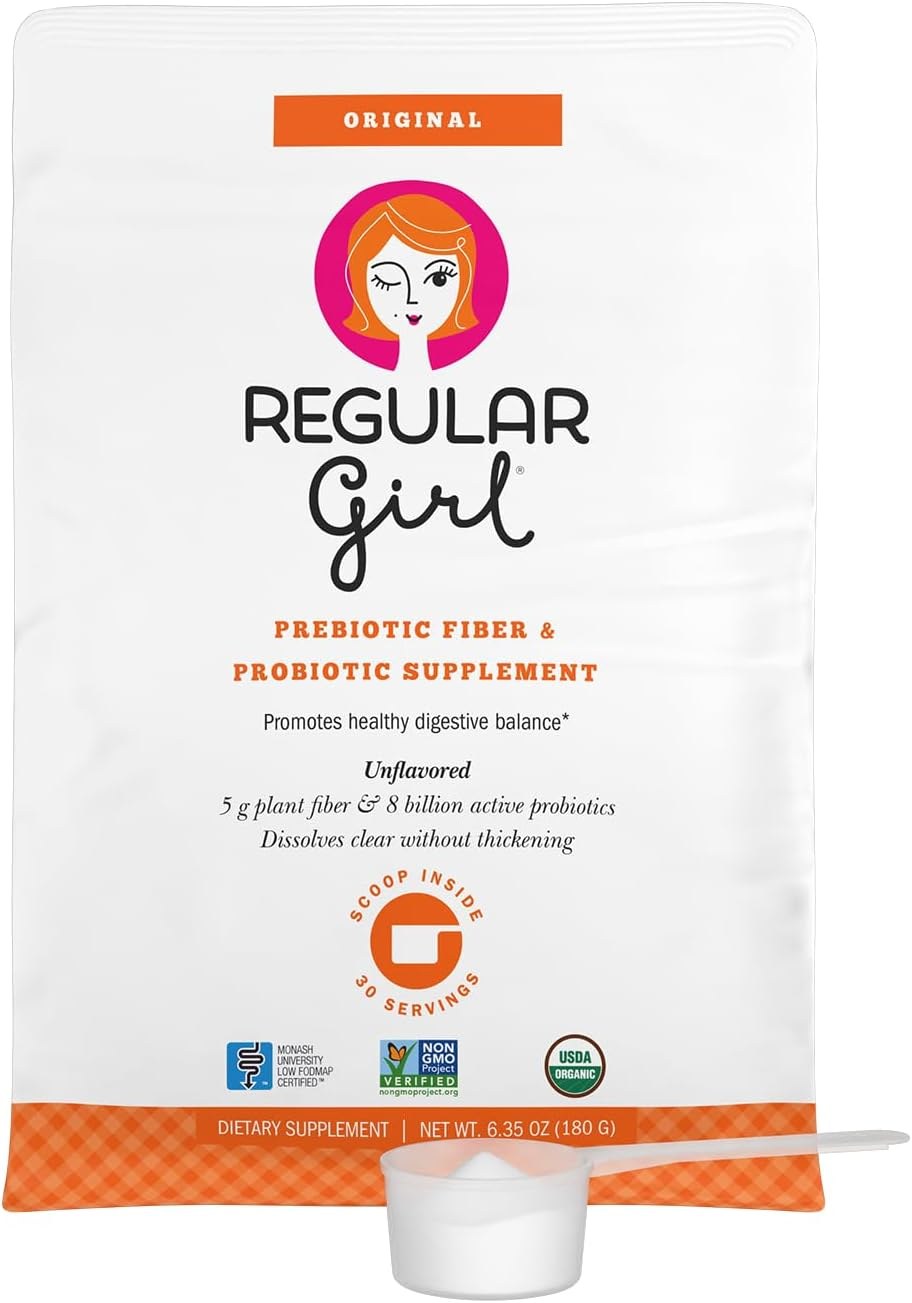
Regular Girl Original (PHGG)
Best for: A gentle, certified low-FODMAP prebiotic for IBS-prone guts
The sensitive-gut specialist. Regular Girl uses partially hydrolyzed guar gum (PHGG, as Sunfiber), a soluble prebiotic that is unusually gentle, it dissolves clear and tasteless and is Monash University Low-FODMAP Certified, a genuine third-party FODMAP mark that almost nothing else here carries. It also adds a probiotic. That makes it the best pick for IBS-prone or easily bloated guts that still want a prebiotic. The catches: it is the priciest per serving, the probiotic count is only guaranteed at manufacture, and 5 g is a moderate dose.
- Gentle, clear-dissolving PHGG
- Monash Low-FODMAP Certified
- Prebiotic plus a probiotic, organic
- Great for sensitive or IBS-prone guts
- Most expensive per serving
- Probiotic CFU guaranteed only at manufacture
- Moderate 5 g dose
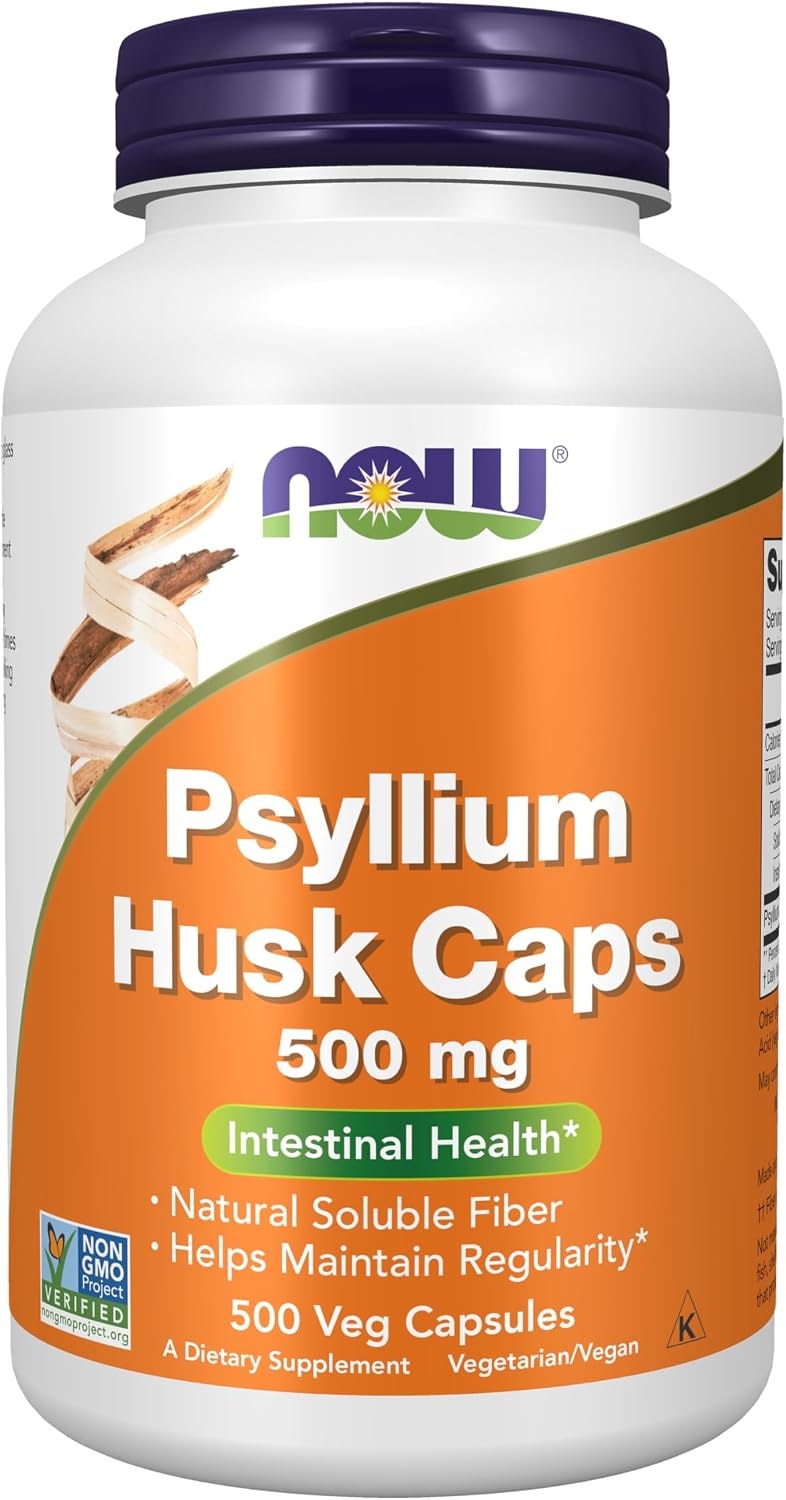
NOW Psyllium Husk Caps
Best for: Taste-free, travel-friendly psyllium with no mixing
The no-mixing option. NOW puts psyllium husk into capsules, so you get the gold-standard fiber with no taste, no stirring, and no gritty glass, ideal for travel or for people who just cannot do powders. It is Non-GMO Project Verified and inexpensive per bottle. The honest reality is efficiency: capsules hold little fiber, so three caps give only about 1.1 g, and matching a tablespoon of psyllium powder means swallowing six to nine-plus capsules a day. Convenient, but a cumbersome way to hit a real fiber target.
- Psyllium with zero taste or mixing
- Travel-friendly, convenient
- Non-GMO Project Verified
- Low gas, low-FODMAP
- Tiny fiber per capsule (~1.1 g per 3)
- Need a big handful to equal one scoop
- Costly per gram of actual fiber
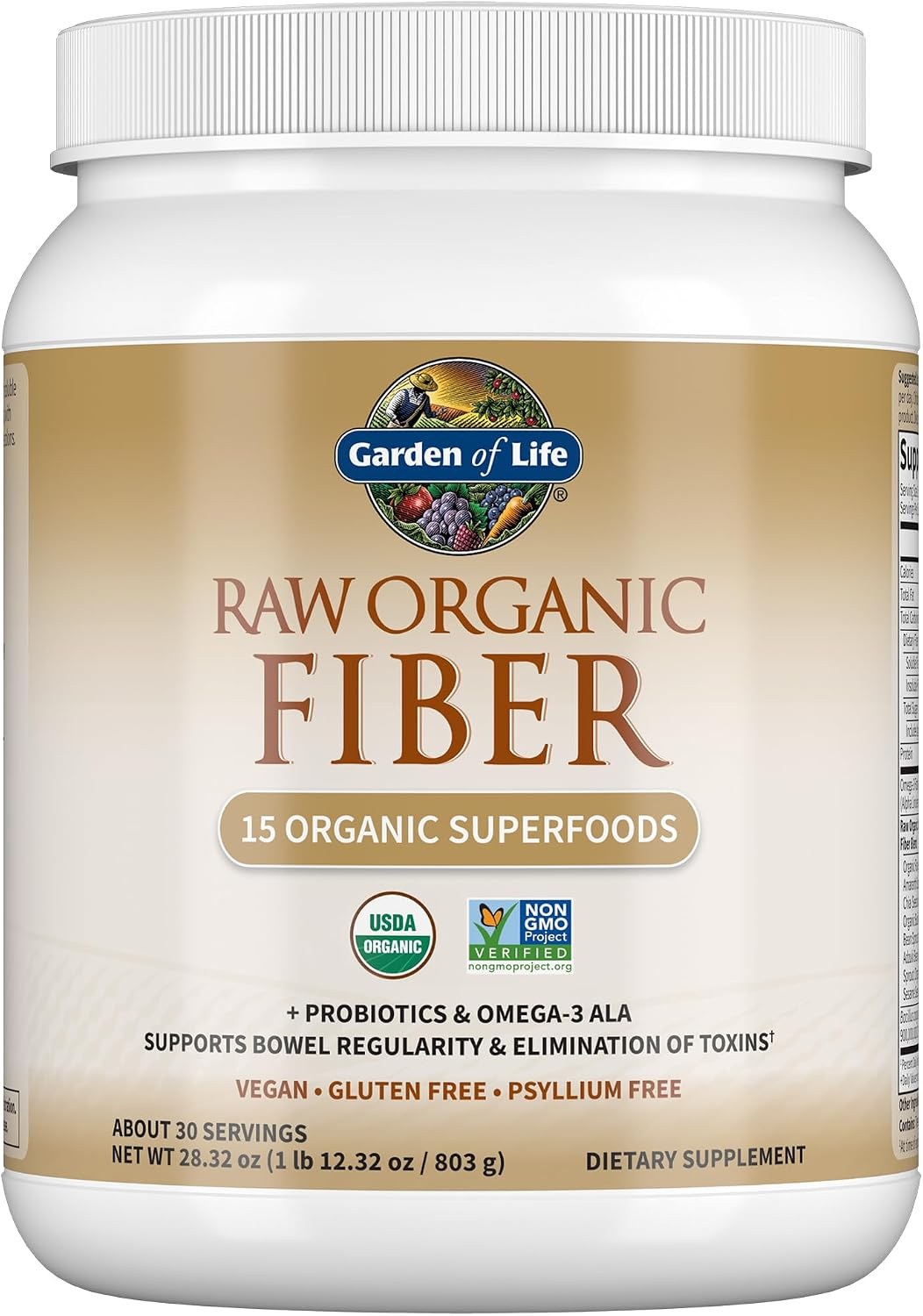
Garden of Life Raw Organic Fiber
Best for: A high-dose, whole-food, psyllium-free organic blend
The whole-food, high-dose option. Garden of Life packs the most fiber here, 9 g per serving (about 4 g soluble, 5 g insoluble), from an organic, psyllium-free blend of flax, chia, and sprouted seeds, plus a probiotic and a little protein and omega-3. It is genuinely USDA Organic and Non-GMO Project Verified, the pick for organic-first shoppers. The honest caveats: it is not low-FODMAP (the sprouted legumes, flax, and chia can trigger gas in sensitive guts), the texture is gritty and earthy, and it is premium-priced.
- Highest fiber dose here (9 g)
- USDA Organic and Non-GMO Project Verified
- Whole-food blend, no added sugar
- Bonus protein and omega-3 ALA
- Not low-FODMAP, can cause gas
- Gritty, earthy texture
- Premium price
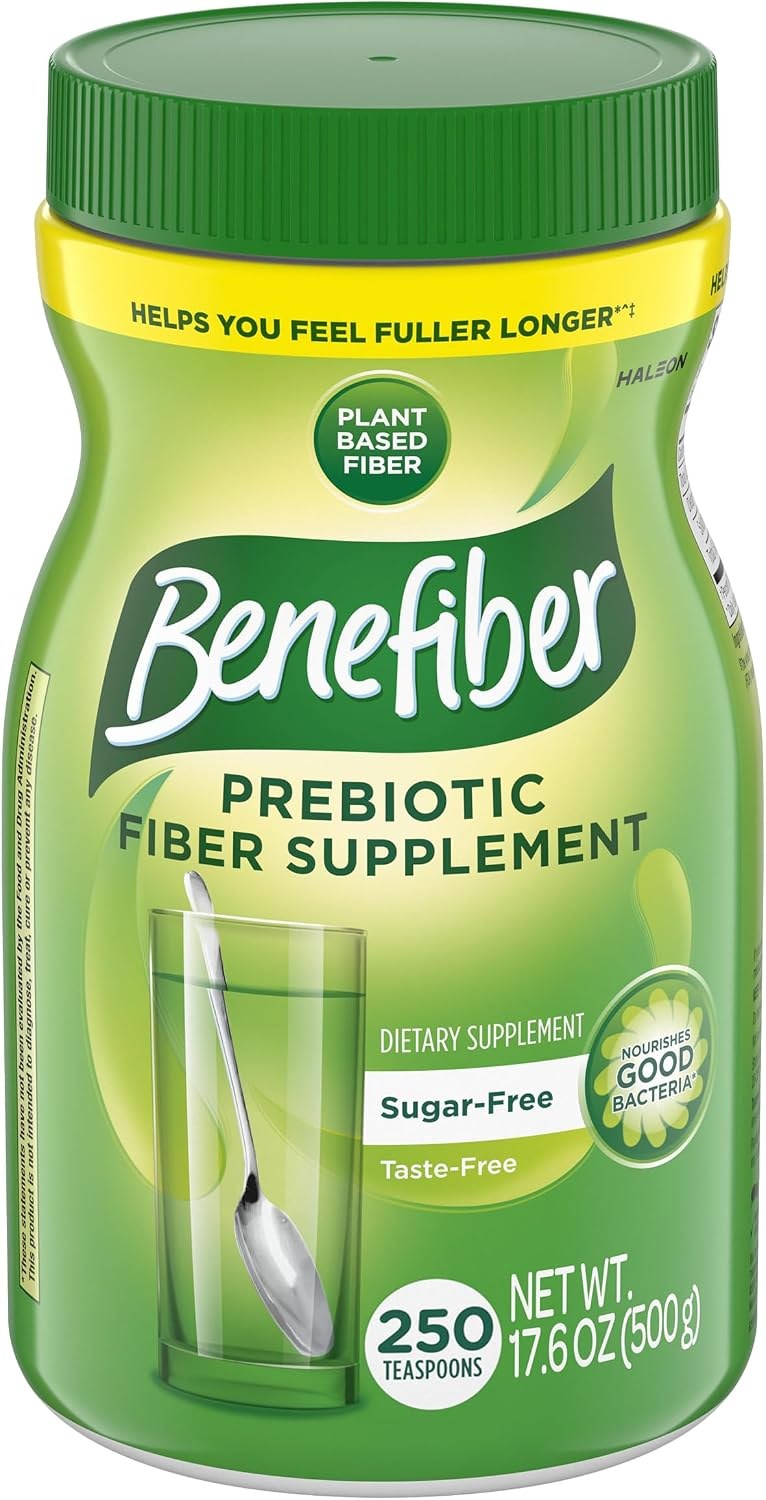
Benefiber Daily Prebiotic
Best for: Stirring invisibly into any food or drink
The disappear-into-anything mixer. Benefiber is wheat dextrin, a soluble prebiotic fiber whose standout trait is that it dissolves completely with no taste or grit, so you can stir it into coffee, water, or food and never notice it, which makes it the easiest to actually stick with. There is no added sugar in the unflavored powder. The honest limits: it is a high-FODMAP, fermenting fiber (so more gas potential and not for strict low-FODMAP diets), it is wheat-derived (gluten-free but not for wheat allergy), and 3 g per serving is on the low side.
- Dissolves invisibly, no taste or grit
- Easiest to stick with daily
- No added sugar (unflavored)
- Inexpensive
- High-FODMAP, ferments (more gas)
- Wheat-derived (avoid with wheat allergy)
- Low 3 g per serving
The full lineup, side by side
Start with the source and gas columns, then check low-FODMAP fit if you have a sensitive gut.
| Product | Fiber | Source | Gas | Low-FODMAP | ~ Price / serving |
|---|---|---|---|---|---|
| Metamucil | 3 g | Psyllium | Low | Yes | $0.25 |
| Konsyl | 6 g psyllium | Psyllium | Low | Yes | $0.55 |
| Citrucel | 2 g | Methylcellulose | None (non-ferment) | Yes | $0.60 |
| Regular Girl | 5 g | PHGG (Sunfiber) | Gentle | Certified (Monash) | $1.00 |
| NOW Psyllium Caps | ~1.1 g / 3 caps | Psyllium | Low | Yes | $0.15 |
| Garden of Life | 9 g | Whole-food blend | Some (prebiotic) | No | $1.30 |
| Benefiber | 3 g | Wheat dextrin | Some | No | $0.22 |
Figures are per labeled serving from current labels. Prices are approximate and change often. Always take fiber with plenty of water.
How to choose the right one for you
Pick the type for your goal
This is the whole decision. For overall health and the most evidence, choose psyllium (Metamucil, Konsyl, NOW caps): it supports regularity, healthy cholesterol, and steadier blood sugar. If your problem is gas and bloating, choose a non-fermenting or low-FODMAP fiber (Citrucel methylcellulose, or Regular Girl PHGG). If you want a genuine prebiotic to feed gut bacteria and tolerate some gas, a fermenting fiber (Benefiber, Garden of Life) fits.
Mind gas, FODMAPs, and your gut
Fermentable fibers, including inulin and chicory root (common in cheap powders and gummies), feed gut bacteria but produce gas, and they are high-FODMAP, a poor fit for IBS or sensitive stomachs. Methylcellulose does not ferment at all, and PHGG is low-FODMAP and gentle. If you bloat easily, that distinction matters more than the fiber gram count.
Start low, go slow, drink water
The number one cause of fiber-related gas and discomfort is ramping up too fast. Start with a small dose, build up over a couple of weeks, and always take fiber with a full glass of water so it does not swell prematurely. This advice applies to every product here.
Watch sugar, skip the gummies
Read the sweetener line: some flavored powders and gummies carry added sugar, and fiber gummies are usually under-dosed (often just 3 to 5 g of inulin). A plain powder or capsule of a studied fiber delivers more usable fiber per serving. Food still comes first, see how fiber and prebiotics fit together in our guide to probiotics, prebiotics, and postbiotics.
Separate fiber from medications
Fiber can bind to and slow the absorption of some medications, so take a fiber supplement about two hours apart from any medication, and check timing with your pharmacist if you take prescription drugs. This is a practical habit, not a reason to avoid fiber.
Frequently asked questions
What is the best fiber supplement?
For most people, a psyllium husk product like Metamucil is the best choice, because psyllium has the strongest evidence for regularity, cholesterol, and blood sugar, and it is gentle on gas. If you are prone to bloating, methylcellulose (Citrucel) or partially hydrolyzed guar gum (Regular Girl) are gentler, non-fermenting or low-FODMAP options.
Which fiber supplement causes the least gas?
Methylcellulose (Citrucel) is essentially non-fermenting, so it produces little to no gas, which makes it the gentlest on bloating. Partially hydrolyzed guar gum (PHGG, in Regular Girl) is also low-FODMAP and gentle. By contrast, inulin and chicory-root fibers, and prebiotic fibers in general, ferment in the gut and are the most likely to cause gas and bloating.
Is psyllium better than inulin or wheat dextrin?
For overall evidence, yes. Psyllium is a gel-forming soluble fiber with the strongest research for regularity, cholesterol, and post-meal blood sugar, and it is low-FODMAP. Inulin is a genuine prebiotic but commonly causes gas and is high-FODMAP. Wheat dextrin (Benefiber) dissolves invisibly but is high-FODMAP and ferments. The best type depends on your goal and your gut.
Do fiber gummies work?
They are usually under-dosed. Most fiber gummies provide only about 3 to 5 grams, often from inulin or chicory root, so you would need to eat a lot to approach a daily target, and the inulin can cause gas. A powder or capsule from a well-studied fiber like psyllium delivers more usable fiber per serving. Gummies are convenient but not the most effective way to supplement fiber.
How much fiber do I need, and how should I start?
General targets are about 25 grams a day for women and 38 grams for men, and most people fall short. Food should come first; a supplement fills the gap. Start with a small dose, increase slowly over a couple of weeks, and drink plenty of water. Ramping up too fast is the main cause of gas and bloating.
Can fiber supplements affect my medications?
Yes. Fiber can bind to some medications and slow or reduce their absorption, so take supplemental fiber about two hours apart from any medication. If you take prescription drugs, especially ones with a narrow dosing window, check with your pharmacist about timing. Always take fiber with enough water to avoid it swelling before it reaches the stomach.
The bottom line
The best fiber supplement is the one whose fiber type matches your goal and your gut. For most people that is Metamucil psyllium, the most-studied, do-it-all choice, with Konsyl the purist's upgrade. If you bloat, reach for Citrucel (non-fermenting) or Regular Girl (low-FODMAP). Want a no-mix option, NOW capsules; an organic high-dose blend, Garden of Life; or an invisible mixer, Benefiber. Whatever you choose, start low, build slowly, drink water, and remember a supplement tops up a fiber-rich diet, it does not replace one.