Phosphatidylserine (PS) is a fat-like molecule that helps build the membranes of brain cells. It is sold for memory, focus and stress, and its reputation rests mostly on studies from the 1980s and early 1990s. Those studies used PS extracted from cow brains. The PS sold today is made from soy or sunflower lecithin, has a different fatty acid makeup, and has a much thinner record.
We read the labels of 26 PS products on Amazon US and ranked seven on dose, how clearly the label states the real PS amount, testing we could confirm, cost per 300 mg of PS, and marketing. The biggest trap is the label: "PS complex 500 mg" can mean only 100 mg of PS.
The short version
- Best overall: Double Wood Phosphatidylserine, 300 mg of PS a day with NSF contents certification we confirmed, at about $0.33 a day.
- Best soy-free: Bestvite with Sharp-PS Green (about $0.83 per 300 mg), or Nutricost sunflower PS for less (about $0.60).
- Look for the PS amount, not the complex weight. Raw materials range from about 20 to 70 percent PS.
- The famous memory results came from cow-brain PS. The largest university-run trial of soy PS found no memory benefit, and the EU's food safety agency rejected PS memory and stress claims in 2010.
- Stress-hormone results are small and mixed, and the best-known positive trials were funded by the supplement industry.
How we ranked them
To qualify, a product needed PS as its main ingredient, a readable Supplement Facts panel in its Amazon images, and the brand or Amazon as the seller. Scoring:
- Dose match (20%). The label's directions reach 300 mg of PS a day, the dose in most trials.
- PS transparency (20%). Full marks for the PS amount and its source on the panel; less when a bigger complex weight is the headline or the PS line is ambiguous.
- Testing (20%). Full marks only for a contents certification we confirmed on the certifier's own site.
- Cost per 300 mg of PS (15%), from Amazon prices on November 4, 2026.
- Branded ingredient (10%). A small edge for a named, specified PS such as Sharp-PS or SerinAid.
- Formulation (5%) and marketing (10%). Points off for unneeded add-ins and for claims beyond the evidence.
What phosphatidylserine can and cannot do
Cow-brain PS versus today's PS. In the early trials, 300 mg a day of bovine brain PS improved memory scores, mostly in older people with memory problems or cognitive decline. Cow-brain PS was largely abandoned in the 1990s over mad cow disease concerns. FDA lets labels make a qualified claim about PS and the risk of dementia or cognitive dysfunction in older adults, but only with its disclaimer that "there is little scientific evidence supporting this claim," and every supportive study FDA counted used bovine PS. In 2010, the EU's food safety agency rejected PS claims for memory and stress, noting that bovine and soy PS are different substances.
Memory trials of soy and sunflower PS. The largest university-run trial gave 120 older adults with memory complaints 300 or 600 mg of soy PS a day for 12 weeks and found no difference from placebo. A Japanese trial of 78 people found that placebo improved about as much as PS, with gains only in a low-scoring subgroup; it was run by the PS maker. A Sharp-PS study of 30 older adults reported better recall, but it had no placebo group and every author was a current or former employee of the ingredient maker. The only published trial of sunflower PS we found, in children, found no difference from placebo on its main measures. A PS product with omega-3 attached beat placebo on one memory measure in a maker-funded trial.
Stress and exercise. In 10 men, 600 mg a day of soy PS for 10 days lowered the cortisol rise during moderate-intensity cycling; a supplement consultancy funded the work and a PS supplier paid for its publication. Lipogen's PS plus phosphatidic acid complex, 400 mg of each a day, softened the stress-hormone response in a 75-man trial, but only in men with high chronic stress, and Lipogen and Lonza funded it. Other trials at 400 and 750 mg a day found no cortisol effect. One small trial found longer cycling to exhaustion at 750 mg a day, while trials on soreness and muscle damage found nothing. For other approaches to stress hormones, see our guide to lowering cortisol.
Safety and labels. Soy PS at up to 600 mg a day for 12 weeks caused no more side effects than placebo in the largest soy PS trial. We found no pregnancy data, and Health Canada advises against PS foods in pregnancy and breastfeeding. Soy PS starts from soy lecithin, which carries traces of soy protein, so people with a soy allergy should choose sunflower PS or ask their allergist. Label accuracy is a real issue: in 2024 ConsumerLab found one PS product with about 10 percent of its labeled amount, and NOW recalled two lots of its 300 mg softgel. Look for "providing X mg phosphatidylserine" on the label.
The 7 best phosphatidylserine supplements
Tap any product to jump straight to its full review.
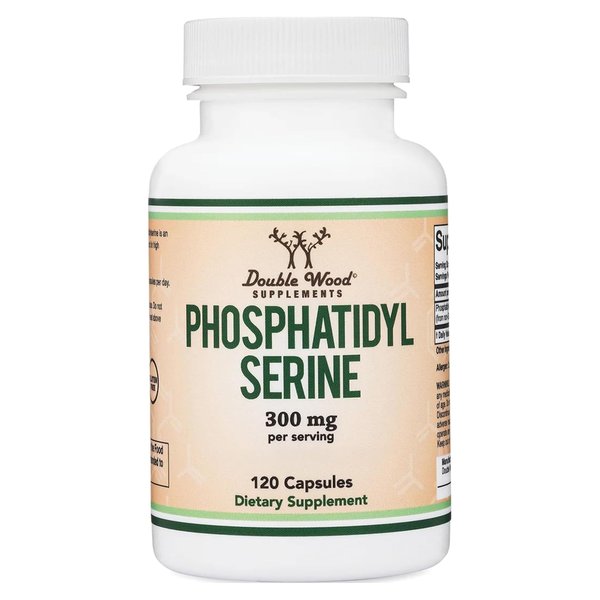
Double Wood Phosphatidylserine 300 mg (120 capsules)
Best for: Certified contents at the trial dose
The best-verified PS here: NSF contents certification we confirmed, 300 mg a day in two capsules, for about $0.33 a day. Its panel wording is confusing, and its cortisol marketing outruns the evidence.
- NSF/ANSI 173 contents certification, confirmed on NSF's site; one of only two PS products we found listed there
- 300 mg of PS a day in two capsules, the dose used in most memory trials
- About $0.33 a day, the lowest cost per 300 mg of any capsule here
- The panel prints "300mg (Standardized to 20%)", which can be misread as 60 mg of PS; NSF certifies it as "Phosphatidyl Serine 300 mg"
- Its title and images promote cortisol support, which small trials only partly back
- Soy-derived, in a gelatin capsule; a gallery image calls the 60-serving bottle a one-month supply
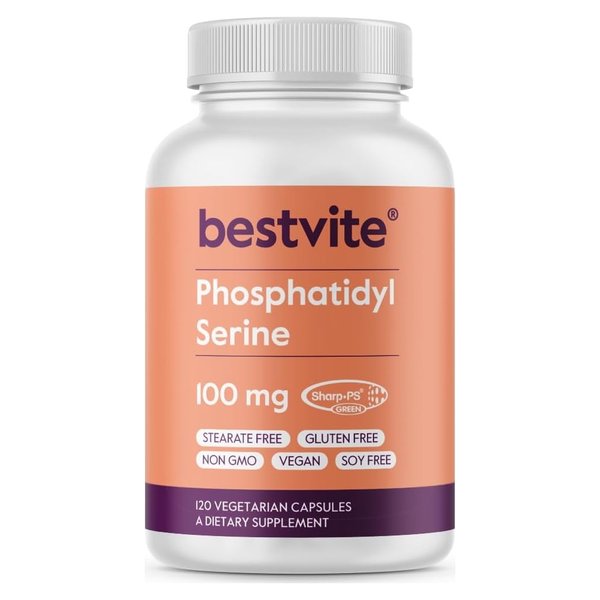
Bestvite Phosphatidyl Serine 100 mg, Sharp-PS Green (120 vegetarian capsules)
Best for: Avoiding soy with a branded PS
A branded sunflower PS, Sharp-PS Green, at 300 mg a day for about $0.83, for people avoiding soy. Its testing claim names no lab.
- Sharp-PS Green, a branded sunflower PS, so it suits people avoiding soy
- The label gives 100 mg of PS per capsule with its source, and directions reach 300 mg a day
- A vegetarian capsule with only rice flour and silica added
- Its testing claim names no lab, and we could not confirm its maker's facility certification
- Only about 60 ratings
- About $0.83 a day at the 300 mg dose
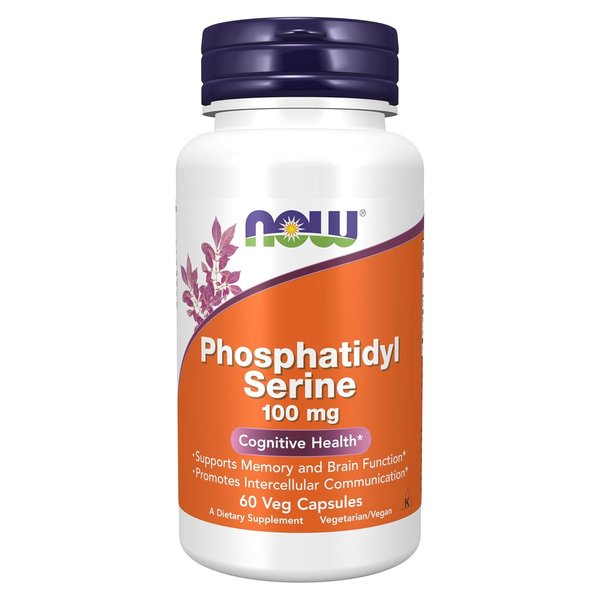
NOW Foods Phosphatidyl Serine 100 mg (60 veg capsules)
Best for: A plain soy PS from a major brand
A plain soy PS capsule from a big brand with the most restrained label here, at about $0.92 per 300 mg. It adds choline and inositol you may not need.
- The only product here with no marketing deductions: plain structure-function wording and no cortisol or sleep claims
- 100 mg of soy PS per vegan capsule, with directions that reach 300 mg a day
- Sold by Amazon itself, not a third-party seller
- Adds 100 mg of choline and 50 mg of inositol per capsule, which the PS trials did not use
- NOW recalled two lots of its separate 300 mg softgel in January 2024 after a lab found about 10 percent of the labeled PS; this capsule was not part of that recall
- Its quality claims describe factory audits and in-house labs, not a product test we could confirm
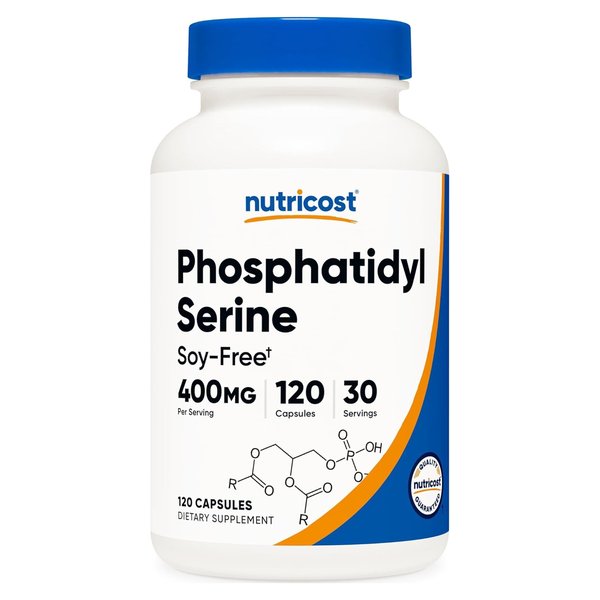
Nutricost Phosphatidylserine 400 mg, Soy-Free (120 capsules)
Best for: Soy-free PS on a budget
The cheapest sunflower PS per 300 mg, about $0.60, with a clear label. The listing and the label disagree on how many capsules to take.
- The lowest cost per 300 mg of any sunflower PS here, about $0.60
- States 400 mg of PS per four capsules from sunflower lecithin, with the carrier listed separately
- A factual listing with no cortisol or memory promises
- The listing says two capsules a day; the label says four (400 mg), which costs about $0.80 a day
- Its testing claim names no lab; ConsumerLab's 2024 public summary lists a Nutricost PS among products tested and reports only one failure, a NOW softgel
- Sold by the brand's own seller account rather than Amazon
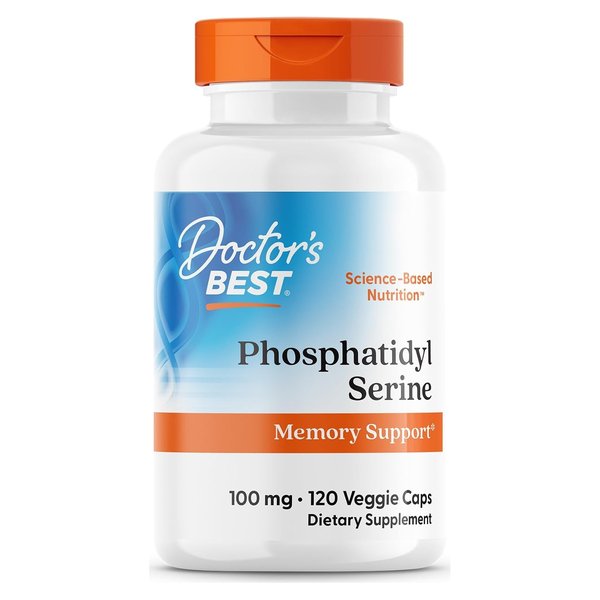
Doctor's Best Phosphatidylserine with SerinAid 100 mg (120 veggie capsules)
Best for: A branded soy PS at the trial dose
SerinAid soy PS at the 300 mg trial dose for about $0.75 a day. Its ingredient lists do not match across its own materials.
- SerinAid, a branded soy PS from Chemi Nutra, at 100 mg per vegan capsule
- Directions call for three a day, the 300 mg dose used in most memory trials
- About $0.75 per 300 mg
- The panel image does not name the soy source; only the listing's allergen line does
- Shows three different other-ingredient lists across its panel, listing and website
- A comparison chart marks unnamed "other brands" as worse; its testing claim names no lab, though ConsumerLab's 2024 public summary implies it passed
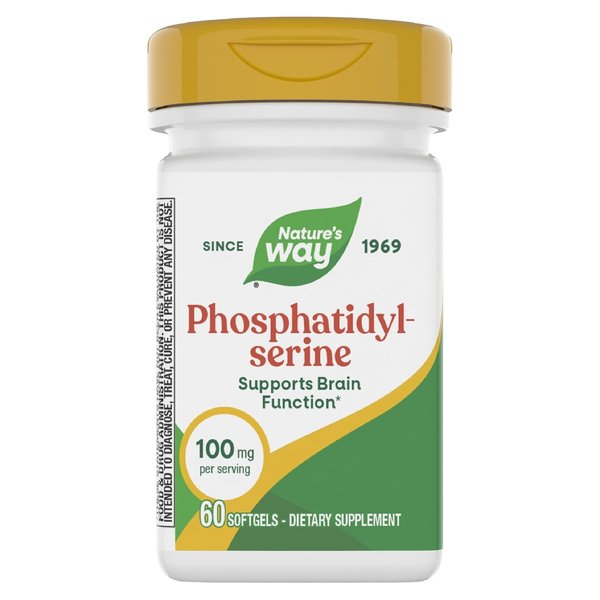
Nature's Way Phosphatidylserine 100 mg (60 softgels)
Best for: Softgel users avoiding soy
A sunflower PS softgel with clear directions, at about $1.72 per 300 mg. A bottle lasts only 20 days at three a day.
- Sunflower PS in a softgel, for people who prefer softgels and want to avoid soy
- Clear directions: three a day for a month, then two
- Sold by Amazon, with no cortisol or memory promises
- About $1.72 per 300 mg, and a bottle lasts only 20 days at three a day
- Gelatin softgel, so not vegetarian
- Its testing claim names no lab
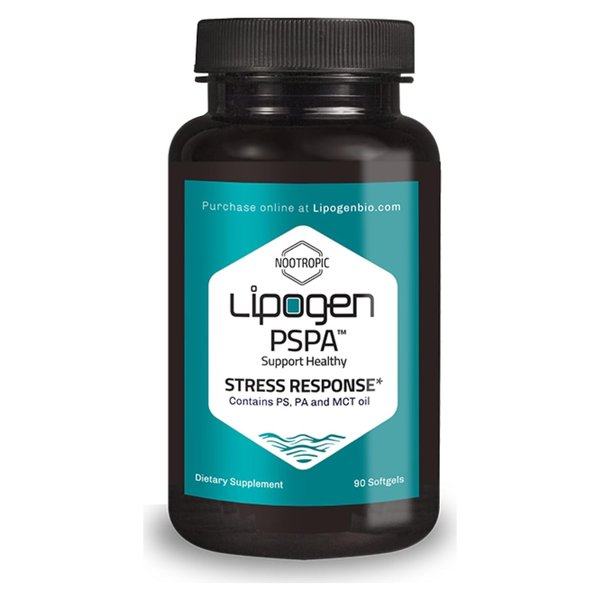
Lipogen PSPA, PS plus Phosphatidic Acid (90 softgels)
Best for: Trying the PS plus PA formula
The PS plus phosphatidic acid formula tested in Lipogen's stress-hormone trials, at the trial dose. Those trials were small and maker-funded, and its marketing goes further than they did.
- The same type of PS plus phosphatidic acid complex, at 400 mg of each a day, used in the maker's 2014 stress-hormone trial
- The label separates the 3,300 mg phospholipid complex from its 400 mg of PS and 400 mg of PA
- Sold by the ingredient's maker
- The 2014 trial was funded by Lipogen and Lonza and helped only highly stressed men; a 2004 trial worked only at its lowest dose
- Its title promises cortisol management and immune support, beyond what the trials showed
- About $1.66 a day, no testing claim, and a 3.8-star average from about 40 ratings
The full lineup, side by side
Amounts come from each product's Supplement Facts panel on its Amazon listing, read November 4, 2026. Costs use the PS amount, not the weight of the lecithin complex.
| Product | Source | PS per day (label) | Testing | Cost per 300 mg PS | Cost per day | Score |
|---|---|---|---|---|---|---|
| #1 Double Wood | Soy | 300 mg | NSF/ANSI 173 (confirmed) | $0.33 | $0.33 | 4.3 |
| #2 Bestvite | Sunflower (Sharp-PS Green) | 300 mg | Unnamed claim | $0.83 | $0.83 | 4.2 |
| #3 NOW 100 mg | Soy | Up to 300 mg | Unnamed claim | $0.92 | $0.31 to $0.92 | 4.2 |
| #4 Nutricost | Sunflower | 400 mg | Unnamed claim | $0.60 | $0.80 | 4.1 |
| #5 Doctor's Best | Soy (SerinAid) | 300 mg | Unnamed claim | $0.75 | $0.75 | 4.0 |
| #6 Nature's Way | Sunflower | 300 mg, then 200 mg | Unnamed claim | $1.72 | $1.15 to $1.72 | 4.0 |
| #7 Lipogen PSPA | Soy (PS plus PA) | 400 mg | None claimed | $1.25 | $1.66 | 4.0 |
Prices are single-bottle, one-time Amazon prices on November 4, 2026 and change often. Cost per 300 mg PS compares products at the usual trial dose; cost per day uses the label's directions. Testing is what we could confirm on a certifier's own site; an unnamed claim names no lab or program.
How to choose, and what to check first
Aim for 300 mg of PS a day. That is the dose in most memory trials and in Health Canada's monograph, usually split into three 100 mg doses with meals. Memory trials ran 12 weeks to 6 months.
Check the PS line. If a label lists only a "PS complex" weight, the real PS content is unknown. Pick sunflower PS if you avoid soy. For other brain-focused options, see our nootropic rankings and cognitive top picks.
- Pregnancy and breastfeeding. We found no safety data; skip PS unless your provider advises otherwise.
- Soy allergy. Choose sunflower PS or ask your allergist.
- Memory changes. New forgetfulness or confusion needs a medical check, not a supplement.
Frequently asked questions
Does phosphatidylserine work?
The strongest results came from cow-brain PS, which was largely abandoned in the 1990s. Trials of today's soy and sunflower PS are small and mostly maker-run, and the largest university-run one found no memory benefit. Small trials suggest it may soften the stress-hormone response in some people.
How much phosphatidylserine should I take?
Most trials used 300 mg a day, often as 100 mg three times a day with meals. Stress and exercise trials used 400 to 750 mg a day for shorter periods. Count the PS amount on the label, not the complex weight.
Is sunflower PS better than soy PS?
We found no human trial comparing them. Sunflower PS avoids soy, which matters for people with a soy allergy; most of the adult trials used soy PS.
Does phosphatidylserine lower cortisol?
In a few small trials, 600 mg of soy PS or a PS plus phosphatidic acid complex reduced the cortisol rise during exercise or a stress test, the complex worked only at the lowest of three doses in one trial and only in highly stressed men in another. Other trials found no effect, and several were funded by the supplement industry.
Is phosphatidylserine safe?
Up to 600 mg a day for 12 weeks caused no more side effects than placebo in older adults. We found no pregnancy data, and people with a soy allergy should choose sunflower PS.
The bottom line
Phosphatidylserine's reputation comes from cow-brain PS; the soy and sunflower PS sold today has weaker, mostly maker-run evidence. If you want to try it, take 300 mg a day of a product that states its real PS amount. Double Wood is the best-verified choice, Bestvite and Nutricost are good soy-free options, and Lipogen PSPA matches the formula its maker tested for stress hormones.