The children's vitamin aisle is built to make parents feel that skipping it is a risk. The reality is calmer and more useful: most healthy kids who eat a reasonably varied diet do not need a multivitamin at all, the nutrients they are actually most likely to lack are the ones gummies quietly leave out, and the biggest safety issue in the category is one parents rarely hear about. This guide ranks the kids' multivitamins genuinely worth buying, judged on sensible dosing, third-party testing, and sugar, and it is honest first about whether your child needs one.
The short story: if your child eats a normal, varied diet, the single supplement worth prioritizing is vitamin D, not a multivitamin. If you do want a multi, pick one that is third-party tested and not loaded with sugar, and know that nearly all of them skip iron on purpose. Read the framing first, because with kids' vitamins, whether to buy matters as much as which to buy.
Read this first: most kids don't need a multivitamin
The American Academy of Pediatrics is clear that healthy children eating a well-balanced diet do not need vitamin supplementation beyond the recommended intake. The one broad exception is vitamin D, which is hard to get from food and is recommended for essentially all infants and children. A multivitamin is a reasonable gap-filler for a defined minority: genuinely picky eaters, kids on vegan, vegetarian, or restrictive diets, and children with certain medical conditions. For everyone else, it is optional insurance, not a requirement.
There is a real safety point too. Iron supplements are a leading cause of poisoning in young children, which is exactly why kids' gummies contain no iron and why any iron-containing product must be stored locked away. And because gummies look and taste like candy, kids overeat them, so more is never better. We cover whether a multivitamin is worth it at all in our companion guide, do you actually need a multivitamin?
The short version
- Best overall: Nature Made Kids First, the only pick here that is USP Verified, with vitamin D and omega-3 in one low-sugar gummy.
- Best no sugar: Hiya, a zero-sugar chewable rather than a candy-like gummy.
- The one nutrient worth prioritizing for most kids is vitamin D, not a full multivitamin.
- Nearly all kids' gummies skip iron on purpose, for safety, so a multi does not cover an iron gap.
- Safety first: store every supplement out of reach, treat the daily dose as fixed, and handle iron only with a pediatrician.
How we ranked them
We ranked these by what makes a children's vitamin genuinely worth giving, and we weighed four things:
- Sensible, honest dosing. Age-appropriate amounts that fill real gaps (vitamin D above all) without megadosing anything, since more is not better and fat-soluble vitamins can build up.
- Third-party testing. The clearest quality signal in a lightly regulated category. We rewarded USP Verified, NSF, and Clean Label Project Certified products over marketing claims.
- Low or no added sugar. Many kids' gummies are candy-adjacent, and added sugar contributes to tooth decay, so we favored lower-sugar and sugar-free options.
- Honest safety and fit. We flag which products contain iron and how to handle it, and we match each pick to a specific need rather than selling one to everyone.
Scores are our editorial assessment on a five-point scale, reflecting product quality for a use case, not a claim that any product treats a condition or that your child needs one. For a deeper look at the gummy-versus-chewable question, see our guide on chewables versus gummies.
The 7 best kids' multivitamins
Tap any product to jump straight to its full review.
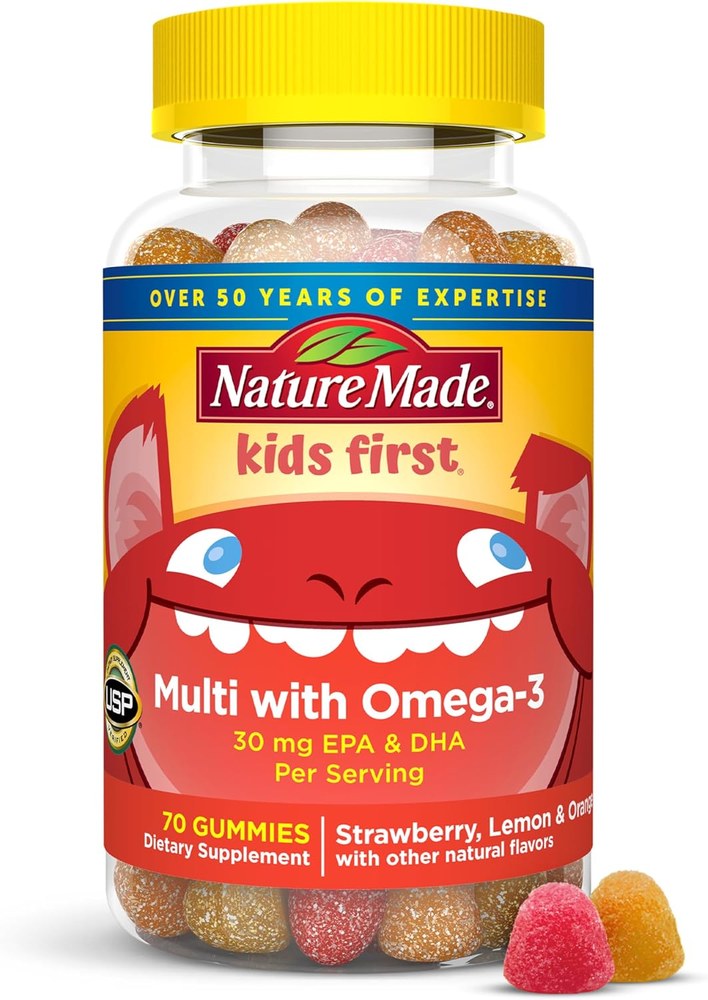
Nature Made Kids First Multivitamin with Omega-3
Best for: A USP Verified daily gummy with omega-3, for most kids who need one
If your child does need a multivitamin, this is the one we would reach for first, because it clears the highest quality bar in the category. It is USP Verified, the most rigorous third-party seal, which independently confirms the ingredients, potency, and manufacturing, and it is rare among kids' gummies. You get a sensible daily gummy with 1000 IU of vitamin D plus a small amount of omega-3 EPA and DHA, at a modest 2 grams of sugar and just one gummy a day, which also limits the candy-appeal overconsumption risk. Like nearly every kids' gummy, it contains no iron and no meaningful calcium, so it is not a fix for those specific gaps. But as an everyday, honestly dosed, independently tested multivitamin, it is the easy first pick. Uses carmine for color, so it is not vegan.
- USP Verified, the strongest third-party seal here
- 1000 IU vitamin D plus omega-3, only 1 gummy a day
- Low sugar (about 2 g) and widely available
- No iron and little calcium, the real gap nutrients
- Not vegan (colored with carmine)
- A gummy, so still store it out of reach
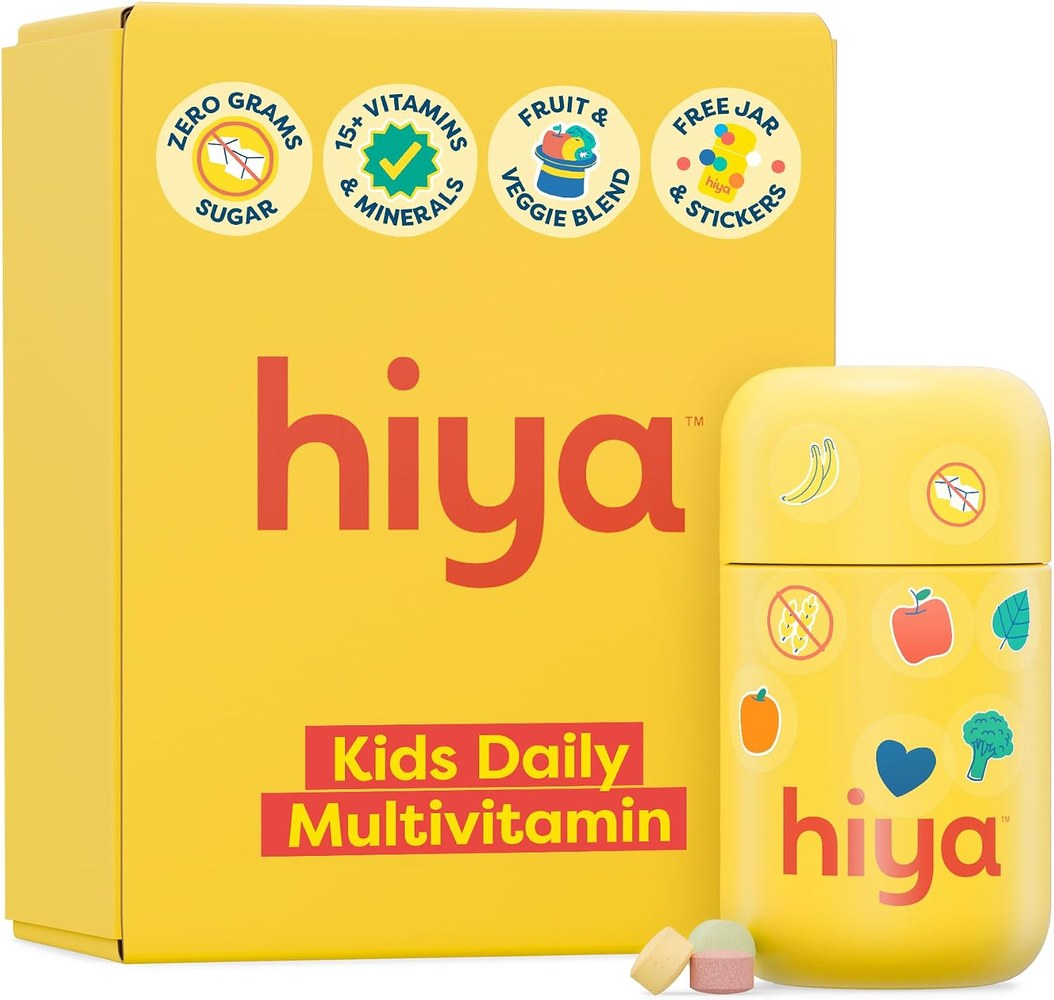
Hiya Kids Daily Multivitamin
Best for: Parents who want no added sugar and no gummy candy base
The pick for parents who do not want to hand their kid a daily piece of candy. Hiya is a chewable tablet with zero added sugar, sweetened with monk fruit and mannitol, which sidesteps both the tooth-decay concern and the sugary-gummy overconsumption pull. It delivers 15-plus vitamins and minerals including 1000 IU of vitamin D and methyl-B12, is Clean Label Project Certified with third-party heavy-metal testing, and covers a wide age range (2 to 12). The honest trade-offs: it has no iron and no omega-3, and its core sales model is a refill subscription, so Amazon stock and price can vary. For a low-additive, sugar-free daily multi, though, it is the standout.
- Zero added sugar, chewable rather than a gummy
- Clean Label Project Certified, heavy-metal tested
- 1000 IU vitamin D and methyl-B12, ages 2 to 12
- No iron and no omega-3
- Sold mainly by subscription, so Amazon pricing varies
- Contains sugar alcohols (mannitol)
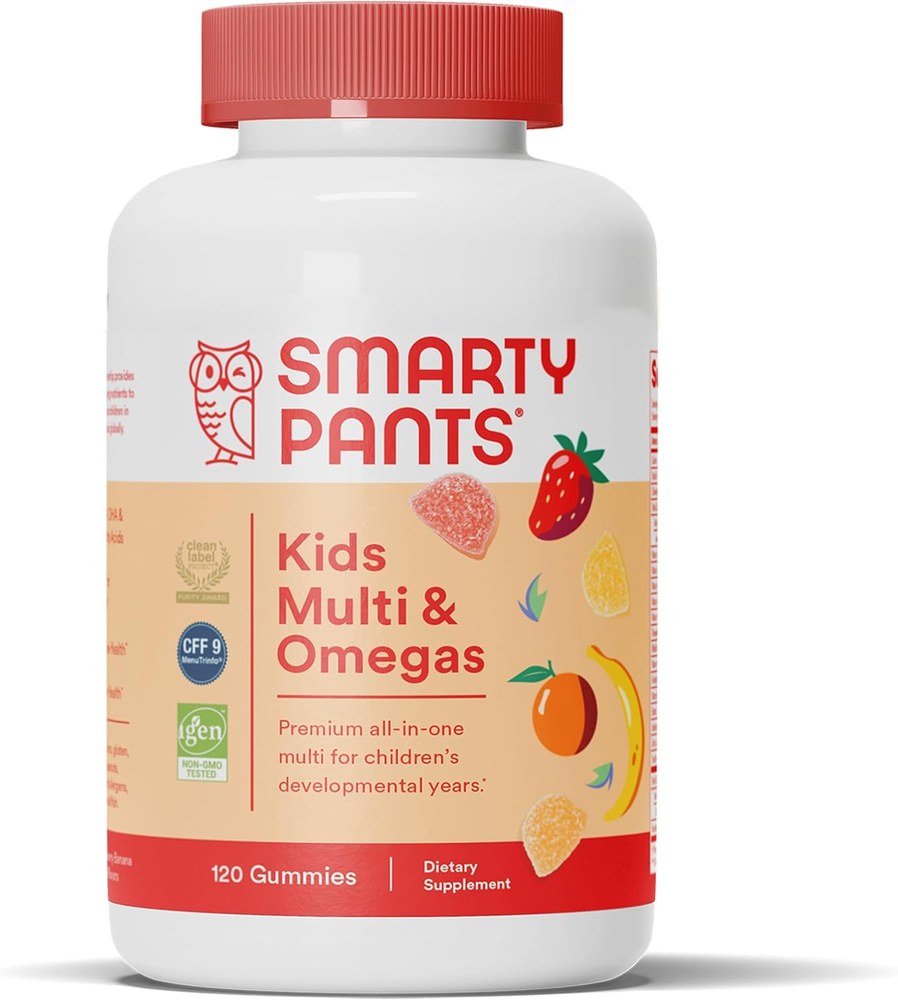
SmartyPants Kids Multivitamin with Omega-3
Best for: The fullest single gummy, combining a multi with fish-oil omega-3
The most complete single product here, because it folds real fish-oil omega-3 into the multivitamin itself. A serving supplies vitamin D, methylcobalamin B12, vitamins A, C, E, K, B6, zinc, and omega-3 EPA and DHA from fish oil, and it carries a Clean Label Project Purity Award with testing for 200-plus contaminants. Two honest catches keep it out of the top spot: it is the sugariest pick here at 5 grams of added sugar per 4-gummy serving, and four gummies a day is a lot of candy-like doses to keep away from little hands. It also, like the others, contains no iron. If you want the broadest nutrient coverage in one gummy and do not mind the sugar, this is the one.
- Combines a full multi with fish-oil EPA and DHA
- Methyl-B12 plus A, C, E, K, zinc; Clean Label tested
- Well-reviewed, widely stocked
- Highest sugar here (5 g per serving)
- Four gummies per serving, so more to store safely
- No iron
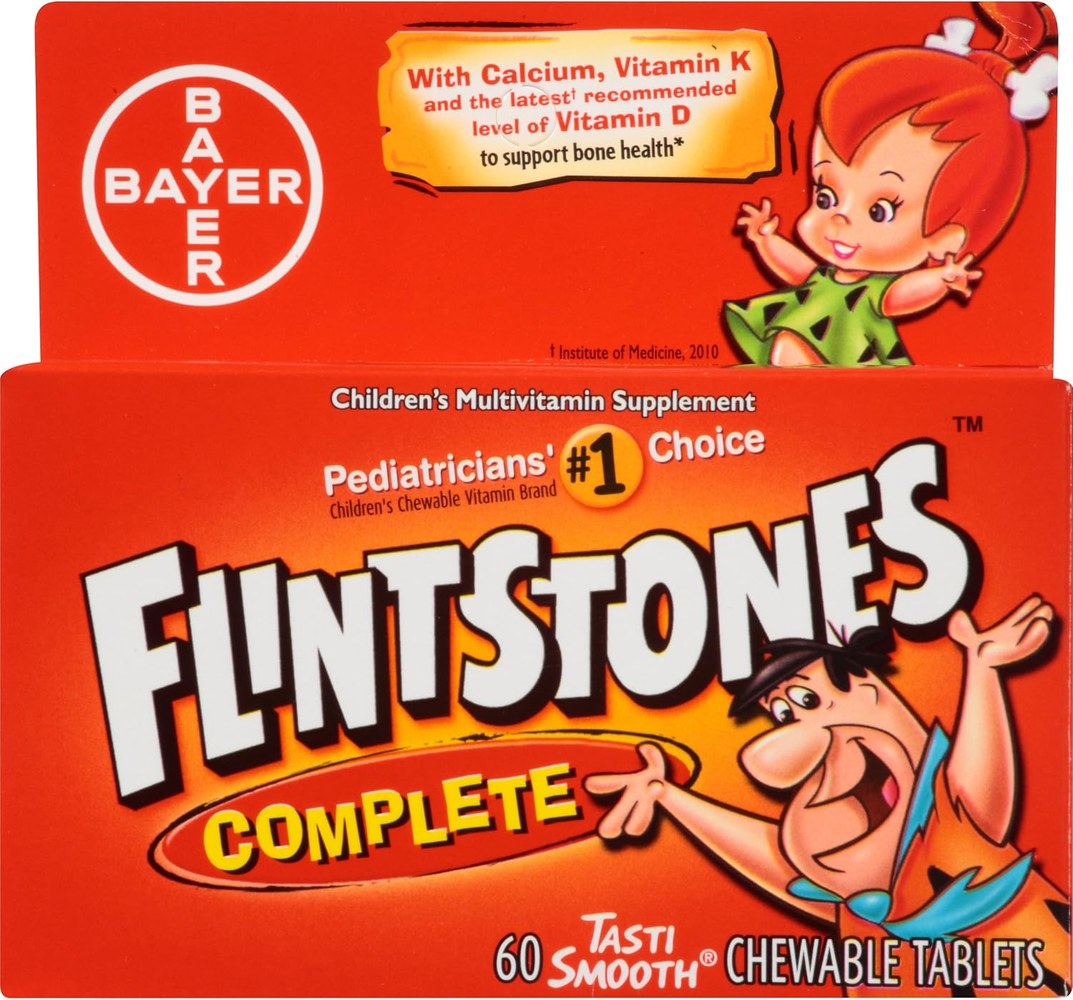
Flintstones Complete Chewable
Best for: A child with an iron gap, used only under a pediatrician's guidance
The one pick on this list that actually contains iron, which is why it earns a spot despite being an old-school drugstore chewable. Most kids' vitamins skip iron on purpose, so if a pediatrician has identified an iron gap, a chewable like this is one way to address it. It provides 18 mg of iron (100 percent of the daily value; the full tablet is for ages 4+, while children 2 to 3 take a half tablet), plus calcium, vitamin D, and a full B-complex, with essentially no added sugar. It is marketed as the number-one pediatrician-recommended brand, though that is a manufacturer claim, it carries no independent third-party seal, and it contains aspartame (a concern for phenylketonuria). The serious caveat: iron supplements are a leading cause of poisoning in young children, so use this only if a doctor recommends it, dose exactly as directed, and store it locked away.
- Actually contains iron (18 mg), unlike nearly all kids' gummies
- Adds calcium and vitamin D; essentially no added sugar
- Marketed as the No. 1 pediatrician-recommended brand (manufacturer claim)
- Iron makes it a real poisoning risk: pediatrician-guided use only
- No independent third-party certification
- Contains aspartame (phenylalanine)
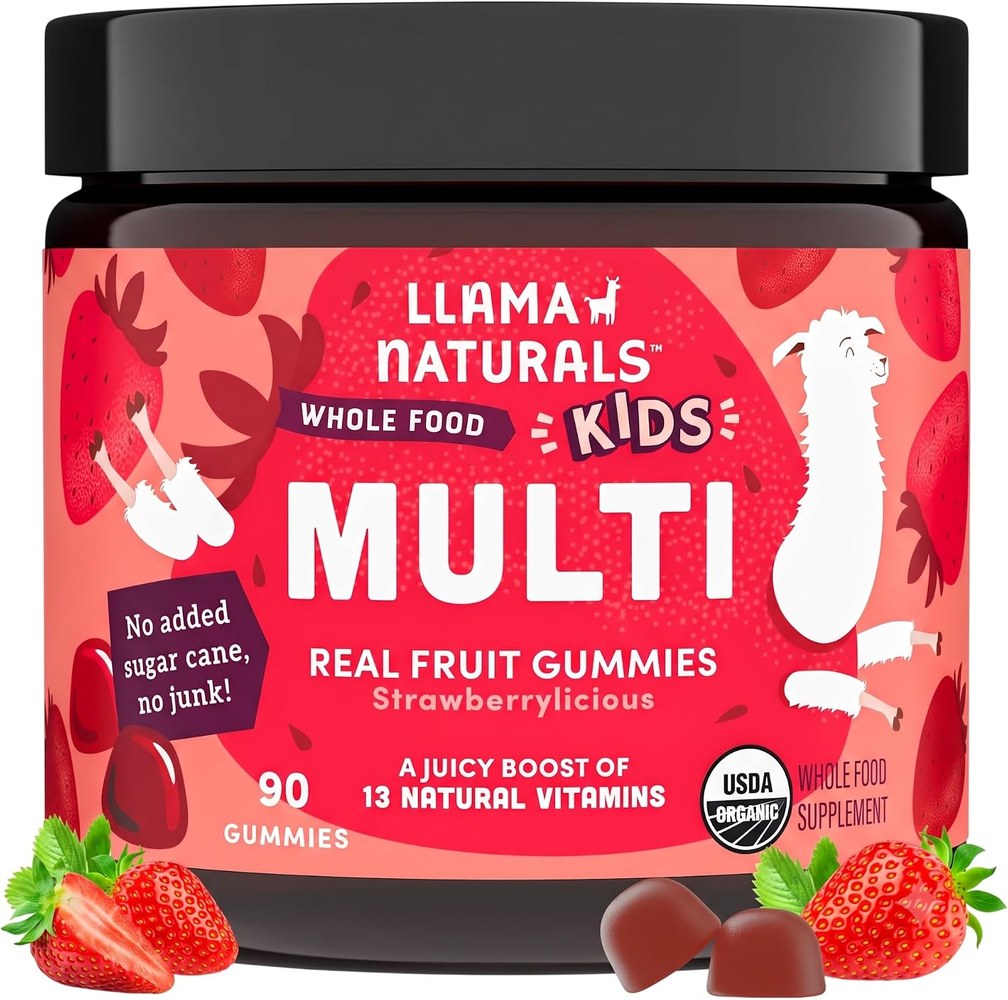
Llama Naturals Whole Fruit Kids Multivitamin
Best for: A clean, no-added-sugar gummy made from real fruit
The cleanest gummy for sugar-conscious parents, because it is genuinely made from pressed whole fruit rather than a sweetened candy base. That means no added sugar and no sugar alcohols, just the roughly 1 gram of naturally occurring fruit sugar the gummy is built from. It is USDA Organic and vegan, delivering 13 whole-food vitamins including vitamin D3 and beta-carotene. The honest limits: it is a vitamin-forward, low-mineral formula, so like the other gummies it has no iron and little calcium, and it does not carry a USP, NSF, or Clean Label Project purity seal, relying instead on its organic certification. For parents who mainly want to avoid added sugar and synthetic ingredients, it is the standout gummy.
- Genuinely no added sugar (made from real fruit)
- USDA Organic, vegan, no synthetic vitamins or dyes
- Delivers vitamin D and a whole-food vitamin panel
- No iron and little calcium (vitamin-forward)
- No USP/NSF/Clean Label purity seal
- Two to three gummies per serving
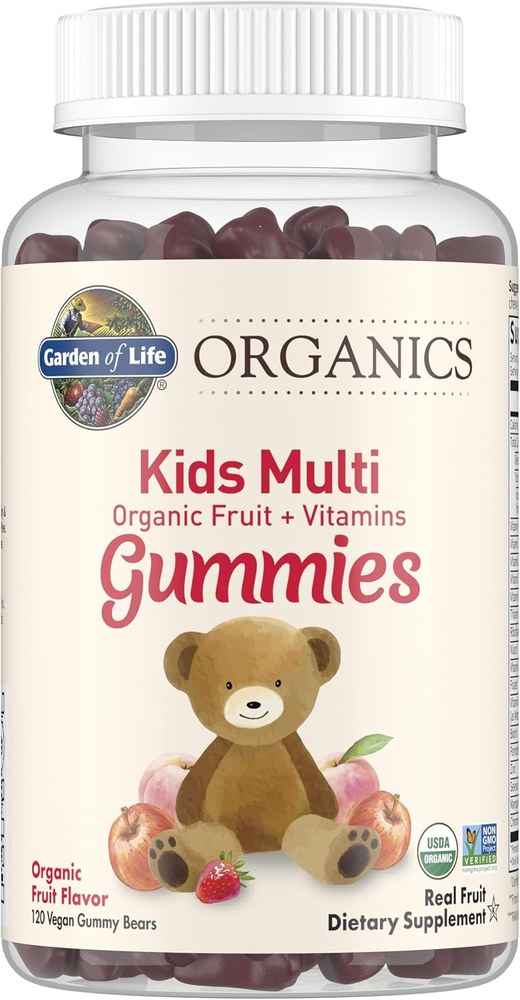
Garden of Life mykind Organics Kids Multi
Best for: A certified-organic, vegan gummy with methyl-B12
The certified-organic choice, and a good base multivitamin for a plant-based kid. It is USDA Organic, Non-GMO Project Verified, and vegan, built from a real-fruit gummy with vitamin D3 800 IU, vitamin C, and vegan methyl-B12, the B12 being genuinely useful for vegan and vegetarian children who cannot get it from food. The trade-offs are familiar for this format: 4 grams of added sugar and a 4-gummy serving, no iron, no calcium, and no omega-3, so a plant-based kid would still need a separate algae-based DHA source. It also carries an organic certification rather than a heavy-metal purity seal. As an organic, vegan daily multi, though, it is the strongest option.
- USDA Organic, Non-GMO, and vegan
- Vegan methyl-B12, useful for plant-based kids
- 800 IU vitamin D3 from a real-fruit gummy
- 4 g added sugar, four gummies per serving
- No iron, calcium, or omega-3
- Organic seal, but no heavy-metal purity certification
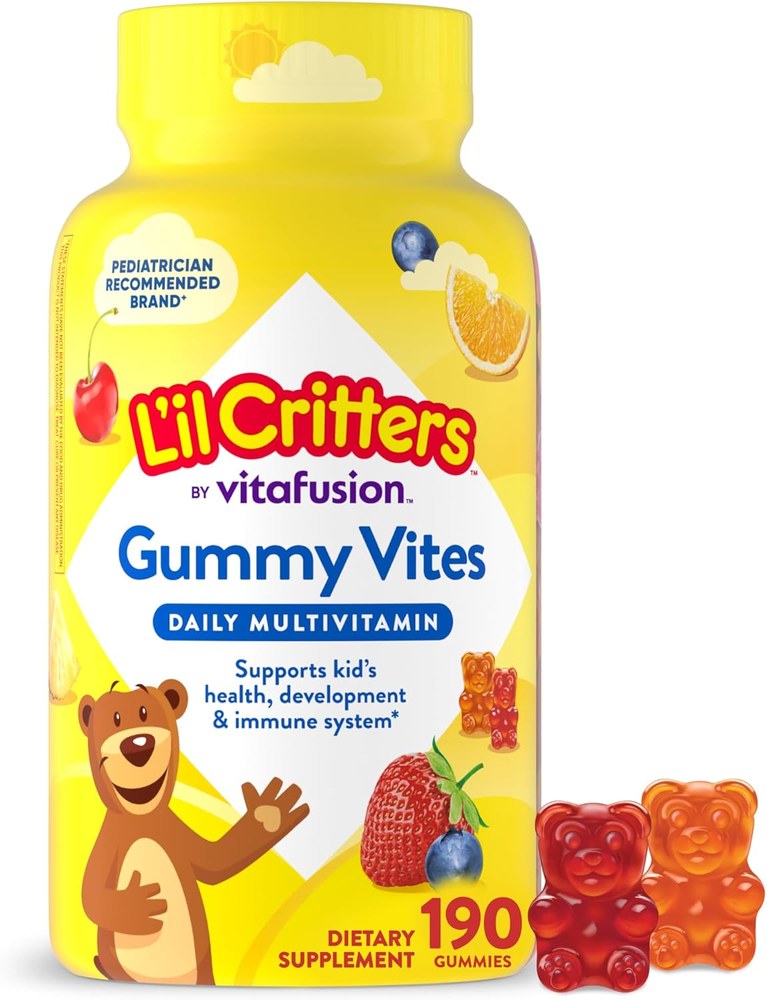
Lil Critters Gummy Vites
Best for: The lowest cost per serving, from the classic best-seller
The value default, and America's long-running best-selling kids' gummy (it is the same product as the Vitafusion Kids line, from the same maker). At roughly a dime a serving it is the cheapest honest pick, delivering 11 nutrients including vitamins A, C, D3, E, the B-complex, plus zinc and iodine, which is a slightly more complete mineral panel than some store brands. The reasons it ranks last are transparency and formulation, not danger: it carries no third-party certification, it has the usual few grams of added sugar, and, like every kids' gummy, it has no iron and no calcium. If budget is the deciding factor and your child simply needs a basic daily vitamin, it does the job.
- Cheapest per serving, widely available
- 11 nutrients including zinc and iodine
- Long-trusted mainstream best-seller
- No third-party certification
- Contains added sugar; no iron or calcium
- Gummy candy appeal, so store out of reach
The full lineup, side by side
Read the “iron” and “tested” columns closely. Only one pick contains iron (and only for a diagnosed gap, under a doctor), and the products with a real third-party seal are the ones we rank highest.
| Product | Format | Iron? | Third-party testing | Award |
|---|---|---|---|---|
| Nature Made Kids First + Omega-3 | Gummy, 1/day | No | USP Verified | Best Overall |
| Hiya Kids Daily | Chewable, 0 g sugar | No | Clean Label Project | Best Zero-Sugar Chewable |
| SmartyPants Kids + Omega-3 | Gummy, most complete | No | Clean Label Project | Most Complete Formula |
| Flintstones Complete | Chewable, 18 mg iron | Yes (18 mg) | Brand standard | Best Chewable With Iron |
| Llama Naturals Whole Fruit | Whole-fruit gummy | No | None (organic only) | Best No Added Sugar |
| Garden of Life mykind Kids | Organic vegan gummy | No | None (organic only) | Best Whole-Food Organic |
| Lil Critters Gummy Vites | Classic budget gummy | No | None | Best Budget |
Doses, sugar, and certifications are read from current Supplement Facts panels and manufacturer disclosures and can change; confirm before you buy. A certification means the product is independently tested, which is the meaningful bar in this category.
What the evidence actually says
Before the products, here is the pediatric-nutrition reality, because it should shape whether you buy anything at all.
- Most healthy kids do not need a multivitamin. The AAP and the Academy of Nutrition and Dietetics both take a food-first position, and national survey data show the paradox that supplement use is highest among the children who need it least.
- Vitamin D is the real exception. The AAP recommends a minimum of 400 IU a day from infancy, and the RDA is 600 IU for ages 1 and up. It is hard to get from food, so it is the one supplement broadly worth giving.
- Iron matters, but is the nutrient gummies omit. Iron deficiency is real in toddlers and teen girls and can affect development, yet gummies leave iron out for safety. Address a gap with a pediatrician, not by free-dosing iron gummies.
- Calcium is also usually missing, because a meaningful dose is too bulky for a gummy. Most kids should get calcium from food (dairy or fortified alternatives).
- Vitamin B12 and omega-3 DHA matter for plant-based kids. Vegan and vegetarian children need a reliable B12 source and often an algae-based DHA, which most multis do not fully cover.
One myth worth retiring: gummies are absorbed fine, and vitamin D is actually absorbed well from a gummy (shown in adults). The real problems with gummies are added sugar, less reliable potency than tablets, and candy-like overconsumption, not absorption. The clearest warning comes from a different product marketed to kids, melatonin gummies: pediatric melatonin ingestions rose more than 500 percent over a decade, and lab testing found the large majority of melatonin gummies mislabeled for dose, both cautionary tales about candy-like gummies and gummy dose control.
Kids' vitamin marketing to skip
A few common pitches deserve a hard pass.
- “Immunity” and “brain” boosting claims. A daily multivitamin does not make a healthy, well-fed child healthier or smarter. These are structure-function marketing phrases, not proven outcomes, and megadoses of vitamins A and D can actually be harmful.
- Treating a multivitamin as a fix for a poor diet. A gummy does not replace fruits, vegetables, and protein, and the shortfall nutrients in kids' diets (calcium, vitamin D, fiber) are largely not what a standard multi delivers well.
- Assuming “organic” or “natural” means cleaner. Organic describes farming, not contaminant testing, and organic products are not automatically lower in heavy metals. Look for a third-party seal instead.
- Fluoride “vitamins” bought over the counter. Therapeutic fluoride supplements are prescription-only and only for specific high-risk kids; do not seek them out on the supplement shelf.
How to choose the right one for you
Match the pick to your situation:
- If your child eats a varied diet, consider a vitamin D supplement rather than a full multivitamin, and save the rest.
- If you do want a daily multi, choose a third-party-tested one; USP Verified is the strongest seal.
- If you want to avoid sugar, a zero-sugar chewable or a whole-fruit gummy is the way to go.
- If a pediatrician flagged an iron gap, use a chewable that contains iron, dose it exactly as directed, and store it locked away.
- If your child is vegan or vegetarian, prioritize reliable B12 and add an algae-based DHA, and discuss iron with your pediatrician.
Who needs one, and when to see a pediatrician
This is a buyer's guide for general wellness, not medical advice. For a healthy child eating a reasonably varied diet, the honest answer is usually that a routine multivitamin is optional, with vitamin D the one nutrient broadly worth supplementing. The children who genuinely benefit from more are a defined group: very selective eaters or those failing to thrive, kids on vegan, vegetarian, or medically restrictive diets, and children with conditions affecting appetite or absorption. Iron and the fat-soluble vitamins A and D are the ones to be careful with, because too little iron harms development while too much of any of these can be dangerous, so decisions about them should be individualized with a pediatrician, ideally after a simple check. If your child is a very restrictive eater, is losing weight, seems persistently tired or pale, or you are considering iron, talk to your pediatrician before buying, rather than guessing at the vitamin aisle.
Frequently asked questions
Does my child actually need a multivitamin?
Probably not. The American Academy of Pediatrics and the Academy of Nutrition and Dietetics agree that healthy children eating a reasonably varied diet do not need a routine multivitamin, and that food is the preferred source of nutrients. The one supplement broadly recommended for kids is vitamin D. Children who genuinely benefit from a multivitamin are a defined minority: very picky eaters, those on vegan, vegetarian, or otherwise restrictive diets, and kids with certain medical conditions. When in doubt, ask your pediatrician rather than buying by default.
What is the best kids' multivitamin?
For most families who want one, a third-party-tested product with sensible doses is the goal, and Nature Made Kids First is the only pick here carrying the USP Verified seal, the most rigorous one. If avoiding sugar matters most, a zero-sugar chewable like Hiya is the pick. But the honest answer is that the best choice for a healthy, varied-eating child is often no multivitamin at all, plus a vitamin D supplement if their intake is low.
Do kids' gummy vitamins contain iron?
Almost never. Gummy multivitamins are deliberately made without iron because it tastes metallic, it speeds the breakdown of other vitamins, and, most importantly, iron overdose from supplements is a leading cause of poisoning in young children. That is a problem, because iron is one of the nutrients kids are most likely to be short on, especially toddlers and menstruating teen girls. If a child needs iron, it should be handled with a chewable that contains it or a targeted supplement, under a pediatrician's guidance, never free-dosed.
Are gummy vitamins bad for kids?
Not inherently. They are absorbed fine, and one study in adults even found vitamin D was absorbed better from a gummy than a tablet. The real downsides are three: added sugar, which contributes to tooth decay; less reliable potency than tablets, since gummies degrade faster and makers add overages to compensate; and the fact that they look and taste like candy, so children overeat them. Treat the daily dose as fixed and store the bottle out of reach.
How much vitamin D do kids need?
The American Academy of Pediatrics recommends a minimum of 400 IU per day starting in infancy, and the official RDA is 600 IU per day for ages 1 and up. Vitamin D is hard to get from food and is the one nutrient most children genuinely benefit from supplementing, particularly breastfed infants, kids with darker skin, and those with limited sun exposure. It is why nearly every good kids' multivitamin leads with vitamin D.
Do organic or clean kids' vitamins have fewer heavy metals?
Not necessarily. Independent testing finds detectable heavy metals across many supplements, but detectable is not the same as unsafe, and gummies are not the worst format, as tablets, herbals, and iron products often test higher. Organic describes how a crop was grown, not whether the finished product was tested for metals. The meaningful signal is an actual third-party seal, such as USP Verified, NSF, or Clean Label Project Certified, not the word organic on the label.
My child ate a bunch of gummy vitamins, what should I do?
Most gummy over-ingestions cause an upset stomach rather than a serious problem, but call Poison Control at 1-800-222-1222 to be sure, since fat-soluble vitamins A and D can build up. The true emergency is iron: if a child swallows adult or prenatal iron pills, seek medical help immediately, because iron overdose can be life-threatening. The best prevention is to keep all supplements, especially any with iron, locked away and out of reach.
The bottom line
The best kids' multivitamin is often no multivitamin at all, plus a vitamin D supplement if your child's intake is low. If you do want one, Nature Made Kids First is the pick we would start with, because it is the only USP Verified option here, sensibly dosed and low in sugar. For a sugar-free choice, Hiya is the standout, and for an iron gap, a chewable like Flintstones Complete works, but only with a pediatrician's guidance and locked safely away. Keep the framing straight: food comes first, vitamin D is the one nutrient most kids benefit from, gummies skip iron for good reason, and more is never better. Choose a transparent, well-tested product if you want one, and let your pediatrician guide anything beyond a basic daily vitamin.