Inositol, almost always sold as myo-inositol, is a sugar alcohol your body makes and gets from fruit, beans and grains. It helps carry insulin's signal inside cells, which is why it became one of the most popular supplements for women dealing with irregular cycles and blood sugar issues. A smaller amount of a related form, D-chiro-inositol, is often added at a 40 to 1 ratio. Most trials used 4 g of myo-inositol a day, and that is where products differ most: some labels give 730 mg a serving, others 4 g a scoop.
So this ranking rewards what you can check: the dose the label directs, whether an independent program confirmed the contents, the cost of 4 g a day, how practical the form is, and how far the marketing outruns the research. We read the Supplement Facts panel on every product's current Amazon listing and scored all ten on the same five criteria. For the condition-specific research, see our inositol for PCOS guide.
The short version
- Best overall: Theralogix Ovasitol, a pure 40:1 powder whose label directs 4 g of myo-inositol a day, NSF/ANSI 173 listed, about $0.96 a day.
- Best verified capsule: Wholesome Story, NSF/ANSI 173 listed, though 4 g a day takes 8 capsules.
- Best plain myo-inositol: Pure Encapsulations, 4 g in one scoop, but no testing claim on the listing.
- Cheapest per gram: BulkSupplements, about $0.14 per 4 g, with an unnamed testing claim.
- The 40:1 ratio is not proven best. The trial behind "40:1 beats other ratios" had 8 women per group and no myo-inositol-alone group, the one trial against myo-inositol alone found no significant difference in metabolic markers at six months, and the 2023 international guideline says no specific type, dose or combination can be recommended.
- Dose matters more than the label headline. Most trials used 4 g of myo-inositol a day; 7 of these 10 products direct 2 g a day or less.
- Content can vary. In an Italian lab test, only 1 of 4 myo-inositol products had more than 95 percent of its labeled amount.
How we ranked them
Inositol is a simple, inexpensive ingredient, so we scored what actually separates products:
- Dose per label (25%). Full marks when the label directs 4 g of myo-inositol a day, the amount most trials used; then 2 g with directions to take it up to twice a day, 2 g, 1 g, and less than 1 g.
- Content verification (25%). Highest for an NSF/ANSI 173 listing, which includes checking that the product contains what the label says; we confirmed each one on NSF's site on October 19, 2026. Then a Clean Label Project claim, then an unnamed lab or in-house testing claim, then nothing. A certified factory is not a tested product.
- Cost per 4 g of myo-inositol (20%), from Amazon prices on October 19, 2026, whatever the label's serving size.
- Form (15%). Powder scores highest, because 4 g is one or two scoops; then 1,000 mg capsules; then 500 mg capsules, which take 8 a day for 4 g.
- Marketing restraint (15%). Products start at 4 of 5, and half a point comes off for each category present: unverifiable superiority claims; benefits beyond the evidence, such as fertility, egg quality, mood, energy, skin or sleep; a brand survey presented as a clinical study; and calling 40:1 the body's natural or ideal ratio.
Scores are rounded to one decimal, and ties are ordered by the unrounded score, then by verification. We also looked at NOW's 500 mg capsules and Jarrow Inositol, which direct only 500 to 750 mg a day, and left out inositol hexanicotinate, a niacin form, and IP6, a different compound. Wholesome Story also sells an NSF-listed version with methylfolate and vitamin D3, which we did not score. No brand paid to be included, and none sent product.
What inositol research actually shows
What the guideline says. The 2023 international PCOS guideline says inositol, in any form, "could be considered" based on personal preference, noting limited harm and possible improvement in metabolic measures, "yet with limited clinical benefits including in ovulation, hirsutism, or weight." It rates that evidence very low certainty, says metformin should be considered over inositol for excess hair and waist size, and adds that "specific types, doses, or combinations of inositol cannot currently be recommended." The evidence review written for the guideline called the overall evidence "limited and inconclusive."
What pooled trials found. In a 2018 meta-analysis of 10 trials, inositol raised ovulation rates against placebo (risk ratio 2.3, with wide variation between trials) and increased the frequency of menstrual cycles; pregnancy rates showed no significant difference, and none of its trials measured live births. A 2023 meta-analysis of 26 trials found more regular cycles and small drops in BMI and androgens against placebo, but no significant difference in fasting insulin or HOMA-IR, while an earlier analysis by authors employed by an inositol maker reported lower fasting insulin. A Cochrane review of women using inositol before IVF found no significant difference in live birth or clinical pregnancy, at low to very low certainty. Head to head with metformin, inositol showed no significant difference on hormones or insulin and fewer stomach side effects.
Retractions inside the evidence. A 2007 Italian placebo trial was retracted in 2023 as a duplicate publication, yet it sits inside two of the meta-analyses above; the 2003 trial it duplicated now carries an expression of concern. The main study behind the idea that too much D-chiro-inositol harms egg quality carries two expressions of concern, and another small trial found the opposite.
The 40:1 ratio. Researchers describe 40 to 1 as the ratio of myo- to D-chiro-inositol in blood plasma, not in the ovary. The trial behind "40:1 beats other ratios" randomized 56 women to seven ratios, 8 per group, with no myo-inositol-alone group and no placebo, open-label, and was stopped early; 5 of 8 women on 40:1 had menstrual cycles. The one randomized comparison with myo-inositol alone, in 50 overweight women, reported the blend ahead at three months but no significant difference in metabolic markers at six. A 2026 umbrella review found combinations "did not consistently outperform" single forms. Plain myo-inositol is the form used in most trials.
Pregnancy research. A 2023 Cochrane review found fewer gestational diabetes diagnoses with myo-inositol in pregnancy (risk ratio 0.53), at low certainty, mostly from small Italian trials, several open-label. Two large independent double-blind trials found no significant difference: a 2025 Dutch trial in 464 pregnant women with PCOS, on a combined outcome of gestational diabetes, preeclampsia and preterm birth, and the 2021 NiPPeR trial of a combined drink, on gestational diabetes. Myo-inositol in pregnancy belongs in a conversation with an obstetric provider, not a shopping cart; see our myo-inositol in pregnancy explainer.
Mood and anxiety. Two small trials in panic disorder used 12 to 18 g a day, three to four and a half times the usual dose. A meta-analysis of 11 small trials found no significant difference in depression, anxiety or obsessive-compulsive symptoms.
The 10 best inositol supplements
Tap any product to jump straight to its full review.
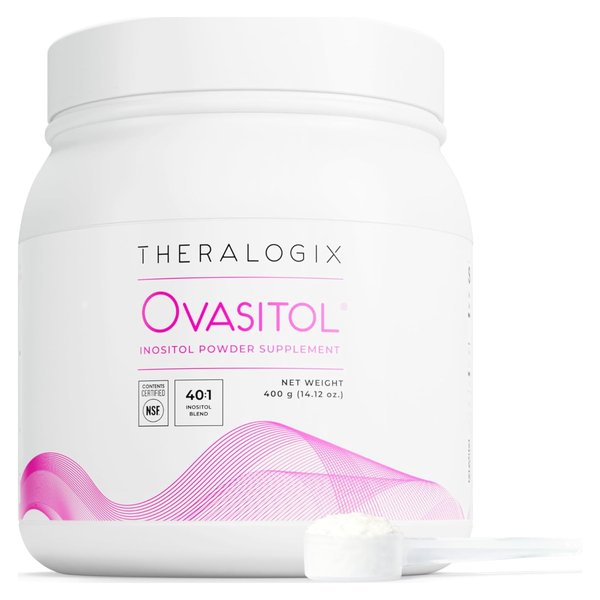
Theralogix Ovasitol Inositol Powder
Best for: The trial dose in a verified, additive-free powder
The top pick because it combines the trial dose with verified contents: two scoops give 4 g of myo-inositol and 100 mg of D-chiro-inositol with nothing else in the canister, and its NSF/ANSI 173 listing, which we confirmed, covers that two-scoop serving. At about $0.96 a day it costs more than plain powders. Its marketing loses points for saying the 40:1 blend is more effective than other ratios or myo-inositol alone, which the one head-to-head trial did not show at six months, for calling 40:1 your natural and ideal ratio, and for fertility claims.
- Label directs 4 g of myo-inositol a day, the amount most trials used, in two scoops
- Listed under NSF/ANSI 173, which checks the label amount; we confirmed it on NSF's site
- Nothing else in the canister: no fillers, flavors or sweeteners
- Unflavored powder that dissolves in any non-carbonated drink
- About $0.96 a day, more than the plain powders
- Says the 40:1 blend is "more effective than other inositol ratios or taking myo- or d-chiro-inositol alone"; the one trial against myo-inositol alone found no significant difference in metabolic markers at six months
- Calls 40:1 "your natural ratio" and the "ideal" ratio
- Markets itself as a fertility supplement, a benefit pooled trials have not established
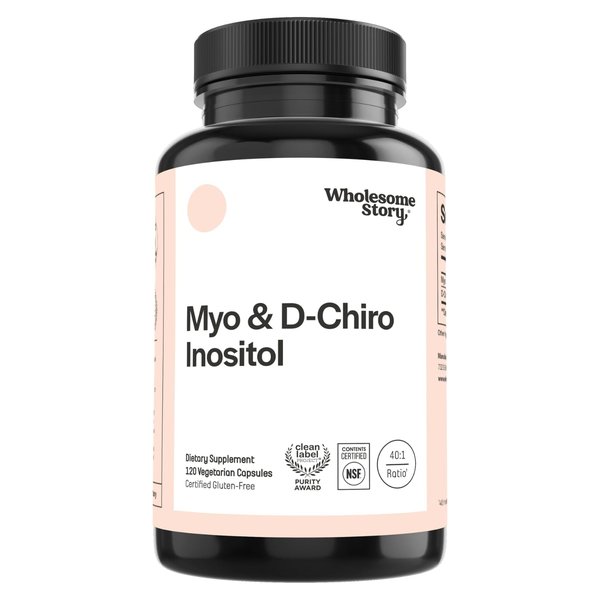
Wholesome Story Myo & D-Chiro Inositol
Best for: Capsule users who want verified contents
The best-verified capsule: Wholesome Story's 40:1 capsules are NSF/ANSI 173 listed at 8 capsules a day, the label's maximum, and the only other ingredients are rice flour and the capsule shell. The catch is arithmetic: 4 g of myo-inositol takes 8 capsules, so a 120-count bottle lasts 15 days at about $1.86 a day. The listing also calls 40:1 "the ideal ratio that our body needs" and lists fertility among its benefits.
- Listed under NSF/ANSI 173 at 8 capsules a day; we confirmed it on NSF's site
- 2,000 mg myo-inositol and 50 mg D-chiro-inositol per 4 capsules, up to twice a day
- Only rice flour and the capsule shell as other ingredients
- More than 36,000 Amazon ratings averaging 4.4 stars
- 4 g of myo-inositol a day takes 8 capsules, so a bottle lasts 15 days
- About $1.86 a day at 4 g, nearly twice Ovasitol's cost
- Says the 40:1 ratio "mirrors the ideal ratio that our body needs"
- Lists fertility among its benefits, which pooled trials have not established
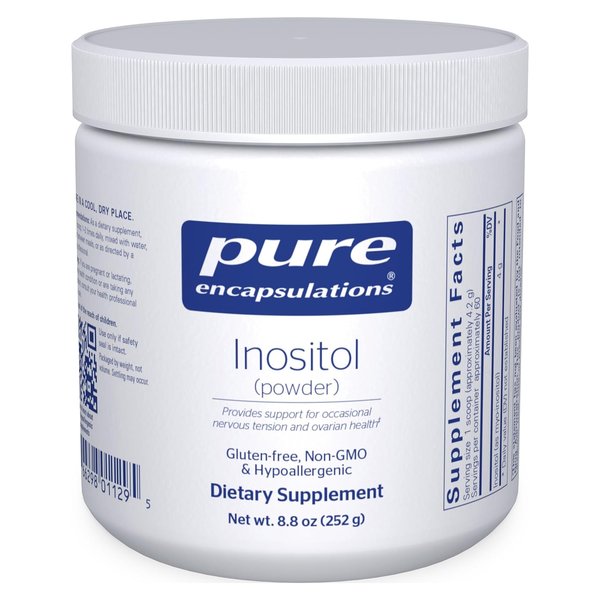
Pure Encapsulations Inositol Powder
Best for: Plain myo-inositol at 4 g a scoop
The simplest way to take the trial dose of plain myo-inositol: one 4.2 g scoop holds 4 g, for about $0.90. It ties Wholesome Story on score and ranks behind it because the listing shows no testing claim or certificate. The listing calls it a natural energy supplement that supports serotonin, claims inositol trials do not support.
- One scoop gives 4 g of myo-inositol, the amount most trials used
- Plain myo-inositol, the form in most published trials, with nothing added
- About $0.90 per 4 g
- The listing shows no testing claim or certificate
- Calls it a "natural energy supplement" that "supports serotonin levels"; we found no inositol trial of energy, and pooled mood trials found no significant difference
- A 252 g jar lasts two months at one scoop a day
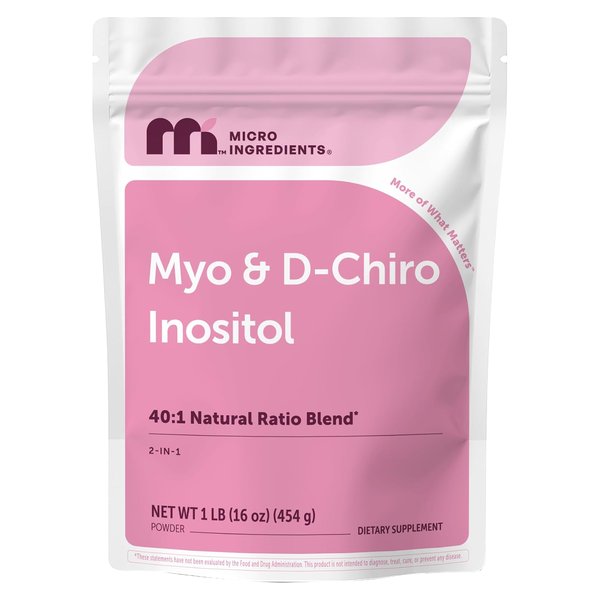
Micro Ingredients Myo & D-Chiro Inositol Powder
Best for: A 40:1 blend at the lowest cost
The cheapest 40:1 product, at about $0.32 per 4 g: each 2.05 g scoop gives 2,000 mg of myo-inositol and 50 mg of D-chiro-inositol with nothing added. It ranks below the top three because its "3rd party lab tested" claim names no lab, the label directs one scoop, half the usual trial amount, and the listing calls 40:1 a natural ratio.
- The cheapest 40:1 product here, about $0.32 per 4 g of myo-inositol
- 2,000 mg myo-inositol and 50 mg D-chiro-inositol per 2.05 g scoop, nothing else added
- A 1 lb pouch lasts more than three months even at two scoops a day
- "3rd party lab tested" names no lab and shows no certificate
- Label directs one scoop, 2 g a day, half the amount most trials used
- Calls 40:1 a "natural ratio" blend
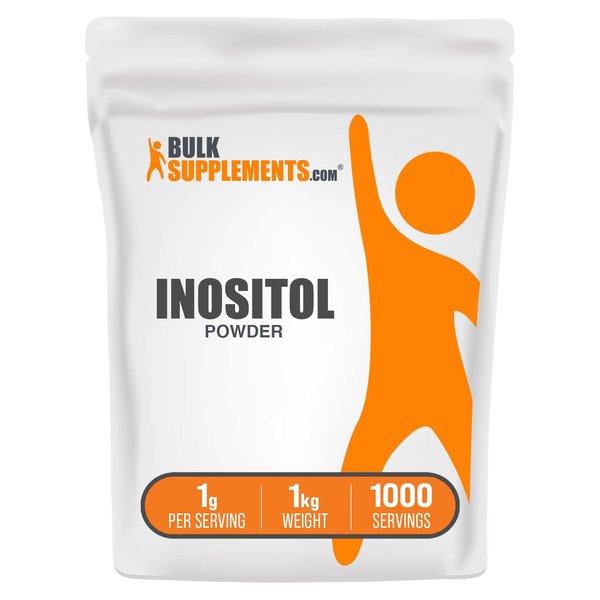
BulkSupplements Inositol Powder
Best for: The lowest cost per gram
The lowest cost per gram here, about $0.14 for 4 g of plain inositol, and a 1 kg bag lasts months. The label serving is 1 g, so 4 g means four servings, its third-party testing claim names no lab, and it says inositol helps turn food into energy more efficiently, which we found no trial showing.
- About $0.14 per 4 g, the cheapest product here
- Plain inositol powder with nothing added
- A 1 kg bag lasts about eight months at 4 g a day
- The label serving is 1 g; 4 g a day means measuring four servings
- Its "third-party testing" claim names no lab
- Says it helps turn food into energy "more efficiently", which we found no inositol trial showing
- The label says inositol without naming the form
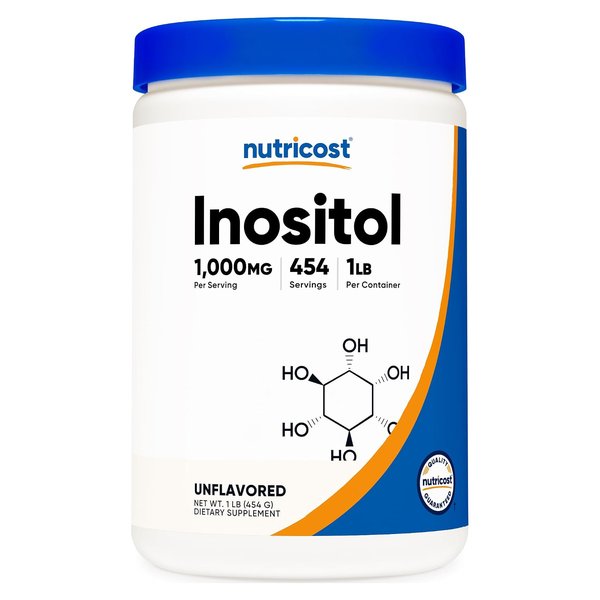
Nutricost Inositol Powder
Best for: A plain, budget powder with a simple listing
A plain powder with one of the most restrained listings here, at about $0.24 per 4 g. It loses points for a 1 g scoop, a quarter of the usual trial amount, and a testing claim that names no lab.
- About $0.24 per 4 g
- Plain inositol with a 1 g scoop included
- A restrained listing with no benefit claims beyond the basics
- The 1 g scoop is a quarter of the amount most trials used
- "Tested by independent, ISO-accredited laboratories" names no lab
- No D-chiro-inositol, if you want a 40:1 blend
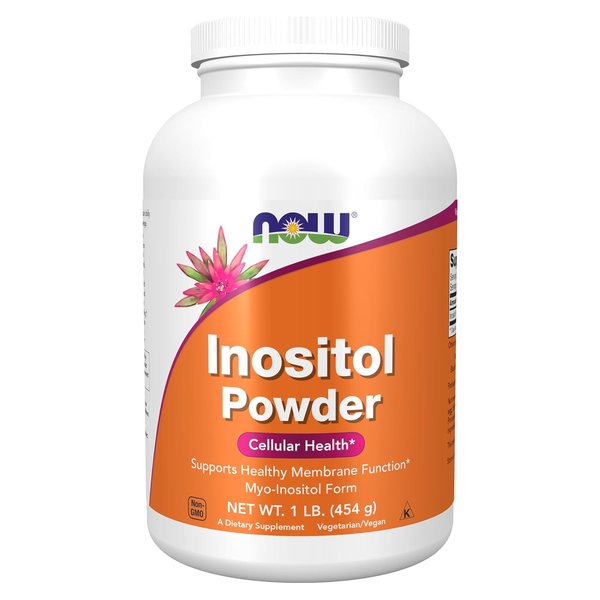
NOW Inositol Powder
Best for: Smaller doses from a long-established brand
Plain myo-inositol from a long-established brand at about $0.26 per 4 g, with a listing that sticks to basic wording. The label serving is only 1/4 teaspoon, 730 mg, the lowest here, and testing is done in NOW's own labs rather than by an independent program.
- About $0.26 per 4 g of plain myo-inositol
- A restrained listing that sticks to basic structure and function wording
- From a long-established manufacturer with its own ISO-accredited labs
- The label serving is 1/4 teaspoon, 730 mg; 4 g takes about 5 1/2 servings
- Testing is in-house; the third-party certification it cites covers manufacturing, not this product
- No D-chiro-inositol, if you want a 40:1 blend
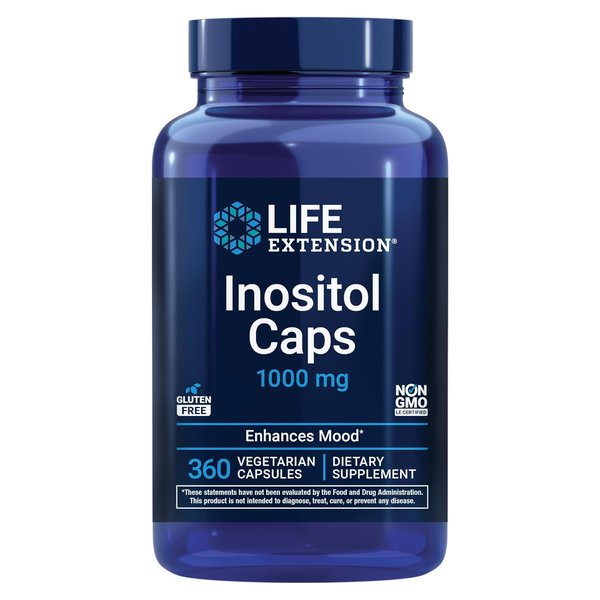
Life Extension Inositol Caps 1,000 mg
Best for: Fewer capsules than 500 mg products
The most practical capsule: 1,000 mg capsules mean 4 capsules for 4 g, and 360 capsules cost about $0.42 per 4 g. The label directs one capsule a day, the listing says it enhances mood through serotonin, which pooled trials did not find, and it shows a #1 brand badge from a ConsumerLab user survey. A certificate of analysis is available on request.
- 1,000 mg capsules, so 4 g is 4 capsules rather than 8
- About $0.42 per 4 g, the cheapest capsule here
- 360 capsules last three months at 4 a day
- The label directs 1 capsule, 1 g a day
- Says it "enhances mood" and serotonin activity; pooled mood trials found no significant difference
- Shows a "#1 Rated Catalog/Internet Brand" badge from a ConsumerLab survey of supplement users, not a product test
- A certificate of analysis is available on request, but no lab is named on the listing
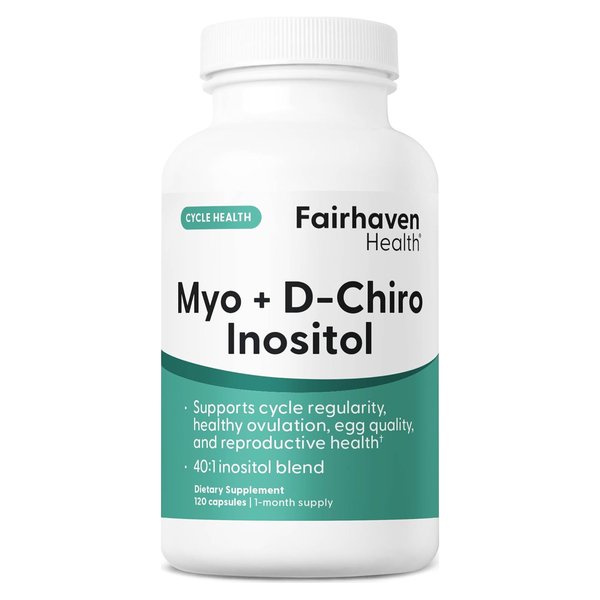
Fairhaven Health Myo + D-Chiro Inositol
Best for: Fans of an established women's health brand
A 40:1 capsule from a long-running women's health brand, with 2,000 mg of myo-inositol and 50 mg of D-chiro-inositol per 4 capsules. Its third-party testing claim names no lab, and its NSF mention refers to the factory, not this product. At 8 capsules for 4 g it costs about $1.67 a day, and the listing claims egg-quality and pregnancy-wellness benefits and calls 40:1 the body's natural ratio.
- 2,000 mg myo-inositol and 50 mg D-chiro-inositol per 4 capsules
- A brand that has sold women's health products since 2003
- 4.7 stars across nearly 500 Amazon ratings
- Says its products undergo third-party testing but names no lab; its NSF mention refers to the factory, not the product
- 4 g a day takes 8 capsules, about $1.67
- Claims egg-quality and pregnancy-wellness benefits that pooled trials have not established
- Calls 40:1 "the body's natural ratio"
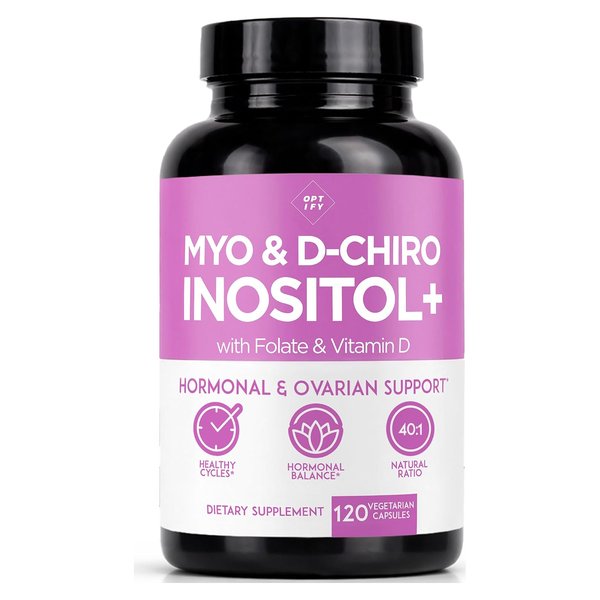
Optify Myo & D-Chiro Inositol+ with Folate and Vitamin D
Best for: People who want folate and vitamin D in the same capsule
The only product here that adds methylfolate (340 mcg DFE) and vitamin D3 (10 mcg) to a 40:1 blend, useful if you want them in one bottle, though at 8 capsules for 4 g of myo-inositol you also double both. It has the most marketing deductions: self-reported results from a 2024 Citruslabs study of its own product presented as clinical evidence, claims for skin, energy, sleep and cravings, a natural-ratio claim, and a dig at other brands.
- Adds 340 mcg DFE of methylfolate and 10 mcg of vitamin D3 to the 40:1 blend
- Says it is tested and awarded by the Clean Label Project, a named program
- More than 12,000 Amazon ratings averaging 4.6 stars
- Presents self-reported results from a 12-week Citruslabs study of its own product (2024, "84% of women reported") as clinical evidence; the listing names no placebo group
- Claims better skin, energy, sleep, mood and fewer cravings, which controlled inositol trials have not established
- 4 g a day takes 8 capsules, which doubles the folate and vitamin D too
- Says "other brands meet the bare minimum"
The full lineup, side by side
Amounts come from each product's Supplement Facts panel on its Amazon listing; verification comes from NSF's own listings, checked by us. Look at the cost column with the dose column: most trials used 4 g of myo-inositol a day, and a label serving of 1 g or 2 g changes how long a container lasts.
| Product | Form | Myo-inositol per serving | D-chiro-inositol | Verified by | Cost per 4 g | Score |
|---|---|---|---|---|---|---|
| #1 Ovasitol | Powder | 2,000 mg (2 scoops a day) | 50 mg | NSF/ANSI 173 | $0.96 | 4.2 |
| #2 Wholesome Story | Capsules | 2,000 mg (4 caps, up to twice a day) | 50 mg | NSF/ANSI 173 | $1.86 | 3.7 |
| #3 Pure Encapsulations | Powder | 4,000 mg (1 scoop, 1 to 2 a day) | None | None shown | $0.90 | 3.7 |
| #4 Micro Ingredients | Powder | 2,000 mg (1 scoop a day) | 50 mg | Unnamed claim | $0.32 | 3.7 |
| #5 BulkSupplements | Powder | 1,000 mg (1/2 tsp) | None | Unnamed claim | $0.14 | 3.7 |
| #6 Nutricost | Powder | 1,000 mg (1 scoop) | None | Unnamed lab | $0.24 | 3.6 |
| #7 NOW | Powder | 730 mg (1/4 tsp) | None | In-house lab | $0.26 | 3.4 |
| #8 Life Extension | Capsules (1,000 mg) | 1,000 mg (1 cap) | None | COA on request | $0.42 | 3.3 |
| #9 Fairhaven Health | Capsules | 2,000 mg (4 caps) | 50 mg | Unnamed claim | $1.67 | 3.2 |
| #10 Optify | Capsules | 2,000 mg (4 caps) | 50 mg | Clean Label Project claim | $1.67 | 3.2 |
Prices are Amazon prices on October 19, 2026 and change often. Cost per 4 g is the container price divided by the grams of myo-inositol it holds, times 4, whatever the label's own serving. NSF/ANSI 173 listings were confirmed on info.nsf.org; other testing claims are as the brands state them.
How to choose, and what to check first
Start with the dose you plan to take. Most trials used 4 g of myo-inositol a day, often split into two 2 g doses. Divide the container's total myo-inositol by 4 g to see how many days it lasts; a 120-capsule bottle of 500 mg capsules lasts 15 days at that amount.
Plain myo-inositol or 40:1. Both have been studied. The one trial comparing the 40:1 blend with myo-inositol alone found no significant difference in metabolic markers after six months, and the 2023 guideline says no specific type, dose or combination can be recommended. Plain powder is usually cheaper; choose a blend if you prefer it, not because a label calls it ideal.
Check verification you can search. Look for an NSF listing you can find yourself at info.nsf.org. "Third-party tested" with no lab named, or a certified factory, does not tell you what is in the container. Avoid confusing inositol with inositol hexanicotinate or IP6, which are different compounds.
- Talk to your clinician first if you are using it for a health condition, so it fits with the rest of your care; the 2023 PCOS guideline asks women taking inositol to tell their healthcare professional.
- Pregnancy and trying to conceive. Myo-inositol has been given in pregnancy trials at about 4 g a day without clear safety signals, but long-term safety data are limited and no guideline we found recommends it in pregnancy. Use it only with your obstetric provider's guidance.
- Lithium and diabetes medicines. We found no interaction studies with lithium, but lithium's action involves inositol, so ask your prescriber first. Inositol may add to the effect of diabetes medicines on blood sugar.
- Side effects. At 4 g a day they are uncommon and mostly mild stomach upset; nausea, gas and diarrhea were reported at 12 g a day.
- Expectations. Trials ran three to six months, and the clearest benefits are in cycle regularity, ovulation and lab markers; most pooled analyses found no significant difference in pregnancy or live birth.
Frequently asked questions
What is the best form of inositol?
Myo-inositol is the form used in most trials. A 40:1 blend of myo- and D-chiro-inositol is popular, but the one trial comparing it with myo-inositol alone found no significant difference in metabolic markers after six months, and the 2023 international PCOS guideline says no specific type, dose or combination can be recommended.
How much inositol should you take?
Most trials used 4 g of myo-inositol a day, usually 2 g twice daily, often with 200 mcg of folic acid per dose. Many labels direct less, from 730 mg to 2 g. Ask your clinician what fits your situation.
Is the 40:1 ratio the body's natural ratio?
Researchers describe about 40 to 1 as the ratio of myo- to D-chiro-inositol in blood plasma. The trial most often cited for 40:1 was small and open-label, with 8 women per group and no myo-inositol-alone group, so it does not show 40:1 is ideal.
Does inositol help with PCOS?
Pooled trials link it to more regular cycles, higher ovulation rates than placebo, and some changes in hormone and metabolic markers, but most pooled analyses found no significant difference in pregnancy or live birth. The 2023 guideline says it could be considered, with very low certainty evidence and limited clinical benefit. See our inositol for PCOS guide for detail.
Is inositol safe?
At around 4 g a day, side effects in trials were uncommon and mostly mild stomach upset; mild nausea, gas and diarrhea appeared at 12 g a day. It has been studied in pregnancy trials, but long-term safety data are limited. People taking lithium or diabetes medicine should ask their prescriber first.
Is inositol powder or capsules better?
Powder makes the usual 4 g dose easy, in one or two scoops, and costs less per gram. With 500 mg capsules, 4 g takes 8 capsules a day; 1,000 mg capsules halve that.
Is inositol a B vitamin?
No. It is sometimes called vitamin B8, but your body makes it, so it is not a vitamin. Inositol hexanicotinate, sold as no-flush niacin, is a different compound.
The bottom line
The best inositol supplement gives you the dose you plan to take, with contents someone independent has checked, at a price you can sustain for months. Theralogix Ovasitol does that best, Wholesome Story is the verified capsule, and powders from Micro Ingredients, BulkSupplements, Nutricost and NOW cost a third or less per 4 g if you accept an unverified label. Keep expectations modest: the guideline rates the evidence very low certainty, the 40:1 ratio has not been shown to beat plain myo-inositol, and most pooled analyses found no significant difference in pregnancy or live birth.