Hair growth supplements are a multi-billion-dollar category built largely on one ingredient, biotin, that does almost nothing for most people. Here is the honest starting point: a hair supplement only helps if your hair loss is driven by a nutritional gap, and most hair loss is not. The two products with any real clinical data, Viviscal and Nutrafol, show modest gains in small, company-funded trials. Everything else on the shelf is, at best, insurance against a deficiency you probably do not have. This guide ranks the best hair growth supplements on what actually has evidence, then is blunt about where the category oversells, and about the cheaper, proven options that are not supplements at all.
The short story: for most people who want to try one, Viviscal is the pick, because it has the strongest published trial record in the category at the best price per day. But before you buy anything, read the box below.
Read this first: rule out the cause
Most hair-loss supplements only work if you are actually deficient, and most people are not. Before spending money, find the cause. Common, treatable drivers include low iron or ferritin, thyroid disorders, vitamin D deficiency, PCOS, recent illness or stress (telogen effluvium), and genetic (androgenetic) pattern loss. Ask your doctor for bloodwork (ferritin, thyroid panel, vitamin D).
Supplements correct nutritional causes. They do not reverse genetic pattern baldness. For androgenetic loss, the only treatments with strong FDA backing are minoxidil (topical or oral, for men and women) and finasteride (men). Supplements are at best an adjunct.
The biotin warning is medical. High-dose biotin (the 5,000 to 10,000 mcg in most "hair" products) does not grow hair in people with normal levels, and it can distort lab tests, including thyroid panels and the troponin test used to diagnose heart attacks (per repeated FDA safety communications). Stop biotin about two days before any blood work and tell your doctor. Give any supplement 3 to 6 months, expect some early shedding, and see a doctor for sudden, patchy, or rapid loss.
The short version
- Best overall: Viviscal, the category's strongest (if small and company-funded) trial record, at the best price per day.
- Biotin is mostly a myth: it only helps if you are deficient, and high doses distort lab tests. Skip the 10,000 mcg hype.
- Only two have real trials: Viviscal and Nutrafol show modest gains; the rest are deficiency-correction at best.
- None beat the proven treatments: for genetic pattern loss, minoxidil and finasteride are the evidence-based options. Supplements are adjuncts.
How we ranked them
Because real evidence is scarce in this category, we weighted it heavily, then judged formulation honesty and value. We weighed five things:
- Real evidence. A published randomized trial outranks "corrects a deficiency," which outranks no evidence at all.
- Honest formulation. DHT-aware actives like saw palmetto for pattern thinning, and a sensible (not megadose) biotin amount.
- Lab-test safety. Lower biotin means less interference with thyroid and cardiac blood tests.
- Form and pill burden. Tablets, capsules, gummies, and how many per day.
- Value. Cost per day, since many are multi-capsule daily doses. See how to read a label.
Scores are our editorial assessment on a five-point scale and are capped to reflect a category with modest, mostly industry-funded evidence. Per-day prices are approximate and change often.
The 7 best hair growth supplements
Tap any product to jump straight to its full review.
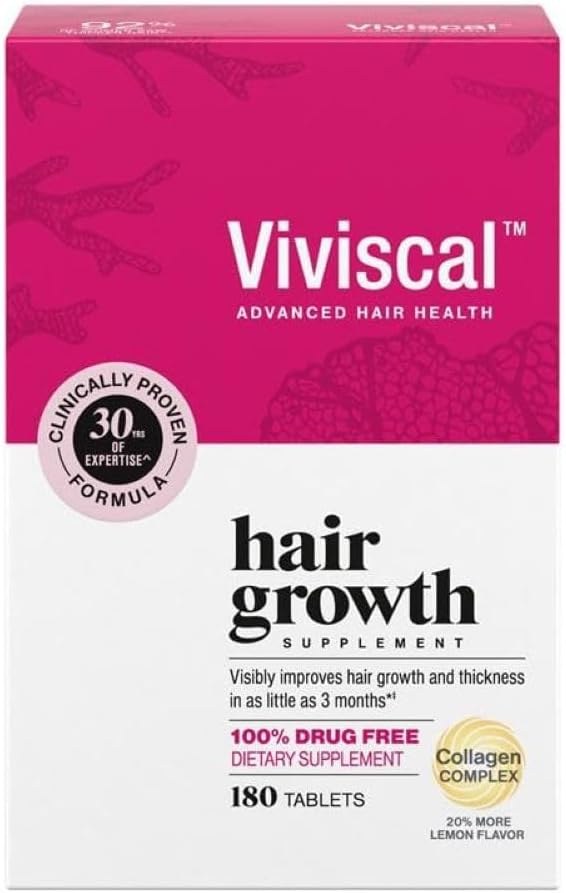
Viviscal Advanced Hair Health
Best for: The most evidence per dollar in a thin category
The evidence pick, and the value pick. Viviscal is built around AminoMar, a marine complex of fish and mollusc powder, and it has the strongest published record of any hair supplement here: multiple double-blind, placebo-controlled trials showing meaningful increases in terminal hairs in women with thinning hair. It is also far cheaper per day than the premium brands. The honest caveats are real, though: every trial was funded by the maker and run in self-perceived-thinning subjects, and because it is fish and shellfish derived, it is off-limits for anyone with those allergies or a vegan diet.
- Best-documented trial evidence in the category
- The marine complex is the actual studied active
- Far cheaper per day than Nutrafol
- Simple two-tablet routine
- All trials are industry-funded
- Contains fish and shellfish (not vegan)
- Includes biotin (mind the lab-test caveat)
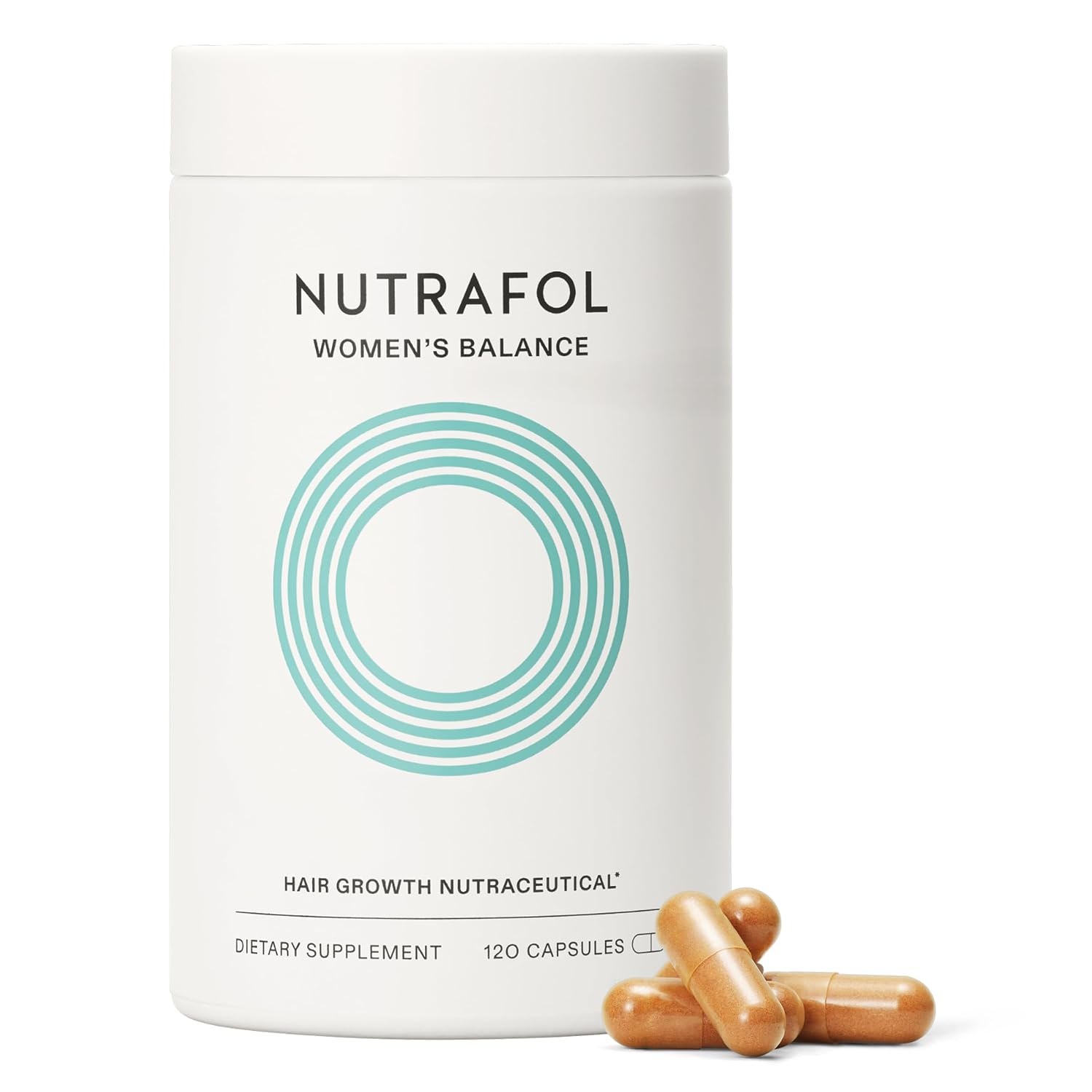
Nutrafol Women's Balance
Best for: Menopausal and hormonal thinning (ages 45+)
The premium women's pick, and the most thoughtfully formulated. The Women's Balance version targets the 45-plus and menopausal years with saw palmetto, Sensoril ashwagandha, curcumin, and marine collagen rather than just biotin, and Nutrafol has its own company-funded six-month trials showing modest improvement. If hormonal or stress-related thinning is your situation, this is the best-aimed formula here. The honest reality is the price (about $2.90 a day), the four-capsule daily dose, and that the evidence, while real, is small and industry-funded.
- One of the few with its own RCT data
- Targets DHT and stress, not just biotin
- Menopause-specific formula
- Expensive (~$88 a month)
- Four capsules a day
- Contains shellfish-derived collagen
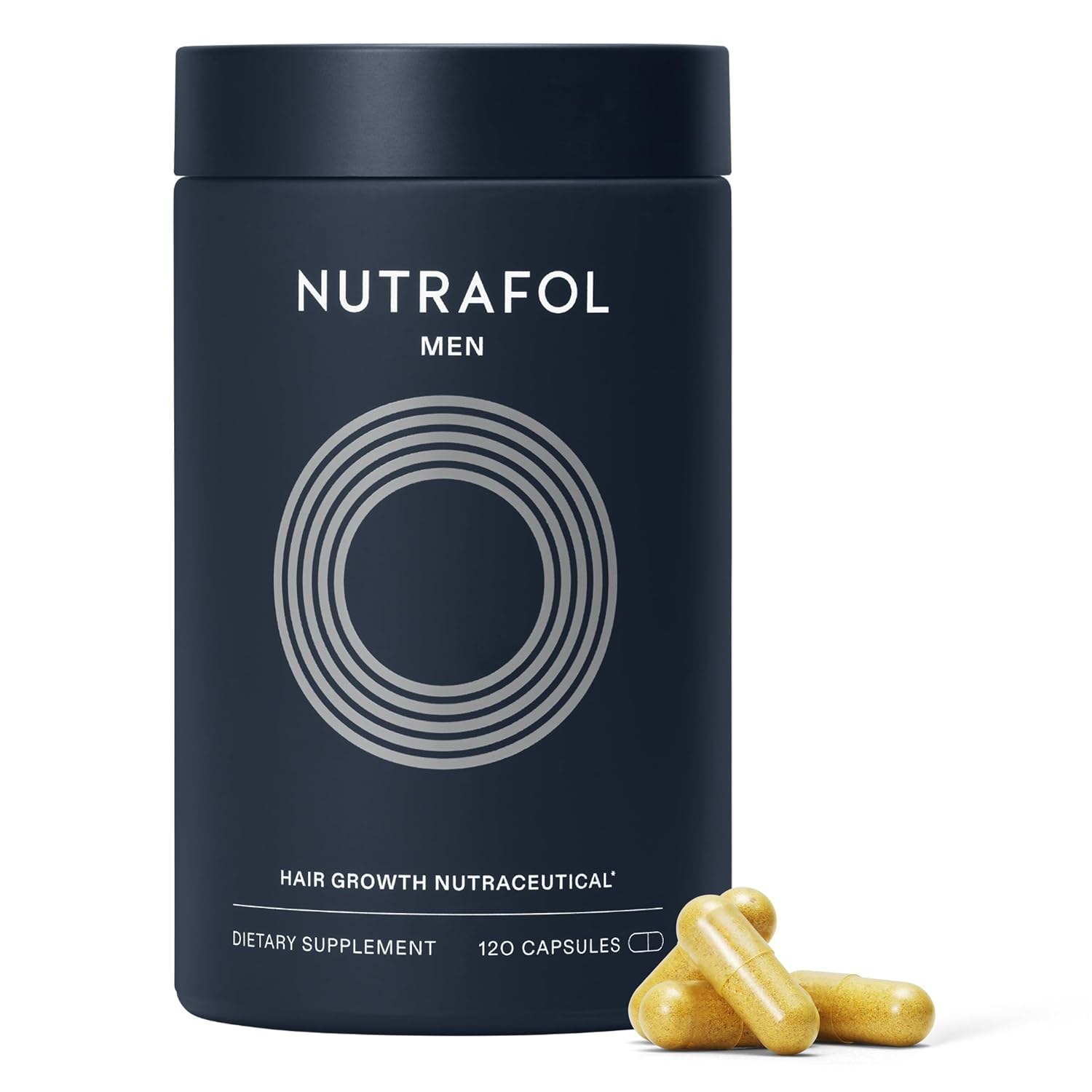
Nutrafol Men
Best for: Men's thinning, as an adjunct to proven treatments
The men's version of the same RCT-backed platform. Nutrafol Men leans on saw palmetto (a mild DHT blocker), curcumin, ashwagandha, and a tocotrienol complex across 21 ingredients, which is sensible for male-pattern thinning since that is DHT-driven. It is the best supplement option for men here. But be honest with yourself about what it is: an adjunct. For genuine male-pattern baldness, it does not replace finasteride or minoxidil, it sits alongside them, at a premium price and four capsules a day.
- DHT-aware actives suited to men
- RCT-backed brand
- Addresses stress and nutrition together
- Not a substitute for finasteride or minoxidil
- Expensive, four capsules a day
- Evidence is small and company-funded
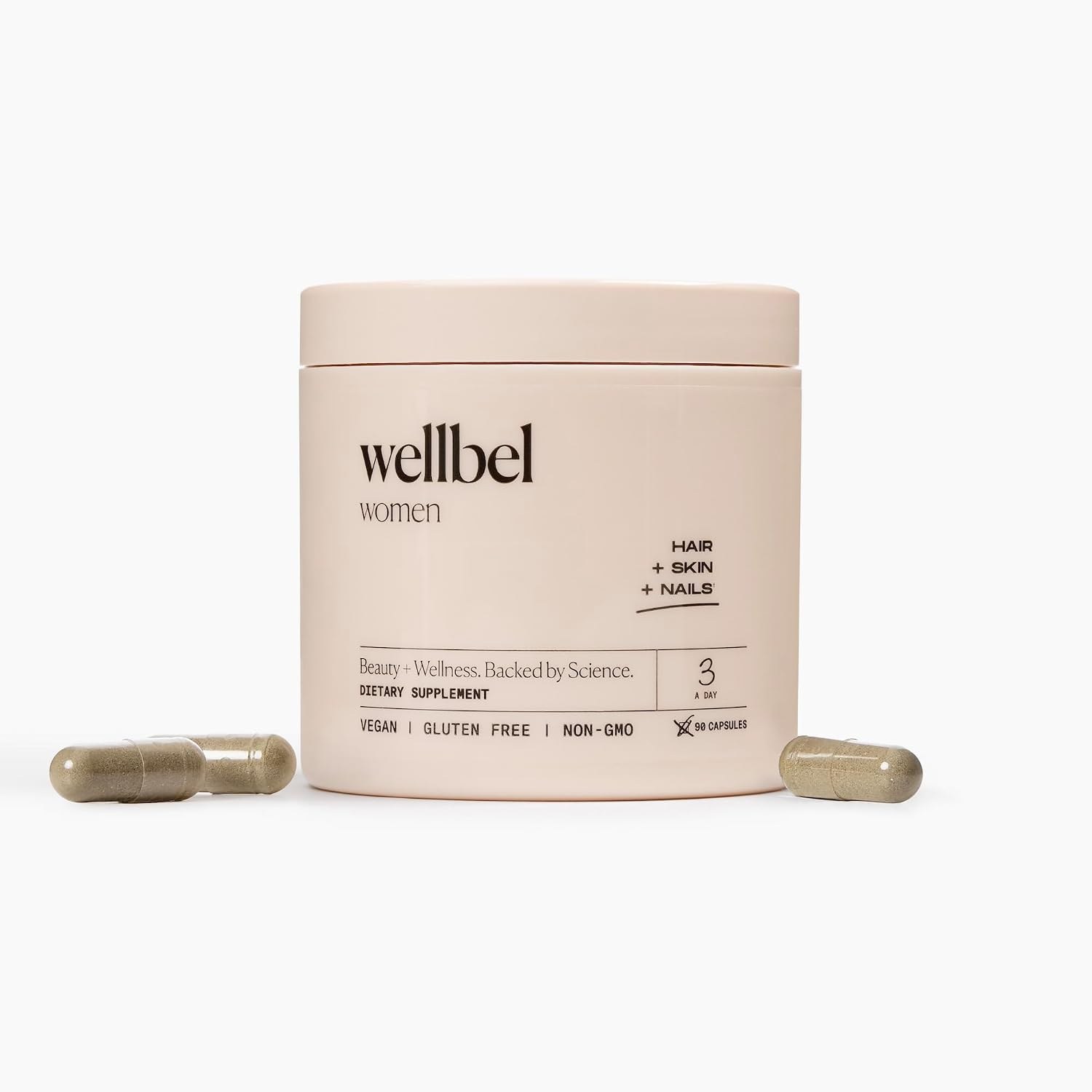
Wellbel Women
Best for: A vegan formula that does not megadose biotin
The smart-formulation pick. Wellbel does the rare sensible thing and keeps biotin at a modest 500 mcg, the lowest of any product here, which means the least risk of skewing your lab tests, then builds the formula around saw palmetto, MSM, stinging nettle, and silica in a vegan capsule. It is the most thoughtfully restrained option on the list. The honest knocks are that there is no clinical trial on the product itself, just ingredient-level rationale, and that it is pricey for an unproven blend with limited Amazon stock (it is mostly sold direct).
- Sensible 500 mcg biotin (least lab interference)
- Vegan, with saw palmetto and clean botanicals
- Single daily dose of three capsules
- No published trial on the product
- Pricey for an unproven blend
- Limited Amazon availability (mostly direct)
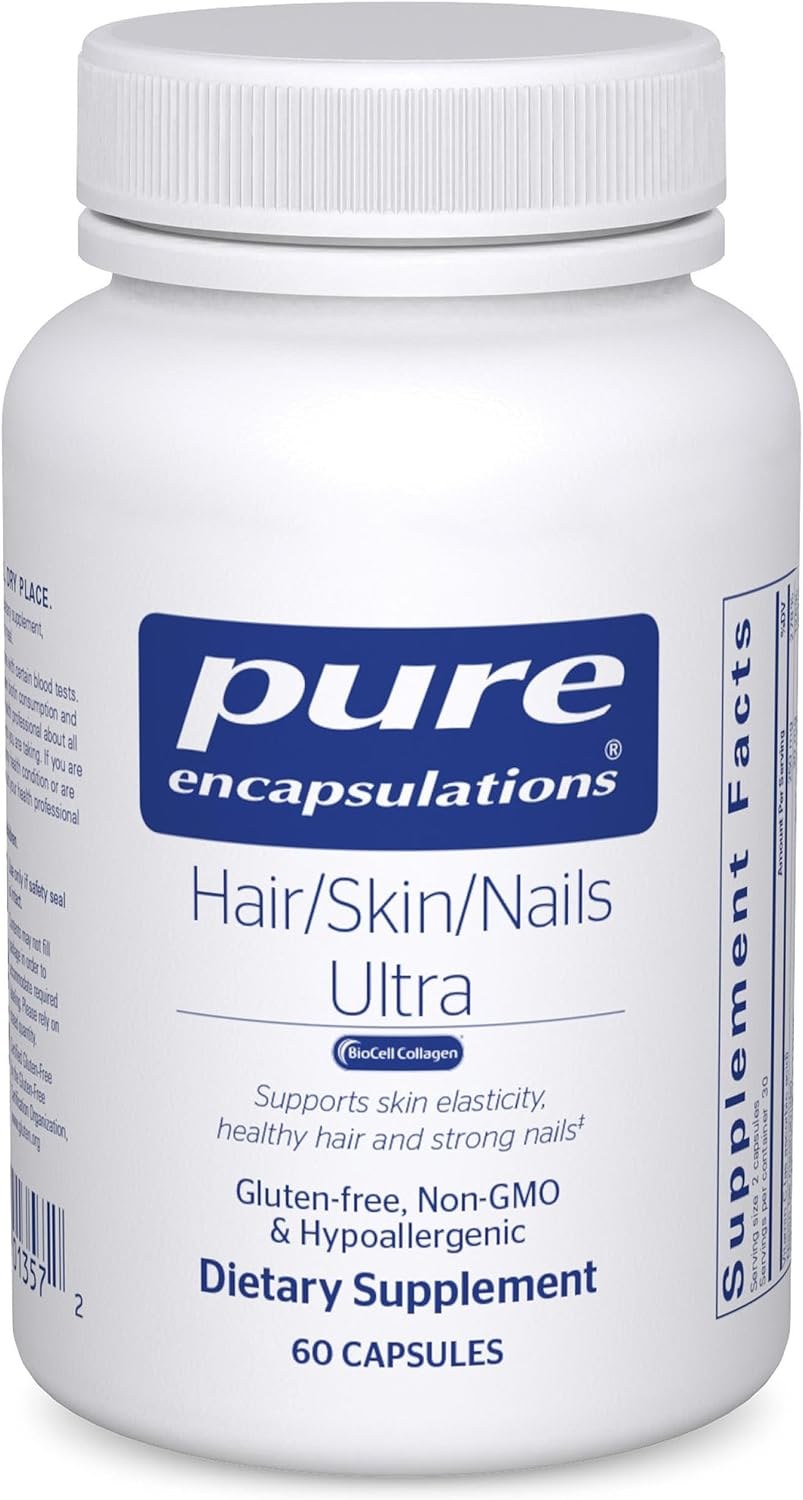
Pure Encapsulations HSN Ultra
Best for: A hypoallergenic, practitioner-grade formula
The clean-label pick for people who care about purity. Pure Encapsulations is a trusted, hypoallergenic practitioner brand, and the HSN Ultra formula is broader than plain biotin, adding BioCell collagen, 30 mg of silica, vitamin C, MSM, and carotenoids. If you want a meticulously clean excipient profile, this is the one. The honest limits: there is no trial on the product, the 6,000 mcg biotin still carries the lab-test caveat, and the collagen is chicken-derived, so it is not vegetarian despite the vegetable capsule.
- Trusted hypoallergenic, clean-label brand
- Broader formula (silica, collagen, antioxidants)
- Just two capsules a day
- 6,000 mcg biotin (lab-test caveat)
- No clinical trial on the product
- Collagen is chicken-derived
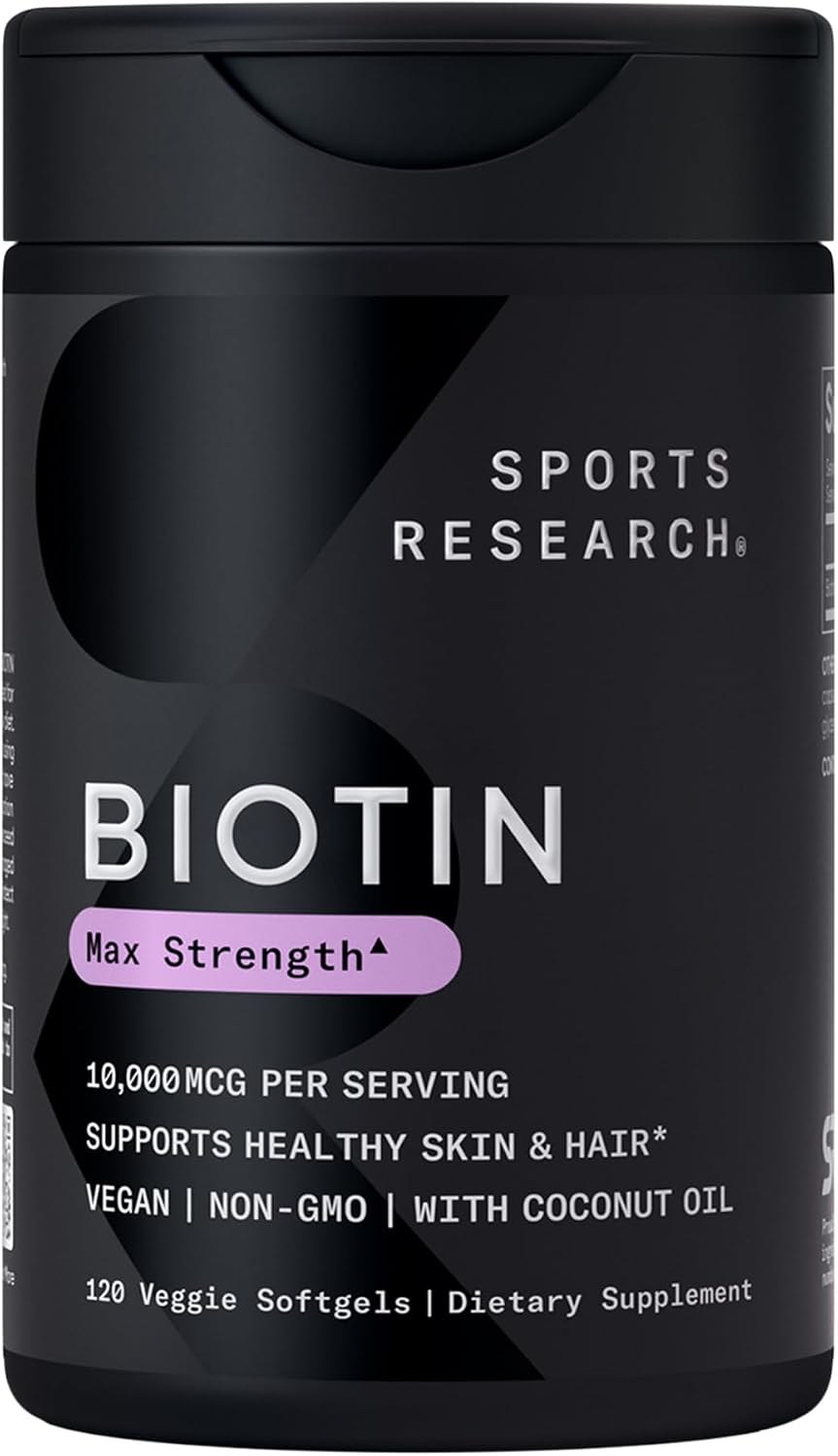
Sports Research Biotin 10,000 mcg
Best for: Cheap, tested biotin if you are genuinely deficient
The honest budget biotin, with a big asterisk. If you genuinely are biotin-deficient, Sports Research is the one to buy: it is cleanly third-party tested, vegan, Non-GMO Project verified, one softgel a day, and pennies per dose, which is the strongest quality label of any pick here. But the asterisk is the whole story of this category: at 10,000 mcg it is the highest dose here, so it does the most to distort your thyroid and heart-attack blood tests, and it does nothing at all if your biotin levels are normal, which they almost certainly are. Buy it for a confirmed deficiency, not for hope.
- Genuinely third-party tested, clean label
- Cheapest per day, one softgel
- Four-month supply
- 10,000 mcg: highest lab-test interference
- No benefit unless you are deficient
- Single nutrient, ignores the real causes
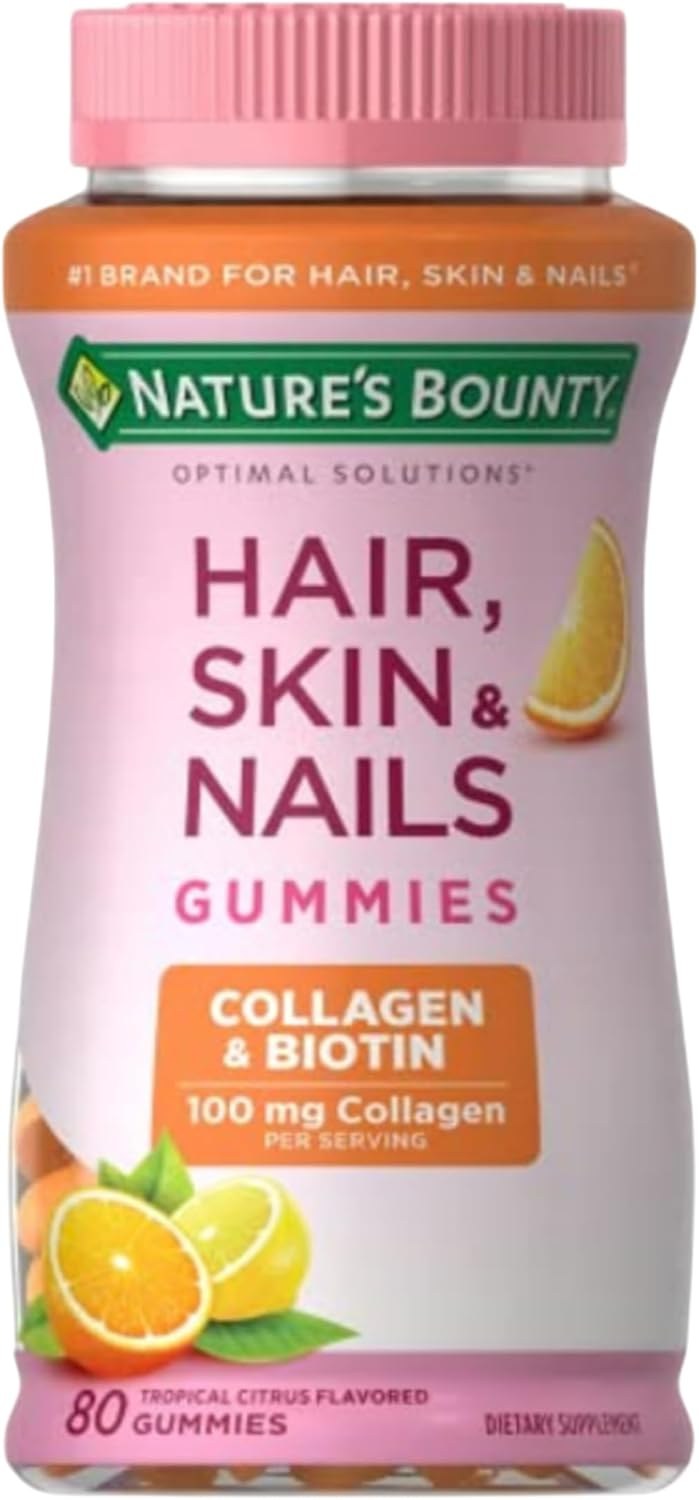
Nature's Bounty Hair, Skin & Nails
Best for: A cheap, pleasant gummy, with low expectations
The honest "you probably don't need this" pick. Nature's Bounty Hair, Skin & Nails is the ubiquitous drugstore gummy: 2,500 mcg biotin plus collagen and vitamins C and E, cheap and pleasant to take. Its one quiet virtue is the lower biotin dose, which interferes with lab tests less than the 10,000 mcg products. But the honest verdict is the same as for any biotin gummy: it will not grow your hair unless you are genuinely deficient, collagen's hair evidence is weak, and the gummies add sugar. A nice treat, not a treatment.
- Very cheap and pleasant gummy
- Lower 2,500 mcg biotin (less lab interference)
- Available in every drugstore
- Won't help unless you are deficient
- Collagen's hair evidence is weak
- Gummies add sugar
The full lineup, side by side
The two columns that matter most are evidence and biotin dose. A product with real trial data and a sensible biotin amount beats a 10,000 mcg single-ingredient gummy, whatever the marketing says.
| Product | Key actives | Evidence | Biotin | Form | ~ Price / day |
|---|---|---|---|---|---|
| Viviscal | AminoMar marine complex | RCT (strongest) | Yes | 2 tablets | $0.58 |
| Nutrafol Women's Balance | Saw palmetto, ashwagandha | RCT (company) | Yes | 4 capsules | $2.90 |
| Nutrafol Men | Saw palmetto, curcumin | RCT (company) | Yes | 4 capsules | $2.90 |
| Wellbel Women | Saw palmetto, MSM, nettle | None (rationale) | 500 mcg | 3 capsules | $2.00 |
| Pure Encapsulations | BioCell collagen, silica | None (rationale) | 6,000 mcg | 2 capsules | $1.30 |
| Sports Research | Biotin (single) | None unless deficient | 10,000 mcg | 1 softgel | $0.15 |
| Nature's Bounty | Biotin + collagen | None unless deficient | 2,500 mcg | 2 gummies | $0.28 |
Viviscal and Nutrafol's trials are small and industry-funded. Biotin helps only true deficiency and distorts lab tests at high doses. Prices are approximate and change often.
How to choose
Rule out the cause before you buy
This is the most important step, and it is free or cheap. Ask your doctor to check ferritin (iron stores), thyroid, and vitamin D, and consider whether stress, illness, PCOS, or genetics is driving your shedding. A supplement only helps a nutritional cause; it will not fix a thyroid problem or pattern baldness.
Be skeptical of biotin
Biotin is the headline ingredient in most hair products and the least useful for most people. It helps only if you are deficient, and the high doses (5,000 to 10,000 mcg) interfere with thyroid and heart-attack blood tests. If you take it, stop a couple of days before any lab work and tell your clinician.
Prefer DHT-aware formulas for pattern thinning
For androgenetic (pattern) thinning, formulas built around saw palmetto and broader actives (Viviscal, Nutrafol, Wellbel) make more sense than a plain biotin pill. Pumpkin seed oil has one small promising trial too.
Match women's vs men's, and give it months
Men's formulas lean harder on DHT-blocking actives; women's (especially menopause versions) add hormone- and stress-supportive botanicals. Whatever you pick, give it 3 to 6 months, expect some early shedding, and pair it with the proven treatments if your loss is genetic.
Frequently asked questions
Does biotin actually work for hair growth?
Only if you are genuinely biotin-deficient, which is uncommon on a normal diet. In people with normal biotin levels there is no solid evidence it grows hair. High doses can also skew lab tests, including thyroid tests and the troponin test used to diagnose heart attacks, which the FDA has warned about, so stop biotin about two days before bloodwork and tell your doctor.
Do hair vitamins really work at all?
Sometimes, but expectations should be modest. They mainly help when hair loss is driven by a nutritional deficiency such as low iron or vitamin D. For genetic pattern baldness, vitamins will not reverse it; minoxidil and finasteride are the proven treatments. Two products with some clinical data are Viviscal and Nutrafol, but their studies are small and company-funded.
Nutrafol vs Viviscal, which is better?
Both are among the few hair supplements with actual randomized trials, and both sets of studies are industry-funded. Viviscal has the longer published track record and costs far less per day. Nutrafol offers a broader formula with saw palmetto, ashwagandha, and curcumin plus dedicated menopause and men's versions, which may suit hormonal or DHT-related thinning. Pick Viviscal for value and evidence, Nutrafol for a targeted hormonal formula. Both contain marine ingredients, so avoid with a shellfish or fish allergy.
How long until I see results?
Plan on three to six months of consistent daily use before deciding whether it is working, because hair grows slowly. It is also normal to shed a bit more in the first few weeks. If there is no change by about six months, reassess with a doctor.
Will any of these regrow male or female pattern (genetic) baldness?
No, not on their own. Supplements do not reverse androgenetic alopecia. The only FDA-approved treatments are minoxidil, for men and women, and finasteride, for men, and combined they work for most men. Supplements like Nutrafol and Viviscal are best viewed as adjuncts. See a dermatologist for pattern hair loss.
Are hair growth supplements safe?
For most healthy adults the ingredients are generally well tolerated, but there are real caveats. High-dose biotin distorts important lab tests, so stop it about two days before bloodwork. Marine-based products such as Viviscal and Nutrafol can trigger fish or shellfish allergies. Saw palmetto can interact with hormonal and blood-thinning medications. Pregnant or breastfeeding women, and anyone on medication or with a health condition, should check with a doctor first.
The bottom line
Hair supplements are a category to enter with clear eyes. For most people willing to try one, Viviscal is the smart pick: the best trial record at the lowest daily cost. Nutrafol is the premium, DHT- and stress-aware choice, with dedicated Women's Balance and Men's formulas. Wellbel is the sensibly low-biotin option, Pure Encapsulations the clean-label one, and the biotin picks (Sports Research, Nature's Bounty) only earn their place if you have a confirmed deficiency. Above all: rule out the cause first, be skeptical of biotin, and remember that for genuine pattern loss, the proven treatments are not supplements at all.