Collagen is the protein that holds skin, joints, bones, and connective tissue together, and supplementing it has become a daily ritual for millions. The honest read on the science: hydrolyzed collagen peptides have real but modest evidence for skin elasticity and hydration and fewer wrinkles, and undenatured Type II collagen has evidence for joint comfort, with weaker support for hair and nails. It is not magic, your body breaks collagen into amino acids like any protein, but specific peptides do appear to signal the cells that build skin and cartilage, and the best studies used branded, clinically-tested peptides.
Two things decide which collagen is right for you. First, type: Type I and III (from bovine or marine) are for skin, hair, and nails; Type II (as undenatured UC-II) is for joints. Second, dose and cofactors: skin studies use roughly 2.5 to 15 grams of peptides a day, joint studies use just 40 mg of UC-II, and vitamin C is a required cofactor for building collagen. We ranked the collagen worth buying on Amazon on exactly these points. For the bigger picture, see our explainer on collagen for skin, joints, and hair.
The short version
- Best overall: Vital Proteins Collagen Peptides. A generous 20 g of grass-fed Type I & III, now with vitamin C and hyaluronic acid.
- Best value: Sports Research Collagen Peptides, the same idea, third-party tested, for much less.
- Best for joints: NOW UC-II, a completely different tool (undenatured Type II) with real joint evidence.
- Type matters more than brand. Type I & III for skin, hair, and nails; Type II for joints.
- Add vitamin C (or pick a product that includes it), and give any collagen 8 to 12 weeks.
How we ranked them
Collagen products differ more than creatine or zinc, so type and source do a lot of the work. We weighed five things:
- Type matched to the goal. Type I and III for skin, hair, and nails; Type II (UC-II) for joints; multi-collagen for broad coverage.
- Dose and form. A sensible amount of hydrolyzed peptides (or the right small dose of a bioactive peptide like Verisol or UC-II), since hydrolyzed peptides absorb better than plain gelatin.
- Source quality. Grass-fed, pasture-raised bovine or wild-caught marine, with clean single-ingredient labels.
- Cofactors and evidence. Added vitamin C is a plus, and we gave extra credit to clinically-studied branded peptides (Verisol, UC-II).
- Value. Price per serving and per gram, since collagen is a daily habit.
Scores are our editorial assessment on a five-point scale, not customer ratings.
The 7 best collagen supplements
Tap any product to jump straight to its full review.
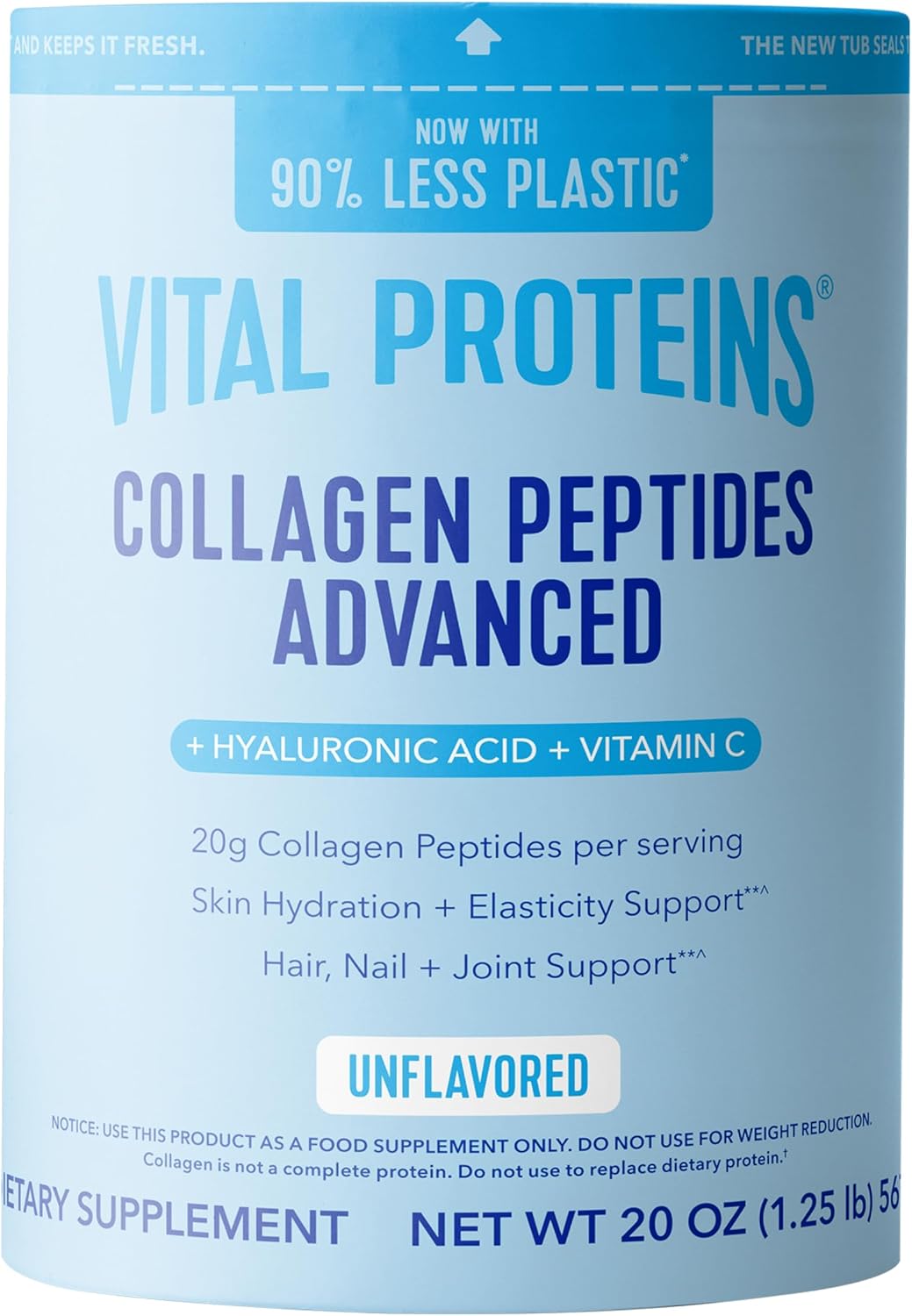
Vital Proteins Collagen Peptides
Best for: everyday skin, hair, nails, and joints
The category benchmark. A generous 20 g of grass-fed Type I & III peptides, now upgraded with vitamin C (the cofactor your body needs to build collagen) and hyaluronic acid. It is truly unflavored, dissolves into anything hot or cold, and is the safe default for skin, hair, nails, and joints. You pay a premium and there is no sport certification, but it is the one most people should start with.
- Generous 20 g dose per serving
- Added vitamin C and hyaluronic acid
- Truly unflavored, dissolves easily
- Grass-fed, pasture-raised bovine; the most trusted name here
- Premium price per serving
- No NSF or Informed Sport certification
- Type I & III only (no Type II for joints)
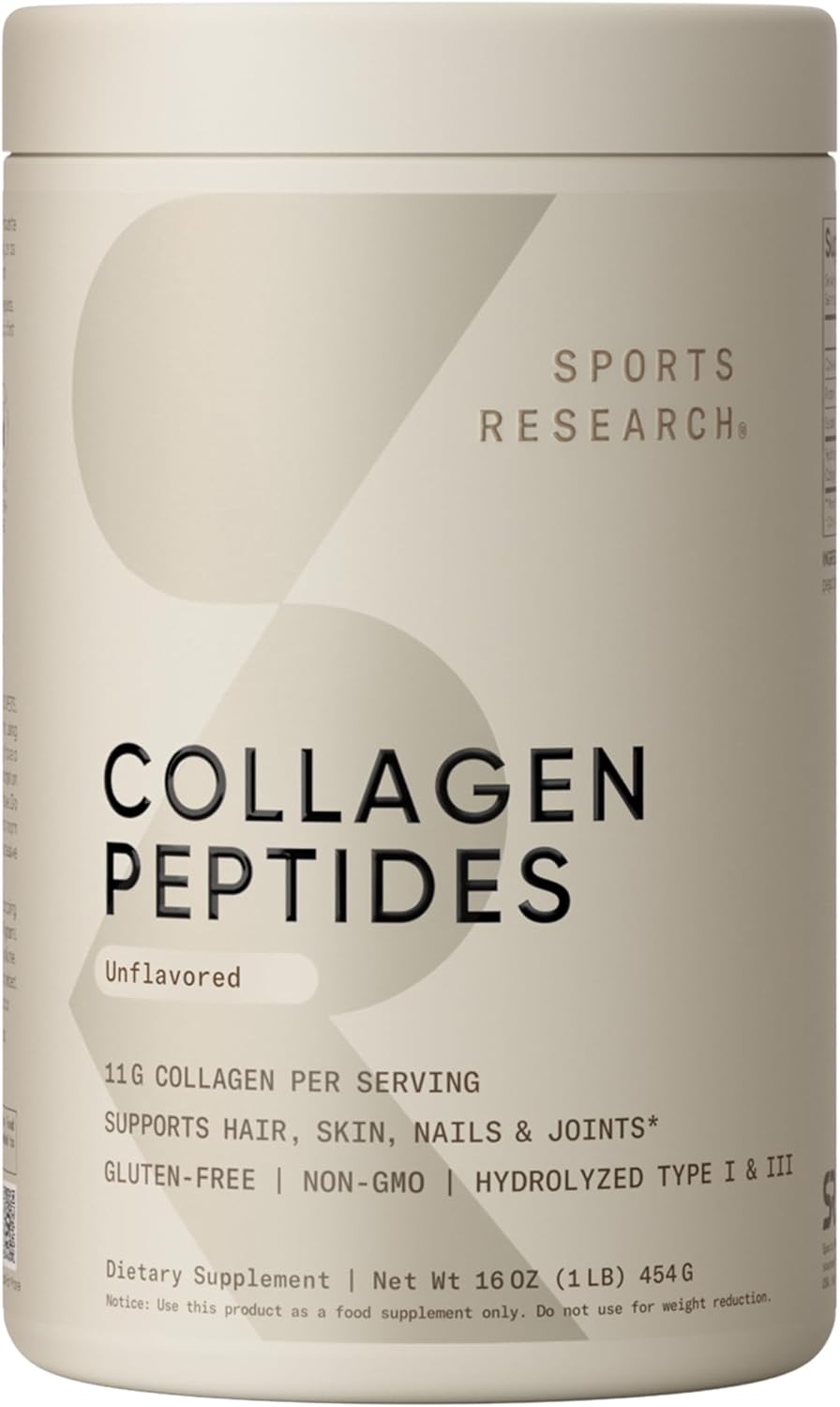
Sports Research Collagen Peptides
Best for: a reliable daily collagen on a budget
The value champion. The same grass-fed Type I & III peptides as the big names, third-party tested, for noticeably less, around 66 cents a serving. It is 11 g rather than 20, but that is still within the range studies use, and it mixes cleanly hot or cold. If you want a reliable daily collagen without the premium markup, this is it.
- Grass-fed Type I & III, third-party tested
- Much cheaper per serving than Vital Proteins
- Clean single ingredient; Non-GMO, keto, gluten-free
- Dissolves easily, neutral taste
- No added vitamin C
- 11 g is a smaller dose
- Not sport-certified
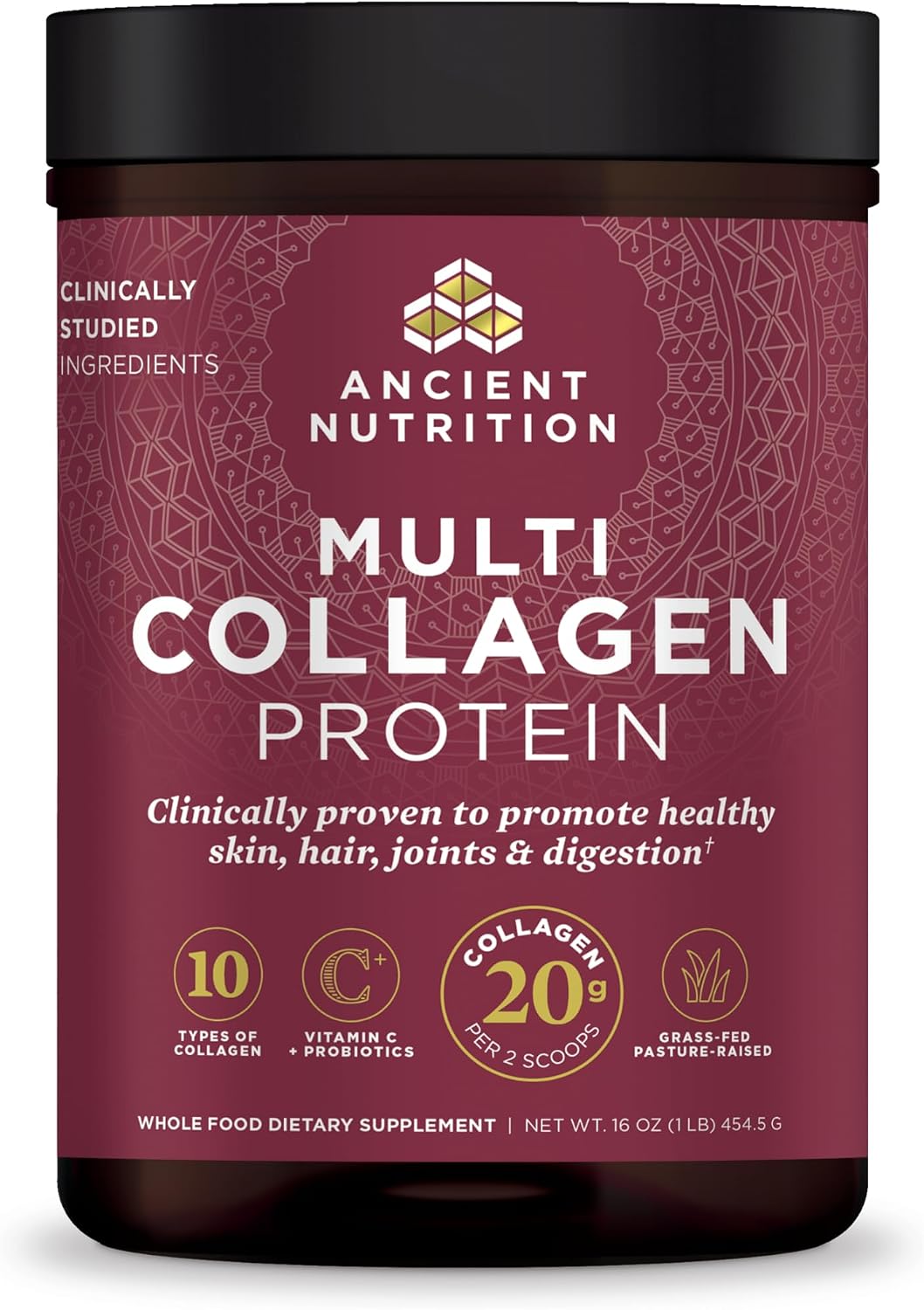
Ancient Nutrition Multi Collagen Protein
Best for: covering skin, joints, and gut at once
The everything pick. Instead of just Type I & III, it blends collagen from four sources (bovine, chicken, fish, and eggshell) to cover ten collagen types, plus vitamin C and a probiotic, aiming at skin, joints, and gut in one scoop. It is the priciest powder here, but if you want broad coverage rather than a single-purpose collagen, it earns its place.
- 10 collagen types from 4 whole-food sources
- Covers skin, joints, and gut
- Added vitamin C and a probiotic
- Grass-fed and cage-free sourcing
- Most expensive powder per serving
- No third-party purity certification
- Broad approach is more than some need
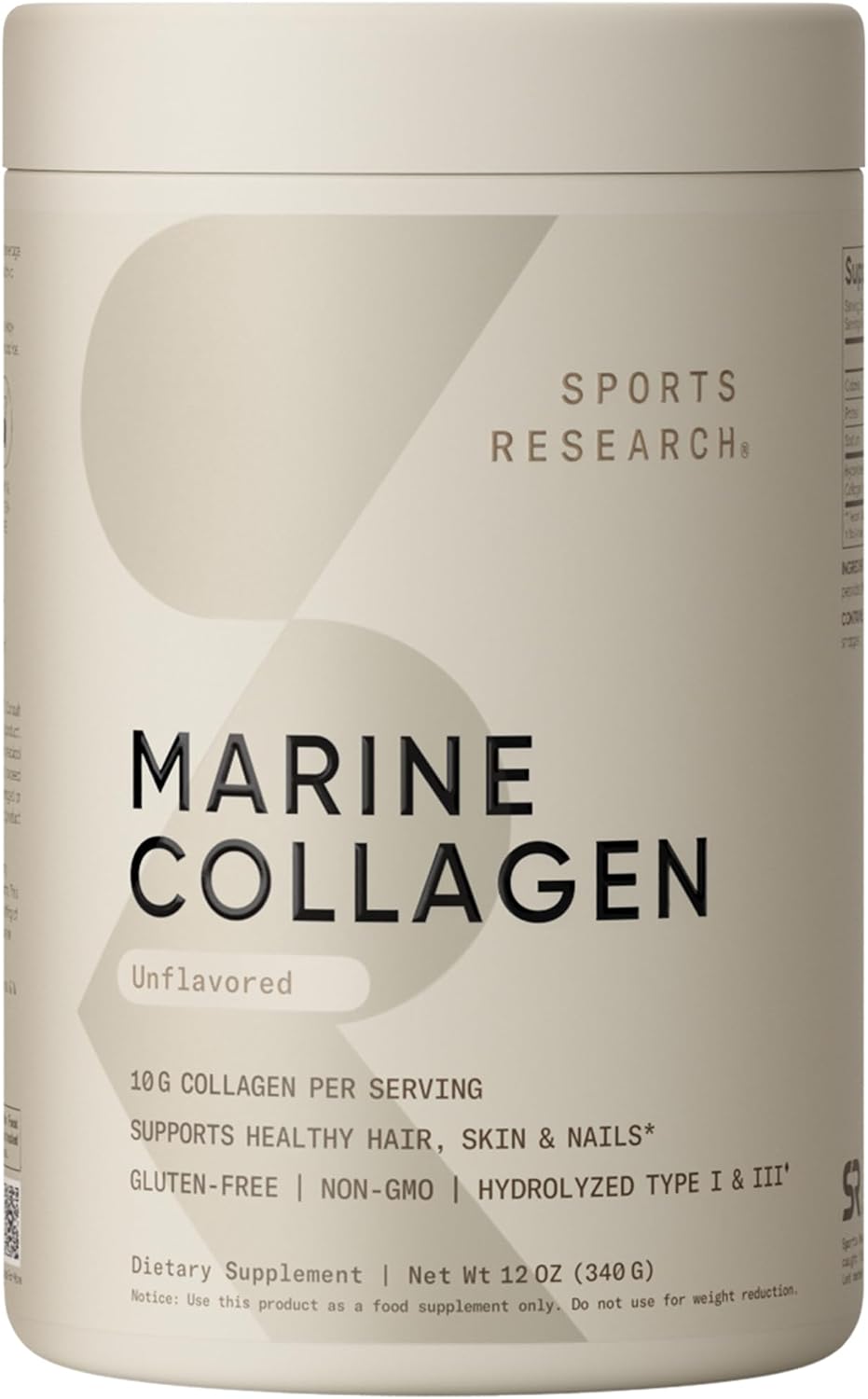
Sports Research Marine Collagen
Best for: pescatarians and people who avoid beef
The pescatarian and absorption pick. Marine collagen is Type I, the dominant type in skin, in smaller peptides that some find absorb a little better, and it is wild-caught rather than bovine. Sports Research makes a clean, third-party-tested version at a fair price. It costs more than bovine and can carry a faint taste, but it is the best choice if you avoid beef or want a marine source.
- Wild-caught marine Type I, pescatarian-friendly
- Smaller peptides, mixes easily
- Third-party tested, Non-GMO
- Clean single ingredient
- Pricier per gram than bovine
- Can have a faint fishy taste
- No added vitamin C
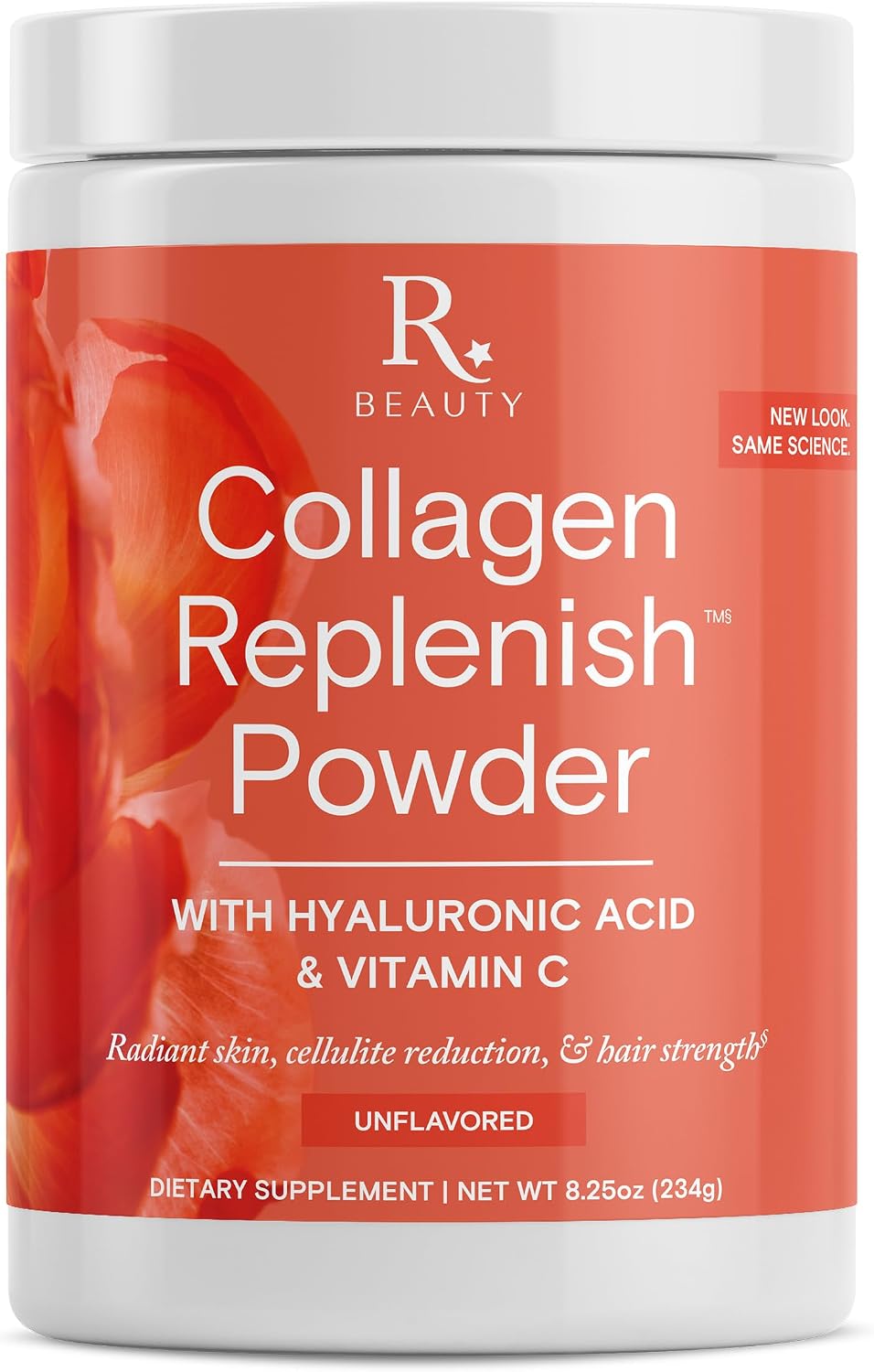
Reserveage Collagen Replenish
Best for: skin elasticity and wrinkles, specifically
The one with the skin studies behind it. It is built on Verisol, the specific collagen peptide used in the randomized trials on skin elasticity and wrinkles, at the same 2.5 g dose those studies used, plus vitamin C and hyaluronic acid. The dose looks small next to 20 g tubs, but that is the point: Verisol is a low-dose bioactive peptide, not a bulk protein. The pick if your goal is specifically skin.
- Uses clinically-studied Verisol at the trial-validated 2.5 g dose
- Adds vitamin C and hyaluronic acid
- Targeted at skin elasticity and wrinkles
- Unflavored, mixes easily
- Small 2.5 g dose if you also want bulk peptides
- Pricier per serving
- No third-party seal
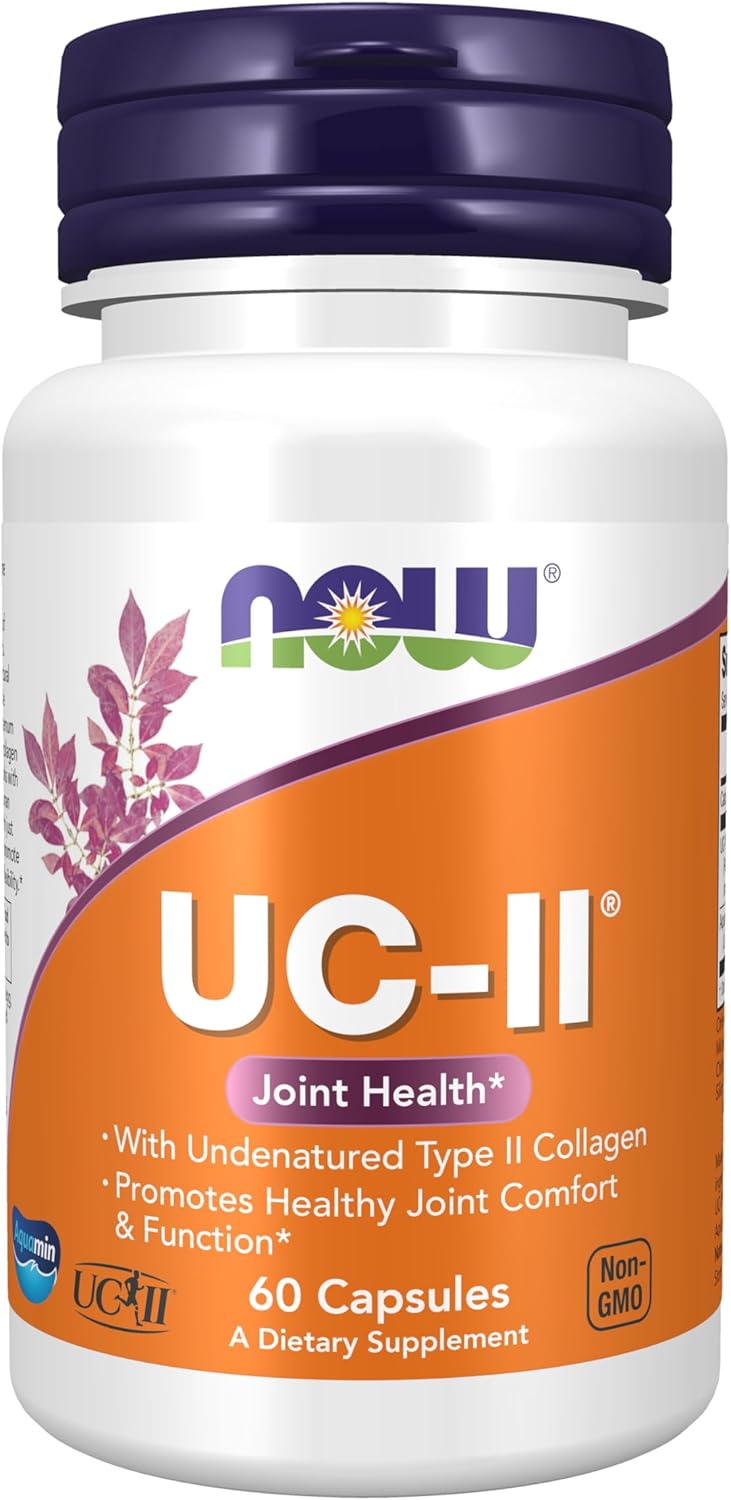
NOW UC-II Type II Collagen
Best for: joint comfort and flexibility
The joint specialist. This is a completely different tool from the skin peptides above: 40 mg of undenatured Type II collagen (UC-II), the form with randomized-trial evidence for joint comfort and flexibility, in one small daily capsule. It does nothing for skin or hair, but for joints it is an affordable, evidence-backed pick, and far easier to take than large glucosamine tablets.
- Undenatured Type II (UC-II) with RCT evidence for joints
- Tiny once-daily capsule
- Affordable per serving
- Trusted Non-GMO brand
- For joints only, not skin, hair, or nails
- Chicken-derived (not vegan)
- Benefits build over weeks
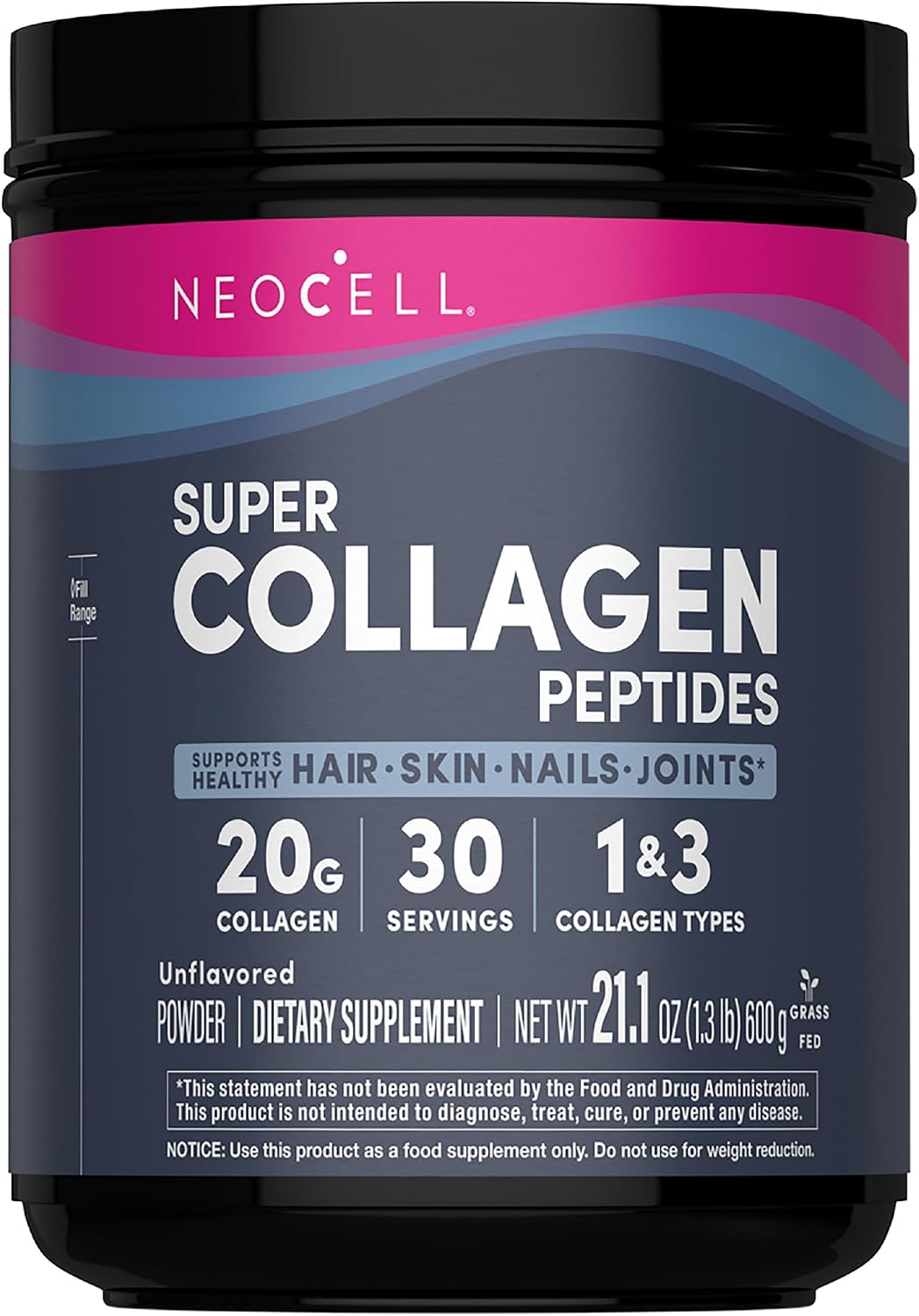
NeoCell Super Collagen Peptides
Best for: a full dose at the lowest cost per gram
The most collagen per dollar. NeoCell has sold collagen since the 1990s, and this grass-fed powder gives you a full 20 g of Type I & III per serving for one of the lowest costs per gram here. No added vitamin C and no sport certification, but it is hydrolyzed, dissolves easily, and does the same job as the premium tubs. The pick if you want a generous dose without the premium price.
- Generous 20 g grass-fed Type I & III
- One of the lowest costs per gram of collagen
- Hydrolyzed, mixes easily
- Long-running, widely available; Non-GMO, gluten-free
- No added vitamin C
- No third-party sport certification
- Basic single ingredient (no skin extras)
The full lineup, side by side
The fastest way to read this table: pick the type that matches your goal (I & III for skin and hair, II for joints), then weigh dose, source, and price.
| Product | Type | Source | Dose | + Vit C | Format | ~ Price / serving |
|---|---|---|---|---|---|---|
| Vital Proteins | I & III | Bovine | 20 g | Yes (+ HA) | Powder | $1.33 |
| Sports Research | I & III | Bovine | 11 g | No | Powder | $0.66 |
| Ancient Nutrition | 10 types | Multi (4 sources) | 20 g | Yes (+ probiotic) | Powder | $1.90 |
| Sports Research Marine | Type I | Marine | 10 g | No | Powder | $1.03 |
| Reserveage (Verisol) | I & III | Bovine | 2.5 g | Yes (+ HA) | Powder | $1.13 |
| NOW UC-II | Type II | Chicken | 40 mg | No | Capsule | $0.32 |
| NeoCell | I & III | Bovine | 20 g | No | Powder | $0.90 |
Type I & III peptides are for skin, hair, and nails; Type II (UC-II) is a low-dose joint product; Verisol is a clinically-studied bioactive peptide dosed at 2.5 g. Prices are approximate per-serving estimates from current Amazon pack sizes and change often.
How to choose the right one for you
Match the type to your goal
This is the first decision. For skin, hair, and nails, you want hydrolyzed Type I and III peptides, which is what most collagen powders are. For joints, the evidence points to a different product entirely: undenatured Type II collagen (UC-II) at 40 mg a day. A multi-collagen blend tries to cover both. If your only goal is wrinkles and elasticity, a clinically-studied peptide like Verisol is the most targeted option. Our hair, skin, and nails guide covers the wider beauty-supplement picture.
Dose, and don't forget vitamin C
Skin and nail studies use roughly 2.5 to 15 grams of collagen peptides a day, with 10 to 20 grams a common practical amount. Bioactive peptides are the exception: Verisol works at 2.5 g and UC-II at just 40 mg. Whatever you choose, vitamin C is a required cofactor for building collagen, so pick a product that includes it or take it with a vitamin-C source.
Source: bovine vs marine
Grass-fed bovine collagen (Type I and III) is the most affordable and the default. Marine collagen is mostly Type I in smaller peptides that some feel absorb a little better, and it suits pescatarians or anyone avoiding beef, but it costs more and can carry a faint taste. Both work for skin; choose on diet, budget, and preference.
Hydrolyzed, and ideally tested
Look for "hydrolyzed" collagen or "collagen peptides," which are broken into small, well-absorbed pieces, rather than plain gelatin. A short, single-ingredient label is a good sign, and third-party testing (as Sports Research and the marine pick carry) adds assurance about what is in the tub.
Format and value
Unflavored powder is the most flexible and usually the best value, stirring into coffee or a smoothie. Capsules suit the low-dose joint products. Be wary of collagen gummies and ready-to-drink shots, which tend to deliver only a gram or two of collagen for a much higher price per gram.
Frequently asked questions
Does collagen actually work?
The evidence is real but modest. Randomized trials show hydrolyzed collagen peptides can improve skin elasticity and hydration and reduce wrinkles, and undenatured Type II collagen can ease joint discomfort. Support for hair and nails is weaker. Collagen is broken down into amino acids like any protein, but specific peptides appear to signal the cells that build skin and cartilage. Give it 8 to 12 weeks of daily use.
What type of collagen is best?
It depends on your goal. Type I and III (from bovine or marine) are the ones for skin, hair, and nails, and most peptide powders are this blend. Type II, taken as undenatured UC-II, is the form studied for joints. Multi-collagen products combine several types to cover skin, joints, and gut in one scoop.
How much collagen should I take?
For skin, hair, and nails, most studies use about 2.5 to 15 grams of collagen peptides a day, and 10 to 20 grams is a common practical dose. The clinically studied Verisol peptide works at 2.5 grams. For joints, undenatured Type II collagen is taken at just 40 milligrams a day. Vitamin C helps your body use collagen, so take it alongside or choose a product that includes it.
Is bovine or marine collagen better?
Both work for skin, hair, and nails. Bovine collagen provides Type I and III and is the most affordable. Marine collagen is mostly Type I in smaller peptides that some people feel absorb a little better, and it suits pescatarians and those who avoid beef, but it costs more and can have a faint taste. Choose based on diet, budget, and preference.
When and how should I take collagen?
Timing does not matter much. Unflavored peptides dissolve into coffee, water, or a smoothie, hot or cold. Taking it with a source of vitamin C supports collagen synthesis. As with most supplements, daily consistency matters more than timing, and skin changes typically take 8 to 12 weeks to appear.
Is collagen the same as protein powder?
Not quite. Collagen is a protein, but an incomplete one that is low in some essential amino acids, so it is not a good substitute for whey or another complete protein if your goal is building muscle. Think of collagen as a targeted supplement for skin and joints, taken in addition to, not instead of, your overall protein intake.
The bottom line
The best collagen is the one whose type matches your goal. For most people that is a grass-fed Type I & III peptide, which is why Vital Proteins takes the top spot, with Sports Research the value version and NeoCell the most grams per dollar. Choose Ancient Nutrition for broad multi-type coverage, Sports Research Marine if you avoid beef, Reserveage with Verisol if your focus is specifically skin, and NOW UC-II for joints, which needs a different Type II product entirely. Whatever you pick, take it daily with vitamin C and give it two to three months.