Ergothioneine is one of the more genuinely intriguing longevity supplements, and one of the least understood. It is an antioxidant you get from mushrooms, and the reason scientists take it seriously is unusual: your body has a dedicated transporter that goes out of its way to absorb and hold onto it, concentrating it in the tissues that take the most oxidative wear. That is the kind of design nature does not usually bother with for a molecule that does nothing. We compared the leading ergothioneine supplements on dose, form, purity, testing, and price, and ranked them with the evidence, which is promising but still early, kept firmly in view.
The short version
- Best overall: Toniiq Ergothioneine. The standardized, high-purity MitoPrime ingredient at a full 30 mg, 98 percent pure and third-party tested, at an unbeatable price.
- Best value: Nutricost, and best mushroom-derived: Real Mushrooms Ergo+.
- Dose: research has used roughly 5 to 25 mg, taken daily or a few times a week. Most products are 5 to 30 mg, and consistency matters more than a big dose.
- Reality check: the mechanism and the observational data are compelling, but human trials are early. This supports healthy aging and antioxidant defenses, it does not treat any disease.
How we ranked them
Ergothioneine products are simpler than most supplements, which makes the details count. We weighed five things, in this order:
- Form and ingredient quality. Whether the product uses a standardized, clinically studied ingredient like MitoPrime, a plain generic L-ergothioneine, or a whole mushroom extract, and whether it discloses purity.
- Dose. A sensible, clearly labeled dose in the studied range beats a vague one. Higher is not automatically better here.
- Testing and transparency. Third-party testing, a Certificate of Analysis, and a reputable manufacturer scored higher.
- Value. Cost per serving, because ergothioneine is a long-term, take-it-daily supplement.
- Format. Vegan capsules, clean labels, and a sensible bottle size.
Scores are our editorial assessment on a five-point scale, not customer ratings, and they factor in the realistic state of the evidence rather than treating ergothioneine as a proven anti-aging cure.
The 5 best ergothioneine supplements
Tap any product to jump straight to its full review.
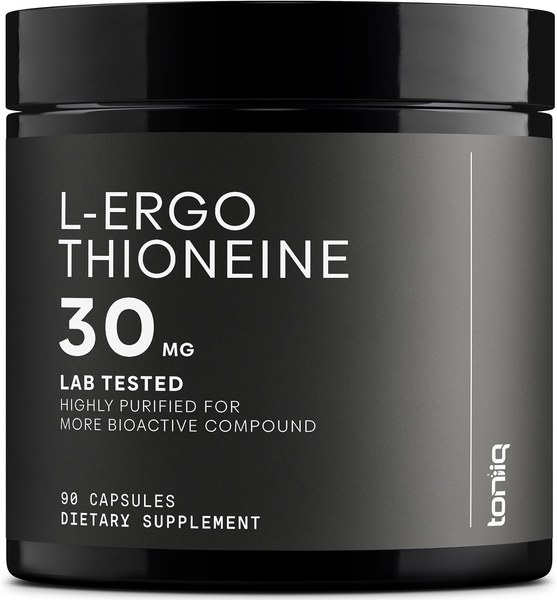
Toniiq Ergothioneine (MitoPrime)
Form: MitoPrime L-ergothioneine · 30 mg, 98 percent pure
The pick that gets the most right. Toniiq uses MitoPrime, a branded, standardized L-ergothioneine made by fermentation, at a full 30 mg and a stated 98 percent purity, third-party tested. The published human trials used generic pharmaceutical-grade ergothioneine rather than this specific brand, but MitoPrime gives you a known, high-purity form. The remarkable part is the price: at roughly 22 cents a serving it is also the cheapest MitoPrime option, which is why it takes the top spot. If you want the studied ingredient without overpaying, start here.
- Uses the standardized, high-purity branded MitoPrime ingredient
- Full 30 mg dose at a stated 98 percent purity
- Third-party tested, 90-count bottle
- Outstanding value, the cheapest MitoPrime here
- Vegan status is not clearly stated on the listing
- 30 mg is above the typical 5 to 25 mg studied dose
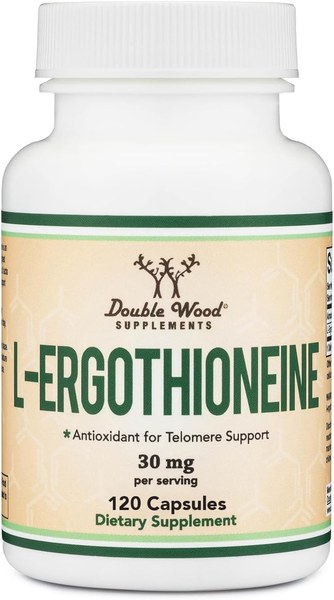
Double Wood L-Ergothioneine
Form: L-ergothioneine · 30 mg, per-lot Certificate of Analysis
The pick if you want a well-known name and a big bottle. Double Wood is one of the more trusted mainstream supplement brands, and this is a straightforward 30 mg L-ergothioneine in a large 120-count size, with a per-lot Certificate of Analysis covering potency, heavy metals, and microbials, in a vegan capsule. It is a generic rather than a standardized branded form and does not publish a purity percentage, but the testing and transparency are solid.
- Well-known, widely trusted brand
- Full 30 mg dose in a large 120-count bottle
- Per-lot Certificate of Analysis published
- Vegan, gluten-free, non-GMO
- Generic form, no branded standardization
- No published purity percentage
- 30 mg exceeds the typical studied dose
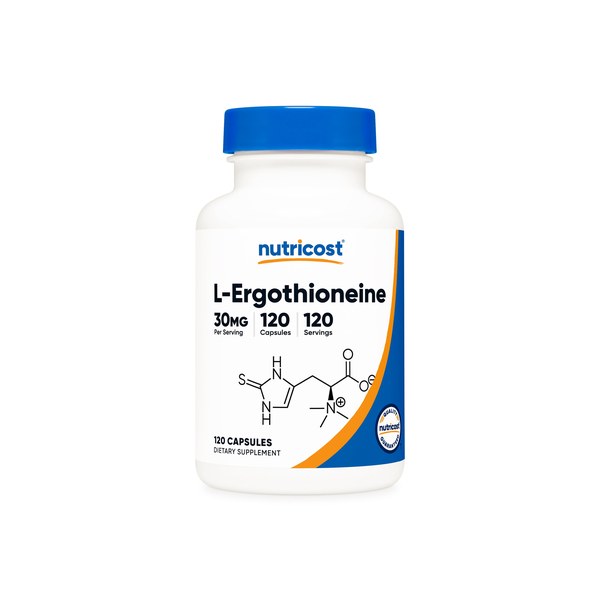
Nutricost L-Ergothioneine
Form: L-ergothioneine · 30 mg, mushroom-derived
The value pick, and it is not close. Nutricost delivers a full 30 mg of L-ergothioneine at the lowest cost per serving here, roughly 16 cents, in a 120-count bottle made in an NSF-certified, cGMP, FDA-registered facility. It is vegan and third-party tested. Like Double Wood it is a generic form without a published purity percentage, but for a well-made, budget-friendly way to take ergothioneine daily, it is the obvious choice.
- Lowest cost per serving by a clear margin
- Full 30 mg dose, 120-count value bottle
- Made in an NSF-certified, cGMP facility
- Vegan, non-GMO, gluten-free
- Purity percentage not disclosed
- Generic ingredient, no branded standardization
- 30 mg is above the studied dose range
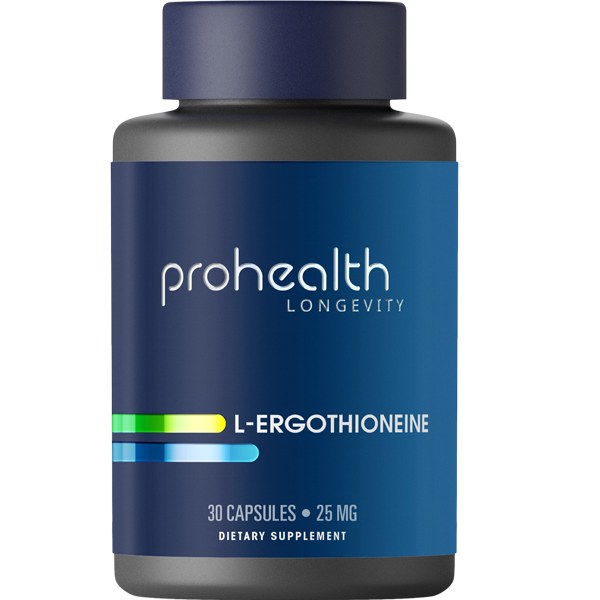
ProHealth Longevity Ergothioneine
Form: L-ergothioneine · 25 mg, longevity-focused brand
The pick for matching the research. At 25 mg, this lines up with the dose used in the main human pilot trial of ergothioneine, from a longevity-focused brand that third-party tests every batch and provides a Certificate of Analysis. It is vegan and GMP-made. The downsides are practical: a small 30-count bottle and a high cost per serving, so you are paying a premium for the brand and the research-matched dose.
- 25 mg matches the common clinical-research dose
- Longevity-specialist brand with per-batch third-party COA
- Vegan, GMP-manufactured
- High cost per serving, around $1.20
- Small 30-count bottle, one month per bottle
- Purity percentage not published
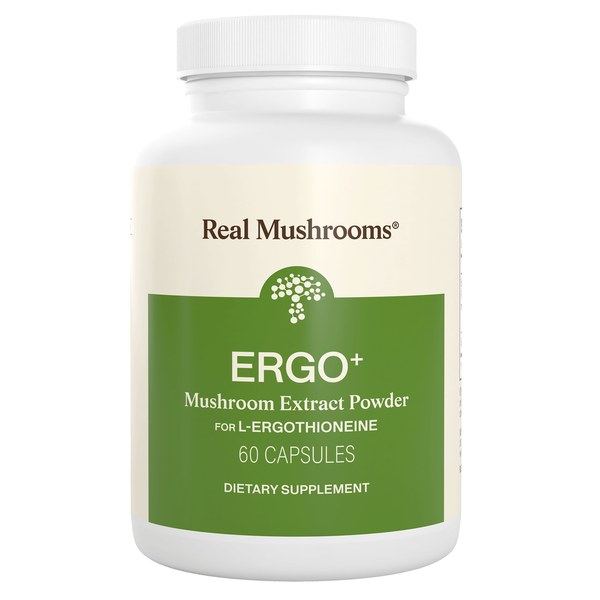
Real Mushrooms Ergo+
Form: Golden oyster mushroom extract · 10 mg ergothioneine plus beta-glucans
The pick if you would rather get ergothioneine the way nature packages it. Real Mushrooms builds this around an organic golden oyster mushroom extract, standardized to 10 mg of ergothioneine and 75 mg of beta-glucans, so you also get the mushroom's immune-supporting fiber. It is certified organic, vegan, and third-party tested. Honest notes: the dose is lower, some of the ergothioneine is yeast-derived rather than purely from the mushroom, and it costs more per milligram than the isolates.
- Genuine mushroom-based formula with a stated 10 mg ergothioneine
- Adds mushroom beta-glucans for extra support
- Certified organic, vegan, third-party tested
- Lower 10 mg dose at a higher price per milligram
- Some ergothioneine is yeast-derived, not all from the mushroom
- Whole extract, so no purity percentage
Want a lower, more conservative dose that matches the studied range even more closely? Established longevity brands like Life Extension and Xymogen sell 5 mg L-ergothioneine capsules, which suit anyone who prefers to start small and stay close to the amounts used in research.
The full lineup, side by side
| Product | Dose | Form | Servings | Testing | ~Cost/serving |
|---|---|---|---|---|---|
| Toniiq | 30 mg | MitoPrime (98%) | 90 | Third-party | ~$0.22 |
| Double Wood | 30 mg | L-ergothioneine | 120 | Per-lot COA | ~$0.30 |
| Nutricost | 30 mg | L-ergothioneine | 120 | NSF facility | ~$0.16 |
| ProHealth Longevity | 25 mg | L-ergothioneine | 30 | Per-batch COA | ~$1.20 |
| Real Mushrooms Ergo+ | 10 mg | Mushroom extract | 60 | NSF facility | ~$0.58 |
Prices are approximate and change often. MitoPrime is a standardized, branded L-ergothioneine ingredient; generic L-ergothioneine is chemically the same molecule but is not tied to a specific branded standardization. Confirm current pricing and label details on the retailer page.
What ergothioneine is, and does it work?
Ergothioneine (ET) is a sulfur-containing amino acid and antioxidant that humans cannot make. You get it entirely from food, above all from mushrooms. What makes it stand out from the crowd of antioxidants is how the body handles it: there is a dedicated transporter, OCTN1, that avidly absorbs ergothioneine and concentrates it inside cells, especially in tissues under high oxidative stress like the liver, brain, and eyes. A body does not usually build a special uptake system for a molecule it has no use for, which is the core reason ergothioneine is taken seriously.
That observation is what led the biochemist Bruce Ames to propose the idea of longevity vitamins: nutrients that do not cause an obvious deficiency disease if you run low, but that may quietly matter for long-term health and healthy aging. Ergothioneine is one of the leading candidates for that label.
The human evidence, honestly. The strongest data is observational. In a large population study, higher blood ergothioneine was associated with a lower risk of cardiovascular disease and death, and other cohorts have found that low ergothioneine predicts faster cognitive and physical decline in older adults. That is a consistent and encouraging signal, but it is an association: people with more ergothioneine may simply eat more mushrooms, vegetables, and whole foods, so it does not prove that a supplement changes the outcome. Direct trials are still small and early. The main one, a pilot study in older adults with mild cognitive impairment, found ergothioneine was safe over a year and was associated with better learning scores and a slower rise in a marker of neuronal damage compared with placebo, but it enrolled only 19 people. So the fair summary is a compelling mechanism plus supportive observational data, with the confirming human trials still to come.
Mushrooms come first. Because ergothioneine is a food compound, the cheapest way to raise your levels is to eat more mushrooms, with oyster, king oyster, shiitake, and maitake being the richest sources. A supplement is a reasonable way to get a consistent, measured dose if you rarely eat them, but there is no evidence a capsule beats a mushroom-rich diet. For the wider picture, see our guides to longevity supplements and whether functional mushrooms work.
How to choose the right one
Ergothioneine is a simple category, so a few questions settle it quickly:
- Dose. Research has used roughly 5 to 25 mg, taken daily or a few times a week. A 5 to 15 mg product hugs the studied range; 25 to 30 mg gives you more, which is safe but not proven better. Because the body stores ergothioneine well, taking it consistently matters more than the number on the label.
- Form. A standardized branded ingredient like MitoPrime gives you a known, high purity. A generic L-ergothioneine is the same molecule for less money, and the published human trials in fact used generic pharmaceutical-grade ergothioneine rather than any specific brand. A mushroom extract gives you ergothioneine plus other mushroom compounds, at a lower dose.
- Testing. Look for third-party testing or a Certificate of Analysis, and a reputable manufacturer.
- Value and consistency. This is a daily, long-term supplement, so cost per serving and a bottle size you will actually finish both matter.
- Or just eat mushrooms. A few servings of oyster or shiitake mushrooms a week is a legitimate, cheaper alternative to a capsule.
Frequently asked questions
What is ergothioneine and what does it do?
Ergothioneine is a diet-derived antioxidant, a sulfur-containing amino acid that you get mainly from mushrooms. What sets it apart is that the body has a dedicated transporter, called OCTN1, that avidly absorbs it and concentrates it in tissues that face a lot of oxidative stress, such as the liver, brain, eyes, and blood cells. That dedicated uptake system is unusual and is the main reason scientists suspect ergothioneine plays a genuine physiological role, acting as a cellular antioxidant and protector. It is why the researcher Bruce Ames proposed a category of longevity vitamins and why ergothioneine is often discussed as a candidate for that group.
Do ergothioneine supplements actually work?
The rationale is genuinely interesting, but be honest about the evidence. The strongest data is observational: people with low blood levels of ergothioneine have been found to have a higher risk of cardiovascular disease, death, and cognitive decline, which suggests higher levels track with healthier aging but does not prove that taking a supplement changes those outcomes. Direct human trials are still early. One small pilot trial in older adults with mild cognitive impairment found ergothioneine was safe and was associated with better learning scores and a slowing of a marker of neuronal damage. So it is a promising, low-risk antioxidant with a strong mechanistic story, not a proven anti-aging pill.
What is the best ergothioneine dosage?
Most human research has used modest doses, roughly 5 to 25 mg, taken daily or a few times a week, and those doses have looked safe and well absorbed. Commercial supplements typically range from 5 mg to 30 mg per serving. A 5 to 15 mg dose lines up most closely with the studied amounts, while 25 to 30 mg products give you a higher dose that is still considered safe but is not proven to work better. Because the body stores ergothioneine and holds onto it well, taking it consistently matters more than taking a large dose, and there is no need to megadose.
Is ergothioneine safe, and does it have side effects?
Ergothioneine has looked very safe in the research so far. It is a normal part of the human diet from mushrooms, the body has a system dedicated to absorbing and storing it, and human studies, including a year-long trial in older adults, reported no toxicity and no effect on blood counts or kidney and liver markers. Reported side effects are minimal. As with any supplement, if you are pregnant or breastfeeding, take medication, or have a health condition, it is sensible to check with your doctor first, since long-term high-dose data in these groups is limited.
Why is ergothioneine called a longevity vitamin?
The term comes from the biochemist Bruce Ames, who proposed that certain nutrients, which he called longevity vitamins, may not prevent an obvious short-term deficiency disease but could still be important for long-term health and healthy aging. Ergothioneine fits that idea unusually well: the body cannot make it, gets it only from food, and has a dedicated transporter to absorb and retain it, while low levels are linked to a higher risk of age-related disease. It is important to keep this as a well-supported hypothesis rather than a settled fact, because the long-term human trials that would confirm a longevity benefit have not been done.
Can you get enough ergothioneine from mushrooms instead of a supplement?
Often, yes. Mushrooms are by far the richest dietary source, and oyster, king oyster, shiitake, and maitake mushrooms are especially high in ergothioneine, so eating mushrooms a few times a week meaningfully raises your intake, along with smaller amounts from foods like beans and oat bran. A supplement is useful if you rarely eat mushrooms or want a consistent, measured dose, but food is a legitimate and cheaper way to get ergothioneine, and there is no evidence that a capsule is superior to a mushroom-rich diet.
The bottom line
Ergothioneine is one of the more scientifically interesting names in the longevity aisle, and one of the more honest values, since a good supplement costs pennies a day. The case for it is real but unfinished: a molecule the body deliberately absorbs and stores, low levels linked to worse aging, and early trials that look safe and mildly encouraging, with the definitive human evidence still to come. If you want to try it, Toniiq gives you the standardized MitoPrime ingredient at the best price, Nutricost is the value buy, ProHealth matches the research dose, and Real Mushrooms is the whole-food option. Keep your expectations calibrated to the evidence, take it consistently rather than in big doses, and remember that a plate of oyster or shiitake mushrooms is a perfectly good way to get ergothioneine too.