Butyrate has quietly become one of the most interesting supplements in the gut-health aisle, and postbiotics are the buzzword riding alongside it. The science underneath is real: butyrate is the main fuel your colon cells run on, and it helps keep the gut barrier sealed. The catch is that most butyrate is made inside your own colon when bacteria ferment fiber, so the honest question is whether swallowing it in a capsule does much, and which of the many forms is worth buying. We compared the leading butyrate and postbiotic products on form, dose, delivery, testing, and price, and ranked them with the evidence kept firmly in view.
The short version
- Best overall: BodyBio Sodium Butyrate. A simple, well-dosed, third-party-tested sodium butyrate from a trusted pioneer, at a fair price.
- Best tributyrin: Healus Complete Biotic. The colon-targeted, lower-odor triglyceride form in a delayed-release capsule.
- Best value: Nutricost Sodium Butyrate, and best odor-free: ProButyrate.
- Reality check: the mechanism is strong, but human data for oral butyrate is still early, and fiber remains the foundation. These support a healthy gut barrier, they do not treat any disease.
How we ranked them
Butyrate and postbiotic products vary more than they look, so we weighed five things, in this order:
- Form and delivery. Tributyrin, sodium butyrate, and encapsulated butyric acid all deliver butyrate differently, and getting it past the stomach toward the colon matters. Delayed or sustained release scored higher.
- Dose and honesty of labeling. A clear, sensible butyrate dose beats a proprietary blend that hides the amount.
- Odor and tolerability. Butyrate's biggest real-world problem is its smell. Forms that control it get used; the ones that do not get abandoned in a drawer.
- Quality and testing. Third-party testing, clean capsules, and a reputable manufacturer counted.
- Value. Cost per serving, because gut protocols run for months.
Scores are our editorial assessment on a five-point scale, not customer ratings, and they weigh the evidence for the category realistically rather than treating any of these as proven cures.
The 6 best butyrate and postbiotic supplements
Tap any product to jump straight to its full review.
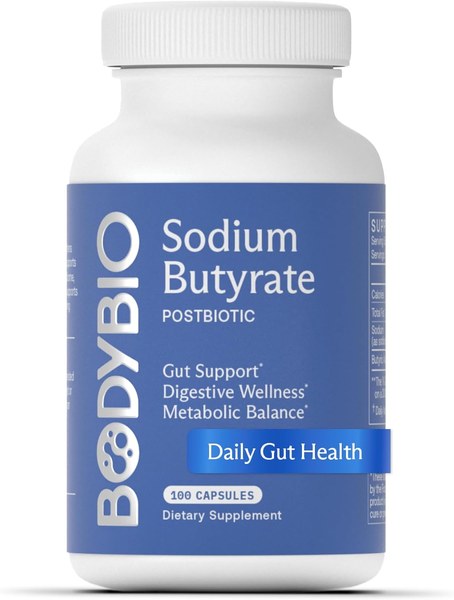
BodyBio Sodium Butyrate
Form: Sodium butyrate · 600 mg butyric acid per capsule
The straightforward pick that most people should start with. BodyBio helped popularize butyrate supplements, and this is a clean, 600 mg sodium butyrate capsule with third-party testing, no fillers, and pricing that will not scare you off a multi-month run. It is a salt, so it carries butyrate's characteristic odor and releases higher in the gut than tributyrin, but as an honest, well-made benchmark to support a healthy gut lining, it is hard to beat.
- Trusted pioneer brand with a simple, transparent label
- Solid 600 mg butyric acid per capsule
- Third-party tested, vegetarian capsule, no allergens
- Reasonable cost for daily, long-term use
- Sodium-butyrate salt has the classic butyrate smell
- Standard capsule releases butyrate higher up, not colon-targeted
- Adds a small amount of sodium
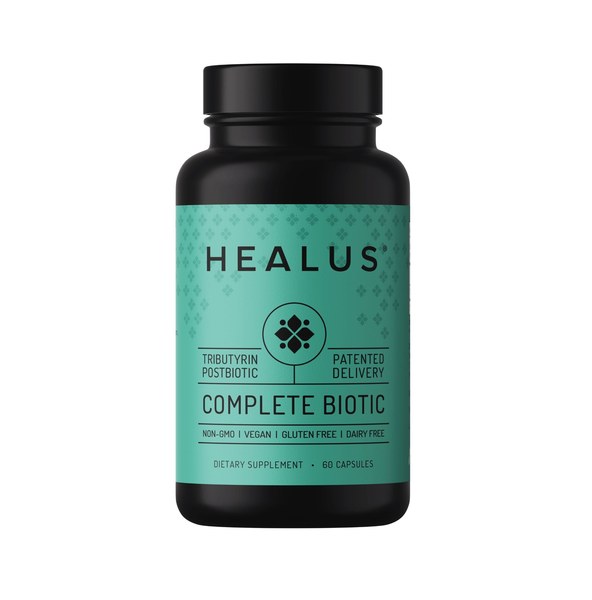
Healus Complete Biotic
Form: Tributyrin · 500 mg per capsule, patented delayed-release
The pick if you want the form that is built to reach the colon. Tributyrin is a triglyceride that resists stomach acid and is naturally lower in odor than salts, and Healus pairs a high 500 mg per capsule with a patented delayed-release designed to deliver butyrate to the small and large intestine. It is a vegan capsule from a physician-formulated brand. The trade-off is price: at a two-capsule daily dose, it is the most expensive butyrate here.
- Tributyrin form is lower-odor and colon-directed
- High 500 mg tributyrin per capsule
- Patented delayed-release targeting the intestine
- Vegan capsule, physician-formulated
- Most expensive per serving in this group
- Smaller, less-known brand with limited public testing detail
- Only 30 servings per bottle at the two-capsule dose
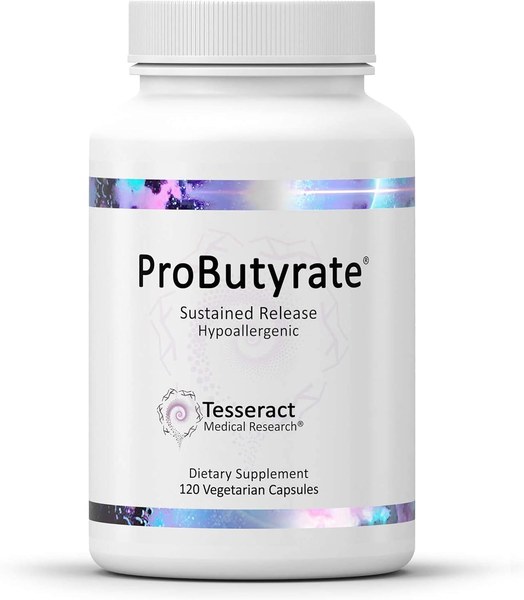
ProButyrate by Tesseract
Form: Encapsulated butyric acid · about 600 mg per serving
The one to reach for if the butyrate smell is a dealbreaker. Tesseract uses a proprietary molecular encapsulation to wrap the butyric acid, which is built to cut the odor and taste that make many people quit butyrate, in a sustained-release capsule. It is a science-forward, practitioner-style product. The absorption claims are brand-stated rather than independently proven, and as free butyric acid rather than tributyrin, more may be taken up before the colon.
- Built for tolerability: greatly reduced butyrate odor and taste
- Delivers bioactive butyric acid directly
- Large 120-capsule bottle from a science-forward brand
- Sustained-release format
- Premium price versus commodity sodium butyrate
- Encapsulation and absorption claims are brand-stated, not peer-verified
- Free butyric acid may absorb higher in the gut than tributyrin
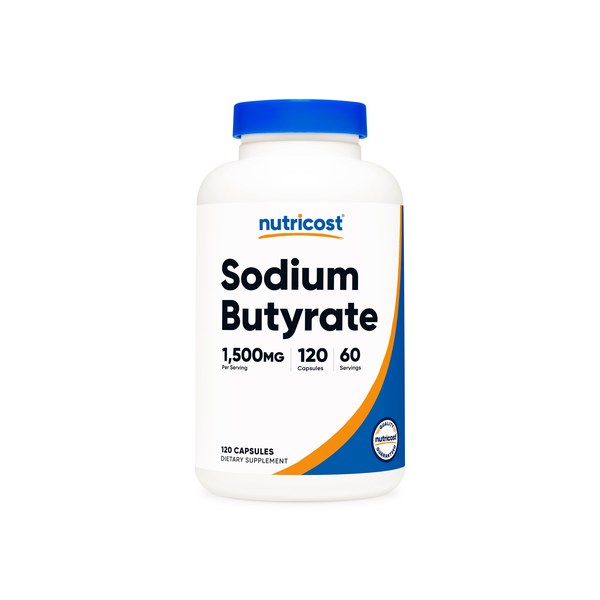
Nutricost Sodium Butyrate
Form: Sodium butyrate · 1,200 mg butyric acid per serving
The value pick, and it is not close. Nutricost delivers a full 1,200 mg of butyric acid per serving at the lowest cost of anything here, in a 60-serving bottle made in an NSF-certified, cGMP facility. It is a mass-market brand without the boutique pedigree of the tributyrin options, and it is still a standard-release sodium butyrate salt with the usual odor, but for a well-dosed, budget-friendly way to try butyrate, it is the obvious choice.
- Lowest cost per serving by a wide margin
- Full 1,200 mg butyric acid per serving
- Made in an NSF-certified, cGMP facility; vegan, non-GMO
- Big 120-capsule bottle
- Sodium-butyrate salt keeps the typical odor
- Standard release, not colon-targeted
- Value brand without a clinical track record
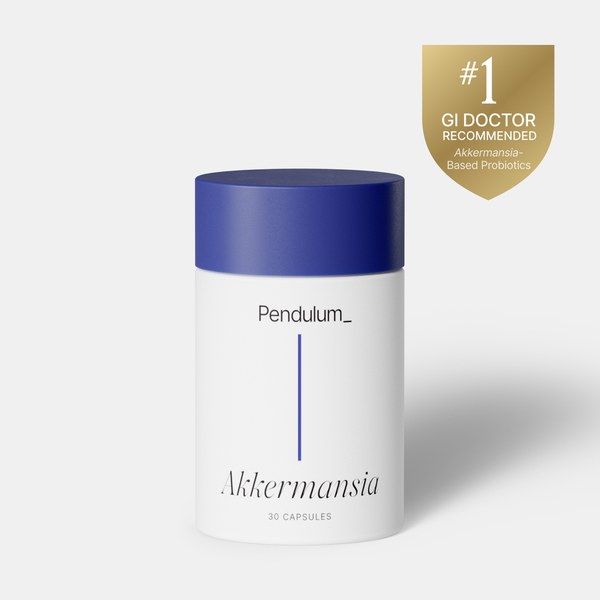
Pendulum Akkermansia
Form: Live Akkermansia muciniphila · 100 million AFU
A different approach, and the most interesting product here. Rather than butyrate itself, Pendulum sells the live gut bacterium Akkermansia muciniphila, which lives in the gut's mucus layer and is linked to a healthier barrier. It is the only widely available consumer source of the strain, third-party tested and delayed-release. Be clear-eyed, though: this is a live probiotic, not a butyrate or postbiotic per se, and the human evidence rests largely on one small, industry-sponsored proof-of-concept trial. Promising, and premium-priced.
- The only mainstream source of live Akkermansia muciniphila
- Third-party tested with delayed-release capsules
- Targets the gut's mucus layer, a distinct mechanism
- A live probiotic, not butyrate or a true postbiotic
- Human evidence is a single small, industry-funded pilot
- Expensive, and needs cool storage for viability
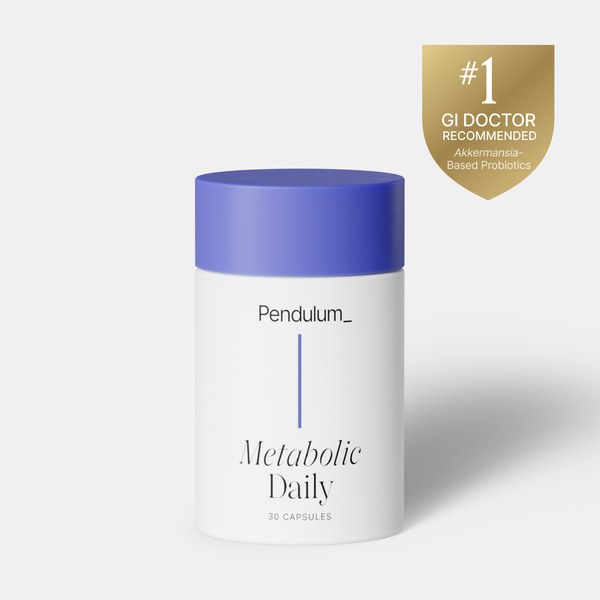
Pendulum Metabolic Daily
Form: 5-strain live blend with Akkermansia and butyrate producers
The blend for people who want the butyrate-producer idea in one capsule. Metabolic Daily combines five live strains, including Akkermansia and the butyrate producer Clostridium butyricum, with the marketing aimed at blood-sugar and metabolic support. The concept, feeding your gut the bugs that make butyrate rather than the butyrate itself, is appealing and mechanistically reasonable. The same honesty applies: it is a live multi-strain probiotic, the strain-specific human evidence is early, and it is a premium subscription product.
- Multi-strain formula with Akkermansia plus butyrate producers
- Delivers the butyrate-producer concept in one daily capsule
- Third-party tested, delayed-release
- A live probiotic blend, not a butyrate or postbiotic supplement
- Strain-specific human evidence is still early
- Premium price, usually sold by subscription
The full lineup, side by side
| Product | Form | Key dose | Release | Count | ~Cost/serving |
|---|---|---|---|---|---|
| BodyBio | Sodium butyrate | 600 mg butyric acid/cap | Standard | 100 caps | ~$0.60 |
| Healus Complete Biotic | Tributyrin | 500 mg tributyrin/cap | Delayed, colon | 60 caps | ~$2.00 |
| ProButyrate | Butyric acid (encapsulated) | ~600 mg/serving | Sustained | 120 caps | ~$0.50 |
| Nutricost | Sodium butyrate | 1,200 mg butyric acid/serving | Standard | 120 caps | ~$0.30 |
| Pendulum Akkermansia | Live Akkermansia | 100 million AFU | Delayed | 30 caps | ~$2.30 |
| Pendulum Metabolic Daily | 5-strain live blend | Multi-strain | Delayed | 30 caps | ~$2.00 |
Doses are not directly comparable across forms: tributyrin milligrams, butyric-acid milligrams, and live-strain counts measure different things. Prices are approximate and change often, especially for subscription products. Confirm current pricing and label details on the retailer page.
Do butyrate and postbiotics actually work?
This is where honesty matters most, because the marketing runs well ahead of the human data. Here is the fair version.
The mechanism is genuinely strong. Butyrate is a short-chain fatty acid, and it is the main energy source for the cells that line your colon. Research shows it supports colonocyte metabolism, strengthens the tight junctions that seal the gut barrier, and encourages the protective mucus layer, largely through effects on gene expression and immune signaling. That is real, well-established biology, and it is why butyrate keeps coming up in gut-health conversations, including our guide to supplements for leaky gut.
The human supplement evidence is still early. Most of the clinical data on oral butyrate is in inflammatory bowel disease, especially ulcerative colitis, which is a medical condition studied by doctors, not the general gut-health use these products are sold for. In healthy people, the data is thin, though a small 2025 trial did find that oral butyrate lowered blood markers of a leaky gut barrier. So the picture is a strong mechanism with promising but limited human results, not proof that a capsule delivers the same benefits as the butyrate your own gut makes.
Postbiotics are a real but new category. The term was formally defined in 2021 as preparations of inanimate microbes or their components that benefit the host, so butyrate qualifies, and so do heat-killed strains. The Akkermansia story is genuinely interesting: this mucus-dwelling bacterium is linked to a healthier barrier, and a small proof-of-concept trial found a pasteurized form improved some metabolic markers in overweight adults. But that trial had about 40 participants, was led by researchers who co-founded the company commercializing the bacterium, and has not been widely replicated, and most consumer products use the live strain rather than the studied pasteurized one. Some other postbiotic trials have come back flat. Treat the category as promising and low-risk, not settled.
The foundation is still fiber. Your gut bacteria make butyrate when they ferment fiber and resistant starch, so the cheapest, best-proven way to raise your butyrate is to eat more plants and fermented foods. Supplements are a reasonable add-on for people who want targeted support for the gut lining, but they work best on top of that foundation, not instead of it. Our guides to the best fiber supplements and probiotics vs postbiotics vs prebiotics put the pieces together.
How to choose the right one
Once you have decided to try butyrate or a postbiotic, a few practical questions narrow it down fast:
- Form. If getting butyrate to the colon matters to you, tributyrin (Healus) is the triglyceride form built for that and is naturally lower in odor. If you want simple and affordable, a sodium butyrate salt (BodyBio, Nutricost) is the classic, well-dosed choice.
- Odor tolerance. Butyrate's real-world weakness is its smell. If that is a dealbreaker, an encapsulated, odor-controlled product (ProButyrate) or the tributyrin form is the way to stay consistent.
- Butyrate itself or the bugs that make it. Butyrate supplements deliver the compound directly. Live products like Pendulum instead seed butyrate-producing and barrier-supporting bacteria, a different and less-proven approach with a higher price tag.
- Dose and testing. Look for a clear butyrate amount on the label and third-party or cGMP testing. Start on the lower end, since higher doses can cause mild gas or loose stools.
- Budget for the long run. Gut protocols run for months, so cost per serving matters. Sodium butyrate is the value play; tributyrin and live strains cost more.
Frequently asked questions
Is butyrate a postbiotic?
Yes. Postbiotics are defined by the International Scientific Association for Probiotics and Prebiotics as preparations of inanimate microbes and/or their components that benefit the host. Butyrate is a short-chain fatty acid that your gut bacteria produce when they ferment fiber, so a butyrate supplement delivers that microbial product directly. Other postbiotics include heat-killed bacterial strains and pasteurized microbes. Live products such as Akkermansia are technically probiotics, not postbiotics, but they are often grouped with this category because they are built around butyrate-producing and barrier-supporting bacteria.
What is the difference between tributyrin and sodium butyrate?
Both deliver butyrate, but they behave differently. Sodium butyrate is a mineral salt of butyrate that is inexpensive and well studied, but a lot of it can be absorbed high in the gut, and the salt form carries butyrate's characteristic strong odor. Tributyrin is a triglyceride, three butyrate molecules attached to a glycerol backbone, which resists stomach acid, is naturally lower in odor, and is designed to release butyrate further down toward the colon where it is most useful. Neither is proven superior for results in humans, so the practical choice usually comes down to odor tolerance, delivery, and price.
Do butyrate supplements actually work?
The mechanism is solid: butyrate is the main energy source for the cells lining your colon and it supports the gut barrier and tight junctions. The honest catch is that human evidence for oral butyrate supplements is still early. Most of the clinical data is in inflammatory bowel disease, especially ulcerative colitis, which is a medical condition studied clinically, and general gut-health data in healthy people is thin, with a few small trials suggesting oral butyrate can move gut-barrier markers. It is a promising, low-risk option to support the gut lining, not a proven fix, and it works best alongside a fiber-rich diet that feeds your own butyrate-producing bacteria.
What is the best butyrate supplement?
For most people, BodyBio Sodium Butyrate is the best all-round pick: a simple, well-dosed, third-party-tested sodium butyrate from a long-established brand at an accessible price. If you want the tributyrin form that is designed to reach the colon and is lower in odor, Healus Complete Biotic is the standout, and ProButyrate is the most tolerable if the butyrate smell is a dealbreaker. Nutricost is the best value. The right pick depends on the form you prefer, how sensitive you are to odor, and your budget.
Are Akkermansia and postbiotic supplements worth it?
They are promising but early. Akkermansia muciniphila is a gut bacterium linked in studies to a healthier gut lining and metabolism, and a single small proof-of-concept trial found a pasteurized form improved some metabolic markers in overweight adults. That study was industry-sponsored and has not been widely replicated, and most consumer products such as Pendulum use the live strain rather than the pasteurized postbiotic form. They are reasonable to try if you are curious and can afford them, but the evidence does not yet justify treating them as essential, and a fiber-rich diet is a cheaper way to support the same bacteria.
Can you take butyrate and postbiotics together, and how much should you take?
Yes, butyrate and postbiotic or probiotic products can generally be taken together, since they work in complementary ways, and both have good safety records in healthy people. Butyrate supplements are typically dosed at a few hundred milligrams to about 1,200 mg of butyric acid per day, often split with meals, while live strains follow the label. Start low to gauge tolerance, since higher doses can cause mild gas or loose stools. If you have a diagnosed digestive condition, are pregnant or breastfeeding, or take medication, talk to your doctor first, and remember that fiber is still the foundation for your own butyrate production.
The bottom line
Butyrate is one of the more legitimately interesting ideas in gut health, built on the solid fact that it fuels your colon cells and helps hold the gut barrier together. The honest framing is that oral supplements are a promising, low-risk way to support that barrier, not a proven cure, and that feeding your own butyrate-producing bacteria with fiber is still the foundation. If you want to try a supplement, BodyBio is the simple, trustworthy place to start, Healus is the colon-targeted tributyrin upgrade, ProButyrate solves the odor problem, and Nutricost is the value buy. The Pendulum products are a different, live-bacteria approach worth watching, as long as you go in knowing the evidence is early and the price is high. Match the form to your priorities, keep your expectations grounded, and let the supplement support a fiber-first diet rather than replace it.