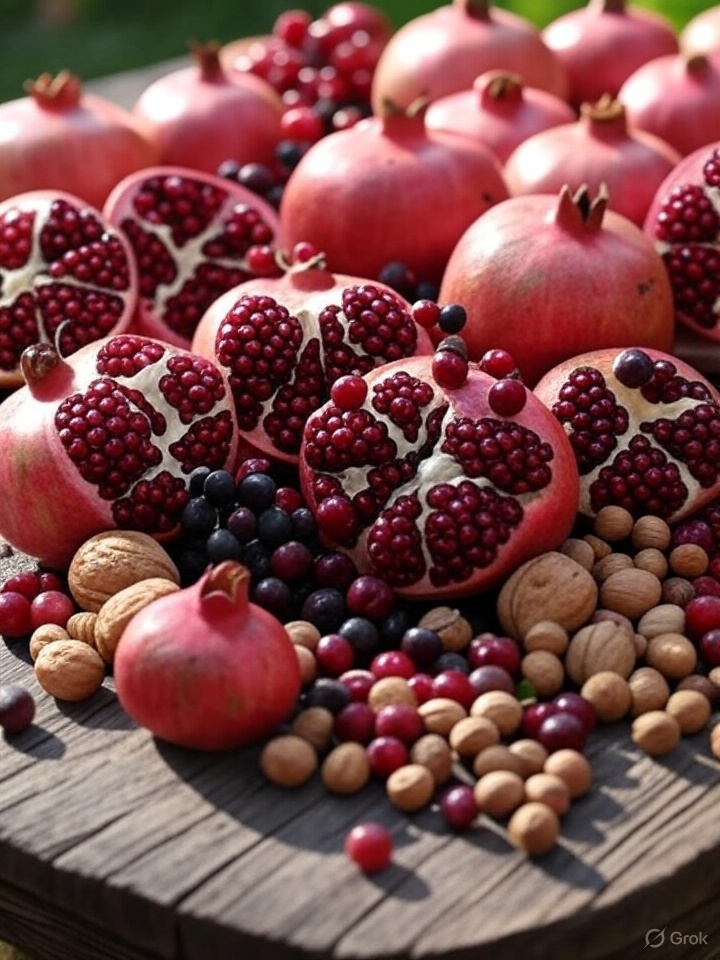
As the quest for healthy aging intensifies, Urolithin A (UA) has emerged as a promising longevity supplement, capturing the attention of researchers, health enthusiasts, and longevity experts alike. But what exactly is Urolithin A, and what does the science say about its role in promoting longevity? Let’s dive into the research and explore why UA is generating so much buzz.
What is Urolithin A?
Urolithin A is a postbiotic metabolite, meaning it’s a compound created when gut microbiota break down ellagitannins and ellagic acid from foods like pomegranates, strawberries, raspberries, walnuts, and pecans. UA has only recently been studied for its potential to enhance healthspan and mitigate age-related conditions. Its primary mechanism of action is promoting mitophagy, the process of clearing out damaged mitochondria and replacing them with healthy ones, which is critical for cellular energy production and overall health. Since mitochondrial dysfunction is a hallmark of aging, UA’s ability to support mitochondrial health makes it a compelling candidate for a longevity supplement.
However, not everyone can naturally produce UA. How much urolithin A you make depends on your gut bacteria. In one sponsor-funded study, only 12% of adults had detectable urolithin A at baseline and about 40% converted pomegranate juice into it in meaningful amounts; other studies find that roughly 5 to 25% make none at all. This variability has led to the development of direct UA supplementation, such as Mitopure® by Timeline, to ensure consistent levels regardless of diet or microbiome composition.
The Science Behind Urolithin A and longevity
A growing body of preclinical and clinical research supports UA’s potential as a geroprotective agent, with benefits spanning muscle health, mitochondrial function, inflammation reduction, and protection against age-related diseases. Below, we explore key findings from the scientific literature.
1. Mitochondrial Health and Mitophagy
Mitochondrial dysfunction is a key driver of aging, contributing to reduced energy production and increased oxidative stress in high-metabolic-demand tissues like muscles, the heart, and the brain. UA has been shown to activate mitophagy, enhancing the removal of dysfunctional mitochondria and improving cellular health.
- Preclinical Studies: In C. elegans (a model organism for aging research), UA extended lifespan (Ryu 2016) and maintained mitochondrial respiratory capacity, preventing the accumulation of damaged mitochondria. In rodents, UA improved exercise capacity in models of age-related muscle decline and enhanced mitochondrial function.
- Human Trials: A randomized, placebo-controlled trial in middle-aged adults (40–64 years) showed that UA supplementation (500 mg or 1000 mg daily for 4 months) significantly increased expression of proteins linked to mitophagy and mitochondrial metabolism in skeletal muscle. It also reduced plasma acylcarnitines and C-reactive protein levels, indicating improved mitochondrial efficiency and reduced inflammation.
- Clinical Trial in Older Adults: In a double-blind, placebo-controlled trial (NCT03283462) involving adults aged 65–90, 1,000 mg a day improved hand and leg muscle endurance versus placebo at 2 months, but by 4 months the placebo group had caught up and the difference was no longer significant; the main outcomes, 6-minute walk distance and muscle ATP production, did not differ from placebo. The study also confirmed UA’s safety and tolerability.
These findings suggest UA’s ability to rejuvenate mitochondria could counteract age-related declines in energy production and cellular function, a cornerstone of healthy aging.
2. Muscle Health and Strength
Age-related muscle decline, or sarcopenia, is a major contributor to frailty and reduced quality of life. In cell and animal studies, urolithin A affects mitochondrial and muscle pathways; human trials have not measured muscle protein synthesis.
- Human Evidence: In the aforementioned trial with middle-aged adults, hamstring strength rose about 10 to 12% versus placebo (partly because placebo strength fell), but the main outcome, peak power, did not improve, and gains in peak VO2 and walking distance were not statistically significant versus placebo.
- Older Adults: The trial in adults aged 65 to 90 found better muscle endurance than placebo at 2 months but not at 4 months, and its main outcomes did not differ from placebo.
- Mechanistic Insights: In cell and animal studies, urolithin A affects mitochondrial and muscle pathways; human trials have not measured muscle protein synthesis.
These results position UA as a potential intervention for preserving muscle mass and function, critical for maintaining mobility and independence as we age.
3. Anti-Inflammatory and Antioxidant Effects
Chronic low-grade inflammation, often termed “inflammaging,” accelerates aging and age-related diseases. UA exhibits dose-dependent anti-inflammatory effects, measured as lower CRP in small trials.
- Systematic Review: A 2024 review of five human studies (250 healthy participants, 10–1000 mg/day UA for 28 days to 4 months) found that UA reduced inflammation markers and upregulated mitochondrial genes, autophagy markers, and fatty acid oxidation, supporting its role in cellular health.
- Preclinical Models: UA reduced inflammation in models of neurodegenerative, musculoskeletal, and cardiovascular conditions, suggesting broad protective effects across multiple organ systems.
By mitigating inflammation, UA may help prevent the progression of age-related pathologies, from arthritis to cardiovascular disease.
4. Neuroprotection and Cognitive Health
UA’s benefits extend to the brain, where mitochondrial dysfunction and inflammation contribute to neurodegenerative diseases like Alzheimer’s.
- Alzheimer’s Model: In a 2023 mouse study published in GeroScience, UA supplementation in Alzheimer’s mouse models (3xTg) reduced amyloid-beta plaque load and improved learning and memory in the Morris water maze test. Notably, the study suggested that amyloid-beta plaques might have a protective role, as UA improved cognition without directly correlating with plaque reduction.
These findings highlight UA’s potential to support cognitive health and protect against age-related neurological decline.
5. Other Age-Related Conditions
UA’s benefits extend beyond muscle and brain health to other systems affected by aging:
- Bone and Joint Health: UA reduced bone resorption and enhanced autophagic activity in human cell models of osteoporosis, suggesting a role in preventing bone loss. It also improved mitophagy and mitochondrial respiration in osteoarthritic human chondrocytes, potentially slowing osteoarthritis progression.
- Skin Aging: A 2026 sponsor-funded report found a topical urolithin A product reduced periorbital wrinkle depth after 8 weeks; that is a skin cream, not an oral supplement.
- Cardiovascular Health: In older adults, 4 months of urolithin A lowered blood ceramides, a risk marker; in a small heart-failure trial and a 2026 trial in adults with obesity, heart function and blood-vessel function did not improve.
6. Lifespan Extension
In preclinical models, UA extended lifespan in C. elegans (Ryu 2016) and improved mobility and pharyngeal pumping, markers of healthspan. While human lifespan studies are not feasible, these findings suggest UA’s potential to enhance healthspan, the period of life spent in good health.
Challenges and Limitations
Despite promising results, there are gaps in the research:
- Limited Long-Term Data: Most human trials have lasted only a few months, leaving questions about long-term safety and efficacy. Researchers, including longevity expert Andrea Maier, caution that optimal dosing and long-term effects need further exploration.
- Population Variability: Trials have been small, short and mostly in healthy, largely White adults (the Seattle trial was 100% White), and it’s unclear how UA performs across diverse groups.
- Microbiome Dependence: Only a subset of people naturally produce UA, and dietary sources like pomegranates may not suffice due to microbiome variability. Supplementation bypasses this issue but requires precise dosing.
- Limited Human Data for Some Conditions: While preclinical studies show benefits for cardiovascular and neurodegenerative diseases, human data are sparse, particularly for heart health.
Practical Considerations: Should You Take Urolithin A?
UA is available as a supplement. Mitopure (Amazentis/Timeline) is the form used in most published trials, nearly all sponsored by the company, usually at 500 mg or 1,000 mg a day. For products compared on source, independent testing and price, see our urolithin A supplements ranking.
Who Might Benefit?
- Older Adults: Those experiencing age-related muscle decline or low energy may benefit from UA’s effects on mitochondrial and muscle health.
- Athletes or Active Individuals: In trained runners it did not improve race performance, though it lowered perceived effort and a muscle-damage marker.
- Individuals with Poor UA Production: If your gut microbiome doesn’t efficiently convert ellagitannins, supplementation ensures consistent UA levels.
Safety:
Clinical trials report UA as safe and well-tolerated, with mild or moderate adverse events unrelated to the supplement. However, consult a healthcare provider before starting, especially if you have underlying conditions or take medications.
Diet vs. Supplementation: While pomegranates, berries, and nuts are healthy, they may not provide enough UA due to microbiome variability. Supplements like Mitopure offer a standardized dose, bypassing dietary and microbial limitations.
The Future of Urolithin A Research
Ongoing trials are exploring UA’s effects on immune function (NCT05735886), muscle atrophy prevention (NCT05814705), and athletic performance. Future studies should focus on:
- Long-term effects and optimal dosing.
- Diverse populations to ensure broad applicability.
- Additional organ systems, like the heart and joints, where preclinical data are promising but human studies are limited.
Conclusion
Early, mostly company-funded trials show changes in mitochondrial and inflammation markers and some lab-measured strength gains, but main outcomes have often been missed; the evidence is promising but limited. Its ability to promote mitophagy addresses a core mechanism of aging, making it a promising tool for extending healthspan. While more research is needed to confirm long-term benefits and optimal use, the current data—spanning preclinical models and human trials—suggest UA is worth further study for healthy aging. Whether you’re an older adult aiming to maintain vitality or an active individual seeking performance gains, UA is worth discussing with your clinician, with realistic expectations. Always consult a healthcare professional to tailor supplementation to your needs, and stay tuned for more research on this exciting longevity molecule.
Sources:
Targeting aging with urolithin A in humans: A systematic review (ScienceDirect, 2024)
Impact of the Natural Compound Urolithin A on Health, Disease, and Aging (Trends in Molecular Medicine, 2021)
Urolithin A improves muscle strength, exercise performance, and biomarkers of mitochondrial health (PMC, 2022)
Effect of Urolithin A Supplementation on Muscle Endurance and Mitochondrial Health in Older Adults (PubMed, 2022)
Sources: Kuerec AH, Lim XK, Khoo AL, Sandalova E, Guan L, Feng L, Maier AB. Targeting aging with urolithin A in humans: a systematic review. Ageing Research Reviews, 2024;100:102406 (PMID 39002645). D'Amico D, Andreux PA, Valdes P, Singh A, Rinsch C, Auwerx J. Impact of the natural compound urolithin A on health, disease, and aging. Trends in Molecular Medicine, 2021;27(7):687-699 (PMID 34030963). Singh A, D'Amico D, Andreux PA, et al. Urolithin A improves muscle strength, exercise performance, and biomarkers of mitochondrial health in a randomized trial in middle-aged adults. Cell Reports Medicine, 2022;3(5):100633 (PMID 35584623). Liu S, D'Amico D, Shankland E, et al. Effect of urolithin A supplementation on muscle endurance and mitochondrial health in older adults: a randomized clinical trial. JAMA Network Open, 2022;5(1):e2144279 (PMID 35050355). Singh A, D'Amico D, Andreux PA, et al. Direct supplementation with urolithin A overcomes limitations of dietary exposure and gut microbiome variability in healthy adults to achieve consistent levels across the population. European Journal of Clinical Nutrition, 2022;76(2):297-308 (PMID 34117375). Ballesteros-Alvarez J, Nguyen W, Sivapatham R, Rane A, Andersen JK. Urolithin A reduces amyloid-beta load and improves cognitive deficits uncorrelated with plaque burden in a mouse model of Alzheimer's disease. GeroScience, 2023;45(2):1095-1113 (PMID 36576642). Faitg J, D'Amico D, Rinsch C, Singh A. Mitophagy activation by urolithin A to target muscle aging. Calcified Tissue International, 2024;114(1):53-59 (PMID 37925671). Ryu D, Mouchiroud L, Andreux PA, et al. Urolithin A induces mitophagy and prolongs lifespan in C. elegans and increases muscle function in rodents. Nature Medicine, 2016;22(8):879-888 (PMID 27400265). Kothe B, Klein S, Petrosky SN, et al. Urolithin A as a potential agent for prevention of age-related disease: a scoping review. Cureus, 2023;15(7):e42550 (PMID 37637627).
Mitophagy Activation by Urolithin A to Target Muscle Aging (PMC)
Impact of the Natural Compound Urolithin A on Health, Disease, and Aging (PubMed)
Urolithin A induces mitophagy and prolongs lifespan in C. elegans (PubMed, 2016)
Urolithin A as a Potential Agent for Prevention of Age-Related Disease (PMC, 2023)