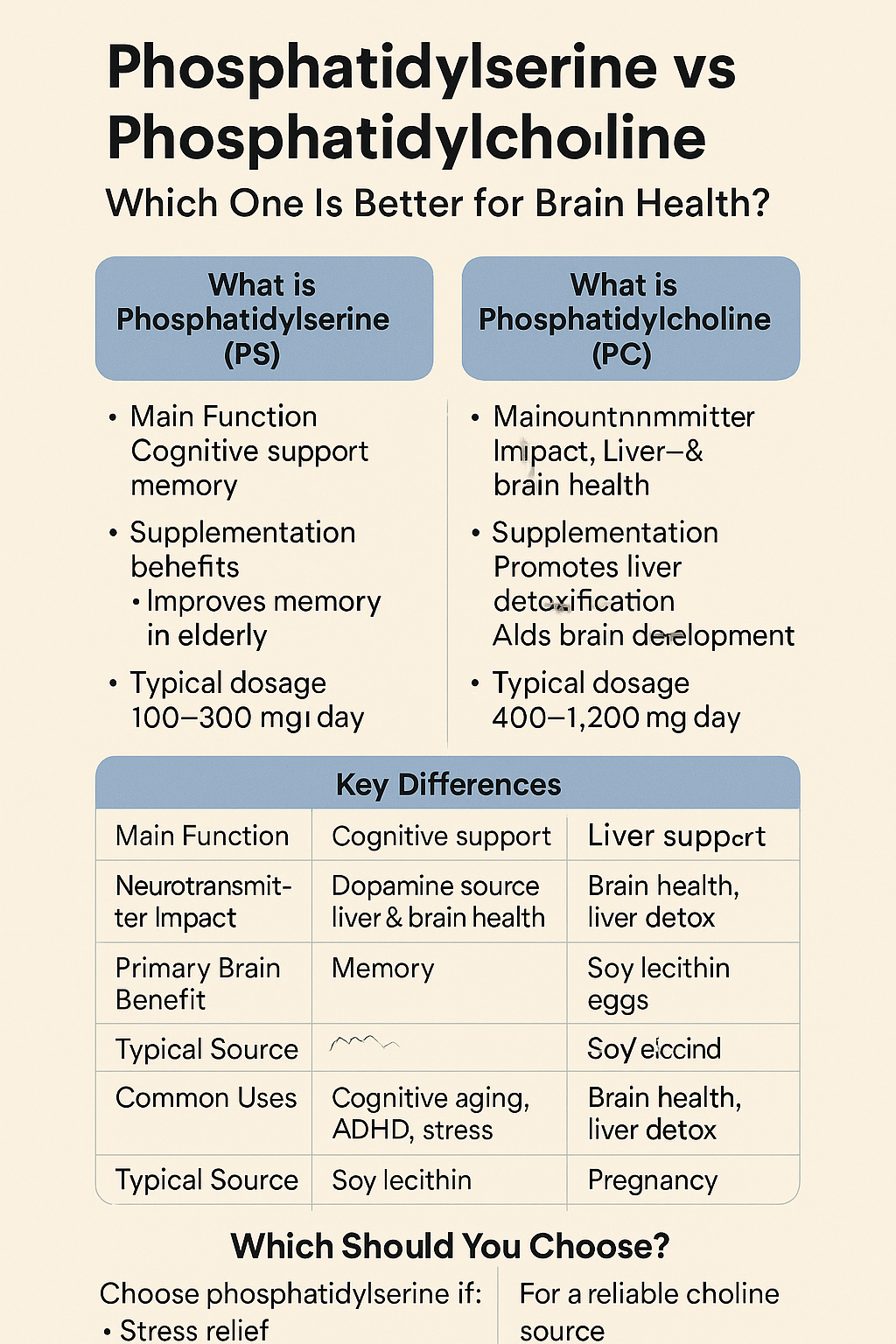
Phosphatidylserine (PS) and phosphatidylcholine (PC) are two vital phospholipids that play significant roles in maintaining cell health and supporting various physiological functions. While they share some similarities as components of cell membranes, their distinct structures, functions, and health benefits set them apart. In this blog post, we’ll explore the differences between phosphatidylserine and phosphatidylcholine, their roles in the body, and their potential therapeutic uses.
What Are Phosphatidylserine and Phosphatidylcholine?
Phospholipids are essential fats that form the backbone of cell membranes, providing structural integrity and facilitating cell signaling. Both PS and PC are phospholipids, but they differ in their chemical composition and distribution within the body.
- Phosphatidylserine (PS): PS is a phospholipid with a serine molecule attached to its glycerol backbone. It is primarily found in the inner layer of cell membranes, particularly in brain cells (neurons). PS is critical for cell signaling, maintaining membrane fluidity, and supporting cognitive functions.
- Phosphatidylcholine (PC): PC contains a choline molecule attached to its glycerol backbone. It is one of the most abundant phospholipids in cell membranes and is found in both the inner and outer layers. PC is a key component of bile and lipoproteins, playing a significant role in lipid metabolism and liver health.
Key Functions in the Body
Phosphatidylserine (PS)
- Cognitive Health: PS is highly concentrated in the brain, where it supports neuronal communication, memory formation, and cognitive function. It helps regulate neurotransmitters like acetylcholine and dopamine, which are critical for mood, focus, and learning.
- Stress Response: PS modulates cortisol levels, the stress hormone, helping to mitigate the effects of chronic stress and support adrenal health.
- Cell Signaling and Apoptosis: PS normally sits on the inner face of the cell membrane. When a cell undergoes programmed cell death (apoptosis), PS is flipped to the outer surface, where it acts as the eat me signal that lets immune cells clear the dying cell. The same exposed PS also forms a scaffold for blood clotting factors on activated platelets.
- Athletic Performance: PS may enhance exercise recovery by reducing muscle soreness and improving endurance, likely due to its impact on cortisol regulation.
Phosphatidylcholine (PC)
- Liver Health: PC is a major component of bile, which aids in fat digestion and prevents fat accumulation in the liver. It is often used to support liver repair in conditions like non-alcoholic fatty liver disease (NAFLD).
- Lipid Metabolism: PC is a building block of lipoproteins (e.g., HDL and LDL), which transport cholesterol and fats in the blood, supporting cardiovascular health.
- Cell Membrane Integrity: PC contributes to the fluidity and stability of cell membranes, ensuring proper cell function and communication.
- Gut Health: PC is a component of the gut’s mucus layer, which protects the intestinal lining and may help with conditions like ulcerative colitis.
Health Benefits and Therapeutic Uses
Phosphatidylserine
- Cognitive Support: PS is typically taken at 100 to 300 mg per day to support memory and cognitive performance in older adults, but the human evidence is mixed and source matters. The one large positive trial (Cenacchi 1993, 494 older patients, 300 mg per day for 6 months) used PS derived from bovine brain cortex, a form no longer sold. The best controlled trial of the soy derived PS on the market today (Jorissen 2001, 120 older adults with memory complaints, 300 or 600 mg per day for 12 weeks) found no effect on memory, attention, or any other cognitive measure.
- Stress and Mood: By lowering cortisol levels, PS supplements may reduce stress and improve mood, making it popular among individuals with high stress or anxiety.
- Athletic Recovery: Athletes use PS to reduce exercise-induced stress and muscle damage, potentially enhancing recovery and performance.
Phosphatidylcholine
- Liver Health: PC supplements (often derived from soy or sunflower lecithin) are used to support liver function, particularly in cases of fatty liver disease or liver damage caused by toxins or alcohol.
- Cholesterol Management: PC may help balance cholesterol levels by supporting the production of HDL (good cholesterol) and aiding fat metabolism.
- Brain Health: As a precursor to acetylcholine, a neurotransmitter involved in memory and learning, PC may support cognitive function, though its effects are less studied than PS in this area.
- Skin and Anti-Aging: PC is used in some cosmetic products and intravenous therapies (e.g., lipostabil injections) for its potential to break down fat and improve skin elasticity.
Sources and Supplementation
- Phosphatidylserine Sources:
- Dietary: Found in small amounts in foods like soy, white beans, egg yolks, and organ meats (e.g., liver). However, dietary intake is typically low, making supplementation more practical.
- Supplements: PS supplements were traditionally derived from bovine brain tissue but are now commonly sourced from soy or sunflower lecithin due to safety concerns. Typical doses range from 100–300 mg/day.
- Phosphatidylcholine Sources:
- Dietary: Abundant in foods like eggs, soybeans, sunflower seeds, liver, and peanuts. Lecithin, a common food additive, is a rich source of PC.
- Supplements: PC is available in oral supplements (capsules or powders) or as part of lecithin supplements. Intravenous PC is used in some medical settings for liver support or fat-dissolving treatments.
Key Differences
Aspect
Phosphatidylserine (PS)
Phosphatidylcholine (PC)
Chemical Structure
Contains serine; found in inner cell membrane layer
Contains choline; found in both membrane layers
Primary Location
Brain, neuronal membranes
Liver, bile, lipoproteins, all cell membranes
Main Functions
Cognitive health, stress regulation, apoptosis
Liver health, lipid metabolism, membrane integrity
Health Benefits
Memory, stress reduction, athletic recovery
Liver repair, cholesterol management, gut health
Common Sources
Soy, sunflower, organ meats (supplements)
Eggs, soy, sunflower, lecithin (supplements)
Typical Supplement Use
100–300 mg/day for cognitive/stress support
500–2,000 mg/day for liver or metabolic support
Which Should You Choose?
The choice between PS and PC depends on your health goals:
- Choose Phosphatidylserine if you’re focused on improving cognitive function, managing stress, or enhancing athletic performance. It’s particularly beneficial for older adults, students, or athletes.
- Choose Phosphatidylcholine if you’re addressing liver health, cholesterol imbalances, or fat metabolism issues. It’s also a good option for overall cellular health and gut support.
Safety and Side Effects
Both PS and PC are generally well-tolerated when taken at recommended doses:
- PS: Side effects are rare but may include mild digestive upset or insomnia if taken late in the day. Those with soy allergies should opt for sunflower-derived PS.
- PC: High doses may cause digestive issues, such as diarrhea or nausea. People with soy or sunflower allergies should check supplement sources.
Always consult a healthcare professional before starting supplementation, especially if you have underlying health conditions or are taking medications.
Conclusion
Phosphatidylserine and phosphatidylcholine are both essential phospholipids with unique roles in the body. PS shines in supporting brain health and stress resilience, while PC excels in promoting liver function and lipid metabolism. By understanding their differences and benefits, you can make an informed decision about which one aligns with your wellness goals. Whether you’re aiming to boost cognitive performance or support liver health, these phospholipids offer powerful, science-backed benefits to enhance your overall health.