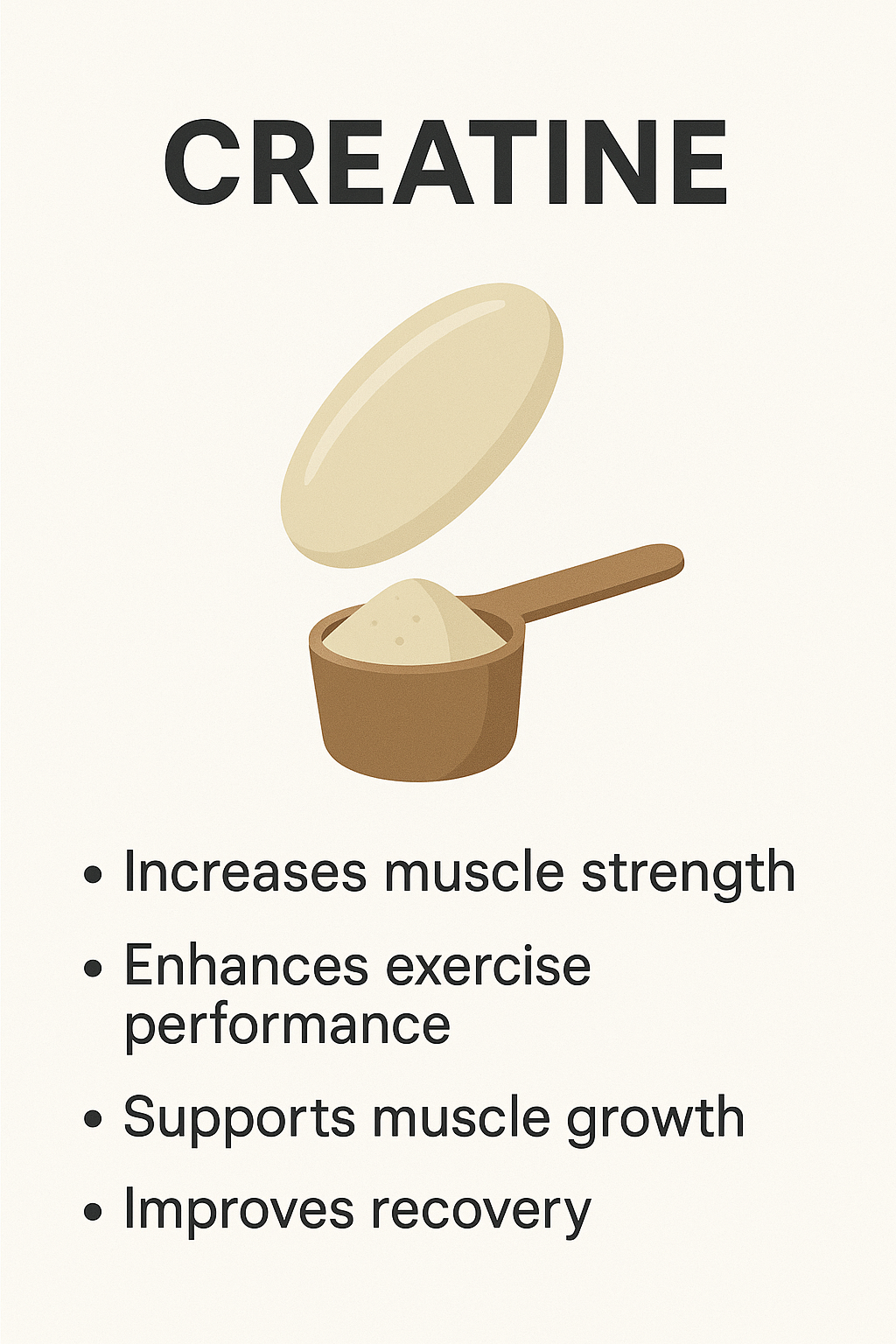
This note provides a detailed examination of creatine, a widely studied supplement known for its role in enhancing athletic performance, muscle growth, and cognitive function. Drawing from recent research and reputable sources, this analysis covers its biochemical properties, benefits, recommended dosages, potential side effects, and safety considerations, aiming to offer a thorough resource for users and professionals alike. The content is informed by a review of scientific literature and health guidelines, with a focus on clarity and depth for informed decision-making.
Introduction to Creatine
Creatine is an organic acid naturally synthesized in the body from the amino acids arginine, glycine, and methionine, primarily in the liver, kidneys, and pancreas. It is also obtained through dietary sources such as red meat (e.g., beef, pork), fish (e.g., tuna, salmon), and dairy products (e.g., milk, cheese). Approximately 95% of the body's creatine is stored in skeletal muscles as phosphocreatine, which plays a critical role in regenerating adenosine triphosphate (ATP), the primary energy carrier for muscle contractions, especially during high-intensity, short-duration activities. This makes creatine particularly relevant for athletes and individuals engaged in resistance training.
Benefits of Creatine Supplementation
Research suggests creatine offers a range of benefits, particularly in athletic and cognitive contexts, with varying levels of evidence supporting its efficacy. Below is a detailed breakdown:
- Athletic Performance Enhancement:Creatine supplementation is well-documented for improving strength, power output, and muscle mass, especially during resistance exercise. Studies indicate it is particularly effective for high-intensity, intermittent activities such as weightlifting, sprinting, and team sports, with notable benefits in both the general population and older adults. It may modestly increase lean mass when combined with resistance training, reduce body fat, and improve anaerobic performance in trained athletes. Additionally, creatine may help prevent severe muscle injuries, reduce their severity, and minimize muscle tightness, strains, and pulls, potentially reducing dehydration and muscle cramping during intense workouts. For example, the research summary site Examine.com notes its role in enhancing anaerobic running capacity, though results are mixed.
- Cognitive and Mental Health Benefits:The evidence leans toward creatine reducing mental fatigue in stressful scenarios, such as sleep deprivation or exhaustion, with potential improvements in memory, especially for vegetarians and older adults with naturally lower creatine levels. Preliminary research suggests it may help alleviate symptoms of depression in conditions like major depressive disorder or bipolar disorder, though more research is needed to confirm these effects. Cognitive benefits are particularly noted in older adults, with potential improvements in short-term memory and reasoning, as supported by a 2023 Cleveland Clinic review.
- Therapeutic and Age-Related Benefits:Creatine may counteract age-related declines in skeletal muscle and bone mineral density, offering potential therapeutic uses for conditions like sarcopenia. Early research also explores its role in enhancing brain health, with possible neuroprotective effects, particularly in individuals over 60. Additionally, topical applications of creatine, often in creams with other ingredients, have shown early promise in reducing skin sagging and wrinkles, as noted in a 2023 Mayo Clinic article, though further studies are needed.
- Special Populations:Vegetarians and vegans, who typically have lower baseline creatine levels due to limited dietary intake, may see more significant muscle gains and cognitive benefits from supplementation, as highlighted in a 2023 Cleveland Clinic report. Women, despite having lower natural creatine levels, may also experience strength and exercise performance improvements, with potential benefits for bone health as they age, though research is less extensive compared to men.
Dosage Recommendations
The optimal dosage of creatine depends on individual goals and physiological needs, with a structured approach often recommended to maximize benefits. The following guidelines are based on recent research:
- Loading Phase: A common strategy is a loading phase of 0.3 g/kg of body weight per day for 5–7 days, typically around 20–25 grams daily for an average 82 kg person, divided into four smaller doses (e.g., 5–6 grams every few hours). This accelerates muscle saturation, achieving full creatine stores in about a week, as summarized by Examine.com.
- Maintenance Dose: Following the loading phase, a maintenance dose of at least 0.03 g/kg of body weight per day is recommended, equating to 2.5 grams daily for an 82 kg person, or a simpler 3–5 grams daily without loading. This approach takes about 4 weeks to saturate muscles but is effective for long-term use.
- Form and Alternatives: Creatine monohydrate is the most researched, affordable, and recommended form, with other variants like creatine hydrochloride, citrate, malate, buffered creatine, ethyl ester, magnesium-chelated, and nitrate showing limited evidence for superiority. The research summary site Examine.com emphasizes monohydrate as the gold standard due to its extensive safety and efficacy data.
- Individual Considerations: Dosage may vary based on body weight, activity level, and health status. The Cleveland Clinic advises consulting a healthcare provider to tailor dosage, especially for those with conditions like diabetes, kidney disease, or liver disease, ensuring safety and efficacy.
Side Effects and Safety Considerations
While creatine is generally safe at recommended doses, potential side effects and safety concerns warrant attention, particularly for specific populations:
- Weight Gain: A small increase in body weight is common. A meta-analysis of 143 randomized trials put the average at about 0.9 kg (2 lbs), and most of it showed up as fat-free mass rather than fat, alongside a rise in total body water (PMID 39042054). It is still worth planning around in weight-sensitive sports like wrestling or gymnastics.
- Gastrointestinal Issues: High single doses, especially during the loading phase, may cause diarrhea or stomach discomfort. High single doses may cause diarrhea or stomach discomfort. In a 28 day double blind trial in 59 soccer players, 10 grams taken as one serving raised the rate of diarrhea, while the same 10 grams split into two 5 gram doses was no different from placebo, so splitting the daily amount is the practical fix.
- Aerobic Capacity Impact: A meta-analysis of 19 randomized trials in 424 people found a small negative effect on VO2max, possibly tied to the increase in body water and body mass, which may matter to endurance athletes (PMID 34859731).
- Kidney Function Concerns: Creatine appears safe for people with healthy kidneys, including with long-term use. It can raise serum creatinine slightly through normal metabolic turnover, which can look like a change in kidney function on a lab report even though measured filtration rate does not change, so tell your doctor you take it before any kidney panel (PMID 36986197). People with existing kidney disease have not been well studied and should check with their doctor first.
- Hair Loss and Hormonal Effects: Unlikely. A 12 week randomized controlled trial in 45 resistance trained men found no differences between 5 grams a day of creatine monohydrate and placebo in DHT, the DHT to testosterone ratio, or any measured hair growth parameter, which runs against the older concern.
- Interactions: a small crossover study found that caffeine at 5 mg per kg a day, roughly 350 mg for a 70 kg adult, canceled out the performance benefit of creatine loading, though later reviews treat this as unsettled. Separately, an analysis of caffeine intake within a large Parkinson's disease trial found that higher caffeine intake tracked with faster disease progression among the participants taking creatine. That is an association rather than a proven cause, and more research is needed.
- Long-Term Safety: Creatine is generally safe for up to 5 years when used orally at appropriate doses, with no significant adverse effects on kidney function in healthy individuals, as per Mayo Clinic (2023), though monitoring is advised for those with health conditions.
Food Sources and Supplementation Context
While creatine can be obtained from diet, supplementation is often necessary to achieve levels associated with performance benefits, especially for vegetarians and those with low meat consumption. Dietary sources include red meat, fish, and dairy, but intake from food alone may not suffice for athletic goals, as noted in a 2024 Harvard Health article. Supplements, particularly creatine monohydrate, are widely available and regulated by sports organizations like the International Olympic Committee and NCAA, making them a convenient option for athletes.
Comparative Analysis: Creatine Forms and Efficacy
To aid understanding, here’s a table comparing common creatine forms based on research evidence:
Form
Efficacy
Cost
Evidence Level
Creatine Monohydrate
Most effective, well-studied
Affordable
High, gold standard
Creatine Hydrochloride
Limited evidence, may dissolve better
Higher
Low, needs more research
Creatine Citrate
Limited evidence, similar to monohydrate
Higher
Low, needs more research
Buffered Creatine
Limited evidence, claims of less stomach upset
Higher
Low, needs more research
Creatine Ethyl Ester
Limited evidence, may be less effective
Higher
Low, needs more research
Magnesium-Chelated Creatine
Limited evidence, potential for better absorption
Higher
Low, needs more research
Creatine Nitrate
Limited evidence, may improve solubility
Higher
Low, needs more research
This table, drawn from summaries at Examine.com, underscores creatine monohydrate’s superiority in both efficacy and cost-effectiveness.
Conclusion and Recommendations
Creatine is a robustly researched supplement with significant benefits for athletic performance, muscle gain, and cognitive function, particularly for high-intensity activities and special populations like vegetarians and older adults. Its safety profile is generally favorable at recommended doses, but users should be aware of potential side effects like weight gain and gastrointestinal issues, and consult healthcare providers, especially if they have kidney concerns or take medications like high-dose caffeine. The loading and maintenance dosage strategy offers flexibility, with creatine monohydrate being the preferred choice due to extensive evidence. This comprehensive understanding equips users to make informed decisions, balancing benefits and risks for optimal health outcomes.