Vitamin D is one of the few supplements most people genuinely benefit from. Deficiency is common, especially in winter, at higher latitudes, with darker skin, or if you spend your days indoors, and low levels are linked to weaker bones, more frequent infections, and low mood. The good news is that fixing it is simple and cheap. A few rules cut through the noise.
First, buy D3 (cholecalciferol), not D2: D3 raises and holds your blood level better, and nearly every quality product is D3. Second, get the dose right: 1,000 to 2,000 IU a day suits most adults for maintenance, while 5,000 IU is a higher, corrective dose better for fixing a measured deficiency than for taking forever (the supplemental upper limit for routine use is about 4,000 IU/day). Third, vitamin D is fat-soluble, so take it with a meal, and softgels or liquids with oil absorb best. Many better formulas also add vitamin K2, which helps steer the calcium D3 mobilizes into your bones rather than your arteries. We ranked the vitamin D worth buying on Amazon on exactly these points. For who actually needs it and the warning signs, see our guide to vitamin D deficiency.
The short version
- Best overall: Sports Research Vitamin D3 + K2. A sensible 2,500 IU of D3 with K2, in an absorbable oil base.
- Best value: NOW Vitamin D3 5000 IU, about a nickel a day (a corrective dose, not daily maintenance).
- Best everyday dose: Nature Made D3 2000 IU, USP Verified and on every pharmacy shelf.
- Buy D3, not D2. And consider pairing it with K2 (MK-7), especially at higher doses.
- Test and dose to your level. Aim for a blood level around 30 to 50 ng/mL; take it with a fatty meal.
How we ranked them
Vitamin D is a simple supplement, so a few things separate a smart buy from a wasteful one. We weighed five:
- D3, not D2. Every pick is cholecalciferol (D3), the form that actually maintains your blood level.
- Sensible dose. We favored doses matched to real needs (1,000 to 2,000 IU for maintenance) and flagged the 5,000 IU products as corrective rather than everyday.
- K2 and absorption. Credit for a K2 pairing and for an oil base (softgel or liquid) that helps a fat-soluble vitamin absorb.
- Source and testing. Lanolin or vegan lichen as appropriate, plus independent verification (USP, NSF) where available.
- Value. Price per serving, since vitamin D is a daily, year-round habit for many people.
Scores are our editorial assessment on a five-point scale, not customer ratings.
The 7 best vitamin D supplements
Tap any product to jump straight to its full review.
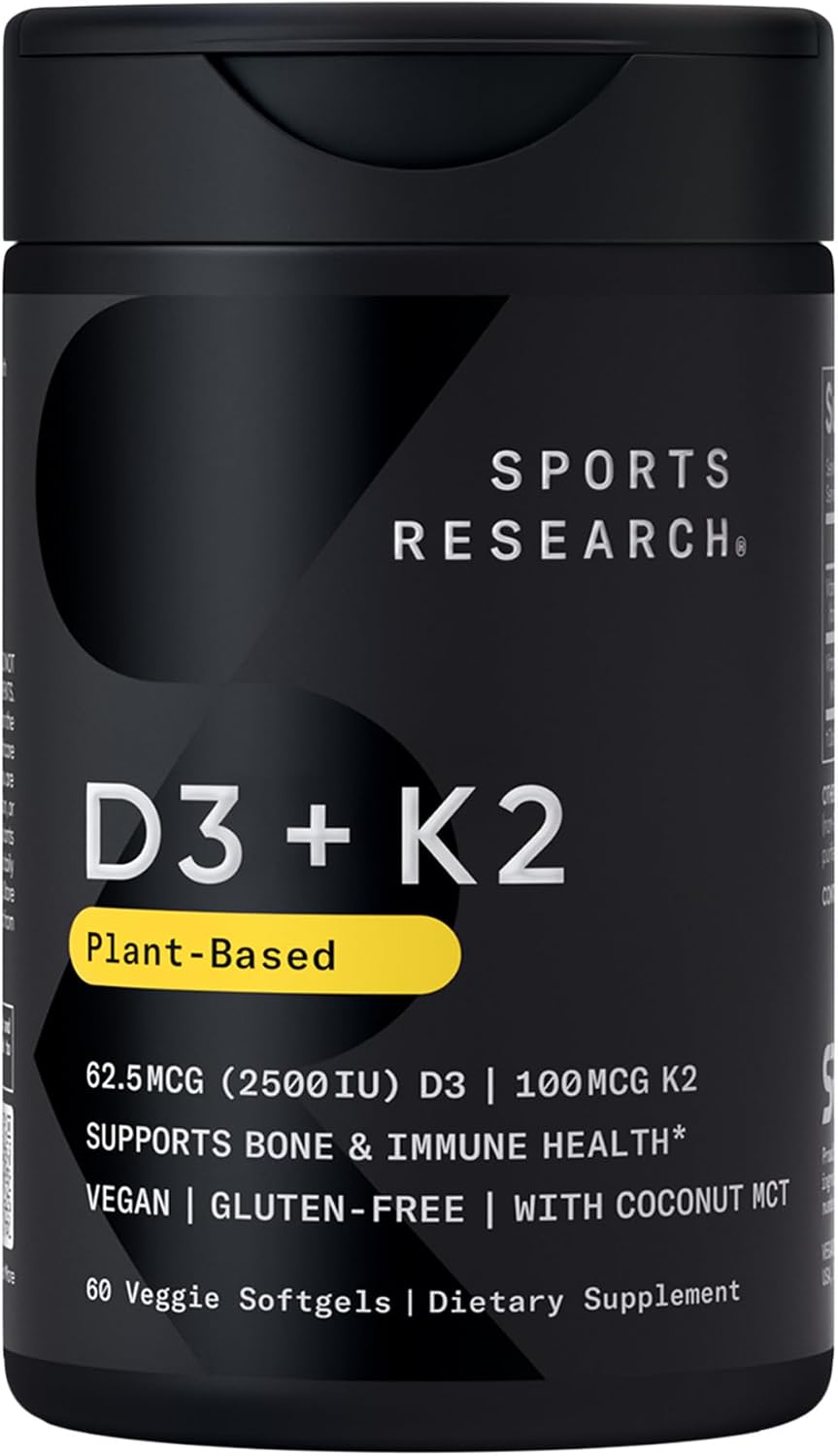
Sports Research Vitamin D3 + K2
Best for: a smart, well-rounded daily dose
The smartest everyday formula. It pairs 2,500 IU of D3 with 100 mcg of K2 (the longer-acting MK-7 form), the combination that helps steer the calcium D3 mobilizes into your bones rather than your arteries, in a coconut-oil softgel for absorption. It happens to be vegan (lichen D3) and third-party tested too. The 2,500 IU dose is a sensible daily maintenance amount for most people.
- D3 + K2 (MK-7), the well-rounded combo
- Coconut oil base aids absorption
- Vegan (lichen) and Non-GMO Verified
- Third-party tested; sensible 2,500 IU dose
- 2,500 IU may be low if you're correcting a deficiency
- Only 60 servings
- Pricier per serving than plain D3
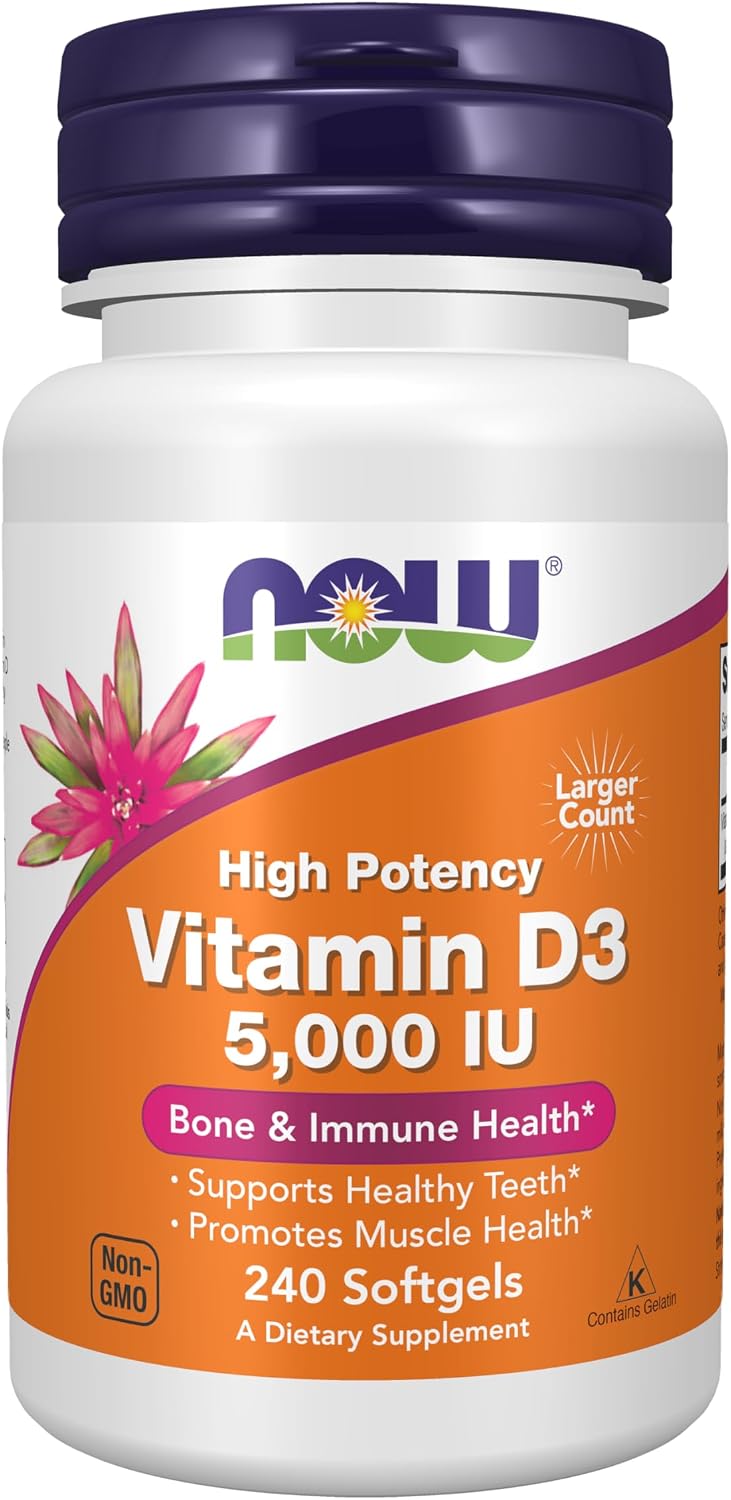
NOW Vitamin D3 5000 IU
Best for: correcting a deficiency on a budget
Unbeatable on price. Lanolin D3 in an olive-oil softgel at about a nickel a day, from a trusted GMP brand. The honest caveat is the dose: 5,000 IU is above the 4,000 IU daily upper limit for routine use, so it is better for correcting a measured deficiency, or taking every other day, than as a forever maintenance dose. No K2, and the softgel uses gelatin.
- Astonishingly cheap (~5¢ per serving)
- Lanolin D3 in olive oil for absorption
- GMP tested, non-GMO
- Huge 240-count bottle
- 5,000 IU is above the routine daily upper limit
- Bovine gelatin softgel (not vegetarian)
- No K2
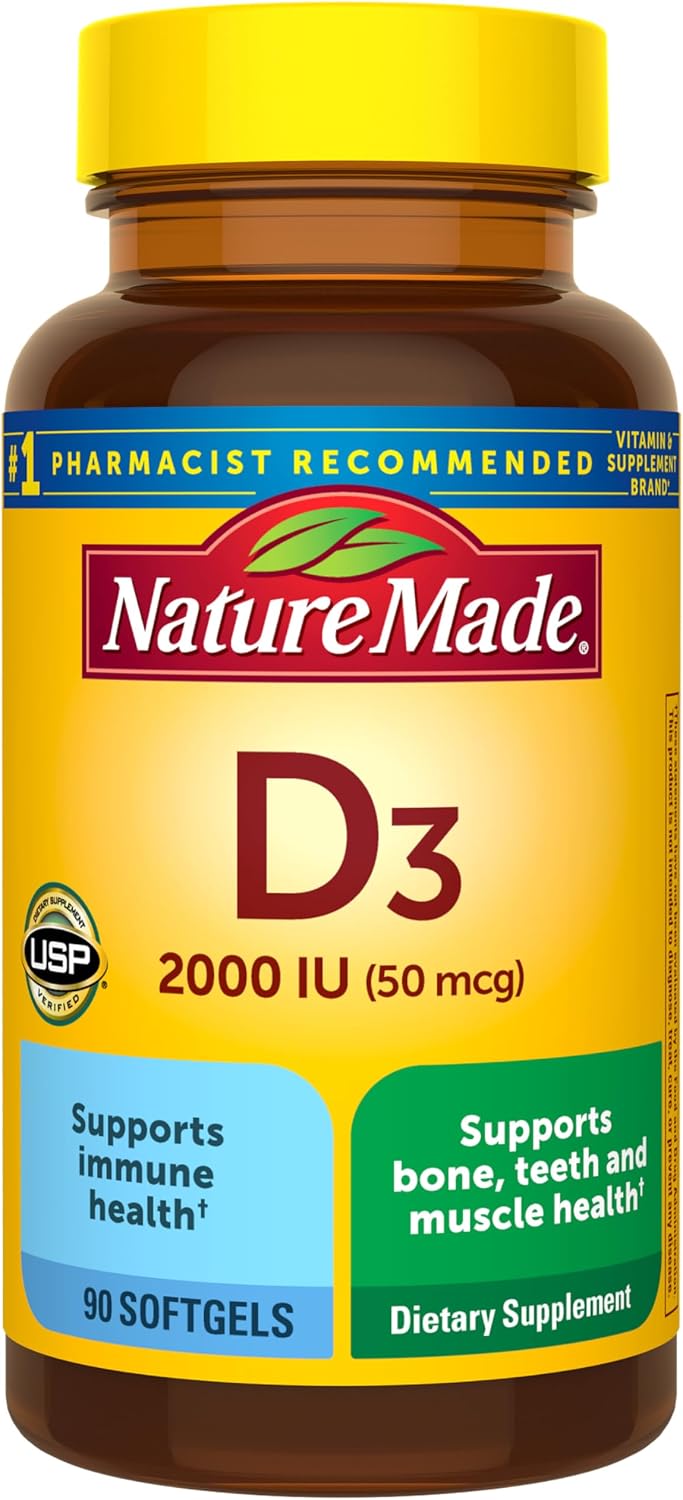
Nature Made Vitamin D3 2000 IU
Best for: a reliable, verified everyday dose
The sensible default you can buy anywhere. A 2,000 IU softgel that is USP Verified, the independent seal confirming it actually contains what it claims, at a sensible daily maintenance dose, for pennies. No frills and no K2, but for a reliable everyday D3 off the shelf of any pharmacy, it is hard to argue with.
- USP Verified for potency and purity
- Sensible 2,000 IU daily dose
- Very cheap and available everywhere
- One softgel a day
- Soybean-oil softgel with gelatin (not vegan)
- No K2
- Basic single nutrient
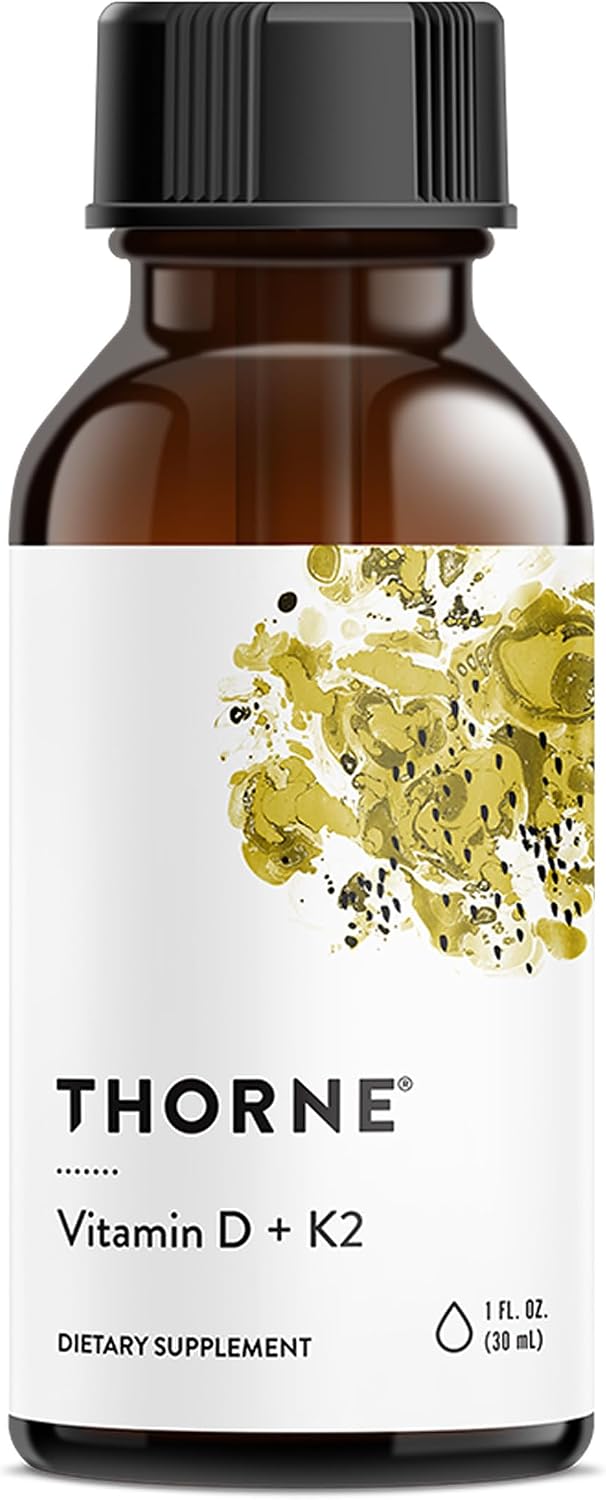
Thorne Vitamin D/K2 Liquid
Best for: flexible dosing and families
The flexible-dosing pick. Each two-drop serving gives 1,000 IU of D3 plus K2 in an MCT-oil base, and the dropper lets you dial the dose up or down, handy for kids or anyone titrating to a blood level. It is NSF Certified for Sport and lasts around 600 servings. One note: its K2 is the MK-4 form, which is shorter-acting than the MK-7 most modern formulas use.
- Flexible drop-by-drop dosing
- D3 + K2 in an MCT-oil base
- NSF Certified for Sport
- ~600 servings; great value and easy for kids
- K2 is MK-4 (shorter-acting than MK-7)
- Liquid is messier than a capsule
- Dropper is less precise than a pill
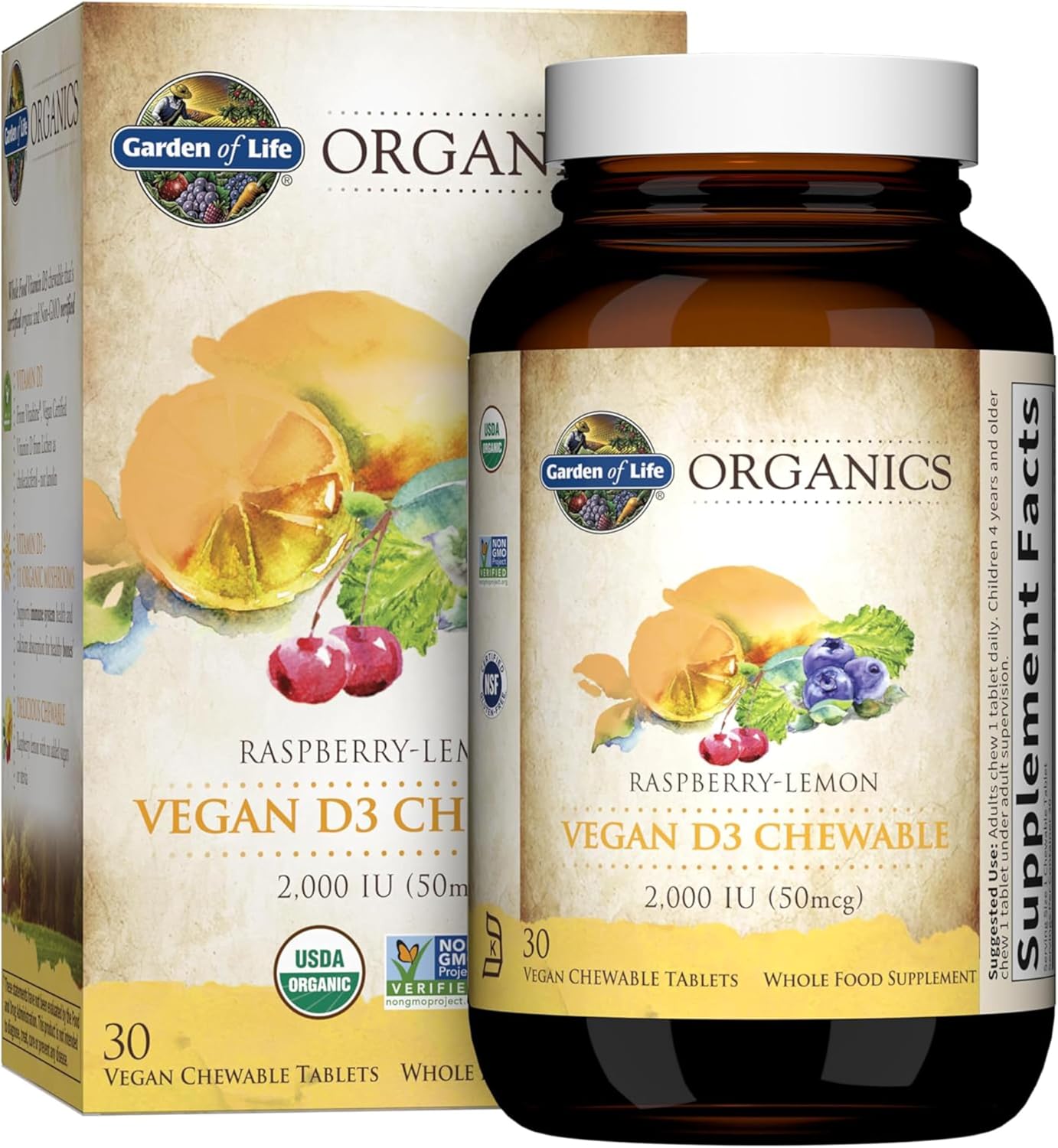
Garden of Life mykind Organics Vegan D3
Best for: organic, vegan, clean-label buyers
The cleanest-label pick. A 2,000 IU vegan D3 from lichen in a raspberry-lemon chewable, USDA Organic, Non-GMO Project Verified, and made with whole foods rather than synthetic fillers. It is the choice if certifications and clean sourcing matter most to you. The trade-offs are a higher price per serving, a small 30-count, and no K2.
- Vegan lichen D3 (real cholecalciferol, not D2)
- USDA Organic + Non-GMO Verified
- Pleasant chewable, no pills or water needed
- Whole-food, no synthetic fillers
- Priciest per serving here
- Only 30 per bottle
- No K2
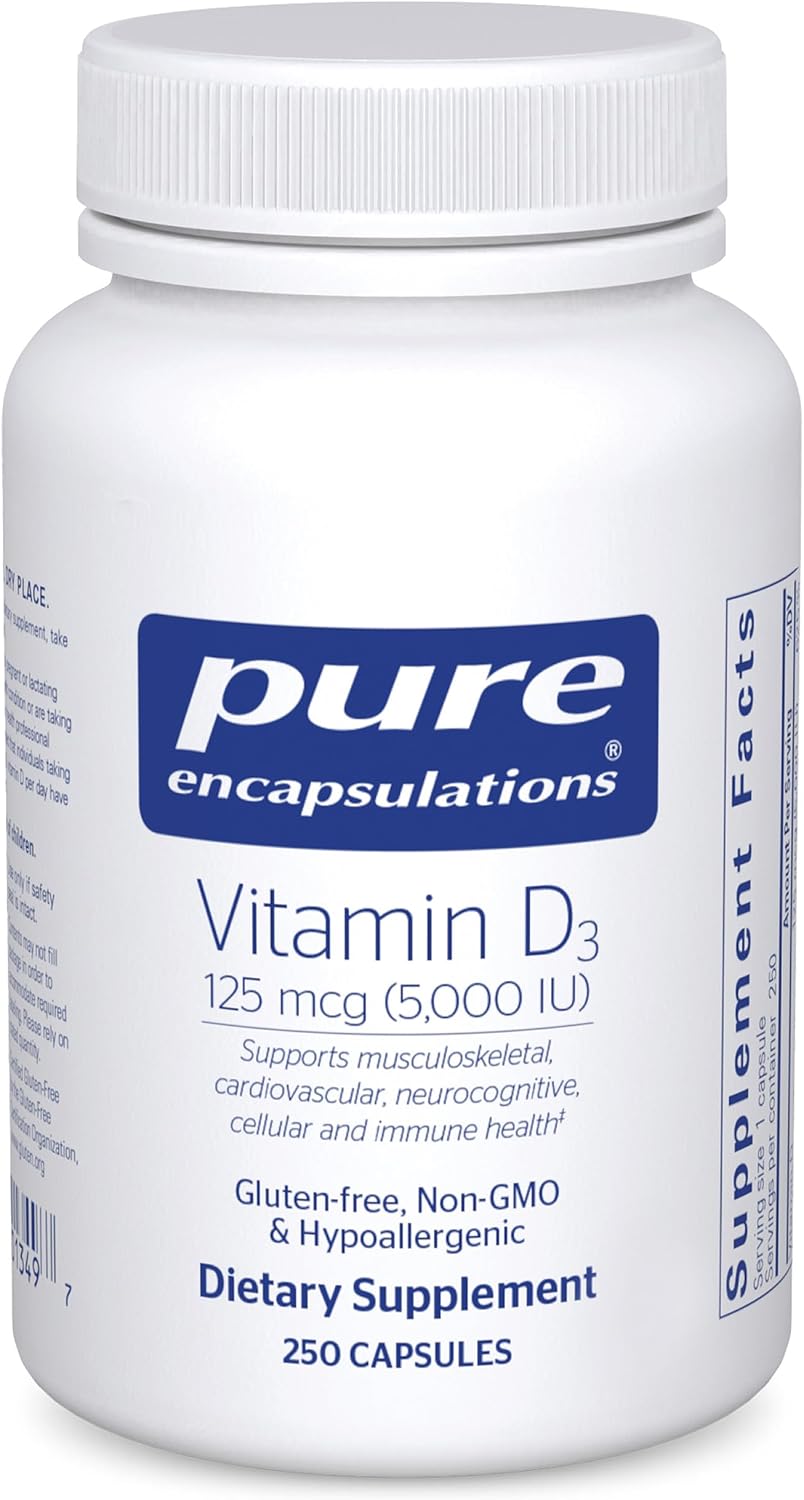
Pure Encapsulations Vitamin D3
Best for: a clean, flexible-strength D3
The hypoallergenic practitioner pick. Just D3 (here 5,000 IU) in a clean capsule with a short, hypoallergenic ingredient list, from a brand built on purity, and offered in 1,000 / 5,000 / 10,000 IU so you can match your dose. The 250-count is good value despite the premium. Like NOW, the 5,000 IU is a corrective dose, not a routine one.
- Clean, hypoallergenic, short ingredient list
- Multiple IU strengths to match your needs
- Trusted practitioner brand
- Large 250-count is good value
- 5,000 IU is above the routine daily limit
- Lanolin source (not vegan)
- No K2
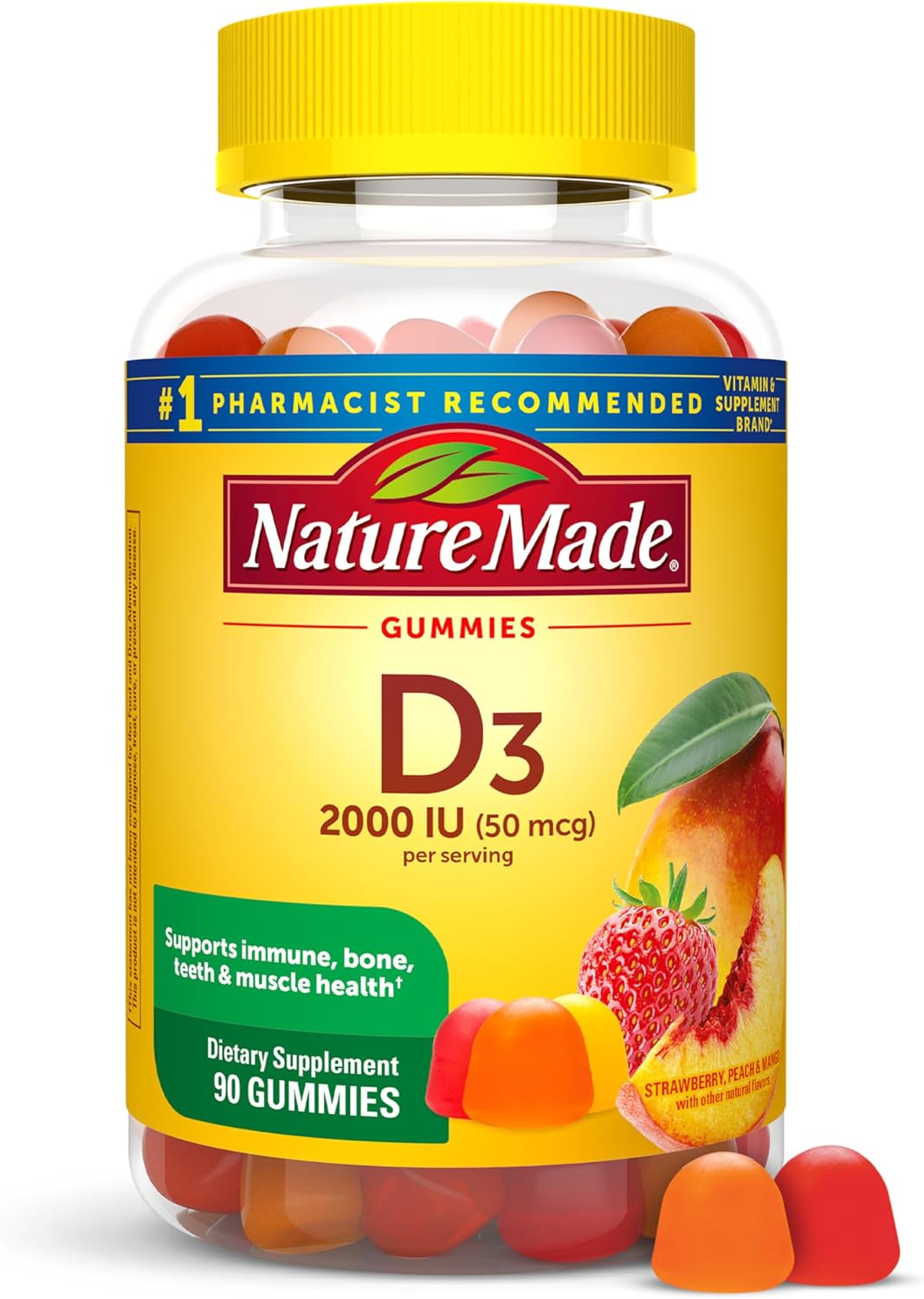
Nature Made Vitamin D3 Gummies
Best for: anyone who won't swallow a capsule
The one to take if a pill won't happen. A 2,000 IU D3 gummy that, unusually, is USP Verified, so you actually get the dose on the label, at a sensible maintenance amount. The catch is the usual gummy trade-off: about 2 grams of added sugar per two-gummy serving. But for a verified, palatable D3, it is the best gummy here.
- USP Verified (rare for a gummy)
- Sensible 2,000 IU dose
- Tasty and easy to take
- No artificial sweeteners or HFCS
- About 2 g added sugar per serving
- Two gummies per dose
- No K2
The full lineup, side by side
Every pick is D3. The fastest way to read this table: match the dose to your goal (2,000 IU maintenance, 5,000 IU corrective), then weigh K2, source, and format.
| Product | Dose | + K2 | Source | Format | Tested | ~ Price / serving |
|---|---|---|---|---|---|---|
| Sports Research | 2,500 IU | Yes (MK-7) | Vegan (lichen) | Softgel | 3rd-party | $0.33 |
| NOW | 5,000 IU | No | Lanolin | Softgel | GMP | $0.05 |
| Nature Made | 2,000 IU | No | Lanolin | Softgel | USP Verified | $0.11 |
| Thorne | 1,000 IU | Yes (MK-4) | Lanolin | Liquid | NSF Sport | $0.05 |
| Garden of Life | 2,000 IU | No | Vegan (lichen) | Chewable | USDA Organic | $0.40 |
| Pure Encapsulations | 5,000 IU | No | Lanolin | Capsule | Hypoallergenic | $0.22 |
| Nature Made Gummies | 2,000 IU | No | Lanolin | Gummy | USP Verified | $0.26 |
All seven are D3 (cholecalciferol). 5,000 IU products are above the 4,000 IU/day upper limit for routine use and are best treated as corrective. Prices are approximate per-serving estimates from current Amazon pack sizes and change often.
How to choose the right one for you
Always D3, never D2
This part is easy: choose D3 (cholecalciferol), which raises and holds your blood level better than D2 (ergocalciferol). Every product here is D3. Vegans do not have to compromise, since lichen-derived D3 is molecularly identical to the lanolin kind.
Match the dose to your need
For everyday maintenance, 1,000 to 2,000 IU a day is right for most adults. A 5,000 IU product is a corrective dose, useful for fixing a measured deficiency or for larger or very deficient people, but it sits above the 4,000 IU/day upper limit meant for routine, long-term use. The best move is to test your blood level and aim for roughly 30 to 50 ng/mL, then dose to get there.
Consider pairing with K2
Vitamin D increases how much calcium you absorb, and vitamin K2 helps direct that calcium into bones rather than soft tissue. Pairing them is low-risk and sensible, especially at higher D doses. If you want K2, look for the longer-acting MK-7 form. It is not mandatory, just a reasonable upgrade, and you can also get K2 from a separate supplement or fermented foods.
Take it with fat, and mind your magnesium
Vitamin D is fat-soluble, so take it with a meal that has some fat, which is why softgels and liquids come in an oil base. Magnesium is also a cofactor your body uses to activate vitamin D, so a solid magnesium intake helps it work, something we cover in our magnesium guide. And if you take it alongside other minerals, see which supplements you shouldn't take together.
Format and testing
Softgels and liquids absorb well and are cheap; chewables and gummies are convenient but cost more and gummies add a little sugar. Whatever the format, independent verification helps: a USP Verified or NSF mark confirms the product actually contains the dose it claims, which matters because testing has repeatedly found vitamin D products that stray from their labels.
Frequently asked questions
What is the best vitamin D supplement?
For most people, Sports Research Vitamin D3 + K2 is the best all-round pick: a sensible 2,500 IU of D3 paired with K2 in an absorbable oil base, third-party tested and vegan. NOW D3 5000 IU is the best value, and Nature Made D3 2000 IU is the best USP-verified drugstore option. The key rules are to buy D3 (not D2) and to match the dose to your needs.
Vitamin D3 vs D2: which is better?
D3 (cholecalciferol) is the better choice. It raises and maintains blood levels of vitamin D more effectively than D2 (ergocalciferol), and nearly every quality supplement uses D3. Vegan D3 made from lichen is molecularly identical to the lanolin-derived kind, so vegans do not have to settle for D2.
How much vitamin D should I take?
For most adults, 1,000 to 2,000 IU a day is a sensible maintenance dose. Higher doses like 5,000 IU are better thought of as corrective, for fixing a measured deficiency, since the supplemental upper limit for routine use is about 4,000 IU per day. The best approach is to test your blood level and dose to reach the 30 to 50 ng/mL range, and take it with a meal that contains fat.
Should I take vitamin K2 with vitamin D?
It is a reasonable pairing, especially at higher doses. Vitamin D increases calcium absorption, and vitamin K2 helps direct that calcium into bones rather than soft tissue like arteries. The evidence is suggestive rather than conclusive, but the combination is low-risk, and MK-7 is the longer-acting form of K2 to look for.
Is 5,000 IU of vitamin D too much?
It is above the 4,000 IU per day upper limit set for routine, long-term use, so 5,000 IU is better suited to correcting a diagnosed deficiency or for larger or very deficient people, ideally with blood testing. For everyday maintenance, 1,000 to 2,000 IU is plenty. Very high doses taken for a long time without monitoring can raise calcium to harmful levels.
When and how should I take vitamin D?
Take vitamin D with a meal that contains some fat, because it is fat-soluble and absorbs better that way; softgels and liquids already include an oil for this reason. Timing of day does not matter much, and a larger weekly dose works about as well as a smaller daily one. Magnesium is a cofactor for vitamin D metabolism, so a good magnesium intake helps too.
The bottom line
Vitamin D is cheap, well-studied, and worth getting right. Buy D3, match the dose to your need, and consider adding K2. For most people that points to Sports Research D3 + K2 as the smart all-rounder, with NOW the unbeatable value (at a corrective 5,000 IU) and Nature Made 2000 IU the USP-verified everyday default. Choose Thorne liquid for flexible dosing, Garden of Life for organic and vegan, Pure Encapsulations for a clean, flexible-strength capsule, and Nature Made gummies if a pill is a non-starter. Test your level, take it with a fatty meal, and you are set.