Walk the men's-health aisle and every prostate bottle promises comfortable nights and a healthy prostate. The honest reality is more sobering: the most popular prostate supplement fails its best trials, the strongest evidence in this whole category is about ingredients that can cause harm, and not one supplement is recommended by urology guidelines. That does not mean nothing is worth taking, but it does mean the marketing and the evidence point in very different directions. This guide ranks the prostate supplements actually worth considering, judged on real trials and honest dosing, and it is candid about who each one is for.
The short story: on trial evidence, beta-sitosterol has the most consistent single-ingredient data, and a well-dosed complex is the most practical single bottle. But saw palmetto, the category default, did not beat placebo in the best studies, and the clearest prostate findings of all are warnings, not benefits. Read the framing first, because here what to avoid matters as much as what to buy.
Read this first: what prostate supplements can and cannot do
No supplement is proven to shrink the prostate, and none is recommended as a treatment by the American Urological Association. At best, a few botanicals modestly ease urinary symptoms, and much of even that is placebo. The proven options for an enlarged prostate are prescription drugs, not pills from a shelf.
Urinary symptoms are a reason to see a doctor, not to self-treat. An enlarged prostate (BPH), prostatitis, and prostate cancer cause overlapping symptoms that cannot be told apart without an exam, so quietly medicating with a supplement can delay a real diagnosis. And be careful with the marketing that supplements fight cancer: the best evidence shows some popular prostate nutrients raise cancer risk. We cover the underlying science in our companion guide, supplements for prostate health: what the evidence shows.
The short version
- Best single-ingredient evidence: beta-sitosterol, which improved urinary symptoms and flow in controlled trials.
- Best one bottle: a sensibly dosed complex that covers the studied ingredients without megadosing anything.
- Saw palmetto is safe but failed its two best trials (STEP and CAMUS) and is not guideline-recommended.
- Avoid for the prostate: high-dose zinc (over 100 mg a day) and vitamin E, both linked to higher prostate cancer risk.
- Proven care beats pills: alpha-blockers and 5-alpha-reductase inhibitors, prescribed by a doctor, do what supplements cannot.
How we ranked them
Prostate supplements are not one product for one problem, and the category overclaims badly, so we ranked by how well each matches a real, evidence-checked use case, and we graded honestly. We weighed four things:
- Honest evidence for a specific use. Beta-sitosterol, with controlled symptom and flow data, is in a different tier from lycopene, whose prostate evidence is weak, and we say so rather than blurring them together.
- Transparent, studied dosing. A disclosed dose that matches what trials used (for example beta-sitosterol at 60 to 130 mg, or saw palmetto at 320 mg) beats a proprietary blend that hides its amounts.
- Safety and appropriateness. We reward sensible mineral levels and flag the real harm signals, like high-dose zinc and vitamin E, so the ranking never pushes you toward a risky dose.
- Testing and value. Good manufacturing, certificates of analysis where available, and cost per day.
Scores are our editorial assessment on a five-point scale, reflecting product quality for a use case, not a promise that any ingredient treats a disease. Because the evidence across this whole category is modest at best, our top score here is deliberately lower than in categories with strong data. For the ingredient-by-ingredient science, see our prostate health guide.
The 7 best prostate supplements
Tap any product to jump straight to its full review.
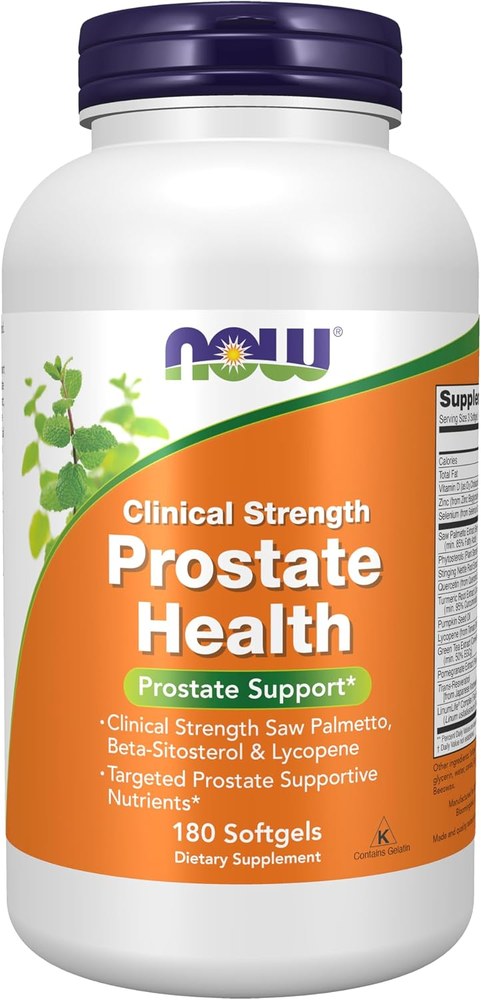
NOW Prostate Health Clinical Strength
Best for: One bottle that covers the studied prostate ingredients
The most practical single purchase, because it puts the ingredients most associated with prostate research into one softgel at sensible doses. NOW's formula delivers saw palmetto 320 mg (the studied dose), a phytosterol blend with beta-sitosterol, stinging nettle root, pumpkin seed oil, lycopene, plus a modest 15 mg of zinc and near-RDA selenium. Two honest points keep it out of miracle territory. First, none of these ingredients has strong, guideline-endorsed evidence for an enlarged prostate, so a complex stacks several modest-to-mixed bets rather than one proven one. Second, because it is a blend, you cannot tell which ingredient, if any, is doing the work. What we like is the restraint: the zinc is a sensible 15 mg, not the high dose linked to harm, and the amounts track the literature. If you want one bottle without overdosing anything, this is it. It also carries low-dose green tea and turmeric extracts.
- Covers the studied prostate ingredients in one softgel
- Sensible 15 mg zinc, not a high-risk dose
- Saw palmetto at the studied 320 mg, low cost per day
- A blend, so you cannot isolate what helps
- No ingredient here is guideline-endorsed for BPH
- Kitchen-sink extras (green tea, turmeric) add little
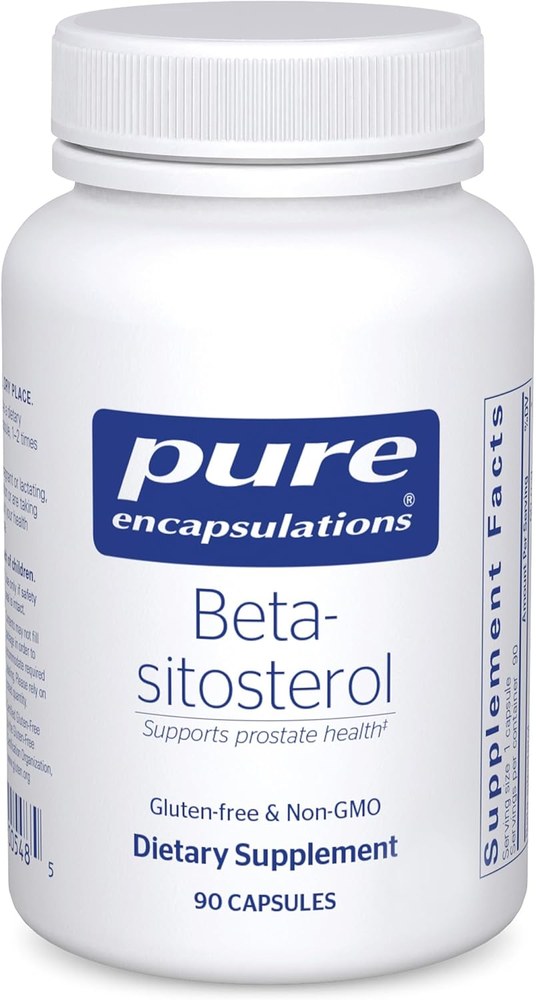
Pure Encapsulations Beta-Sitosterol
Best for: The prostate botanical with the most consistent trial data
If any single prostate botanical has earned its place, it is beta-sitosterol, and this is the cleanest way to take it. Two 6-month double-blind trials (Berges 1995, Klippel 1997) found beta-sitosterol improved urinary symptom scores and raised peak urine flow by roughly 4 to 5 mL/s versus placebo. Treat that number with some caution, because it is actually larger than the flow gain proven drugs like finasteride deliver, and it comes from small, old trials of specific German preparations that modern products have not reproduced. A systematic review agreed on the direction while noting the same limits. Pure Encapsulations labels an unambiguous 60 mg of beta-sitosterol per capsule, so 1 to 2 a day lands in the 60 to 130 mg range those trials used, from a practitioner-grade brand that publishes certificates of analysis. The honest caveats: the evidence is old and short, it eased symptoms without shrinking the prostate, and the trials used specific German preparations, so a store-bought capsule may not behave identically. On evidence quality per ingredient, though, this is the pick. Contains soy.
- Best single-ingredient symptom and flow data (Berges, Klippel)
- Labels an exact 60 mg beta-sitosterol dose
- Practitioner-grade brand with published COAs
- Evidence is old, short, and from specific preparations
- Relieves symptoms without shrinking the prostate
- Contains soy
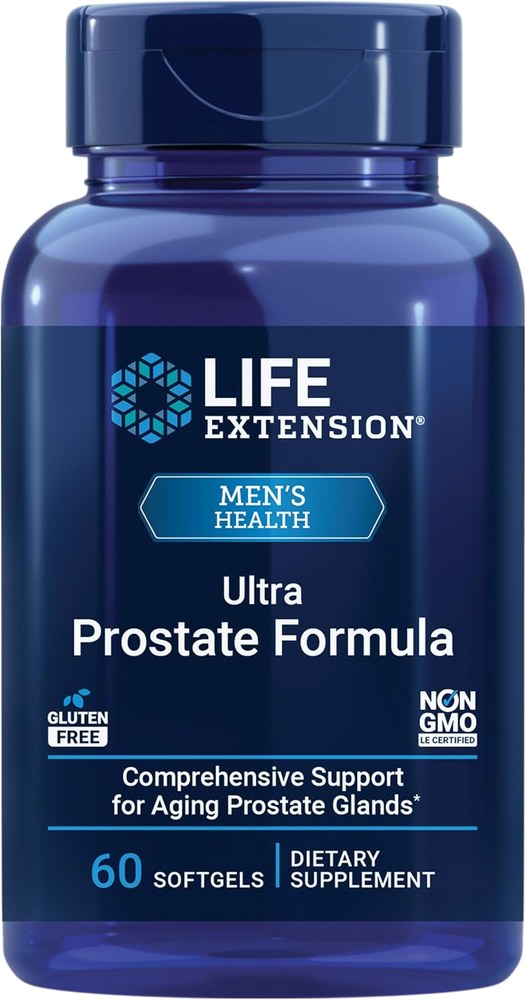
Life Extension Ultra Prostate Formula
Best for: The full traditional stack, including pygeum
The choice for readers who want the classic traditional stack, each ingredient studied on its own rather than as a blend, in one product, including pygeum, which most complexes leave out. Two softgels supply saw palmetto 320 mg, beta-sitosterol 180 mg, pygeum 160 mg, stinging nettle 240 mg, pumpkin seed oil, lycopene, plus Graminex flower pollen and boron, made in an NSF-registered facility with per-batch certificates of analysis. It sensibly leaves out zinc, which is reasonable given the caution around high-dose zinc. The same honesty applies as with any complex: it bundles several modest and mixed ingredients rather than one proven one, and the pygeum and pollen evidence is old and self-rated. It also costs more per day than the others. But if you specifically want the full traditional stack with pygeum, this is the most complete honest option.
- Includes pygeum, which most complexes skip
- Matches the classic traditional stack (each ingredient studied on its own)
- NSF-registered facility and per-batch COAs, no high-dose zinc
- A blend of modest and mixed ingredients
- Pygeum and pollen evidence is old and self-rated
- Most expensive per day here
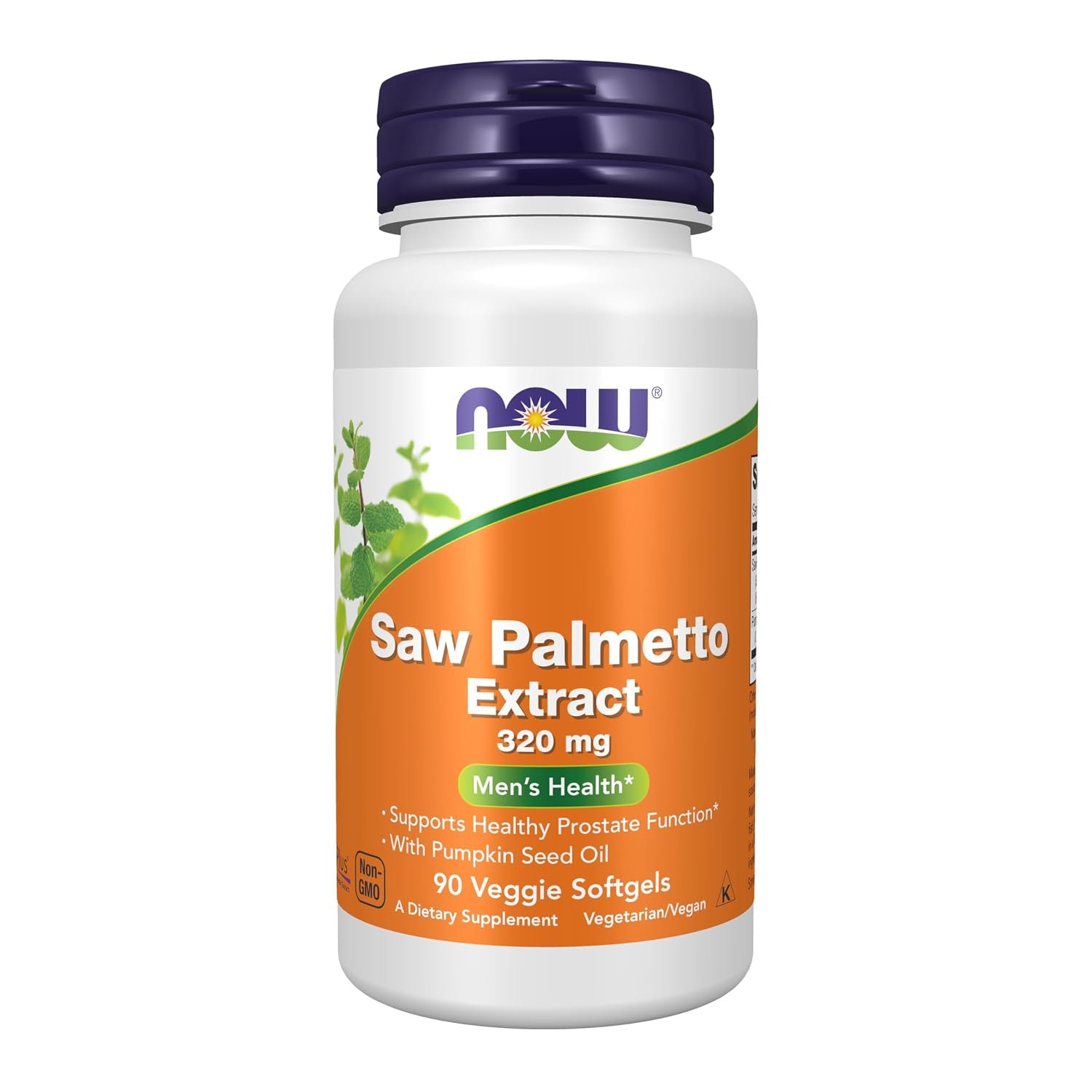
NOW Saw Palmetto 320 mg with Pumpkin Seed Oil
Best for: Trying the category default, with realistic expectations
Saw palmetto is the best-known prostate supplement, so it belongs on this list, but you deserve the straight story. The two largest, best-designed, NIH-funded trials found it no better than placebo: the STEP trial (Bent 2006) saw no benefit over a year, and the CAMUS trial (Barry 2011) pushed the dose to triple the standard for 72 weeks and still found nothing, with the numbers slightly favoring placebo. A Cochrane review of 32 trials reached the same conclusion, and the AUA guideline does not recommend it. If you still want to try it, this NOW product is a sound, inexpensive version at the studied 320 mg with added pumpkin seed oil, and there is a real upside: saw palmetto does not lower PSA (Andriole 2013), so unlike finasteride it will not mask a prostate cancer screen. Just do not expect it to shrink your prostate. For the brand-by-brand breakdown, see our saw palmetto ranking.
- Studied 320 mg dose, well made, very cheap
- Does not lower PSA, so it will not mask screening
- Well tolerated in the trials
- The best trials (STEP, CAMUS) found no benefit over placebo
- Not recommended by the AUA guideline
- Will not shrink the prostate
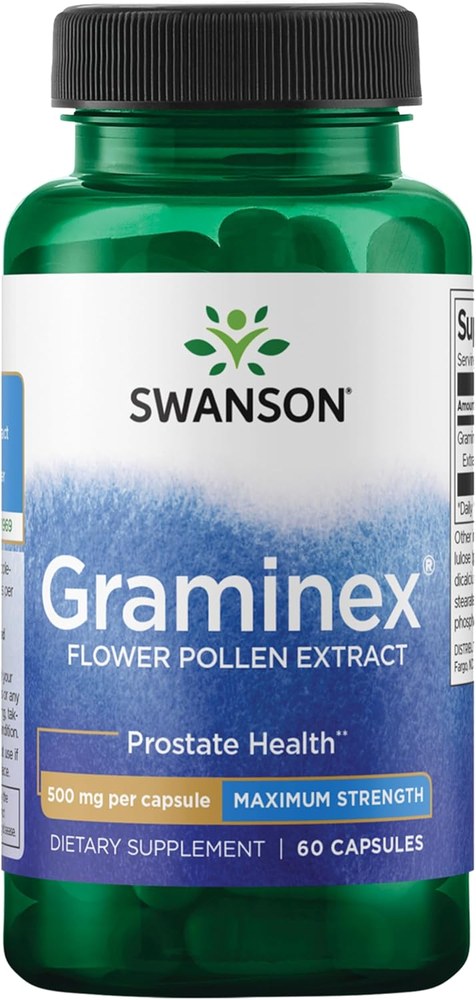
Swanson Graminex Flower Pollen Extract 500 mg
Best for: The Cernitin flower-pollen option, as a single ingredient
Flower pollen extract is the quiet, evidence-adjacent option, and Swanson's is the best value: a single-ingredient 500 mg capsule of the Graminex material that supplies the Cernitin used in the original trials. A Cochrane review of Cernilton found men were about twice as likely to report symptom improvement and less nighttime urination versus placebo. The honesty here matters: those gains were self-rated only, with no improvement in urine flow, residual volume, or prostate size, the trials were small and short, and Cochrane actually withdrew that review in 2011 without updating it. So this is a reasonable, well-priced thing to try for bothersome symptoms, not a proven treatment. At least, as a single ingredient, you know what you are taking.
- Uses the Graminex/Cernitin material from the trials
- Single ingredient, high 500 mg dose, good value
- About twice as likely to improve self-rated symptoms vs placebo
- Benefit was self-rated only, no flow or size change
- Trials small and short; Cochrane review withdrawn in 2011
- Not a proven treatment
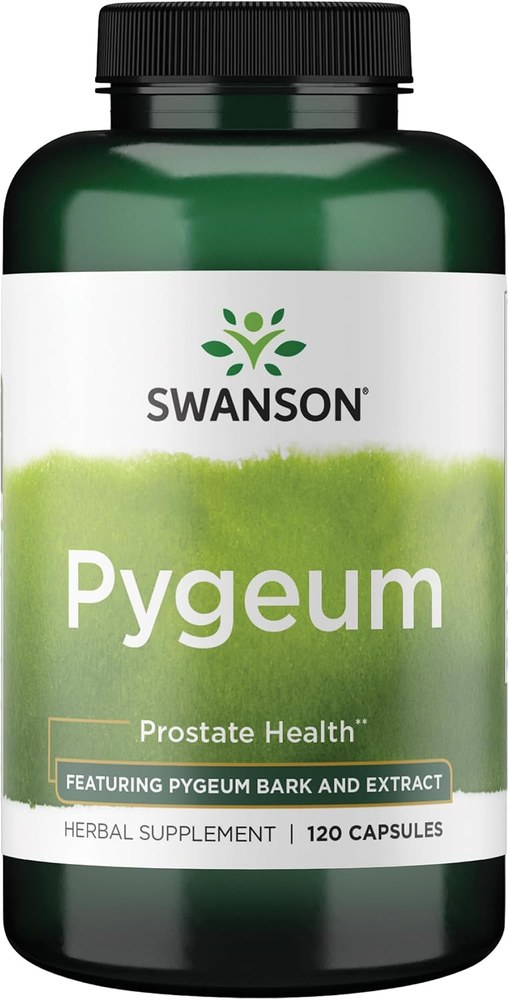
Swanson Pygeum 400 mg
Best for: Trying pygeum specifically, as a standalone
Pygeum, African plum bark, is the traditional European prostate botanical, and Swanson gives you the most bark for the money in a standalone capsule (400 mg plus a standardized extract). A Cochrane review of 18 trials in 1,562 men found pygeum roughly doubled the odds of self-rated symptom improvement, with modest gains in nighttime urination and flow. As with the others, the trials were old, small, and used non-standardized preparations, so treat the evidence as promising but soft. One consideration many posts skip: Prunus africana is an over-harvested, CITES-listed tree, so sustainable sourcing is a genuine issue. A fair pick if you want to try pygeum specifically, knowing the evidence is soft.
- Most pygeum bark per dollar, standalone
- Cochrane: about double the self-rated improvement across 18 trials
- Includes a standardized extract
- Trials old, small, and non-standardized
- Benefit is mostly self-rated
- Sourcing concern: CITES-listed, over-harvested tree
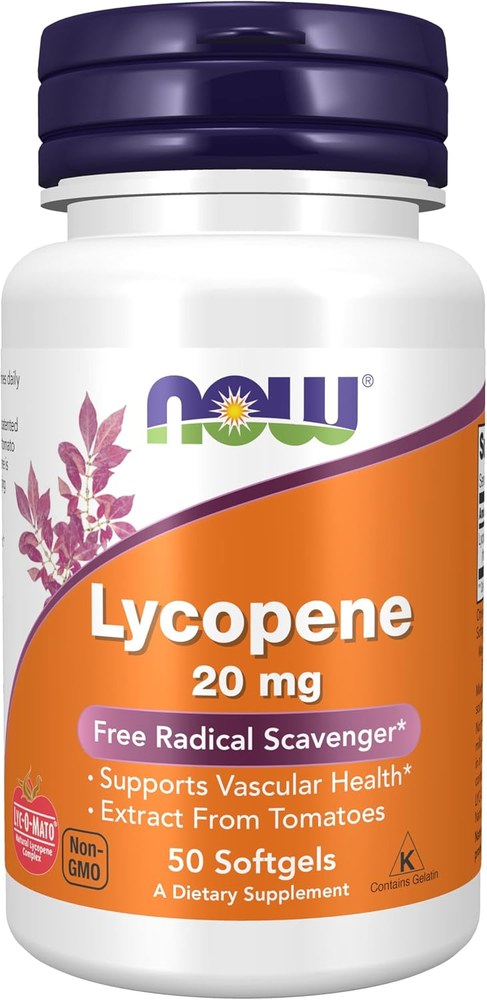
NOW Lycopene 20 mg (Lyc-O-Mato)
Best for: An antioxidant extra, not a prostate cancer shield
Lycopene, the red pigment in tomatoes, is the most oversold prostate ingredient, so it ranks last, but NOW's is the honest version if you want it: 20 mg from the Lyc-O-Mato tomato complex rather than a synthetic isolate. Be clear on the evidence. For an enlarged prostate there is essentially one small, industry-funded 6-month trial (Schwarz 2008, 40 men). For prostate cancer the story is mixed and mostly disappointing: early studies hinted at benefit, but the largest, most rigorous analyses (from the PLCO and PCPT trials) found no association, and the FDA reviewed the evidence and rejected a tomato-cancer claim (Kavanaugh 2007). Whatever weak signal exists is for whole tomatoes and cooked tomato foods, not pills. So eat the tomatoes, and take this only as an antioxidant extra, not a prostate cancer shield.
- Real Lyc-O-Mato tomato complex, not synthetic
- Well made, reasonable price
- Fine as a general antioxidant
- Only one tiny BPH trial; cancer evidence is null or mixed
- FDA rejected the tomato-cancer claim
- Whole tomatoes beat supplements for any benefit
The full lineup, side by side
Read the “best for” and “evidence” columns first. Notice that our highest-ranked picks are not miracle cures; they are the honest best of a modest category, and the popular saw palmetto sits mid-pack precisely because its best trials were null.
| Product | Key actives | Best for | Evidence | Award |
|---|---|---|---|---|
| NOW Prostate Health Clinical Strength | Saw palmetto, beta-sitosterol, nettle, pumpkin, lycopene, zinc | All-in-one | Mixed, modest | Best Overall Complex |
| Pure Encapsulations Beta-Sitosterol | Beta-sitosterol 60 mg | Symptom and flow support | Modest, best single | Best Single-Ingredient Evidence |
| Life Extension Ultra Prostate | Saw palmetto + beta-sitosterol + pygeum + pollen | Full traditional stack | Mixed, modest | Best Comprehensive Formula |
| NOW Saw Palmetto + Pumpkin | Saw palmetto 320 mg | The category default | Null in the best RCTs | Best Saw Palmetto |
| Swanson Graminex Flower Pollen | Flower pollen (Cernitin) 500 mg | Self-rated symptom relief | Symptom-only | Best Flower Pollen |
| Swanson Pygeum | Pygeum bark 400 mg | Traditional botanical | Modest, old trials | Best Pygeum |
| NOW Lycopene | Lycopene 20 mg (Lyc-O-Mato) | Antioxidant extra | Weak, mixed | Best Lycopene |
“Evidence” is our plain-language read of the human trial data for the lead ingredient, not a promise of results. Doses are read from current Supplement Facts panels and can change; confirm before you buy.
What actually has evidence
Behind the products, only a few ingredients have earned real prostate data, and most of it is modest. Here is the honest one-line version, with links to the deeper science.
- Beta-sitosterol, the strongest single ingredient. Controlled 6-month trials improved urinary symptom scores and raised peak flow by about 4 to 5 mL/s versus placebo, a gain larger than proven drugs achieve and not reproduced in modern trials. Real, but old, short, and it does not shrink the prostate.
- Pygeum and flower pollen. Older Cochrane reviews found modest, mostly self-rated symptom improvement. Promising but soft, from small, dated trials.
- Saw palmetto, the popular default. The best NIH-funded trials (STEP and CAMUS) and a Cochrane review of 32 trials found it no better than placebo, even at triple dose. See our saw palmetto ranking.
- Pumpkin seed and nettle root. Small, mixed trials. The largest pumpkin seed trial (GRANU) barely beat placebo, and only for whole seed, not the extract.
- Lycopene. One tiny BPH trial and null cancer-prevention data. Eat tomatoes rather than relying on pills.
A word on minerals, because this is where the clearest evidence lives and it is not reassuring. High-dose zinc has no proven benefit for an enlarged prostate, and a large cohort tied intakes over 100 mg a day to more advanced prostate cancer, so any zinc should be modest and paired with copper. In the SELECT trial, selenium and vitamin E did not prevent prostate cancer, and vitamin E significantly raised the risk. For sensible zinc dosing, see our zinc guide.
Prostate marketing to skip
Some of the loudest prostate claims are the least supported, and a few are genuine safety issues.
- Anything that promises to shrink your prostate or prevent cancer. No supplement is shown to shrink the prostate, and for cancer the best evidence runs the other way, with vitamin E raising risk in a large trial.
- High-dose zinc for prostate health. The prostate concentrates zinc, but supplementing it has no proven benefit for an enlarged prostate, and over 100 mg a day was linked to advanced prostate cancer. Keep zinc modest.
- Selenium and vitamin E to prevent prostate cancer. The large SELECT trial found no prevention, and vitamin E significantly increased risk, so this is a combination to avoid for the prostate.
- Proprietary prostate blends that hide their doses. If a label will not tell you how much saw palmetto or beta-sitosterol is inside, you cannot match a studied dose, and you are paying on faith.
How to choose the right one for you
Match the pick to your situation:
- If you want the best single-ingredient evidence, choose beta-sitosterol with a disclosed dose in the 60 to 130 mg range.
- If you want one convenient bottle, a sensibly dosed complex covers the studied ingredients without megadosing anything.
- If you want to try saw palmetto, it is safe and cheap, but temper expectations, because its best trials found no benefit.
- If prostate cancer risk is your worry, do not rely on supplements, skip high-dose zinc and vitamin E, and talk to your doctor about PSA screening.
- Whatever you pick, choose disclosed doses, keep zinc modest, and see a doctor for any new or changing urinary symptoms.
BPH, PSA, and when to see a doctor
This is a buyer's guide for general wellness, not a substitute for medical care. An enlarged prostate is diagnosed and staged by a doctor, and it shares symptoms with prostatitis and prostate cancer, so a proper work-up matters more than any supplement. If you take a 5-alpha-reductase inhibitor such as finasteride or dutasteride, know that it roughly halves your PSA, so the number has to be interpreted with that in mind; saw palmetto, by contrast, does not change PSA. Because of that halving, a PSA that rises while you are taking finasteride or dutasteride should always be checked by your doctor, even if the number still looks normal. The treatments proven to work are prescription drugs: alpha-blockers such as tamsulosin ease symptoms within days, and in the MTOPS trial combination drug therapy cut the risk of BPH progression by up to 67 percent, reducing urinary retention and the need for surgery. No supplement has ever shown that. Tell any provider about every supplement and medication you take, and see a doctor promptly for new, worsening, or alarming urinary symptoms.
Frequently asked questions
What is the best prostate supplement?
Honestly, none is a proven or guideline-endorsed treatment, so the best one depends on what you want. On trial evidence, beta-sitosterol has the most consistent single-ingredient data for urinary symptoms and flow. If you prefer one bottle, a complex like NOW Prostate Health covers the studied ingredients at sensible doses. But keep expectations realistic: the best trials on the most popular option, saw palmetto, found no benefit, and no supplement matches proven prescription drugs. See a doctor for any urinary symptoms.
Does saw palmetto actually work for an enlarged prostate?
The best evidence says no. The two largest NIH-funded trials, STEP and CAMUS, found saw palmetto no better than placebo, even when CAMUS pushed the dose to triple the standard for 72 weeks, and a Cochrane review of 32 trials agreed. The AUA guideline does not recommend it. It is safe and, unlike finasteride, does not lower PSA, so it will not mask a cancer screen, but do not expect it to shrink the prostate.
Do prostate supplements shrink the prostate or prevent prostate cancer?
No. No supplement is shown to shrink the prostate; the botanicals at best modestly ease symptoms. For cancer, be careful, because the evidence runs the other way: the large SELECT trial found vitamin E significantly increased prostate cancer risk, and a cohort study linked high-dose zinc (over 100 mg a day) to more advanced disease. Do not take supplements to prevent prostate cancer.
Is beta-sitosterol better than saw palmetto?
On trial evidence, arguably yes for symptoms. Controlled trials found beta-sitosterol improved urinary symptom scores and raised peak urine flow, while the best saw palmetto trials were null. Both effects are modest and neither shrinks the prostate; beta-sitosterol simply has the more consistent, if older, data. That is why it ranks as our best single-ingredient pick.
Are prostate supplements safe, and what about zinc and selenium?
The common botanicals (saw palmetto, beta-sitosterol, pygeum, flower pollen, pumpkin seed) are generally well tolerated. The real caution is with megadose minerals: high-dose zinc over 100 mg a day was tied to advanced prostate cancer, and in the SELECT trial selenium and vitamin E did not prevent cancer while vitamin E raised risk. Keep any zinc modest, pair it with copper, and skip vitamin E for the prostate.
How long before a prostate supplement works, and when should I see a doctor?
Trials ran from weeks to months, and a large part of any improvement is the placebo effect, which is strong in prostate studies. More important than timing: urinary symptoms can come from an enlarged prostate, prostatitis, or prostate cancer, and these cannot be told apart by symptoms alone. See a doctor before self-treating, and get urgent care for blood in the urine, inability to urinate, or fever with urinary symptoms.
Should I take a supplement or a prescription like tamsulosin or finasteride?
Proven drugs work better. Alpha-blockers such as tamsulosin relieve symptoms within days, and in the MTOPS trial combination drug therapy cut the risk of BPH progression by up to 67 percent, something no supplement has ever shown. Supplements are, at best, an option to discuss with your doctor for mild symptoms, not a replacement for evaluation or effective medication.
The bottom line
The best prostate supplement is the honest one, matched to your situation and your expectations. On trial evidence, beta-sitosterol is the single ingredient most worth trying, and a sensibly dosed complex is the easiest one-bottle option. Saw palmetto is safe and popular but failed its two best trials, and lycopene is mostly marketing. Above all, keep the framing straight: no supplement shrinks the prostate or prevents cancer, high-dose zinc and vitamin E are best avoided, and proven prescription care beats anything on the supplement shelf. Choose a transparent, well-dosed product if you want one, and let a doctor guide anything beyond general support.