Maca is a Peruvian root that gets sold as everything from a libido booster to a natural testosterone pill to an all-day energy fix. The honest version is narrower: its best-supported use is sexual desire, the evidence there is limited, and, importantly, maca is not a hormone. What actually separates a good maca product from a mediocre one is not a magic dose but the basics: where the root comes from, whether it is gelatinized for digestion, whether you can reach a studied dose without taking a fistful of capsules, and whether the brand tests for heavy metals. This guide ranks the best maca supplements on exactly that, and it is upfront about what maca can and cannot do.
The short story: The Maca Team Gelatinized is the pick for buyers who care about sourcing and transparency, with single-origin organic Peruvian root and published heavy-metal certificates. But read the box below first, because with maca your expectations matter more than which bottle you choose.
Read this first: what maca really does
The best-supported use is sexual desire, and even that evidence is limited. A 2010 systematic review (Shin and colleagues) assessed four randomized trials and found suggestive but low-certainty evidence maca may improve desire; a 12-week trial by Gonzales (2002) reported higher self-rated desire in men at 1.5 to 3 g a day. Small trials also hint it may ease the sexual side effects some people get from SSRI or SNRI antidepressants, though that is preliminary.
Maca is non-hormonal. In human studies it did not change testosterone or estrogen, so despite the marketing it is not a testosterone booster. Menopause trials (several using the branded Maca-GO preparation) are small and weak, and energy, mood, and athletic claims are preliminary.
How to use it. Studied doses are about 1.5 to 3 g a day. Gelatinized maca is pre-cooked and gentler on digestion; raw maca is a brassica with goitrogens, so very heavy raw intake carries a theoretical thyroid caution. If you are pregnant, breastfeeding, take thyroid medication, or have a hormone-sensitive condition, check with a clinician first.
The short version
- Best overall: The Maca Team Gelatinized, single-origin organic Peruvian root with published heavy-metal COAs.
- Best value: Micro Ingredients gelatinized powder, a studied dose for pennies.
- Sourcing and processing beat dose hype. Organic, gelatinized, and heavy-metal tested matters more than a big number.
- Set expectations: maca may support libido, but it is non-hormonal and not a testosterone booster.
How we ranked them
Because sourcing and processing decide maca quality more than any label claim, those did most of the deciding. We weighed four things:
- Sourcing and organic status. Certified-organic, clearly-sourced Peruvian maca ranks above vague origins.
- Processing. Gelatinized (pre-cooked) maca is gentler on digestion and closer to traditional use.
- Honest dose. Products that make the 1.5 to 3 g studied range easy and affordable to reach.
- Testing. Published third-party heavy-metal certificates, GMP, and organic verification.
We penalized testosterone or hormone-balancing claims that outrun the evidence. Scores are our editorial assessment on a five-point scale, reflecting product quality, not a promise the ingredient will work for you. Prices are approximate and change often.
The 7 best maca supplements
Tap any product to jump straight to its full review.
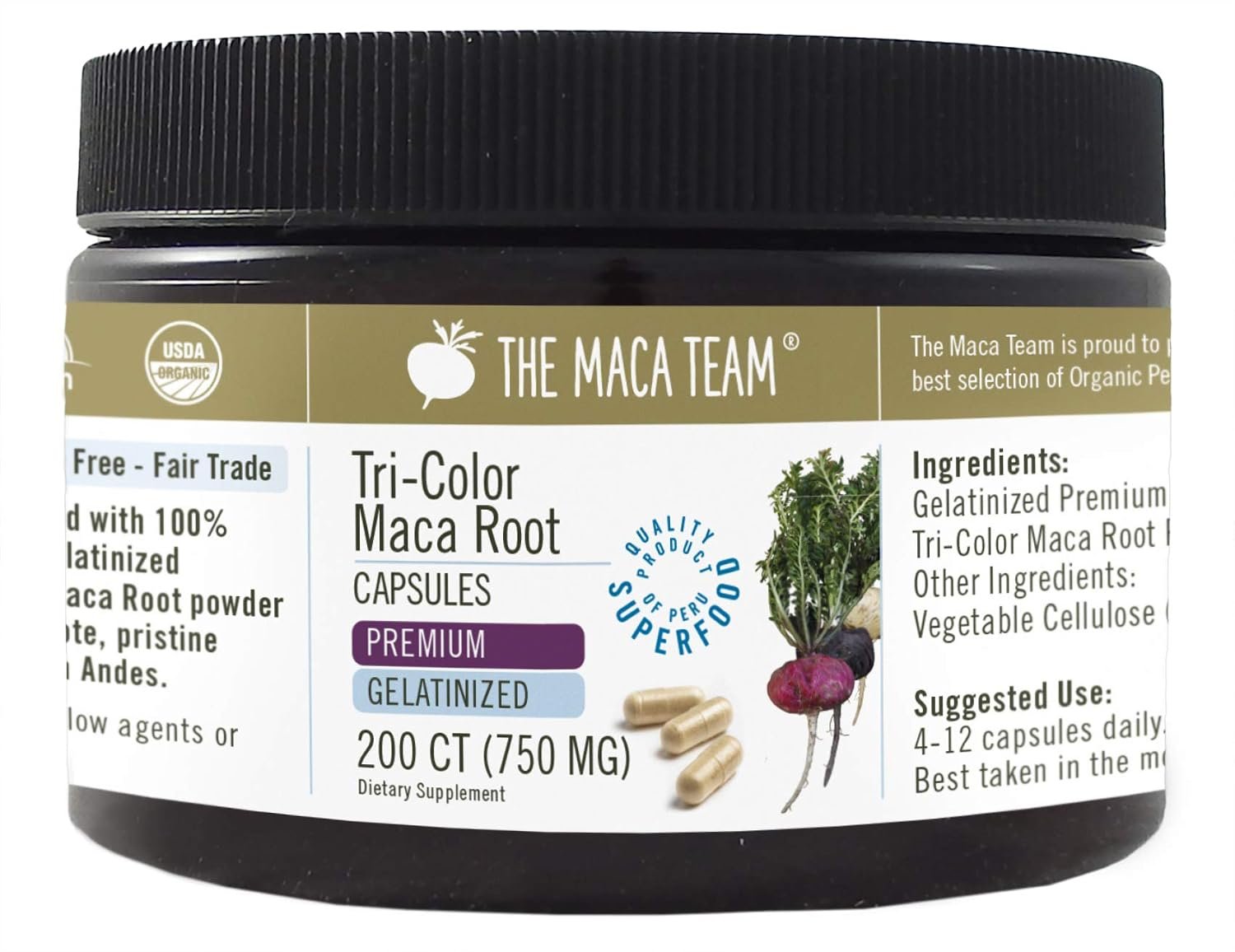
The Maca Team Gelatinized Premium Organic Maca Root
Best for: Sourcing transparency and heavy-metal testing
The pick for buyers who care where their maca comes from. The things that actually matter for maca are sourcing and processing, and The Maca Team documents both: single-origin organic, fair-trade Peruvian root, fresh-processed after harvest and gelatinized for easier digestion, at an honest 750 mg per capsule with no fillers and published heavy-metal certificates. It also makes no testosterone or hormone claims, which fits the evidence. The trade-offs are a premium price and, as a small direct-to-consumer brand, occasional Amazon stock gaps, which is the only reason it edges out cheaper but less transparent options.
- Single-origin, organic, fair-trade Peruvian root
- Gelatinized and fresh-processed, no fillers
- Published heavy-metal certificates
- No hormone or testosterone claims
- Premium price
- Amazon stock can be intermittent
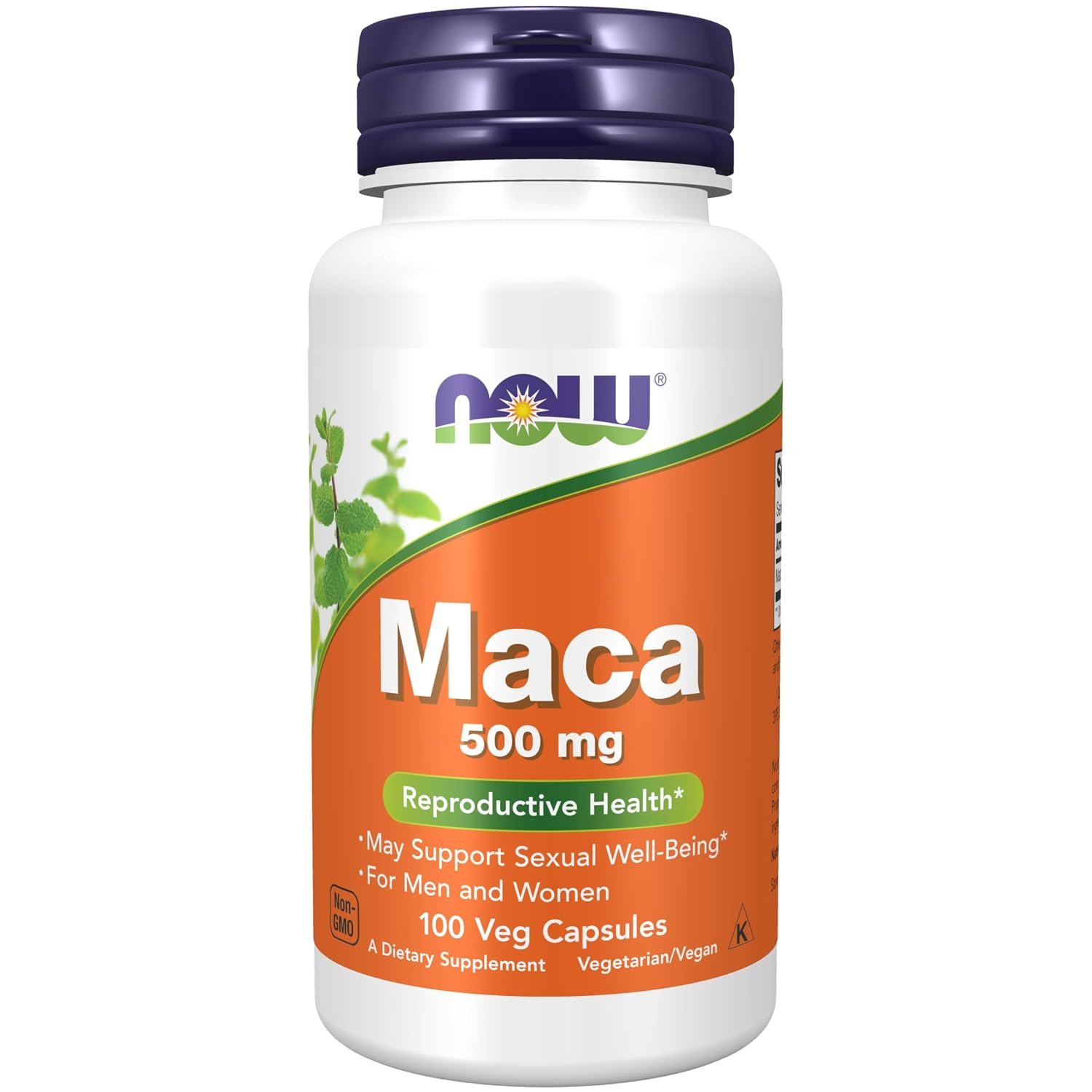
NOW Foods Maca 500 mg
Best for: A trusted, GMP-tested brand at a low price
The trusted, testing-forward budget pick. NOW is a GMP-certified brand with a well-earned reputation for extensive in-house analytical testing, and its maca is honest single-ingredient labeling at a very low price. Two honest caveats keep it at number two. First, it is raw rather than gelatinized, so the goitrogen and thyroid caution is most relevant here (mind very heavy intake if you have thyroid concerns). Second, at only 500 mg per capsule you need 3 to 6 capsules a day to reach the studied 1.5 to 3 g range, which chips away at the low price.
- Trusted GMP brand with strong in-house testing
- Honest single-ingredient label
- Very low price
- Raw, not gelatinized (raw thyroid caution)
- Only 500 mg, so 3 to 6 caps for a studied dose
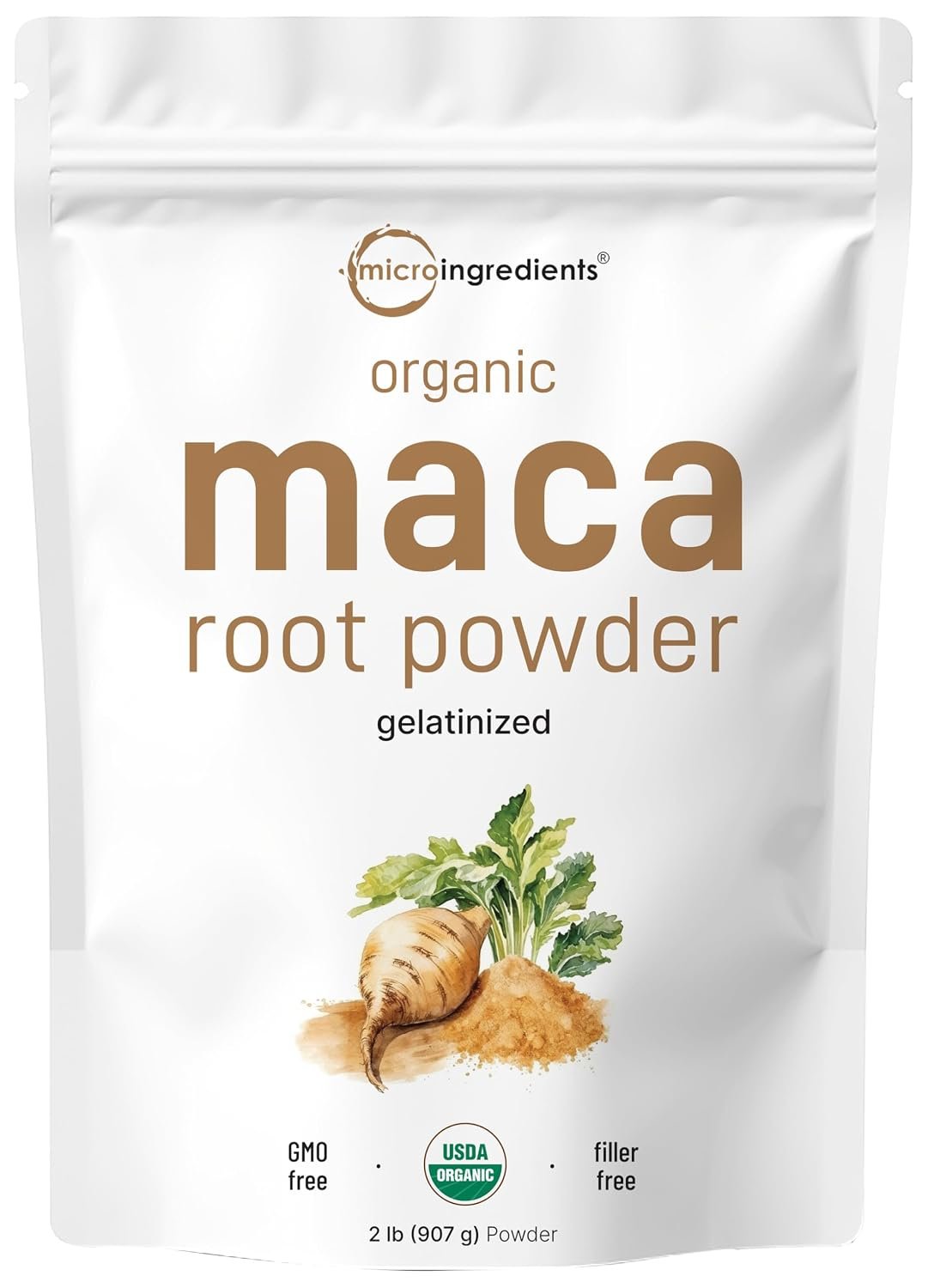
Micro Ingredients Organic Gelatinized Maca Root Powder
Best for: Reaching a studied dose for the least money
The value champion if you do not mind a powder. Micro Ingredients gives you a large 2 lb bag of organic, gelatinized, Peru-origin maca powder at one of the lowest costs per gram anywhere, with third-party certificates published on the brand site. Because it is powder, hitting a studied 3 to 5 g dose is genuinely cheap and easy, which is the whole point with maca. The only reasons it is not higher: the taste is earthy and malty, and you have to measure it yourself rather than get a fixed capsule dose. For most people optimizing cost per studied gram, this is the one.
- Organic, gelatinized, Peru-origin powder
- Lowest cost per gram, published COAs
- Easy to hit a studied dose
- Earthy, malty taste
- You measure it yourself
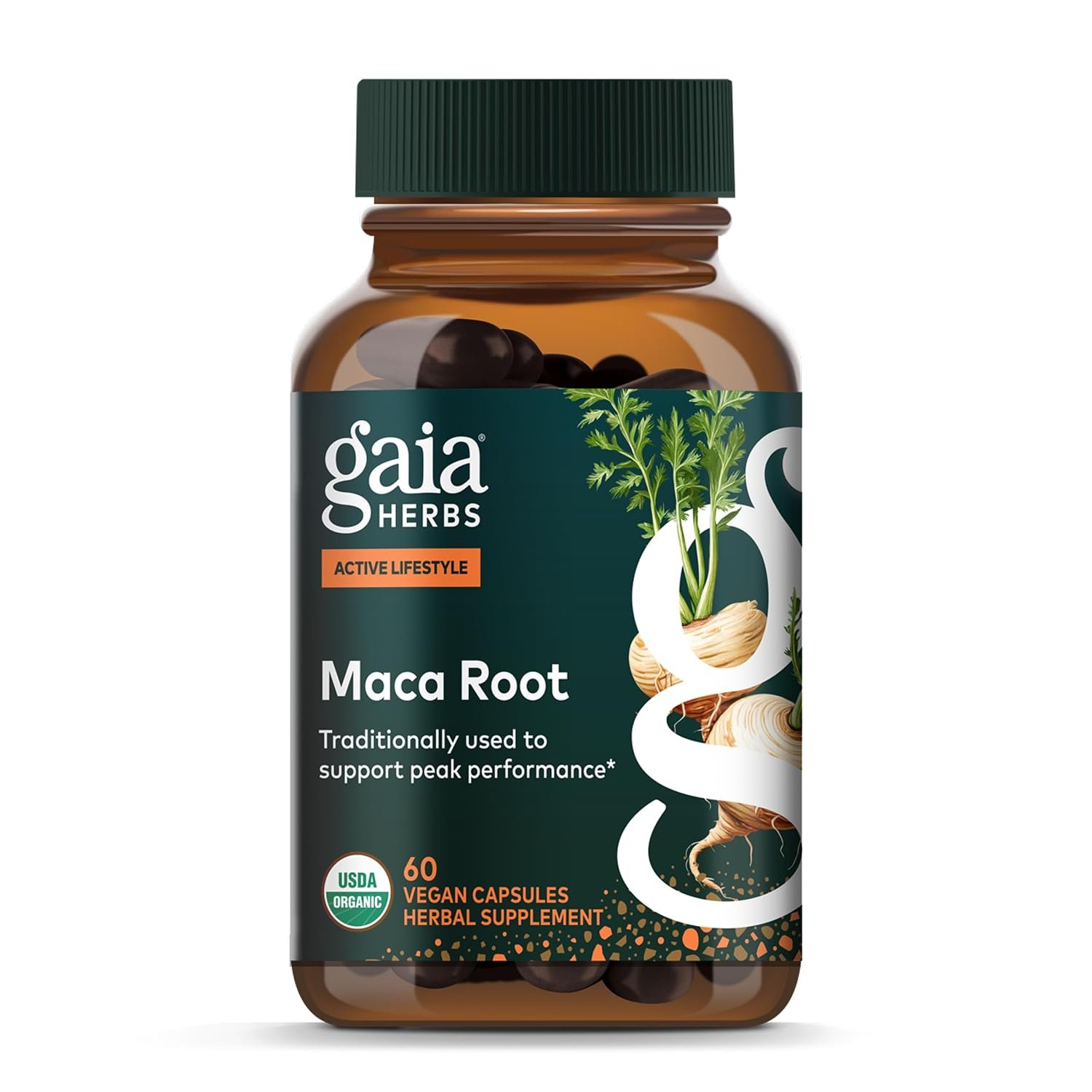
Gaia Herbs Maca Root
Best for: Per-batch traceability from a reputable brand
The traceability pick. Gaia Herbs is a reputable brand whose real differentiator is a genuine per-batch ID you can look up on their site, paired with organic whole gelatinized root. If knowing exactly what is in your bottle appeals to you, it delivers. It lands mid-pack for two practical reasons: a 60-capsule bottle at two a day is only about a month, and the default 1,000 mg a day sits below the 1.5 to 3 g studied range, so you may want to take more, which shortens the bottle further and raises the effective cost.
- Genuine per-batch ID lookup
- Organic whole gelatinized root
- Reputable, widely trusted brand
- 60 caps is about a month
- Default 1,000 mg is below the studied range
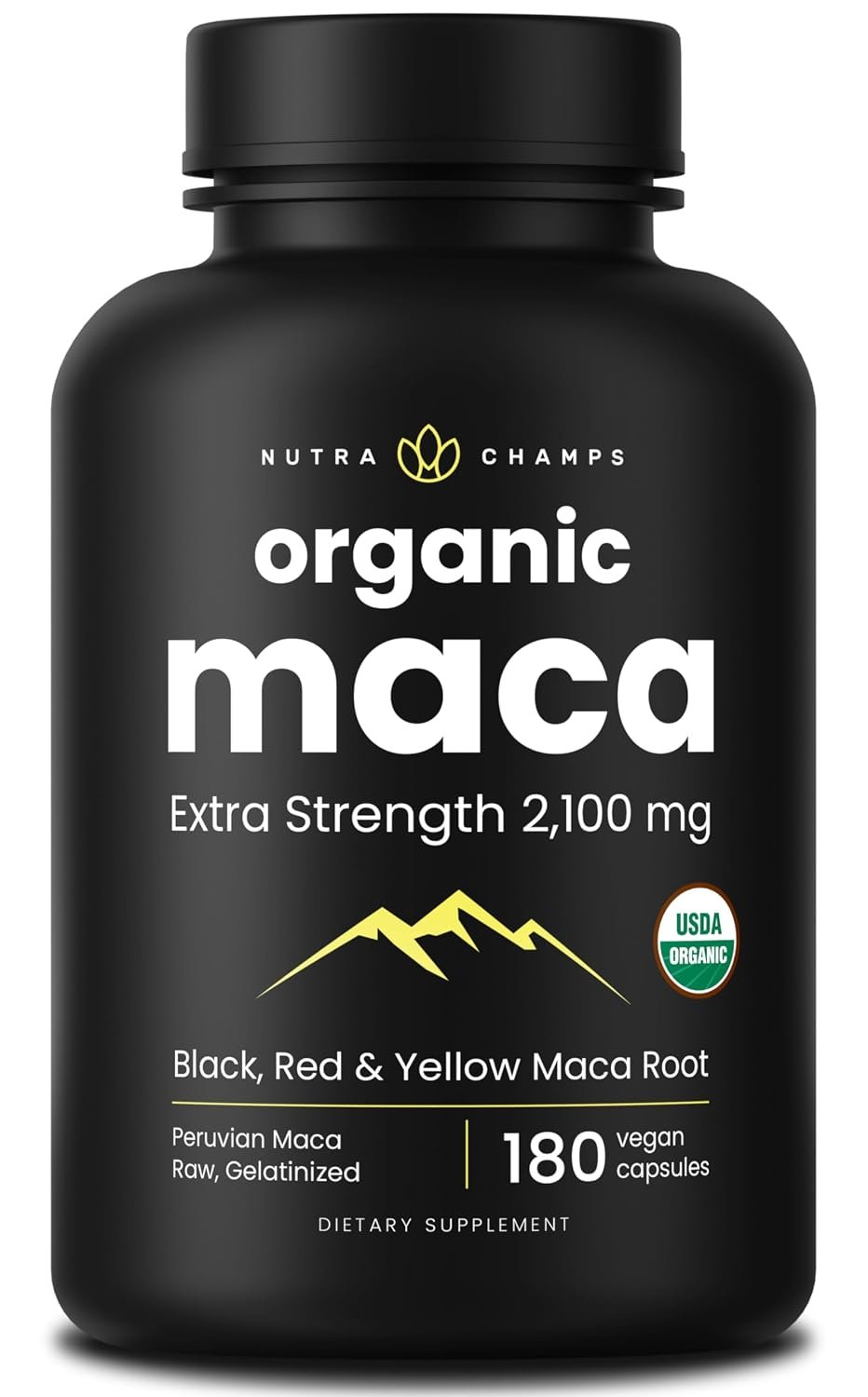
NutraChamps USDA Organic Maca Root, 2,100 mg
Best for: A studied dose in capsules, cheaply
The easiest way to hit a studied dose in capsule form. NutraChamps delivers 2.1 g of organic gelatinized tri-color (black, red, and yellow) maca per three-capsule serving at a low price, so unlike the 500 mg capsules you reach the research range in one small serving. If you want a studied dose without swallowing a handful of pills or measuring powder, this is the value option. It ranks fifth only because it leans mainly on its organic certification and GMP manufacturing rather than publishing its own third-party certificates of analysis the way our top picks do.
- 2.1 g studied dose in three capsules
- Organic gelatinized tri-color blend
- Low price
- Relies on organic and GMP, no published COAs
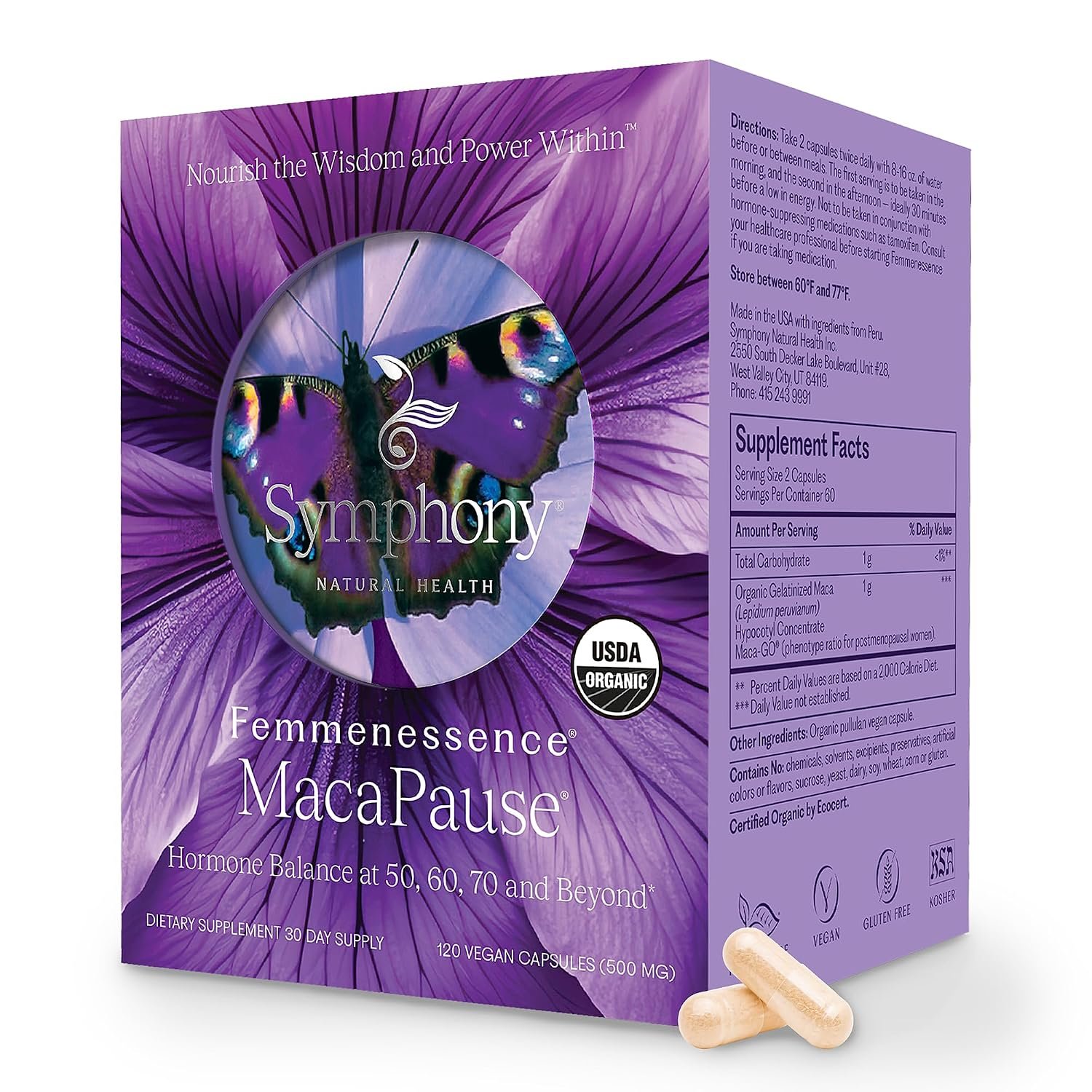
Femmenessence MacaPause (Maca-GO)
Best for: The exact preparation used in menopause trials
The one to pick only if you want the researched product itself. Femmenessence uses the exact Maca-GO preparation studied in the small postmenopausal trials, so you get the same formula the studies used rather than a look-alike. That is a genuine, if narrow, reason to choose it. The honest caveats keep it near the bottom: it is expensive, and those supporting trials are small and industry-linked, so its hormone-balancing marketing runs well ahead of the evidence. Maca is non-hormonal, and buying this for guaranteed menopause relief would be over-trusting a thin evidence base.
- The exact Maca-GO formula used in trials
- Organic and GMP
- Expensive
- Supporting trials are small and industry-linked
- Marketing outruns the evidence
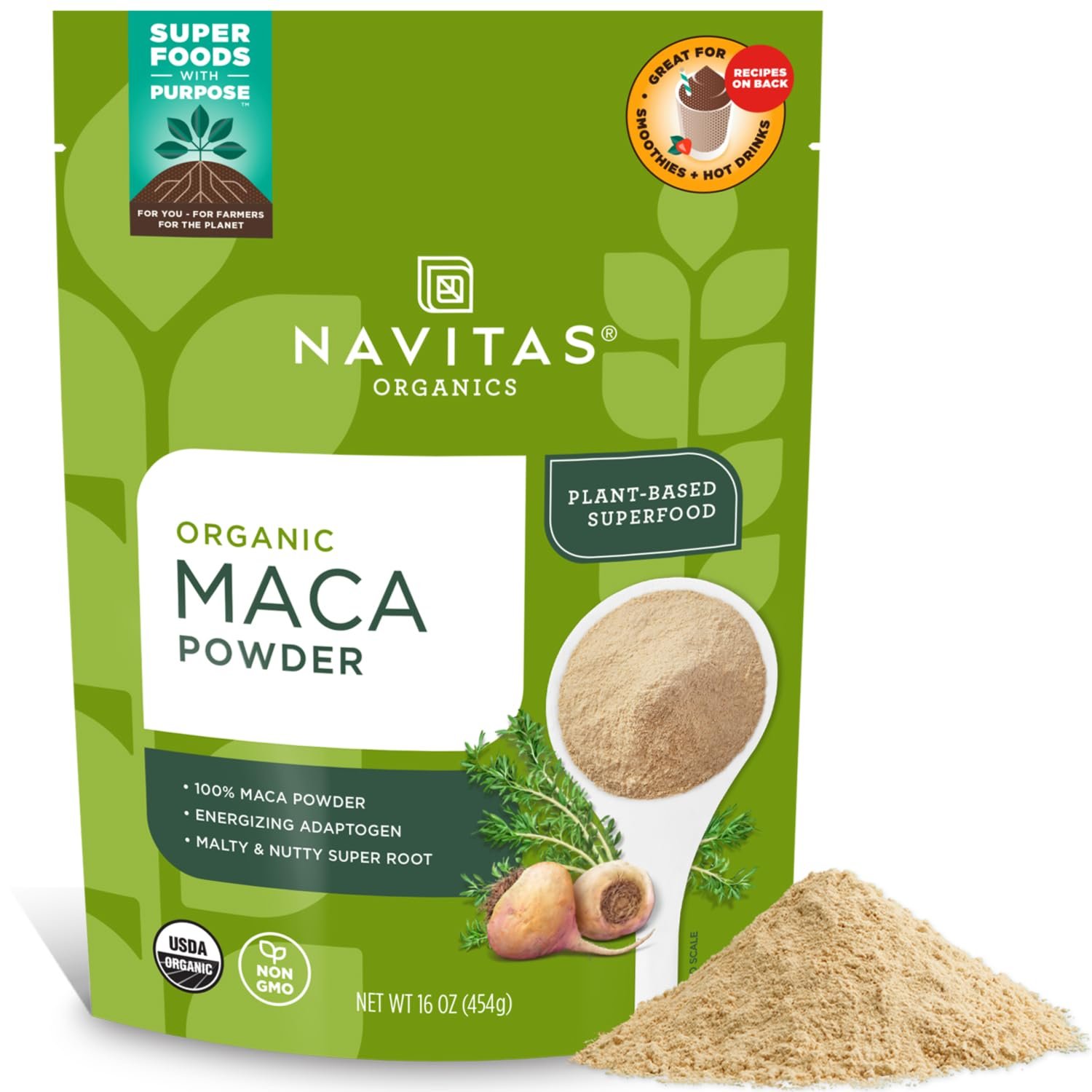
Navitas Organics Gelatinized Maca Powder
Best for: A widely stocked powder that blends smoothly
The grab-it-at-the-store powder for smoothie people. Navitas is a widely stocked USDA-organic, Non-GMO Verified gelatinized Peruvian maca that blends smoothly into smoothies, lattes, and baking, which is its real appeal. It is a perfectly good product. It finishes last only on the numbers: it costs more per gram than the bulk bags, and its malty, butterscotch taste is not for everyone. If you already shop the brand and want maca you will actually use daily in drinks, it earns its place; if you are optimizing cost per studied gram, the bulk powder wins.
- USDA organic, Non-GMO Verified
- Blends smoothly into drinks and baking
- Widely stocked
- Higher cost per gram than bulk bags
- Malty taste is divisive
The full lineup, side by side
Read the processing and serving columns first. With maca, gelatinized processing and reaching a studied dose affordably matter more than the brand on the bag.
| Product | Form | Processing | Serving | Tested | Best for |
|---|---|---|---|---|---|
| The Maca Team | Capsule | Gelatinized | 2,250 mg | 3rd-party metals | Sourcing transparency |
| NOW Foods | Capsule | Raw | 500 mg/cap | GMP | Trusted budget |
| Micro Ingredients | Powder | Gelatinized | 3-5 g | 3rd-party COA | Best value per gram |
| Gaia Herbs | Capsule | Gelatinized | 1,000 mg | Batch ID lookup | Traceability |
| NutraChamps | Capsule | Gelatinized | 2,100 mg | GMP, organic | Studied dose in caps |
| Femmenessence | Capsule | Maca-GO | ~2 g | GMP, organic | The trial preparation |
| Navitas Organics | Powder | Gelatinized | ~5 g | Non-GMO, organic | Smoothies |
Prices and specs are read from current listings and can change; confirm the Supplement Facts panel before you buy.
How to choose the right one for you
A few honest priorities make the decision easy:
- If sourcing and testing matter most, The Maca Team is single-origin, organic, and heavy-metal tested.
- If you want the lowest cost per studied gram, a gelatinized powder like Micro Ingredients is unbeatable.
- If you prefer capsules at a real dose, NutraChamps reaches 2.1 g in three capsules.
- If you will use it in drinks daily, Navitas blends the most smoothly.
- Whatever you pick, aim for the 1.5 to 3 g studied range, favor gelatinized if your stomach is sensitive, and remember maca is non-hormonal.
If your real goal is libido, our supplements for libido guide covers the wider picture, and if you are chasing testosterone specifically, read do testosterone boosters actually work first, since maca is not one.
Frequently asked questions
Does maca boost testosterone?
No. Human trials, including Gonzales 2002, found maca did not raise testosterone or estrogen. It is non-hormonal, and any effect on libido works through other pathways, so treat testosterone-booster marketing skeptically.
What does maca actually help with?
The strongest, though still limited, evidence is for sexual desire, plus small trials suggesting it may ease SSRI-related sexual side effects. Evidence for energy, mood, and athletic performance is preliminary.
How much maca should I take?
Most studies used about 1.5 to 3 grams a day. Powders and higher-count capsules make that dose easier and cheaper to reach than a single 500 mg capsule.
Gelatinized or raw maca, which is better?
Gelatinized maca is pre-cooked to remove starch and is usually gentler on digestion. Raw maca is a brassica containing goitrogens, so very heavy raw intake carries a theoretical thyroid caution.
Is there a difference between yellow, red, and black maca?
In preliminary research, yes: black maca has been studied more for cognition and sperm and red maca for prostate and bone (mostly animal data), while most human sexual-desire trials used yellow or mixed maca.
Is maca safe?
Maca is generally well tolerated in trials. People with thyroid or hormone-sensitive conditions, and those who are pregnant or breastfeeding, should check with a clinician first.
The bottom line
Maca is a supplement where honest expectations and good sourcing beat hype. The Maca Team is the transparent, heavy-metal-tested pick, Micro Ingredients is the value champion for reaching a studied dose cheaply, and NutraChamps is the easy 2.1 g capsule option, while NOW is the trusted budget capsule with a raw-maca caveat. Whatever you choose, favor organic and gelatinized, aim for the 1.5 to 3 g studied range, and hold the marketing at arm's length: maca may gently support libido for some people, but it is non-hormonal, it is not a testosterone booster, and its energy and menopause claims rest on thin evidence.