Ginkgo biloba is one of the best-selling herbal supplements for memory, made from the leaves of the ginkgo tree. The trial picture is clearer than for most herbs, and less flattering: in healthy adults and in two large prevention trials in older adults, ginkgo did no better than placebo. Quality is also a real problem: a 2024 review found ginkgo the most often adulterated of the five popular herbs it examined.
We checked 25 ginkgo products on Amazon US and ranked five on dose, how fully the label describes the extract, testing we could confirm, cost and marketing. For the evidence in more depth, see our ginkgo guide.
The short version
- Best overall: Life Extension, the only label we found with a ginkgolic acid limit, at 240 mg a day.
- Best value: Doctor's Best or Nature's Bounty, both 120 mg of a 24/6 extract.
- Memory evidence in healthy people is weak. A trial of 230 older adults and a meta-analysis of 13 trials found no memory benefit, and two prevention trials of about 3,000 people each missed their main goals.
- Quality varies. In published testing, more than half of ginkgo samples were adulterated or mislabeled, and no ginkgo product we checked had an independent certification.
- Safety: ask a doctor first if you take blood thinners or other prescription medicines, or have surgery planned; do not take it in pregnancy.
How we ranked them
To qualify, a product needed ginkgo extract as its main ingredient, a readable Supplement Facts panel, and the brand, its own seller account, its parent company or Amazon as the seller. Scoring:
- Dose match (20%). Directions that reach 120 to 240 mg a day of a standardized extract, the range trials used.
- Standardization (20%). Full marks for 24 percent flavone glycosides, 6 percent terpene lactones and a ginkgolic acid limit on the label.
- Testing (20%). Full marks only for independent certification we could confirm; none had it.
- Cost (15%), per 120 mg of extract, from Amazon prices when we reviewed the products.
- Extract match (10%). Highest for EGb 761, the extract in most trials; no US product we found names it.
- Formulation (5%) and marketing (10%). Points off for added raw leaf powder, claims beyond the evidence and listings that contradict their labels.
What ginkgo can and cannot do
Memory in healthy adults: no clear benefit. In a six-week trial of 230 adults over 60, 120 mg a day did no better than placebo on any test of learning, memory or attention. A 2012 meta-analysis of 13 memory trials found an effect near zero that did not depend on dose or trial length, and a 2007 review called the evidence from longer trials "largely negative." A 2026 analysis comparing ginkgo with bacopa ranked ginkgo lower for memory.
Prevention trials in older adults. GEM gave 3,069 people aged 75 and older 120 mg of a standardized extract twice a day or placebo for a median of about six years; dementia rates did not differ. GuidAge, in 2,854 adults aged 70 and older with memory complaints, also missed its main outcome after five years. A 2026 Cochrane review of ginkgo extracts, including EGb 761, found possible small to moderate benefits in people already diagnosed with dementia, on low-certainty evidence, and little or no effect in milder memory impairment; that is drug-style research, not a reason for healthy people to take ginkgo.
Other uses. Cochrane reviews found little to no effect on tinnitus and no clinically meaningful benefit for leg pain from poor circulation, and a 614-person trial found ginkgo did not prevent altitude sickness.
Quality and safety. A 2024 review of published testing found 56.7 percent of 533 ginkgo samples adulterated or mislabeled, often spiked with cheap flavonoids such as rutin or quercetin that standard tests can miss. Good extracts also remove ginkgolic acids, irritant and allergy-causing compounds, to under 5 ppm, but most labels do not say so. Trials that measured clotting did not show a higher bleeding risk, but case reports exist, so ask a doctor before combining ginkgo with blood thinners or before surgery. Seizures have been reported with the leaf extract in people with epilepsy, and ginkgo can affect some drug levels. The European Medicines Agency lists pregnancy as a contraindication.
The 5 best ginkgo biloba supplements
Tap any product to jump straight to its full review.
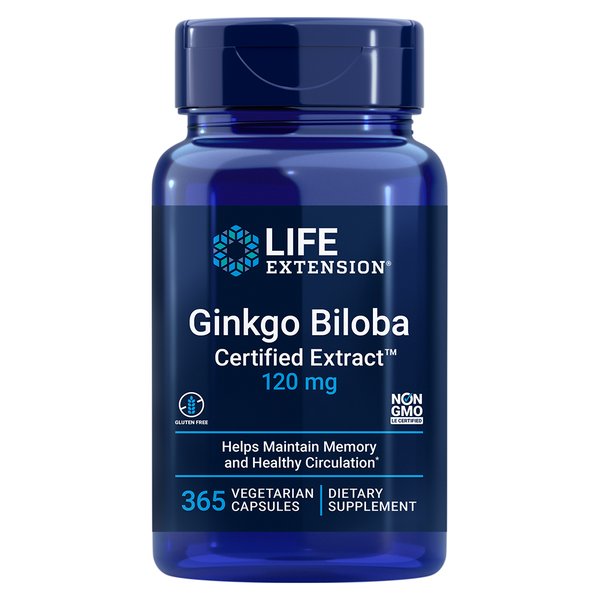
Life Extension Ginkgo Biloba Certified Extract 120 mg (365 capsules)
Best for: A label with a purity limit
The most transparent label here, with a 24/6 extract, a ginkgolic acid limit under 1 ppm and the 240 mg trial dose. Its listing gets ginkgolic acid backward, and its testing is on request.
- The only product we found that prints a ginkgolic acid limit, under 1 ppm, alongside the 24 percent and 6 percent standardization
- Directions give 240 mg a day, the dose used in the large trials
- A 365-capsule bottle, with a certificate of analysis available
- A listing bullet says the formula includes ginkgolic acid as a beneficial compound, which contradicts its own label limit
- Shows a "#1 Rated" badge that comes from a customer survey, and the bottle says it helps maintain healthy circulation, more than the trials show
- Its testing is on request, not confirmed by an independent certifier
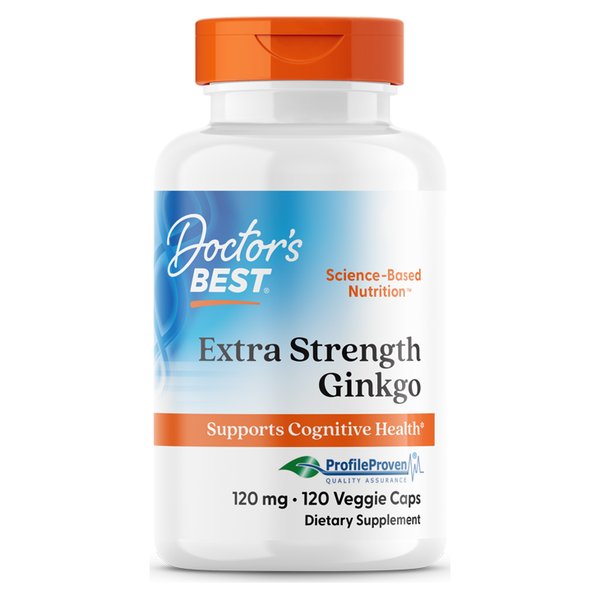
Doctor's Best Extra Strength Ginkgo 120 mg (120 veggie capsules)
Best for: A low-cost 24/6 extract
A 24/6 extract with many ratings. It states no ginkgolic acid limit, and its marketing overreaches.
- 120 mg of a 24/6 extract per vegetarian capsule
- About 6,750 ratings averaging 4.6 stars
- Names its ingredient supplier's quality program
- No ginkgolic acid limit on the label
- Its testing claim names no independent lab
- Calls a standard 120 mg dose "extra strength," uses a chart that marks an unnamed "Other Brand" as worse, and says it supports "healthy oxygen delivery to brain cells"
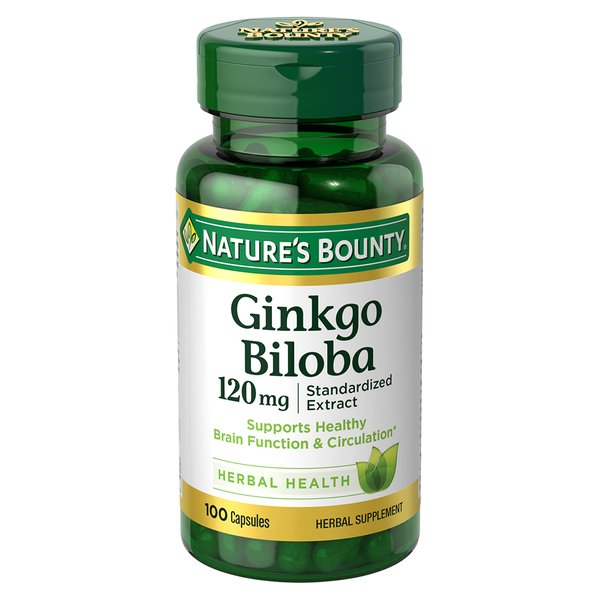
Nature's Bounty Ginkgo Biloba 120 mg (100 capsules)
Best for: The lowest daily cost for a full 24/6 extract
The cheapest 24/6 extract per day, sold by Amazon. It makes no testing claim and uses a gelatin capsule.
- 120 mg of a 24/6 extract at the lowest cost per day among the 24/6 picks
- Sold by Amazon, with about 18,750 ratings averaging 4.6 stars
- One capsule a day
- Makes no testing claim, and states no ginkgolic acid limit
- Gelatin capsule, so not vegetarian
- Says it suits occasional mild memory problems of aging and supports circulation, more than the trials show
NOW Foods Ginkgo Biloba 60 mg (60 veg capsules)
Best for: Starting at a lower dose
A 24/6 extract in small capsules, so you can take 60 or 120 mg. Each capsule adds 200 mg of plain leaf powder.
- A 24/6 extract in 60 mg capsules, so one or two a day gives 60 to 120 mg
- The lowest price per bottle here, sold by Amazon
- A vegetarian capsule
- Each capsule also holds 200 mg of plain leaf powder, which the trials did not use
- The listing's ingredient list leaves out the leaf powder and differs from the label
- Calls itself the finest quality available worldwide; its testing claims describe its own labs and a facility audit
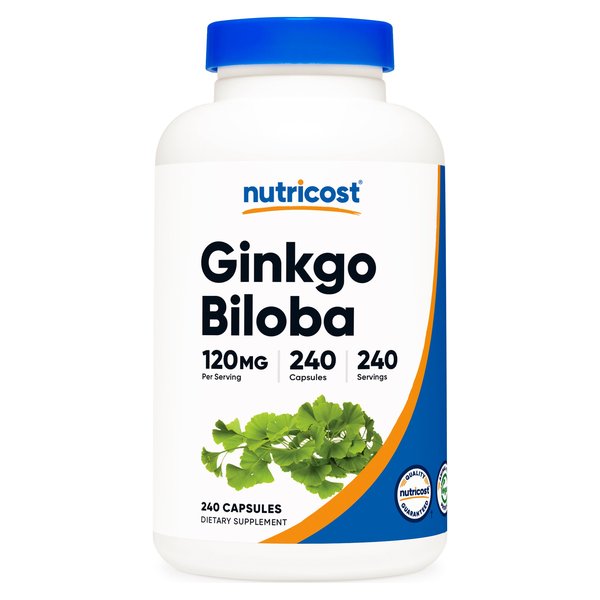
Nutricost Ginkgo Biloba 120 mg (240 capsules)
Best for: A large, low-cost bottle
A big 240-capsule bottle at the lowest daily cost here. The label gives only the flavone glycoside figure.
- 240 capsules of 120 mg extract, the lowest daily cost here
- About 12,200 ratings averaging 4.6 stars
- A plain listing with few benefit claims
- States 24 percent flavone glycosides but no terpene lactone figure
- Calls a standard 120 mg dose "extra strength"; its testing claim names no lab, and its NSF mention refers to the factory
- No ginkgolic acid limit
The full lineup, side by side
Amounts come from each product's Supplement Facts panel on its Amazon listing, read November 6, 2026. A "24/6" extract is standardized to 24 percent flavone glycosides and 6 percent terpene lactones.
| Product | Extract per day | Standardization | Ginkgolic acid limit | Testing | Cost tier | Score |
|---|---|---|---|---|---|---|
| #1 Life Extension | 240 mg | 24% / 6% | Under 1 ppm | Certificate on request | $$$ | 4.2 |
| #2 Doctor's Best | 120 mg | 24% / 6% | Not stated | Unnamed claim | $$ | 4.0 |
| #3 Nature's Bounty | 120 mg | 24% / 6% | Not stated | None claimed | $ | 4.0 |
| #4 NOW 60 mg | 60 to 120 mg | 24% / 6% | Not stated | In-house claims | $$ | 3.9 |
| #5 Nutricost | 120 mg | 24% only | Not stated | Unnamed claim | $ | 3.9 |
Cost tiers compare the cost per day of the products on this page when we reviewed them ($ lower, $$ mid-range, $$$ higher), using single-bottle, one-time Amazon prices. Prices change often, so check the current price on Amazon. Cost per day uses the label's daily dose. No ginkgo product we checked had an independent contents certification. Scores are rounded: Doctor's Best (4.00) edges Nature's Bounty (3.95), and NOW and Nutricost tied at 3.90, with NOW's fuller standardization label breaking the tie.
How to choose, and what to check first
Check three label lines. Look for 120 mg of extract per capsule standardized to 24 percent flavone glycosides and 6 percent terpene lactones, and ideally a ginkgolic acid limit of 5 ppm or less. Avoid labels that list only "ginkgo leaf" or very low percentages, such as 2 percent.
Set expectations. Trials used 120 to 240 mg a day, but large trials did not show that healthy people think or remember better. If memory is your goal, see our bacopa versus ginkgo comparison and bacopa rankings.
- Blood thinners and surgery. Ask your doctor before combining ginkgo with anticoagulant or antiplatelet drugs, and stop it before surgery as your surgeon advises.
- Seizures and medicines. People with epilepsy, and anyone on HIV medicines such as efavirenz, should not take ginkgo without medical advice.
- Pregnancy and memory changes. Do not take it in pregnancy, and get new memory problems checked by a doctor.
Frequently asked questions
Does ginkgo biloba improve memory?
Not in healthy people, based on the largest trials. A trial of 230 older adults and a meta-analysis of 13 trials found no memory benefit, and two prevention trials of about 3,000 older adults each missed their main goals.
What is a 24/6 ginkgo extract?
It is an extract standardized to 24 percent flavone glycosides and 6 percent terpene lactones, the profile of the extracts used in most trials. A good label also limits ginkgolic acids to 5 ppm or less.
How much ginkgo should you take?
Trials used 120 to 240 mg a day of a standardized extract, often split into two doses. That range describes the research, not a proven benefit for healthy people.
Is ginkgo safe?
Most people tolerate it, but ask a doctor first if you take blood thinners, seizure or HIV medicines, or have surgery planned, and do not take it in pregnancy. Seizures have been reported in people with epilepsy.
Why do ginkgo products vary so much?
Ginkgo is often adulterated: a 2024 review of published testing found more than half of samples adulterated or mislabeled. Look for a full 24/6 standardization and a ginkgolic acid limit on the label.
The bottom line
Ginkgo's memory evidence in healthy people is weak, and its quality problems are real. If you still want to try it, choose 120 mg of a 24/6 extract once or twice a day, ideally with a ginkgolic acid limit on the label: Life Extension is the most transparent, and Doctor's Best and Nature's Bounty cost less. Ask a doctor first if you take blood thinners or other prescription medicines.