Walk the eye-vitamin aisle and almost every bottle promises to protect your vision, fight screen strain, or ward off macular degeneration. The honest reality is narrower and more useful: one specific formula has strong evidence, but only for people who already have a particular eye disease, a couple of carotenoids have modest support, and much of the rest is marketing. This guide ranks the eye vitamins worth considering, judged on real evidence and dosing, and it is candid about who each one is actually for.
The short story: if an eye doctor has diagnosed you with macular degeneration, the AREDS2 formula is the one with real evidence; for everyday macular support in healthy eyes, a standardized lutein and zeaxanthin product is the sensible pick. But read the framing first, because with eye vitamins, who a product is for matters as much as what is in it.
Read this first: what eye vitamins can and cannot do
The AREDS2 formula is proven only to slow PROGRESSION in people who already have intermediate or advanced age-related macular degeneration (AMD) in at least one eye. It does not prevent AMD in healthy eyes, does nothing for cataracts, and is not for eye strain, screen time, or blue light. That single fact reshapes this whole category.
For healthy eyes, food does the heavy lifting: lutein and zeaxanthin come from leafy greens, eggs, and colorful vegetables, and the best protection for your vision is regular eye exams, not a pill. A supplement is at most a supporting player. If you have or suspect an eye condition, that is a reason to see an eye doctor, not to self-treat. We cover the underlying evidence in depth in our companion guide, supplements for eye health: what the evidence shows.
The short version
- Best for diagnosed AMD: PreserVision AREDS 2, the exact formula from the AREDS2 trial (use it because an eye doctor said to).
- Best everyday carotenoids: a standardized lutein and zeaxanthin product for macular-pigment support in healthy eyes.
- AREDS2 does not prevent AMD in healthy eyes, and does nothing for cataracts or screen fatigue.
- Smokers: only use beta-carotene-free (AREDS2) formulas; beta-carotene raises lung-cancer risk in smokers.
- Skip: “eye vitamins for screen time / blue light,” bilberry “night vision” products, and kitchen-sink blends with hidden carotenoid doses.
How we ranked them
Eye supplements are not one product for one problem, so we ranked by how well each matches a real, evidence-backed use case, and we graded honestly against a category full of overclaiming. We weighed four things:
- Real evidence for a specific use. The AREDS2 formula for diagnosed AMD is in a different evidence tier from carotenoids for macular-pigment support, and we say so rather than blurring them together.
- Honest, transparent dosing. Disclosed lutein and zeaxanthin amounts (ideally matching or exceeding the studied doses) beat a proprietary “eye blend” that hides its carotenoid content.
- Safety and appropriateness. AREDS2 is a therapeutic formula, not a wellness vitamin, and beta-carotene versions are unsafe for smokers, so we flag who each product is and is not for.
- Testing and value. Third-party or branded-ingredient verification, and cost per day.
Scores are our editorial assessment on a five-point scale, reflecting product quality for a use case, not a promise that any ingredient treats a disease. For the ingredient-by-ingredient science and every raw material, see our eye-health supplement guide.
The 7 best eye vitamins
Tap any product to jump straight to its full review.
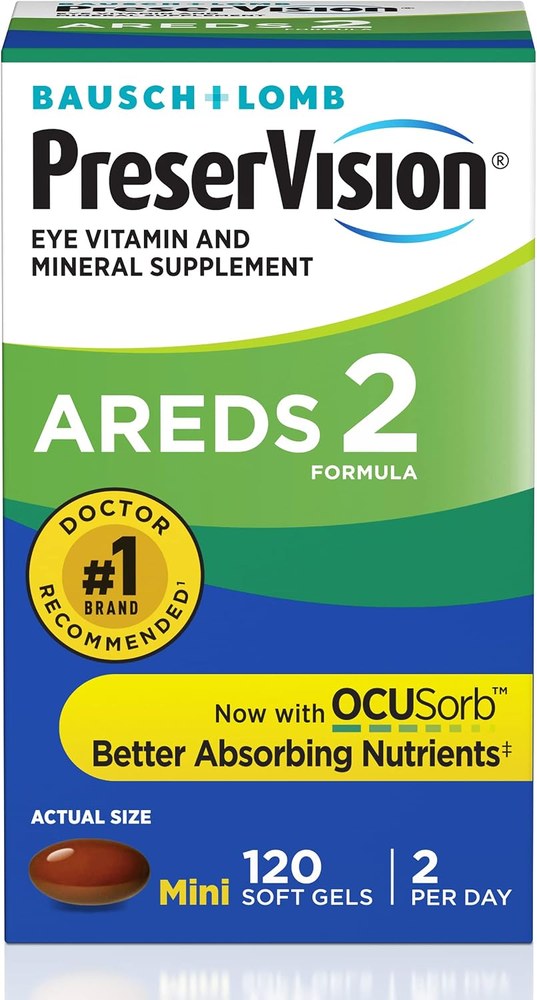
PreserVision AREDS 2 Formula
Best for: Diagnosed intermediate or advanced AMD, under an eye doctor
This is the one eye supplement with hard clinical evidence, and it is important to be precise about who it is for. PreserVision AREDS 2 is the exact formula tested in the National Eye Institute's AREDS2 trial: vitamin C, vitamin E, lutein 10 mg, zeaxanthin 2 mg, zinc 80 mg, and copper, beta-carotene-free. In people who already have intermediate or advanced age-related macular degeneration in at least one eye, the AREDS formula slowed progression to advanced AMD by about a quarter, and AREDS2 showed lutein and zeaxanthin are a safer swap for beta-carotene. The crucial honest caveats: it is proven only to slow progression in diagnosed AMD, it does not prevent AMD in healthy eyes, does nothing for cataracts, and is not for eye strain or screen fatigue. The 80 mg zinc is a therapeutic dose, so this is a pick to use because an eye doctor told you to, not a general wellness vitamin.
- The exact formula from the AREDS2 trial
- Beta-carotene-free, so appropriate for smokers
- Real evidence to slow progression in diagnosed AMD
- Only for diagnosed intermediate or advanced AMD
- Does not prevent AMD, cataracts, or screen fatigue
- 80 mg zinc is a therapeutic dose, use under a doctor
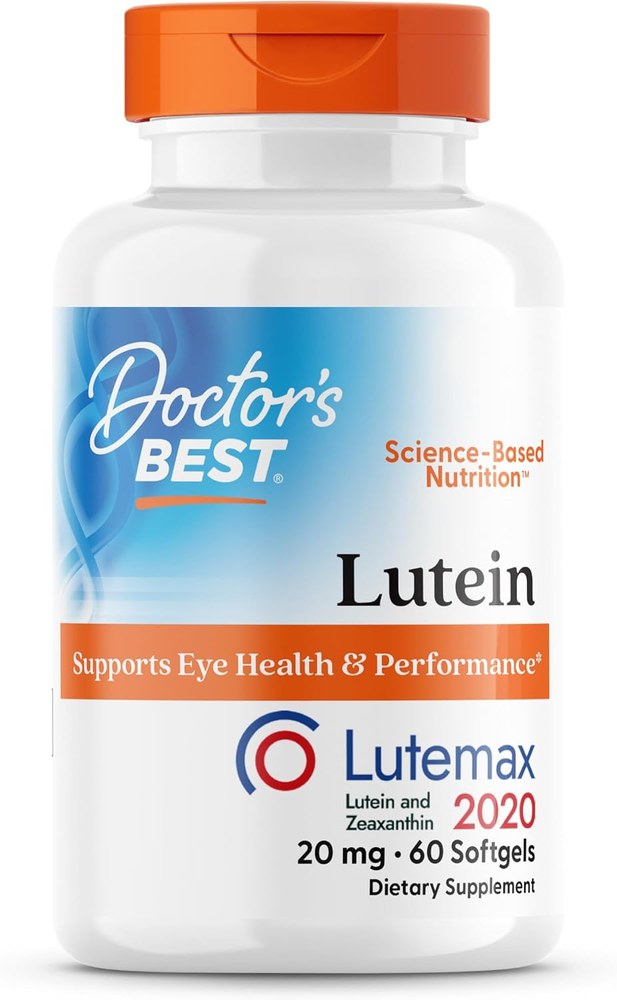
Doctor's Best Lutein with Zeaxanthin (Lutemax 2020)
Best for: Everyday macular-pigment support in healthy eyes
The clean, single-purpose carotenoid pick for healthy eyes. Doctor's Best uses Lutemax 2020, a branded marigold extract standardizing lutein plus both zeaxanthin isomers, at 20 mg lutein per softgel, without the megadose zinc and antioxidants of an AREDS2 formula. Lutein and zeaxanthin build macular pigment, and controlled trials show that raising macular pigment can modestly improve contrast sensitivity and glare recovery, especially in people who start low. Set expectations honestly: this supports macular pigment, a biomarker, and is not shown to prevent AMD or cataracts in healthy eyes, and 20 mg is above the 10 mg studied in AREDS2, so it is a support product, not an AMD treatment.
- Branded, standardized carotenoids (Lutemax 2020)
- Clean single-purpose formula, low cost
- Real macular-pigment and contrast-sensitivity data
- Supports macular pigment, not proven to prevent AMD
- 20 mg lutein is above the AREDS2 dose
- Not an AREDS2 substitute for diagnosed AMD
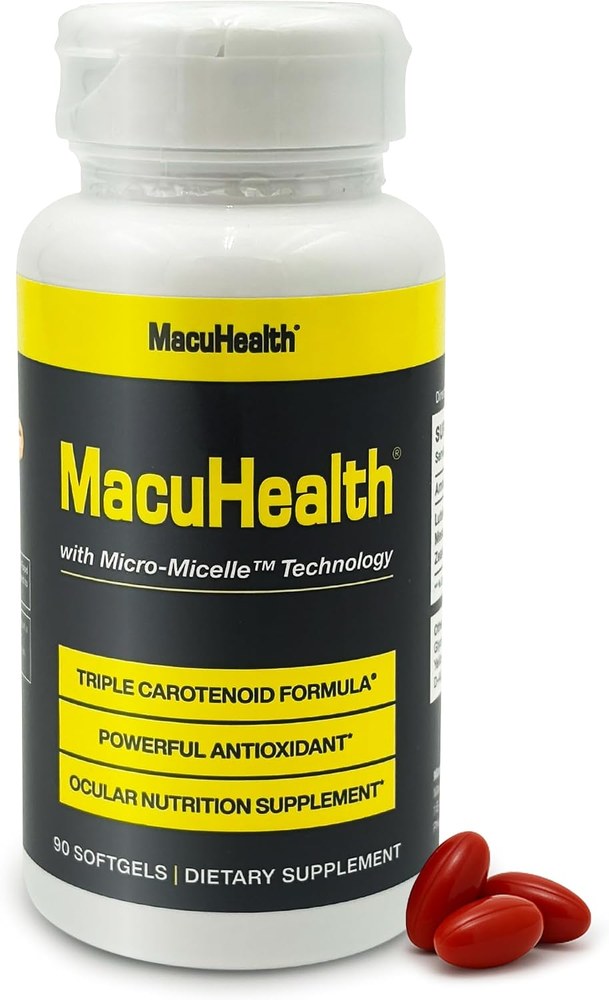
MacuHealth Triple Carotenoid Formula
Best for: Adding meso-zeaxanthin, the central-macula carotenoid
The differentiated macular-pigment pick, because it adds meso-zeaxanthin, the carotenoid concentrated at the very center of the macula that is largely absent from the diet. MacuHealth uses the 10:10:2 meso-zeaxanthin, lutein, zeaxanthin ratio studied for raising macular pigment optical density across the retina, and small trials suggest the meso-zeaxanthin-containing combination raised macular pigment and contrast sensitivity versus placebo. It ranks here, not higher, because the evidence is for increasing a pigment biomarker and contrast sensitivity, not for preventing or treating AMD, and it costs the most per day. A reasonable choice if you specifically want the meso-zeaxanthin angle.
- Adds meso-zeaxanthin, missing from most diets
- Studied 10:10:2 macular-pigment ratio
- Raises macular pigment and contrast sensitivity vs placebo in a small trial
- Evidence is for a pigment biomarker, not treating AMD
- Most expensive per day here
- No disease-prevention claim is justified
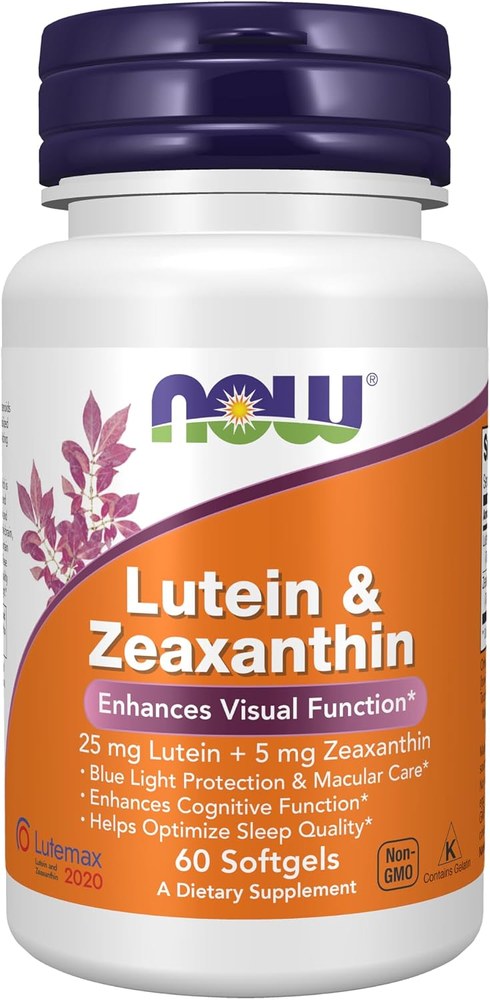
NOW Foods Lutein & Zeaxanthin
Best for: The cheapest legitimate lutein and zeaxanthin
The honest budget answer, and it is a real standardized carotenoid, not a cheap sprinkle blend. NOW gives you 25 mg lutein plus 5 mg zeaxanthin from FloraGLO-sourced material from a long-trusted, GMP-certified brand at a rock-bottom price. If you just want affordable macular support, this is it, and it shows you do not need to spend a lot for lutein and zeaxanthin. As with the other standalone carotenoids, the honest framing is macular-pigment support, not AMD or cataract prevention, and 25 mg is a high dose, well above the AREDS2 amount, so more is not clearly better.
- Real standardized lutein and zeaxanthin, very cheap
- Long-trusted GMP brand, FloraGLO source
- Shows you do not need a premium price for carotenoids
- 25 mg lutein is a high dose, not clearly better
- Macular-pigment support only, not AMD prevention
- Not an AREDS2 formula
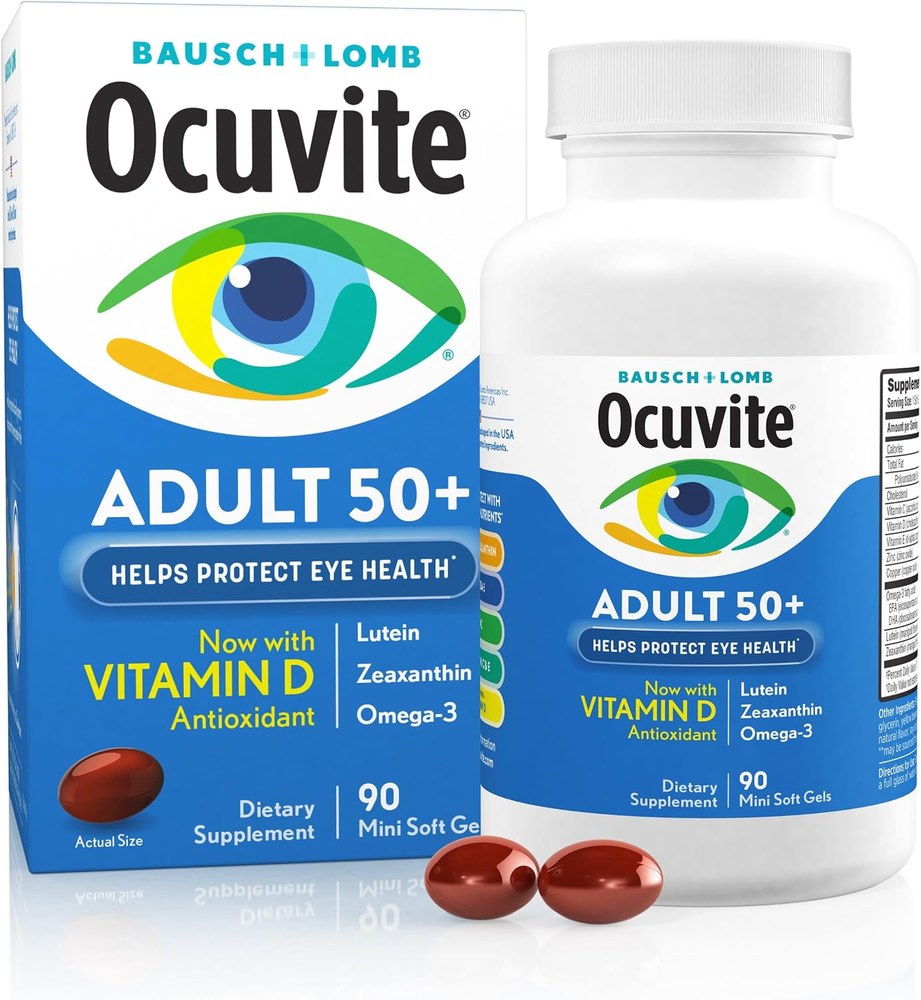
Ocuvite Adult 50+ Eye Vitamin
Best for: A low-dose daily eye vitamin without diagnosed AMD
The recognizable everyday eye multivitamin, from the same maker as PreserVision. Ocuvite Adult 50+ combines modest amounts of lutein, zeaxanthin, omega-3, zinc, vitamins C and E, and now vitamin D in one daily softgel, aimed at general adult eye nutrition. It is a fine, convenient way to cover eye-relevant nutrients if your eyes are healthy and you just want a maintenance vitamin. The important distinction: Ocuvite is a low-dose maintenance multi, not the AREDS2 treatment formula, its carotenoid and zinc levels are far below AREDS2, so do not mistake it for macular-degeneration therapy, and like any eye multi it does nothing for screen fatigue.
- Convenient once-daily general eye nutrition
- Balanced low-dose carotenoids plus D
- From the trusted PreserVision maker
- Low-dose maintenance multi, not AREDS2 therapy
- Carotenoid and zinc levels far below AREDS2
- Not for diagnosed AMD or screen fatigue
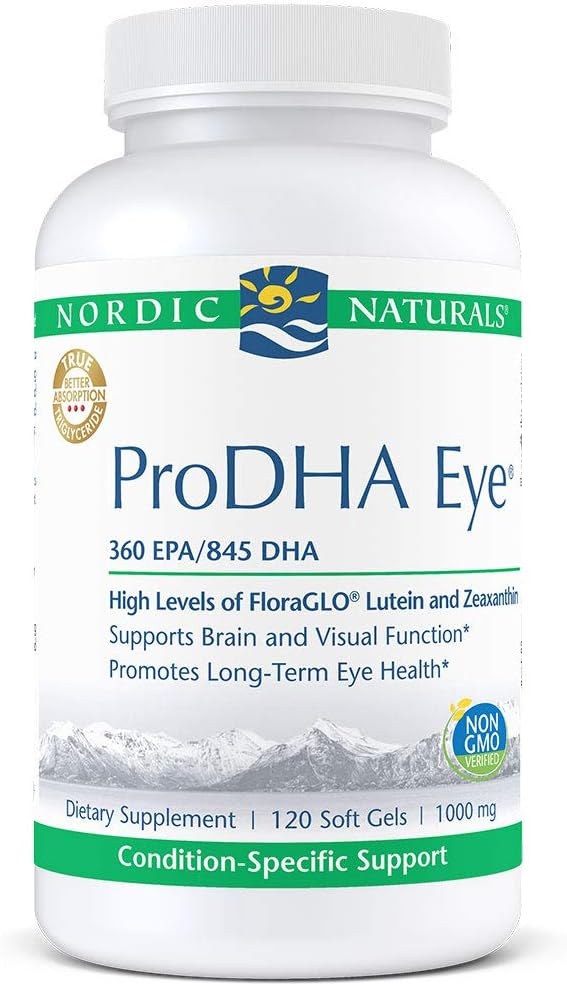
Nordic Naturals ProDHA Eye
Best for: The omega-3 angle for eye comfort, if you want to try it
If you want the omega-3 route for eye comfort, this is a well-made version: a high-DHA, triglyceride-form fish oil combined with FloraGLO lutein and zeaxanthin, third-party tested through the IFOS program. But be honest about the evidence, because this is where most dry-eye marketing overreaches: the large NIH-funded DREAM trial found fish oil no better than a placebo for moderate-to-severe dry eye, while some smaller trials and pooled analyses do show symptom improvement, especially for screen-related dryness. So it may help some people and is reasonable to try, but it is not a dry-eye cure. For pure high-EPA fish oil, see our fish oil ranking.
- High-DHA triglyceride omega-3 plus carotenoids
- IFOS third-party tested for purity
- A sensible way to try the omega-3-for-eyes angle
- The large DREAM trial found omega-3 no better than placebo for dry eye
- Premium price
- Not a dry-eye cure; evidence is mixed
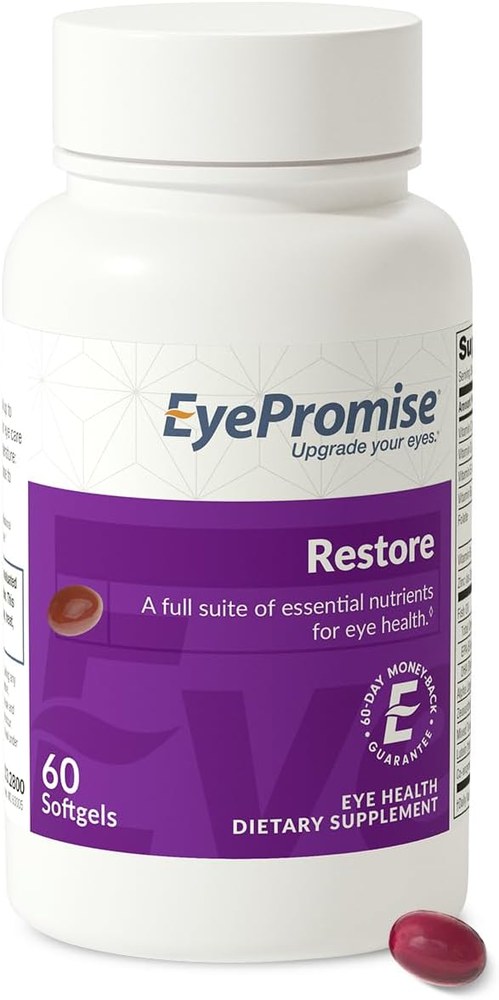
EyePromise Restore
Best for: A zeaxanthin-forward carotenoid plus antioxidant blend
The zeaxanthin-forward option, for readers who want more zeaxanthin than the typical lutein-dominant product. EyePromise Restore leads with 8 mg of dietary zeaxanthin plus 4 mg lutein, wrapped in a broader blend of omega-3, vitamins C, D and E, B vitamins, and zinc, and it is NSF Content Certified. The zeaxanthin emphasis is the genuine differentiator. It ranks last because it is the most kitchen-sink formula here, so you are paying for a lot of supporting-cast ingredients around the carotenoids, and, like every carotenoid product, it supports macular pigment rather than preventing or treating any eye disease. Contains fish oil, an allergen.
- Zeaxanthin-forward (8 mg), an uncommon emphasis
- NSF Content Certified
- Broad antioxidant and omega support
- Kitchen-sink formula, not a clean carotenoid product
- Premium price; contains fish oil (allergen)
- Macular-pigment support only, no disease claim
The full lineup, side by side
Read the “best for” and “AREDS2 match” columns first. Only one product here is the actual AREDS2 formula for diagnosed macular degeneration; the rest are carotenoid or omega-3 support products for healthy eyes.
| Product | Key actives | Best for | AREDS2 match? | Award |
|---|---|---|---|---|
| PreserVision AREDS 2 | Lutein/zeaxanthin + C/E/zinc/copper | Diagnosed AMD | Exact AREDS2 match | Macular degeneration |
| Doctor's Best Lutein | Lutein 20 mg + zeaxanthin (Lutemax) | Macular support | No (support) | Lutein + zeaxanthin |
| MacuHealth | Meso-zeaxanthin + lutein + zeaxanthin | Macular pigment | No (support) | Macular-pigment complex |
| NOW Lutein & Zeaxanthin | Lutein 25 mg + zeaxanthin 5 mg | Macular support | No (support) | Budget |
| Ocuvite Adult 50+ | Low-dose carotenoids + omega/D/zinc | General eye nutrition | No (low-dose) | Everyday multi |
| Nordic ProDHA Eye | Omega-3 (high DHA) + lutein/zeaxanthin | Dry eye (mixed evidence) | No | Dry eye |
| EyePromise Restore | Zeaxanthin 8 mg + lutein 4 mg + multi | Zeaxanthin support | No | Zeaxanthin-forward |
Only PreserVision AREDS 2 matches the studied AREDS2 formula and is intended for diagnosed intermediate or advanced AMD. Everything else supports macular pigment or general eye nutrition and is not an AMD treatment. Doses are read from current Supplement Facts panels and can change; confirm before you buy.
What actually has evidence
Behind the products, only a few things have earned real eye data. Here is the honest one-line version, with links to the deeper science.
- The AREDS2 formula, for diagnosed AMD. The one strong result: it slows progression to advanced AMD in people who already have intermediate or advanced disease, by about a quarter. It does not prevent AMD or help healthy eyes.
- Lutein and zeaxanthin. They build macular pigment, and trials show that can modestly improve contrast sensitivity and glare recovery, especially in people who start with low pigment. Support, not disease prevention. Meso-zeaxanthin is the central-macula carotenoid some products add.
- Omega-3 for dry eye. Genuinely mixed: the large DREAM trial was null, some smaller trials help. Reasonable to try, not a cure. See our fish oil ranking.
- Astaxanthin for eye fatigue. One small industry-sponsored trial, conducted only in children aged 10 to 14, suggested a modest benefit for computer-vision symptoms; the evidence in adults is preliminary.
The zinc in AREDS formulas is paired with copper for a reason: high-dose zinc can cause copper deficiency over time, which is one more reason the 80 mg-zinc AREDS2 dose belongs under a doctor's guidance, not in a daily wellness routine. See our zinc guide for the dosing picture.
Eye-supplement marketing to skip
Some of the loudest eye-supplement claims are the least supported, and one is a real safety issue.
- “Eye vitamins for screen time / blue light / digital eye strain.” There is no good evidence that oral supplements relieve computer eye strain, and blue light from screens is not shown to damage the retina. The honest fix is the 20-20-20 rule and breaks; we cover it in our screen-time and eye health guide.
- Bilberry “night vision” products. The night-vision claim traces to a World War II myth, and the best randomized trials found no benefit in healthy people.
- Original-AREDS formulas with beta-carotene, for smokers. Beta-carotene raised lung-cancer risk in current and former smokers in two large trials, which is exactly why AREDS2 replaced it with lutein and zeaxanthin. If you smoke or used to, use only a beta-carotene-free AREDS2 formula.
- Kitchen-sink “eye health” blends with hidden carotenoid doses, and antioxidant pills sold to prevent cataracts, which controlled trials do not support.
How to choose the right one for you
Match the pick to your situation:
- If an eye doctor diagnosed you with intermediate or advanced AMD, use the exact AREDS2 formula (PreserVision AREDS 2), and confirm it with your doctor.
- If your eyes are healthy and you just want macular support, a standardized lutein and zeaxanthin product is the honest choice, with a budget option that works just as well.
- If you want the meso-zeaxanthin angle, a triple-carotenoid complex adds the central-macula pigment most diets lack.
- If dry eye is the issue, omega-3 is reasonable to try, but the evidence is mixed and it is not a cure.
- Whatever you pick, choose a product with disclosed carotenoid doses, skip the screen-fatigue and night-vision marketing, get your lutein from food too, and keep up with eye exams.
AREDS2, AMD, and when to see an eye doctor
This is a buyer's guide for general wellness, not a substitute for eye care. Age-related macular degeneration is diagnosed and staged by an eye doctor through a dilated exam, and the AREDS2 formula is only appropriate once intermediate or advanced AMD is confirmed in at least one eye. It slows progression; it does not restore lost vision or prevent the disease in healthy eyes. Adults over 55, anyone with a family history of AMD, and anyone noticing changes in central or distorted vision should have regular dilated eye exams rather than relying on a supplement. If you smoke, take medication, or have any eye condition, talk to your eye-care professional before starting an AREDS2 or high-dose zinc product.
Frequently asked questions
What is the best eye vitamin?
It depends on why you want one. If an eye doctor has diagnosed intermediate or advanced macular degeneration, the AREDS2 formula (sold as PreserVision AREDS 2) is the one eye supplement with real evidence, and it slows progression rather than restoring vision. For general macular support in healthy eyes, a standardized lutein and zeaxanthin product is the sensible pick. Honestly, though, if your eyes are healthy, a diet rich in leafy greens plus regular eye exams does more than any pill.
Do eye vitamins actually prevent macular degeneration?
No. This is the most important and most misunderstood point. The AREDS and AREDS2 trials showed the formula slows PROGRESSION to advanced AMD in people who already have intermediate or advanced disease, cutting that risk by roughly a quarter. In people with healthy eyes or only early changes, it does not prevent AMD from developing, a point confirmed by Cochrane reviews. Eye vitamins are for slowing a diagnosed disease, not preventing one.
Are eye vitamins good for eye strain, screen time, or blue light?
There is little good evidence that oral supplements relieve digital eye strain, and no supplement is a substitute for the simple fixes: the 20-20-20 rule, blinking, good lighting, and breaks. One small industry-sponsored trial, conducted only in children aged 10 to 14, found astaxanthin modestly helped computer-vision-syndrome symptoms, but the overall evidence for screen-fatigue supplements, especially in adults, is preliminary. Treat “eye vitamins for screen time” as a marketing angle, not an established benefit. See our screen-time guide for what actually helps.
What is the difference between AREDS and AREDS2?
AREDS2 updated the original formula by replacing beta-carotene with lutein and zeaxanthin. That swap was at least as effective for slowing AMD and much safer, because beta-carotene raised lung-cancer risk in current and former smokers in two large trials. The practical rule: if you smoke or used to, only use an AREDS2 (beta-carotene-free) formula, never an older beta-carotene version.
How much lutein and zeaxanthin should I take?
The AREDS2 trial used 10 mg of lutein and 2 mg of zeaxanthin a day, and that is the dose with outcome evidence. Many standalone products use 20 to 25 mg of lutein, which safely builds macular pigment but is not proven to work better than the studied dose. Some premium products add meso-zeaxanthin, the carotenoid concentrated at the center of the macula that is largely missing from the diet.
Do omega-3s help dry eyes?
The evidence is mixed. The large NIH-funded DREAM trial found fish oil no better than an olive-oil placebo for moderate-to-severe dry eye, on symptoms and objective signs. Some smaller trials and pooled analyses do show symptom improvement, particularly for screen-related dryness, so omega-3 is reasonable to try but is not a reliable cure. For a general high-EPA fish oil, see our fish oil ranking.
Do I still need an eye exam if I take eye vitamins?
Yes. Supplements do not replace a dilated eye exam, and the AREDS2 formula is only appropriate if an eye doctor has actually diagnosed intermediate or advanced macular degeneration. Adults over 55 should have regular dilated eye exams to catch AMD and other conditions early, because that is what determines whether an AREDS2 supplement is even the right tool for you.
The bottom line
The best eye vitamin is the honest one, matched to your actual situation. If an eye doctor has diagnosed you with macular degeneration, PreserVision AREDS 2 is the one supplement with real evidence to slow it. If your eyes are healthy and you want macular support, a standardized lutein and zeaxanthin product, even a budget one, is the sensible pick, and a meso-zeaxanthin complex is the premium version. Just keep expectations honest: AREDS2 does not prevent AMD or help healthy eyes, no eye vitamin fixes screen fatigue, beta-carotene formulas are unsafe for smokers, and food plus regular eye exams beat any pill. Choose a transparent, well-dosed product, and let an eye doctor guide anything beyond general support.