Vitamin B12 is one of the most-bought supplements and one of the most over-bought. Here is the honest starting point: if you eat animal foods and absorb nutrients normally, you very likely do not need it. The people who genuinely benefit are a specific set, vegans and vegetarians, older adults, people on metformin or long-term acid reducers, and anyone with pernicious anemia or absorption problems. If you are in one of those groups, the good news is that B12 is cheap, safe, and easy to get right, and the differences between products are smaller than the marketing suggests. This guide ranks the best B12 supplements on form, dose, delivery, honest testing, and price, and it is candid about the cyanocobalamin-versus-methylcobalamin debate that drives so much of the upsell.
The short story: for most people who need B12, Nature Made Vitamin B12 is the best pick, because it is the only product here with a genuine USP seal, at a budget price. From there, each product wins a specific job, including the best vegan and active-form options.
The short version
- Best overall and value: Nature Made B12, the only pick here with a real USP Verified seal, for about a dime a day.
- Do you even need it? Mainly vegans, older adults, metformin or acid-reducer users, and people with absorption issues.
- Form barely matters: cheap, stable cyanocobalamin works as well as "active" methylcobalamin for most people.
- Ignore the giant numbers: 500 to 1,000 mcg is plenty; sublingual and sprays are not better absorbed than tablets.
How we ranked them
B12 is a category where honesty matters more than hype, because nearly every product delivers plenty of B12. We weighed five things:
- Third-party testing. A real seal (USP, NSF) ranks highest, honestly separated from "GMP facility" or unnamed "brand-tested" claims. See how to read a label.
- Form. Cyanocobalamin, methylcobalamin, or a methyl-plus-adenosyl combo. We treat form as preference, not a quality tier, per the B12 and methylcobalamin evidence.
- Sensible dose. Enough to cover needs without pointless mega-dosing.
- Fit and format. Vegan suitability and a delivery format (tablet, lozenge, spray) you will actually use.
- Value. Cost per serving, since B12 is usually a long-term daily habit.
Scores are our editorial assessment on a five-point scale, not customer ratings. Per-serving prices are approximate and change often.
The 7 best B12 supplements
Tap any product to jump straight to its full review.
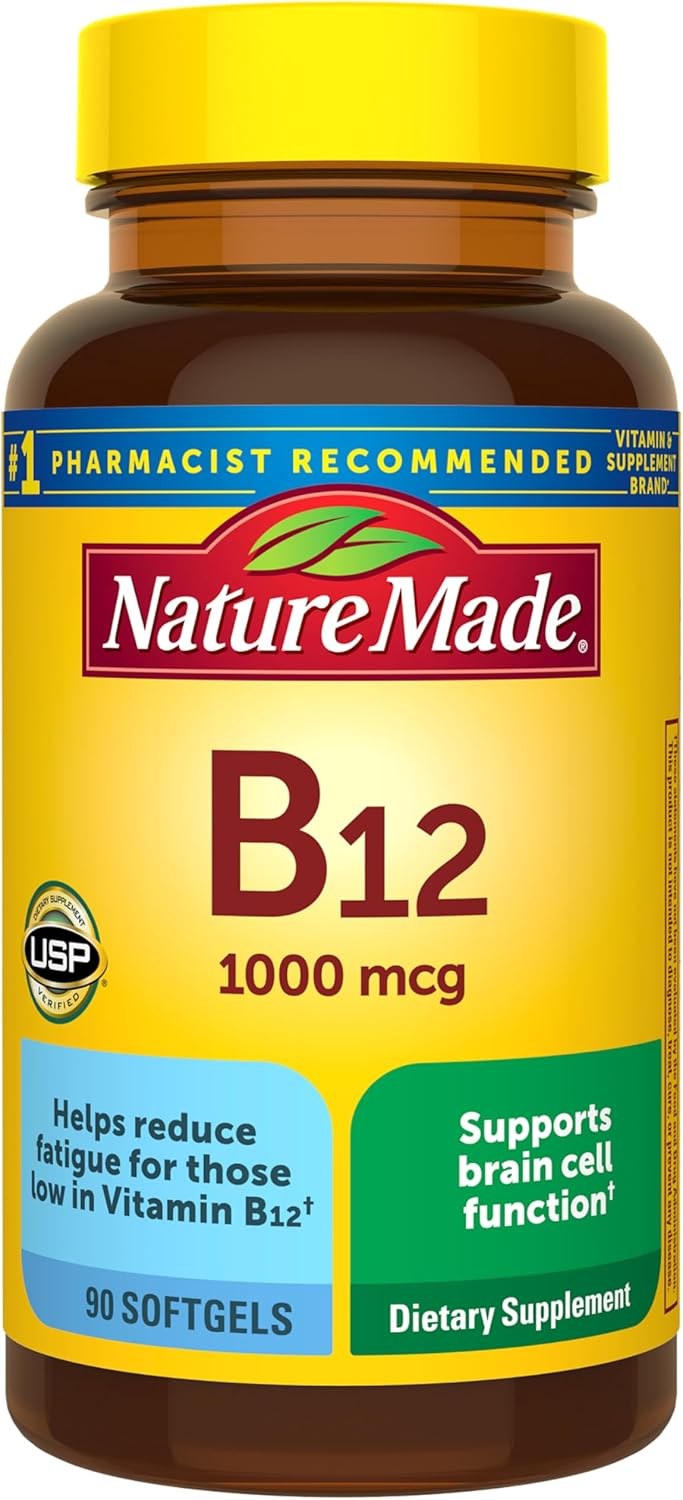
Nature Made Vitamin B12 1000 mcg
Best for: A genuinely verified B12 at a budget price
The honest winner. Nature Made B12 delivers 1,000 mcg of cyanocobalamin, the cheapest, most stable, and most-studied form, and it is the only product in this lineup with a real USP Verified seal, an independent check of identity, potency, and purity, for around a dime a serving. For the large majority of people who simply need reliable B12, that combination of genuine verification and low cost is unbeatable. The one honest catch is the format: it is a gelatin softgel, so it is not suitable for vegans, which is a little ironic given that vegans are a top reason to take B12 in the first place.
- The only real USP seal here
- Cheapest cost per serving
- Stable, well-studied cyanocobalamin
- One softgel a day
- Gelatin softgel, not vegan
- Cyano form for those who prefer active
- No added co-factors
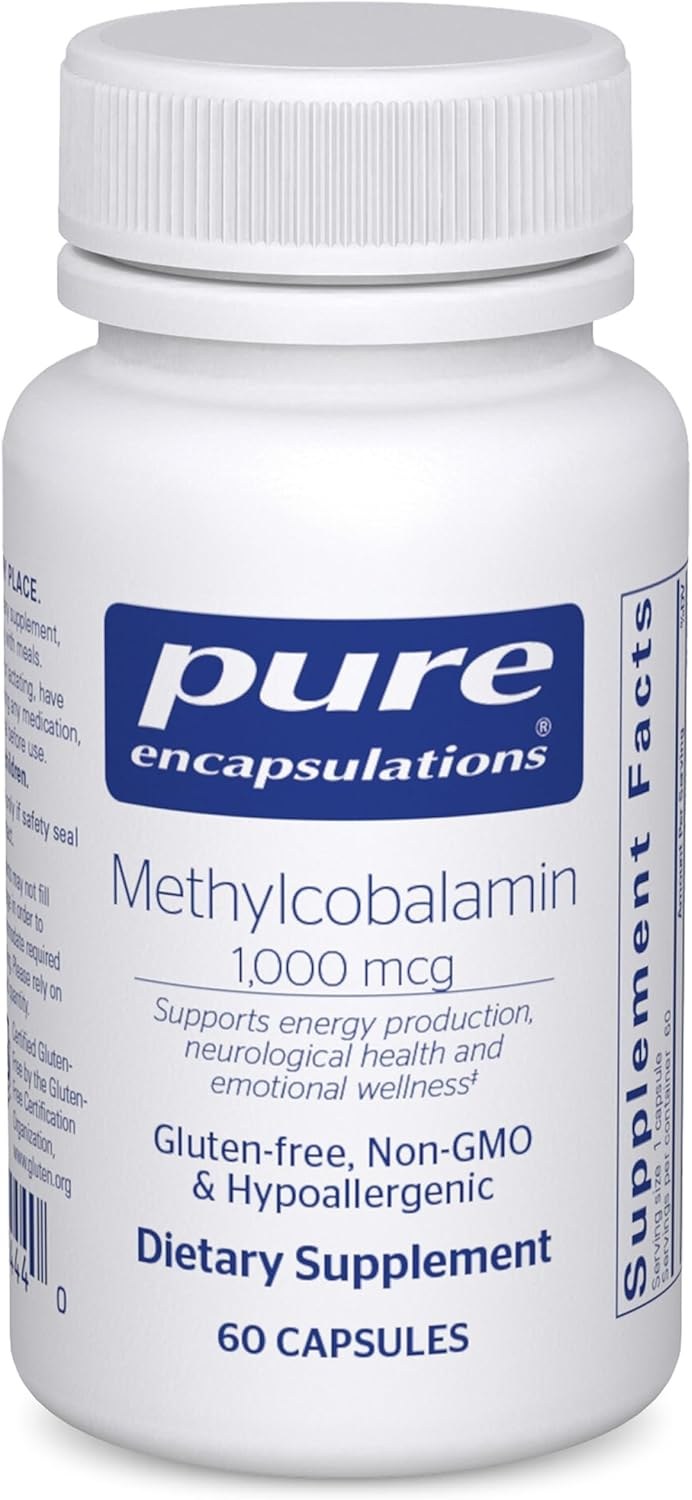
Pure Encapsulations Methylcobalamin
Best for: A clean, vegan active-form B12
The clean active-form choice. Pure Encapsulations gives you 1,000 mcg of methylcobalamin in a hypoallergenic vegan capsule with nothing extra, from a practitioner brand with genuine independent lab testing (through Eurofins and Covance) for identity, potency, and contaminants. If you specifically want the active form in a clean, vegan format, this is the pick. The honest distinction from our number one: that testing is real and documented, but it is not an on-label USP or NSF consumer seal, so for verification alone Nature Made still edges it.
- Active methylcobalamin, vegan
- Clean, hypoallergenic formula
- Documented independent lab testing
- Trusted practitioner brand
- No on-label USP/NSF seal
- Pricier than cyanocobalamin
- Active form is preference, not proven better
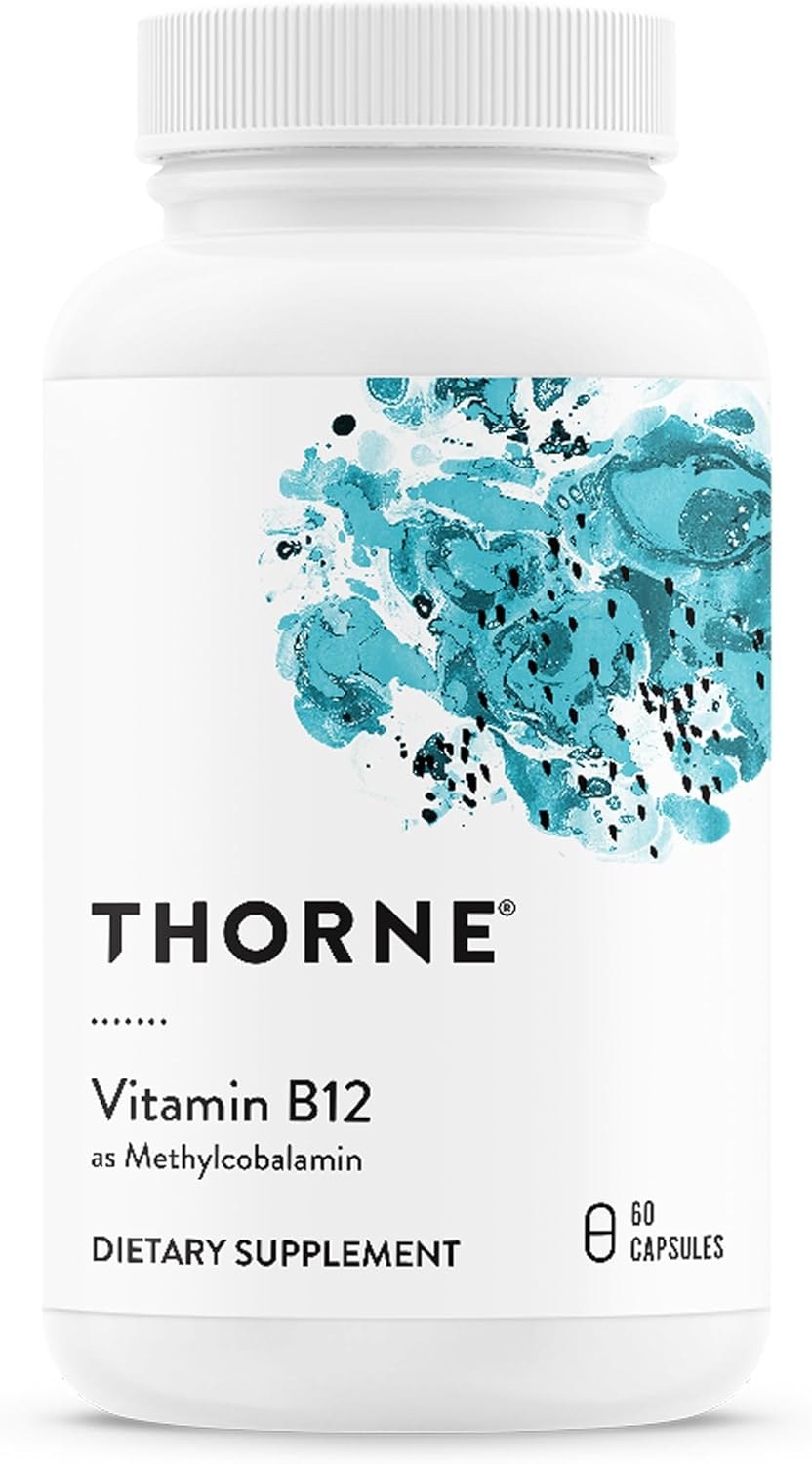
Thorne Vitamin B12
Best for: Rigorous testing from a respected brand
The testing-obsessed pick. Thorne delivers 1,000 mcg of methylcobalamin in a clean vegan capsule from one of the most quality-respected brands in the industry, with multiple rounds of testing and NSF- and TGA-registered facilities. If brand-level rigor reassures you, it delivers. The honest flag: Thorne is famous for NSF Certified for Sport, but that certification applies to its B-Complex, not this standalone B12 SKU, so treat this as excellent brand and facility testing rather than a per-product sport seal. It is also the priciest of the near-identical methylcobalamin options.
- Elite brand testing reputation
- Clean vegan methylcobalamin
- NSF- and TGA-registered facilities
- NSF for Sport does not cover this SKU
- Most expensive methyl option here
- No on-label consumer seal
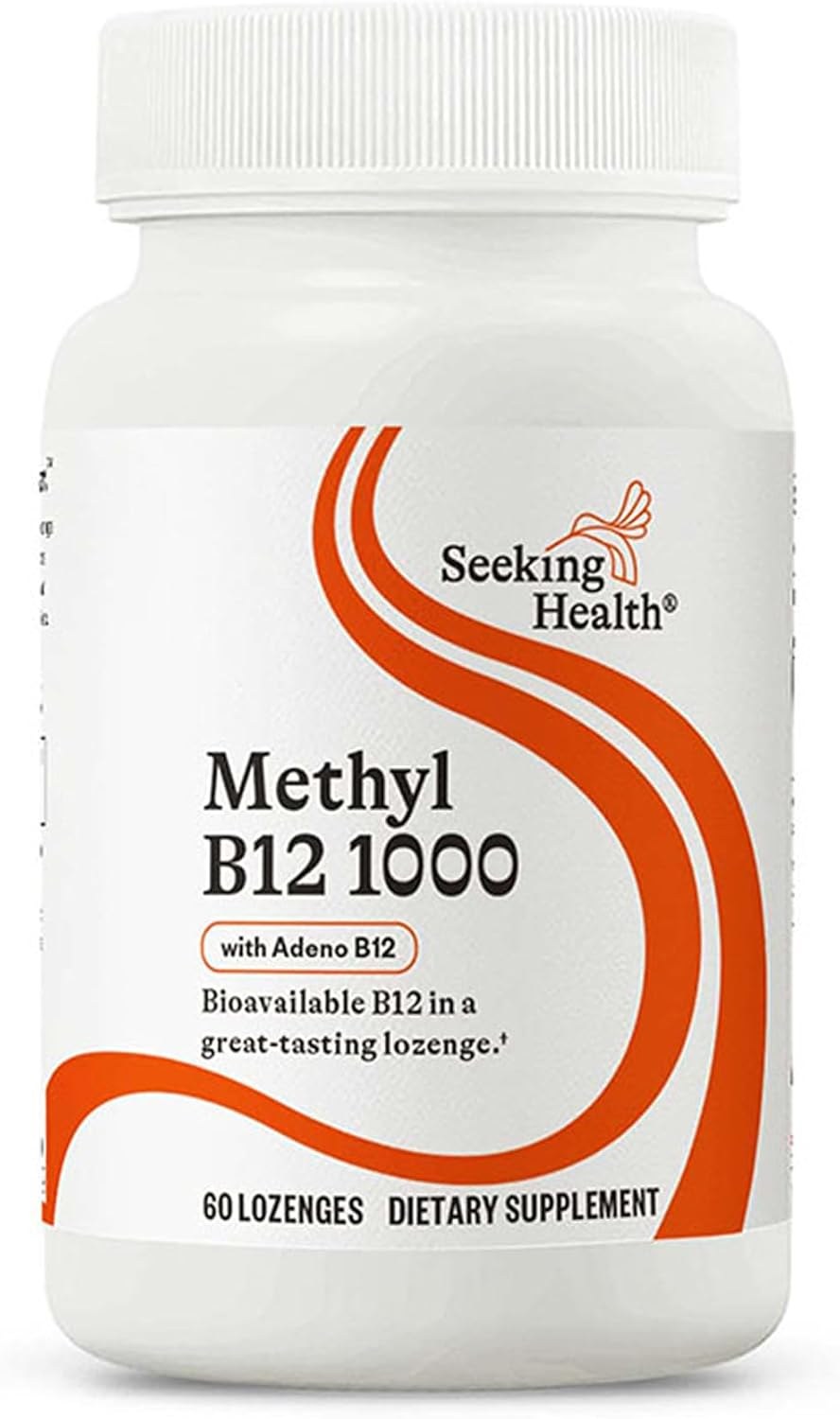
Seeking Health Methyl B12
Best for: Both active coenzyme forms in one lozenge
The dual-active option. Seeking Health is one of the few products that combines both active coenzyme forms, methylcobalamin and adenosylcobalamin, at 1,000 mcg in a splittable sublingual lozenge, so you can take a half or quarter for a smaller dose. For people set on the most complete active-form B12, it is the genuine pick (many "active B12" products are methyl-only). The honest reality is that "fully active" is a preference that commands a premium, with no proven clinical advantage over plain B12 for most people, and it carries no independent seal.
- True methyl plus adenosyl combo
- Splittable for smaller doses
- Vegan, very clean excipients
- No proven edge over plain B12
- Premium price for "active"
- No independent product seal
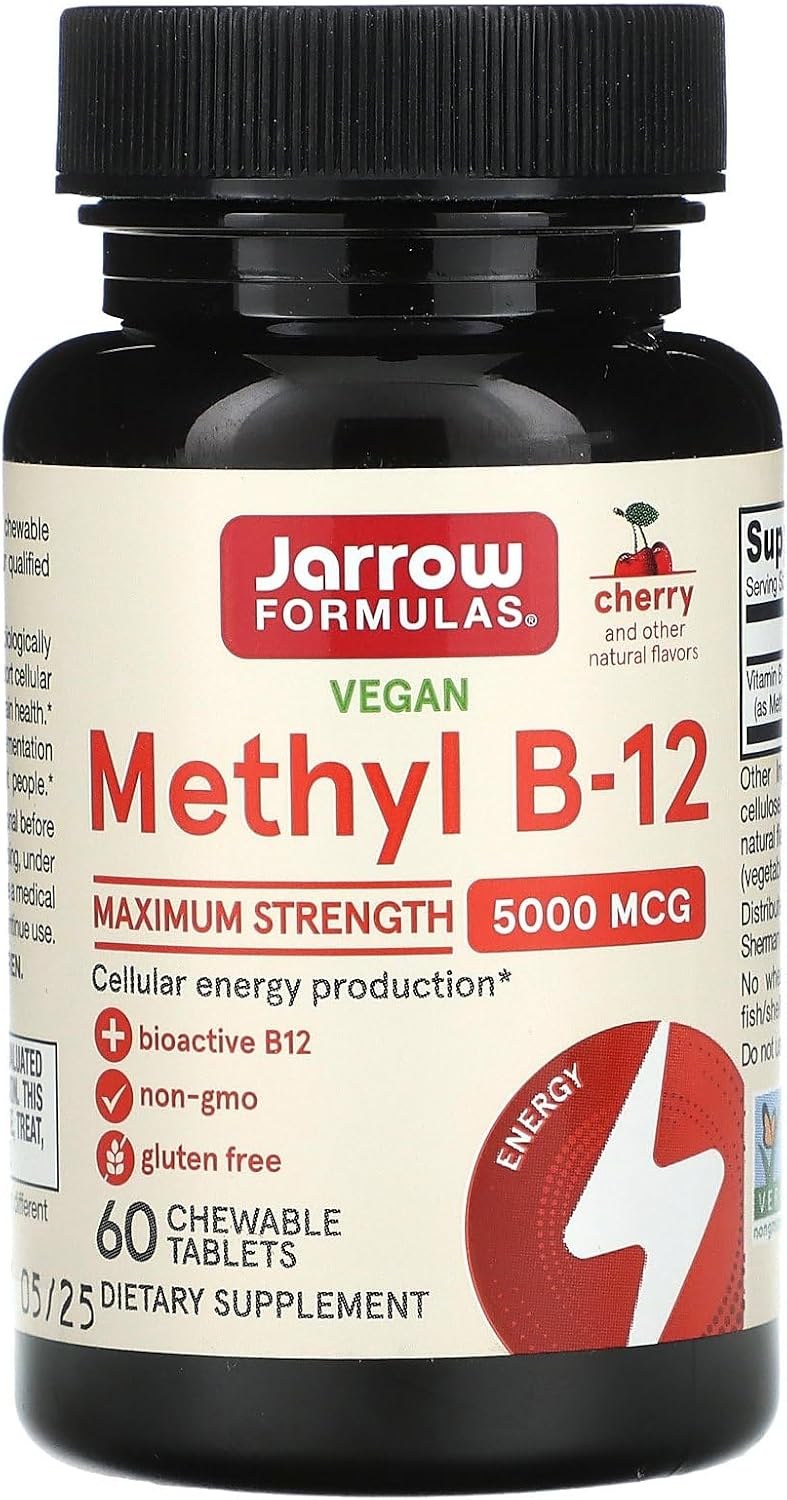
Jarrow Formulas Methyl B-12
Best for: A tasty, popular active-form lozenge
The popular, palatable lozenge. Jarrow Methyl B-12 is a long-time favorite: a great-tasting cherry lozenge of methylcobalamin that dissolves in the mouth, vegan, with a clean ingredient list, handy for anyone who dislikes swallowing pills. The honest notes are two. First, this version is 5,000 mcg, far beyond any physiological need (a lower-dose 1,000 mcg lemon version exists, and is plenty), so the giant number is not a benefit. Second, it carries no independent third-party seal; its non-GMO and gluten-free claims are brand self-declarations.
- Great-tasting, dissolvable lozenge
- Vegan, clean ingredients
- Good for pill-avoiders
- A lower-dose version exists
- 5,000 mcg is well beyond need
- No independent seal
- Self-declared claims only
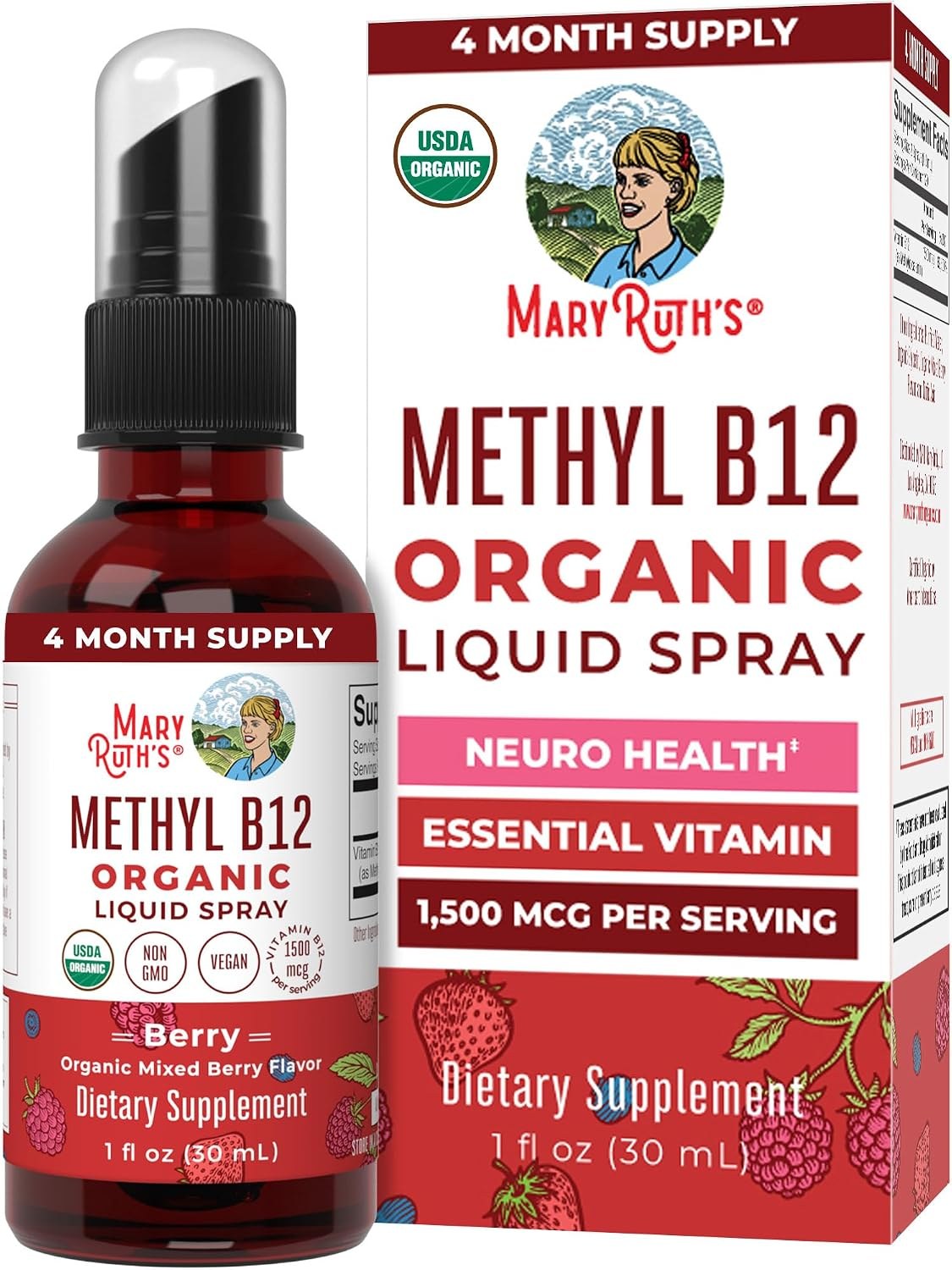
MaryRuth's Organic Methyl B12 Spray
Best for: A vegan, organic spray with strong purity testing
The vegan spray with the best purity story. MaryRuth's delivers 1,500 mcg of methylcobalamin in a sugar-free berry liquid spray, vegan and USDA Organic, and it carries Clean Label Project certification, a genuine independent check for heavy metals and contaminants. For a pleasant, pill-free, vegan option with real purity testing, it is the standout. The honest notes: Clean Label Project verifies contaminants rather than potency (unlike USP), 1,500 mcg is a high dose, and the natural red liquid can stain if spilled.
- Vegan, USDA Organic, sugar-free
- Clean Label Project purity testing
- Pleasant, pill-free spray
- Good value per serving
- Purity cert, not potency (not USP)
- 1,500 mcg is a high dose
- Liquid can stain
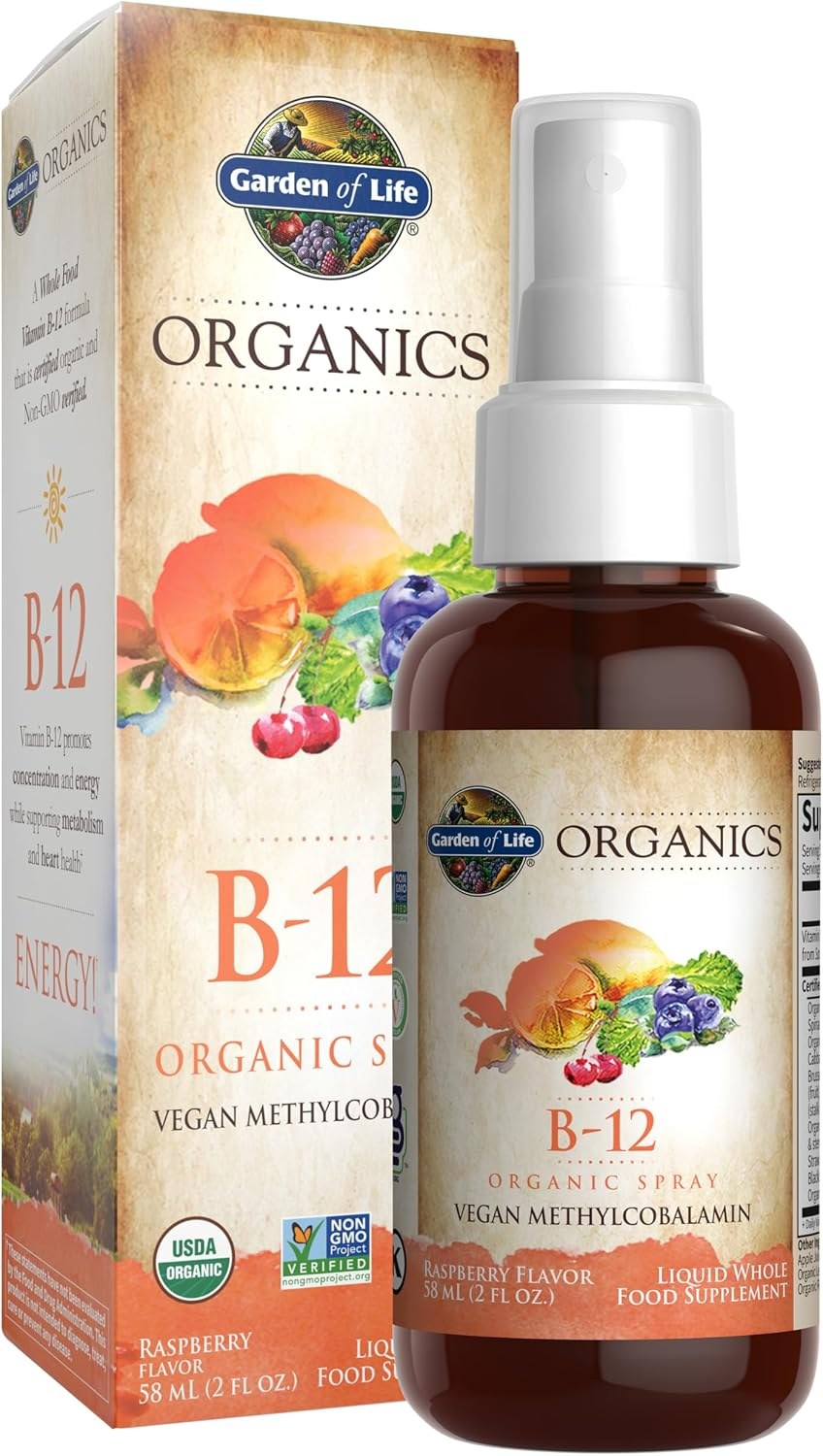
Garden of Life mykind Organics B-12
Best for: A vegan organic spray at a sensible dose
The sensible-dose organic spray. Garden of Life's mykind Organics B-12 spray gives you 500 mcg of methylcobalamin, the most physiologically reasonable dose in this lineup, in a Certified Vegan, USDA Organic, Non-GMO Project Verified raspberry spray, at an excellent price per serving. For a clean, vegan, well-priced everyday B12 without mega-dosing, it is a smart choice. The honest notes: USDA Organic and Non-GMO certify sourcing rather than potency (no USP or NSF seal), and the tiny "whole-food blend" on the label is cosmetic at this amount.
- Sensible 500 mcg dose
- Certified Vegan, USDA Organic, Non-GMO
- Pleasant spray, great value
- Organic certs are sourcing, not potency
- "Whole-food blend" is cosmetic
- No USP/NSF seal
The full lineup, side by side
Most of these deliver plenty of B12, so weigh testing, vegan fit, and price more than the form.
| Product | Form | Dose | Delivery | Third-party | ~ Price / serving |
|---|---|---|---|---|---|
| Nature Made B12 | Cyanocobalamin | 1,000 mcg | Softgel | USP Verified | $0.11 |
| Pure Encapsulations | Methylcobalamin | 1,000 mcg | Capsule | Lab tested | $0.30 |
| Thorne B12 | Methylcobalamin | 1,000 mcg | Capsule | Brand tested | $0.40 |
| Seeking Health | Methyl + adenosyl | 1,000 mcg | Sublingual | Brand tested | $0.33 |
| Jarrow Methyl B-12 | Methylcobalamin | 5,000 mcg | Lozenge | None | $0.30 |
| MaryRuth's Spray | Methylcobalamin | 1,500 mcg | Spray | Organic, CLP | $0.20 |
| Garden of Life Spray | Methylcobalamin | 500 mcg | Spray | Organic, Non-GMO | $0.14 |
The RDA is 2.4 mcg, so every dose here is far above need (only about 1% is absorbed passively). Prices are approximate and change often.
How to choose
First, decide if you need it
If you eat animal foods and absorb normally, you likely do not need a B12 supplement. The groups who genuinely benefit are vegans and vegetarians, adults over about 50, people on long-term metformin or acid reducers, and those with pernicious anemia or malabsorption. If in doubt, ask your doctor for a blood test rather than guessing. Our B12 deficiency guide covers the signs and at-risk groups in depth.
Do not overpay for "active forms"
Cyanocobalamin is the cheapest, most stable, and most-studied form, and your body converts it to the active methyl and adenosyl forms. Methylcobalamin is fine, but the evidence does not show a meaningful absorption advantage for most people, so choose by preference and price, not marketing.
Look for a real seal, and know what it covers
USP Verified and NSF actually test identity, potency, and purity. "GMP facility," unnamed "brand-tested," USDA Organic, and Clean Label Project are weaker or narrower (organic and Clean Label verify sourcing or contaminants, not potency). In this lineup, only Nature Made carries a true potency-and-purity seal.
Format is preference, not absorption
Sublingual lozenges and sprays are absorbed about as well as swallowed tablets, no better, despite the marketing. Choose the format you will take consistently, and pick a certified vegan product if that matters to you, since several here are gelatin-based.
Ignore the giant numbers
Doses of 500 to 5,000 mcg all dwarf the 2.4 mcg RDA because only about 1% is absorbed by passive diffusion. A bigger %DV is not a quality or benefit signal; for most people, 500 to 1,000 mcg daily is plenty.
Frequently asked questions
Do I actually need a B12 supplement?
Probably not, if you eat animal foods (meat, fish, eggs, or dairy) and absorb nutrients normally. The people who genuinely benefit are vegans and vegetarians, adults over about 50, those on long-term metformin or acid-reducing drugs, and anyone with pernicious anemia or a malabsorption condition. If you are unsure, a simple blood test ordered by your doctor settles it.
Methylcobalamin or cyanocobalamin: which is better?
For most people the practical difference is small. Cyanocobalamin is inexpensive, very stable, and the most-studied form, and your body converts it to the active forms. Methylcobalamin is an active form some people prefer. Major health authorities note that the evidence does not show a meaningful difference among forms in absorption for most people, so choose by preference and price rather than paying a premium for active.
Is a sublingual lozenge or spray better than a swallowed tablet?
Not really. Studies show sublingual and swallowed B12 raise blood levels about equally, so sublingual is not proven to absorb better despite the marketing. Pick whichever format you will take consistently. Sprays and lozenges are handy if you dislike pills, and they are easy vegan options.
How much B12 should I take?
The RDA is just 2.4 mcg per day, but oral supplements use far higher doses (commonly 500 to 1,000 mcg) because only about 1 percent is absorbed by passive diffusion. For general maintenance, 500 to 1,000 mcg daily is ample; mega-doses like 5,000 mcg offer no proven extra benefit for most people. B12 is water-soluble with a wide safety margin, so excess is simply excreted.
Who is at risk of B12 deficiency?
Strict vegans and vegetarians (B12 occurs naturally only in animal foods), older adults (reduced stomach acid impairs absorption in many people over 50), people on long-term metformin or acid-reducing medications, and anyone with pernicious anemia, celiac or Crohn's disease, or prior gastrointestinal surgery. These groups are exactly who supplements are designed for.
I have numbness, tingling, or memory problems. Should I just take B12?
No, see a doctor. Neurological symptoms can signal true deficiency and can appear even without anemia, and untreated B12 deficiency can cause permanent nerve damage. High folate intake can also mask a B12 deficiency on a basic blood test while nerve damage progresses. Get evaluated before self-treating, especially with neurological symptoms, since severe deficiency may need injections.
The bottom line
B12 is a category where the honest pick is also the cheap one. For most people who need it, Nature Made B12 wins on the strength of a genuine USP seal at a budget price, with the only catch being that it is not vegan. If you want the active form, Pure Encapsulations and Thorne are clean, vegan methylcobalamin options; Seeking Health adds adenosylcobalamin for the fully-active crowd; Jarrow is the tasty lozenge; and MaryRuth's and Garden of Life are the vegan sprays, with Garden of Life's 500 mcg the most sensible dose. Above all, make sure you actually need B12, do not overpay for "active," and see a doctor for any neurological symptoms.